If you have ever turned on the evening news or glanced at a financial website, you have likely seen three letters and a number flashing across the screen: S&P 500. It is often followed by a number that is either green or red, signaling whether the market had a good or bad day. But for someone just starting their journey into the world of money, those characters can feel like a secret code.
The S&P 500 is much more than just a random ticker on a screen. It is widely considered the ultimate pulse of the American economy. It tells us how the largest companies in the United States are doing, and by extension, how the country’s financial health is holding up. Understanding this index is often the first and most important step for any new investor.
In this guide, we are going to peel back the layers of the S&P 500. We will explain what it is, how it works without using complicated math, and why it has become the gold standard for building wealth over the long term. Whether you have ten dollars or ten thousand dollars to start with, this is the foundation you need.
What Exactly is the S&P 500?
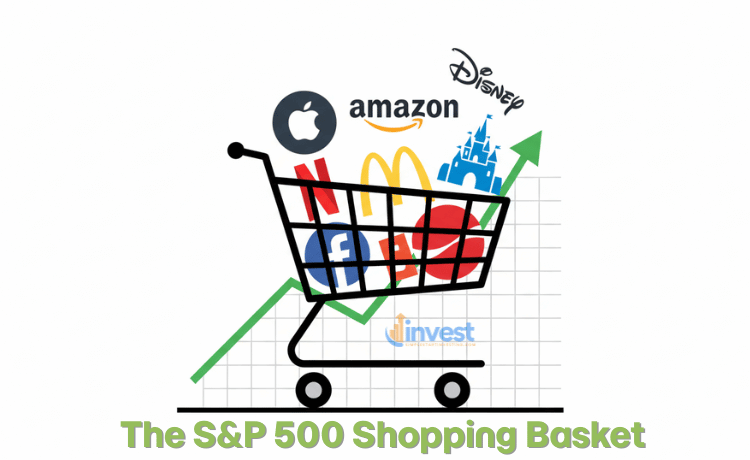
Imagine you are walking into a massive grocery store. Instead of buying individual items like a single apple or one carton of milk, you decide to buy a pre-packaged “Mega Basket.” This basket contains small portions of the 500 most popular and successful products in the entire store. If those 500 products sell well and become more valuable, your basket becomes more valuable. If they struggle, your basket loses value.
In the world of finance, the S&P 500
A Real-World Example
Think of the brands you use every single day. When you check your iPhone, you are interacting with Apple. When you search for something online, you are using Alphabet (the parent company of Google). When you order a package, it likely comes from Amazon. All of these giants, along with 497 others like Walmart, Disney, and Nvidia, are part of the S&P 500.
The Beginner’s Misconception
Many people start out thinking that the S&P 500 is a single company you can “buy” like a share of Tesla. They might say, “I want to buy one S&P 500.”
The Reality Check
The S&P 500 is just a list—a measurement. You cannot buy the index itself any more than you can “buy” the temperature on a thermometer. However, you can buy an “Index Fund” or an “ETF” (Exchange-Traded Fund) that is designed to mimic the index perfectly. When you do this, you are effectively owning a tiny slice of all 500 companies at once.
How Does a Company Join the “Club”?
Not just any company can get into the S&P 500. It is an exclusive club with very strict entry requirements. The goal of the index is to represent the leading industries of the U.S. economy, so the selection committee looks for the “best of the best.”
To be considered for the index this year, a company generally needs to meet several criteria. First, it must be based in the United States. Second, it must be massive. As of recent updates, a company usually needs a “market value” of at least 22.7 billion dollars to even be invited to the party.
Third, the company must be “liquid,” meaning its shares are traded frequently so people can buy and sell them easily. Finally, the company must show that it is actually making money. The committee looks for positive earnings over the most recent quarter and the sum of the previous four quarters combined.
The Power of Evolution
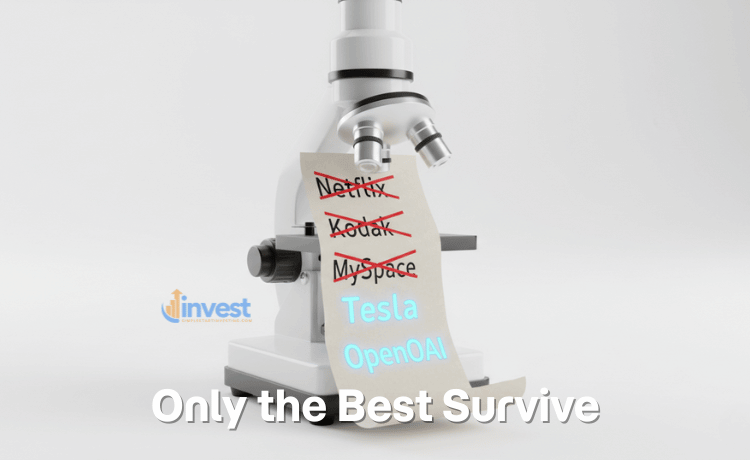
The list of 500 companies is not permanent. It changes constantly. If a company stops growing or starts losing money, it gets “kicked out” of the index. A newer, faster-growing company like Nvidia or Tesla might then take its place. This is a built-in “survival of the fittest” mechanism that helps the index stay strong over decades.
The Beginner’s Misconception
New investors often think that once a company is in the S&P 500, it stays there forever. They worry that if a few companies fail, the whole index will crash.
The Reality Check
The beauty of the is that it is self-cleaning. Bad companies are replaced by good ones. This is why the index has historically gone up over very long periods—it is always comprised of the 500 strongest players at that specific moment in time.
How the Index Works: The Weighting System
One of the most confusing parts for beginners is how the index is calculated. You might wonder, “Does every company have the same impact on the index?” The answer is no. The S&P 500 uses something called “Market-Cap Weighting.”
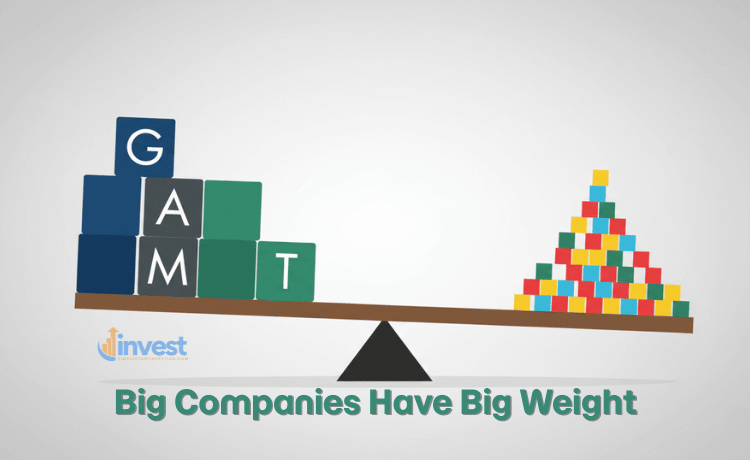
Think of it like a giant team. On this team, the biggest and strongest players have more influence over the final score than the smaller players. In the S&P 500, the “size” of a company is determined by its total market value (all its shares multiplied by the current price of one share).
Explaining the Logic
If a massive company like Microsoft sees its stock price go up by ten percent, it will pull the entire S&P 500 index upward much more than if a smaller member of the list did the same thing.
For example, currently, the top ten companies—including names like Nvidia, Microsoft, and Apple—make up a large portion of the index’s total value. This means the “Big Tech” sector often has the loudest voice in determining whether the index goes up or down on a given day.
The Beginner’s Misconception
A common mistake is thinking that if 251 companies go up and 249 go down, the index must go up because “more than half” did well.
The Reality Check
Because of weighting, it is possible for the index to go down even if more than half of the companies had a good day. If the ten biggest companies all have a terrible day, they can “outvote” the 490 smaller companies. When you invest in the S&P 500, you are leaning heavily on the success of America’s largest corporate giants.
Why Is Everyone Obsessed With the S&P 500?
There are thousands of stocks you could buy, but the S&P 500 remains the most famous. Why? Because it is the “benchmark.”
In the world of investing, everyone is trying to “beat the market.” When a professional fund manager or a neighbor tells you they had a “great year” in the stock market, the first question you should ask is: “Did you do better than the S&P 500?”
If the S&P 500 went up by ten percent this year, but your hand-picked stocks only went up by five percent, you actually “underperformed.” You would have been better off just buying an index fund and doing nothing.
Diversification Made Simple
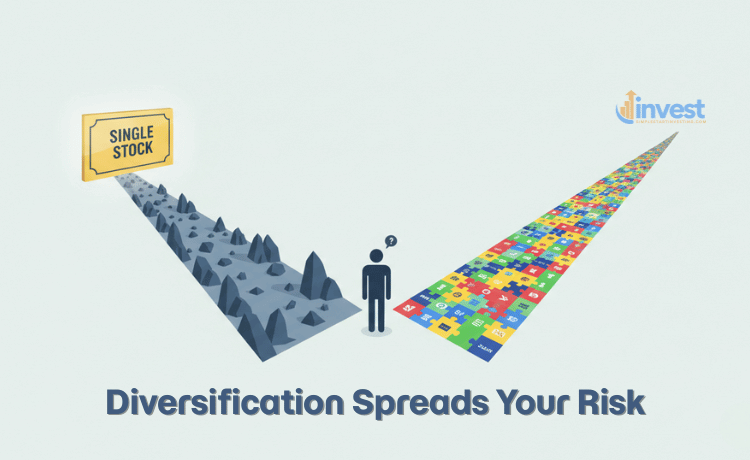
The biggest draw for beginners is “diversification.” If you put all your money into one stock, say a small biotech company, and that company fails, you lose everything. But if you put your money into an S&P 500 fund, your risk is spread across 500 different businesses in 11 different sectors (like technology, healthcare, and energy). It is very unlikely that all 500 of America’s largest companies will go to zero at the same time.
The Beginner’s Misconception
Newcomers often believe they need to spend hours researching individual companies to make money. They think “passive” investing in an index is for people who aren’t serious.
The Reality Check
History shows that even the most brilliant professional investors struggle to beat the S&P 500 over 10 or 20 years. For a beginner, the most logical move is often to join the index rather than try to outsmart it. It allows you to benefit from the growth of the entire US economy without needing to be an expert in any single industry.
How to Start Investing in the S&P 500
Now that you know what it is, how do you actually put your money into it? As we mentioned earlier, you can’t buy the “index” itself, but you can buy funds that track it. There are two main ways for beginners in the US:
1. Exchange-Traded Funds (ETFs)
These are very popular. You buy them through a brokerage account (like Fidelity, Vanguard, or Charles Schwab) just like a regular stock. They have ticker symbols you can search for. Some of the most famous ones are SPY, VOO, and IVV.
- The Benefit: They are very “cheap” to own. The fees (called expense ratios) are often near zero.
2. Mutual Funds
These are similar but usually bought directly from a fund provider or through a 401k at work. An example is the Vanguard 500 Index Fund.
- The Benefit: You can often set up automatic monthly investments for a set dollar amount, such as 100 dollars every payday.
A Simple Math Example
If you decide to invest 100 dollars into an S&P 500 ETF, the fund manager takes that 100 dollars and spreads it out. Based on the weighting we discussed, about seven dollars might go toward Nvidia, six dollars toward Microsoft, and so on, down to just a few pennies for the smallest companies on the list. You own a piece of everything with one single click.
The Beginner’s Misconception
Many people wait until they have “enough money” (like 5,000 dollars) before they start. They think they can’t afford to buy into the S&P 500 yet.
The Reality Check
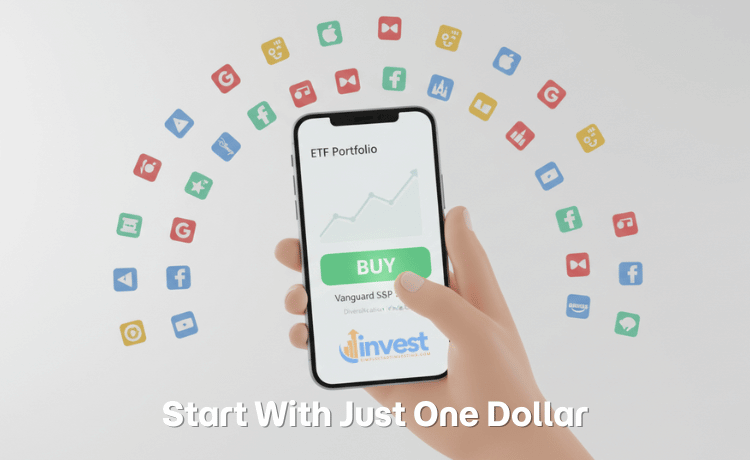
In today’s market, you can start with as little as one dollar using “fractional shares.” Most major US brokers allow you to buy a tiny piece of an ETF. The best time to start is when you have your first extra dollar, as the “magic” of this investment comes from letting it grow over many years.
The Risks: What No One Tells You
While the S&P 500 is a great tool, it is not a “savings account.” It does not guarantee that your money will grow every single year.
Market Volatility
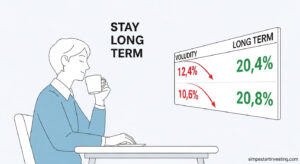
The stock market moves in cycles. There will be years where the S&P 500 drops by ten percent, twenty percent, or even more. This is normal. In 2008 and 2020, the market saw significant temporary drops. However, in the US market, the index has historically recovered and reached new highs every single time.
Concentration Risk
Because the index is market-cap weighted, it is currently very “top-heavy.” This means that if the five biggest tech companies have a bad year, the entire index will suffer, even if the other 495 companies are doing fine. You are more exposed to the “Big Tech” sector than you might realize.
Summary: The Heartbeat of Your Portfolio
The is the gold standard for a reason. It offers a simple, low-cost way to own the 500 most powerful companies in the world. It filters out the losers and keeps the winners for you automatically.
As you start your investing journey, remember that the S&P 500 is a long-term play. It is not a way to get rich overnight, but it is one of the most proven ways to grow your wealth steadily over decades.
By understanding that you are buying into the collective success of the American economy, you can ignore the daily noise of the news and focus on your long-term goals. The “heartbeat of Wall Street” has been thumping for a long time, and for the patient beginner, it is often the best place to start.
Disclaimer: This content is for educational purposes only and does not constitute financial advice. Investment regulations and market conditions can change; please check current IRS and SEC guidelines or consult with a qualified professional before making investment decisions.