If you are dreaming of buying your first home in the United States, you have likely heard the term Private Mortgage Insurance, or PMI, whispered in hushed, frustrated tones. For many new buyers, PMI feels like an extra tax or a penalty for not having a massive pile of cash ready for a down payment. But what exactly is it, and is it really as bad as people say?
In this guide, we will pull back the curtain on Private Mortgage Insurance. We will explain how it works, why it exists, and most importantly, how you can eventually stop paying it. Whether you are browsing listings on Zillow or talking to a lender at a big bank like JPMorgan Chase or Wells Fargo, understanding PMI will help you save thousands of dollars over the life of your loan.
What is Private Mortgage Insurance (PMI)?
In the simplest terms, Private Mortgage Insurance is a type of insurance that protects the lender—not you—if you stop making your mortgage payments. It is typically required on conventional loans when you make a down payment of less than 20 percent of the home’s purchase price.
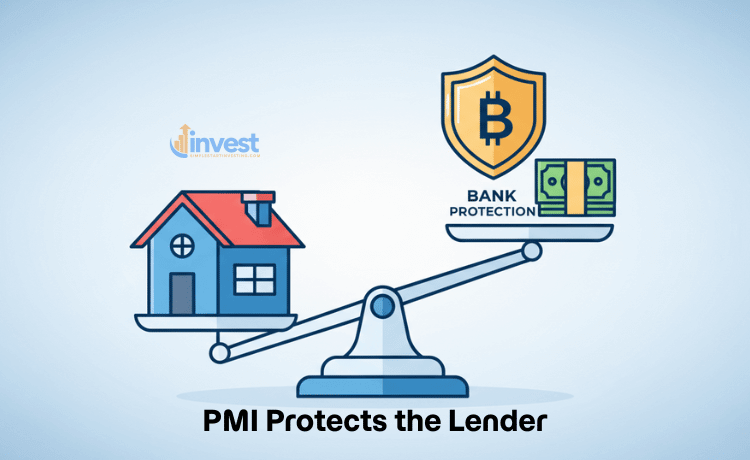
Think of it as a safety net for the bank. When you put down a small amount of money, like 3 percent or 5 percent, the bank feels more “at risk.” If you can’t pay the mortgage and the bank has to take the house back through foreclosure, they might lose money. Your PMI payments go toward an insurance policy that covers the bank’s potential losses in that specific scenario.
Why do lenders demand PMI?
Lenders use a metric called the Loan-to-Value (LTV) ratio to measure risk. If you buy a house for 400,000 dollars and put down 80,000 dollars (which is 20 percent), your loan is 320,000 dollars. In this case, your LTV is 80 percent. Banks generally feel safe at this level.
However, if you only put down 12,000 dollars (which is 3 percent), your loan is 388,000 dollars. Now your LTV is 97 percent. Because you have very little “skin in the game,” the bank requires Private Mortgage Insurance to offset that high LTV risk.
The 4-Step Deep Dive: Who Does PMI Actually Protect?
To truly understand PMI, we need to clear up the biggest misconception held by first-time homebuyers.
1. The Simple Explanation Many people hear the word “insurance” and assume it works like car insurance or health insurance—that if something goes wrong, the insurance pays them. In the case of Private Mortgage Insurance, this is not true. You pay the bill every month, but if you lose your job and can’t pay your mortgage, the insurance company pays the bank, not you. You still lose the house.
2. A Real-World Example Imagine a buyer named Carlos who buys a 350,000 dollar home in a suburb of Dallas. Carlos only has 17,500 dollars saved for a down payment (5 percent). Because he is not hitting that 20 percent mark, his lender requires him to pay for Private Mortgage Insurance. Every month, Carlos sees an extra 150 dollars added to his mortgage bill. This 150 dollars doesn’t go toward his house balance; it is just a fee to keep the insurance active for the bank.
3. The Common Beginner Mistake New buyers often think, “If I’m paying for this insurance, it will protect my credit or help me if I have a financial emergency.” They might even think it’s a “scam” by the bank to take more money.
4. The Logical Financial Mindset The correct way to look at PMI is as a “convenience fee” for early access to homeownership. Without Private Mortgage Insurance, the bank would simply say “No” to Carlos. He would have to wait years to save up the full 20 percent (70,000 dollars). PMI allows Carlos to buy the home today with much less cash, even though it costs him a bit more each month.
How Much Does PMI Cost? (The Math in Plain English)
You are probably wondering exactly how much this will add to your monthly budget. The cost of Private Mortgage Insurance isn’t a flat fee. It is calculated as a percentage of your total loan amount, usually ranging from 0.5 percent to about 2 percent per year.
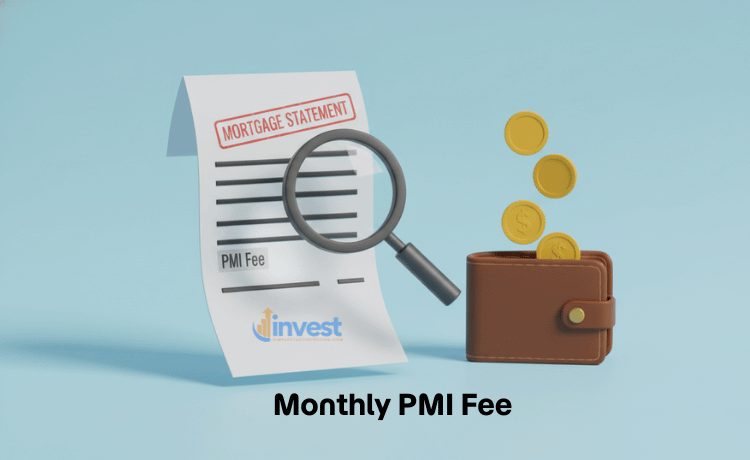
Your specific rate depends on your credit score and how much money you put down. If you have a high credit score (above 740), your PMI will be much cheaper than someone with a score of 620.
Let’s look at an example: Suppose you take out a loan for 300,000 dollars. If your PMI rate is 1 percent, you would multiply 300,000 by 0.01 to get 3,000 dollars. This is your total annual cost. To find the monthly cost, you take that 3,000 dollars and divide it by the 12 months in a year. This results in an extra 250 dollars added to your mortgage payment every month.
If your credit is excellent and your rate is only 0.5 percent, your annual cost for that same loan would be 1,500 dollars. Dividing that by 12 months gives you a much more manageable 125 dollars per month.
The Different Ways You Can Pay for PMI
Most people assume Private Mortgage Insurance is always a monthly fee, but there are actually a few different ways lenders can structure it.
Monthly PMI
This is the most common version. The premium is added to your monthly mortgage payment. You’ll see it listed as a separate line item on your closing disclosure. The benefit here is that you don’t have to pay a large lump sum at the start.
Single-Premium PMI
With this option, you pay the entire cost of the insurance upfront at the time of closing. You can pay this in cash, or sometimes the lender will allow you to fold it into your total loan amount. While this makes your monthly payment lower, it means you’ll pay interest on that insurance amount if you add it to the loan.
Lender-Paid Mortgage Insurance (LPMI)
This sounds like a great deal—the lender pays the insurance! But be careful. In exchange for “paying” your PMI, the lender will usually give you a slightly higher interest rate on your mortgage. Even after you reach 20 percent equity, you are stuck with that higher interest rate for the life of the loan (unless you refinance).
The 4-Step Deep Dive: Is PMI Permanent?
Another fear many beginners have is that once they start paying for Private Mortgage Insurance, they will be stuck with it forever.
1. The Simple Explanation Unlike some government loans (like FHA loans), PMI on a conventional mortgage is not forever. It is designed to fall away once you have built up enough “equity” in your home. Equity is just a fancy word for the portion of the home you actually own outright.
2. A Real-World Example Sarah buys a house for 250,000 dollars with 10 percent down. Her loan starts at 225,000 dollars. A few years later, through her monthly payments, she has paid the balance down to 200,000 dollars. At the same time, the neighborhood has become popular, and her home is now worth 300,000 dollars. Because 200,000 is much less than 80 percent of 300,000, Sarah can now ask her bank to cancel her Private Mortgage Insurance.
3. The Common Beginner Mistake Many homeowners assume the bank will automatically stop charging them the moment they hit 20 percent equity. They wait for the bill to go down on its own and are shocked when the fee stays there for months or years longer than necessary.
4. The Logical Financial Mindset You must be proactive. While there are laws that require banks to eventually stop the insurance, you can often get it removed much sooner if you keep track of your home’s value and your loan balance. Being your own advocate can save you hundreds of dollars.
PMI vs. MIP: Understanding the FHA Difference
If you are looking at an FHA loan (a popular government-backed loan for beginners), you won’t technically pay “PMI.” Instead, you pay Mortgage Insurance Premium (MIP).
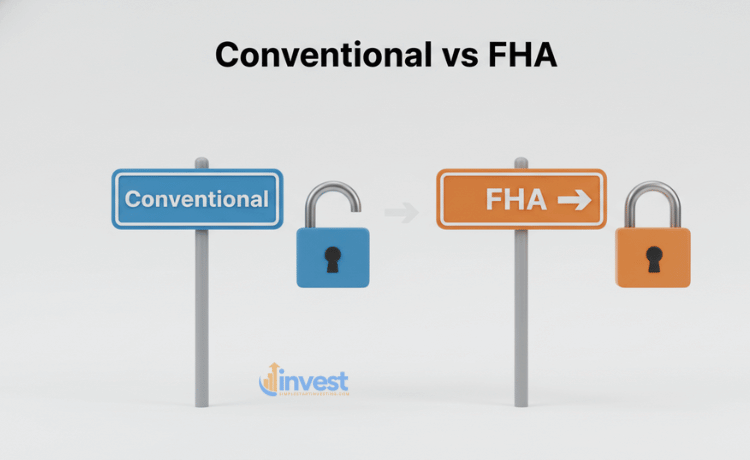
While they serve the same purpose (protecting the lender), they work very differently:
- Duration: On a conventional loan, Private Mortgage Insurance can be canceled. On an FHA loan with a small down payment, you usually have to pay MIP for the entire 30-year life of the loan.
- Upfront Costs: FHA loans always require an upfront payment (usually 1.75 percent of the loan) plus a monthly fee. Conventional PMI usually only has the monthly fee.
If you have a choice, many experts suggest a conventional loan if your credit is good, specifically because you can eventually “fire” your Private Mortgage Insurance without having to refinance your whole house.
How to Remove Private Mortgage Insurance
There are three main paths to getting rid of PMI once you have it. Understanding these “exit strategies” is vital for any new investor or homeowner.

1. Request Cancellation (The 80% Rule)
Under the Homeowners Protection Act, you have the right to request that your lender cancel PMI once your loan balance reaches 80 percent of the original value of your home. You must have a good payment history (no late payments) and the request must be in writing.
2. Automatic Termination (The 78% Rule)
If you forget to ask, the law requires the lender to automatically stop the PMI on the date your loan is scheduled to reach 78 percent of the original value. This is based on the original payment schedule. If you made extra payments, you should still follow the “Request Cancellation” path to get it done faster.
3. Final Termination
If you are still paying PMI by the time you reach the midpoint of your loan term (for example, year 15 of a 30-year mortgage), the lender must terminate it, even if you haven’t quite reached the 78 percent mark.
The 4-Step Deep Dive: Using Appreciation to Kill PMI
This is the “secret” many savvy homeowners use to stop paying for Private Mortgage Insurance years ahead of schedule.
1. The Simple Explanation You reach 20 percent equity in two ways: by paying down your loan or by your house value going up. If the market is hot and your house is suddenly worth a lot more, your “percentage of ownership” increases even if you haven’t made any extra payments.
2. A Real-World Example Let’s look at a buyer in a fast-growing city like Phoenix or Austin. They bought a house for 400,000 dollars with 5 percent down (a 380,000 dollar loan). Two years later, houses in their neighborhood are selling for 500,000 dollars. Even though their loan is still around 370,000 dollars, that balance is now only 74 percent of the home’s new value (500,000). They can hire a professional appraiser to prove this to the bank and potentially cancel their PMI immediately.
3. The Common Beginner Mistake Beginners think they have to wait 10 years for the “math” of their payments to reach the 20 percent mark. They ignore the news about rising home prices because they think it only matters when they want to sell.
4. The Logical Financial Mindset Treat your home like an investment. Check your home’s estimated value once a year. If prices have jumped, call your lender and ask about their “appraisal-based PMI removal” policy. Paying 500 dollars for an appraisal is a smart move if it saves you 150 dollars every month for the next five years.
Strategies to Avoid PMI from the Start
If you haven’t bought your home yet, you might be able to avoid Private Mortgage Insurance entirely without having the full 20 percent cash in hand.
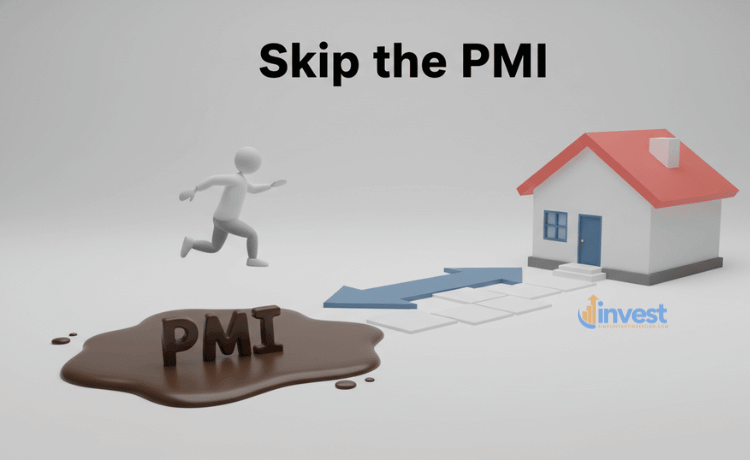
The Piggyback Loan (80/10/10)
This is a clever strategy where you take out two loans at once.
- The first mortgage is for 80 percent of the home’s price (no PMI required!).
- The second mortgage is for 10 percent.
- You provide the final 10 percent as a down payment. Because the main loan is only at 80 percent, there is no PMI. However, the second loan usually has a higher interest rate, so you have to do the math to see if the total cost is actually lower.
Specialized No-PMI Loans
Some credit unions (like Navy Federal) or specific “first-time homebuyer” programs offer loans with low down payments and no Private Mortgage Insurance. These often have slightly higher interest rates to cover the risk, similar to Lender-Paid PMI.
VA and USDA Loans
If you are a veteran or active-duty service member, a VA loan allows you to buy a home with 0 percent down and no monthly insurance fees. Similarly, USDA loans for rural areas have no PMI, though they do have their own specific fees.
The 2026 Tax Advantage: Is PMI Tax Deductible?
There is some good news for homeowners this year. Under the most recent tax updates (including the One Big Beautiful Bill Act), the deduction for mortgage insurance premiums has been made permanent for many taxpayers starting this year.
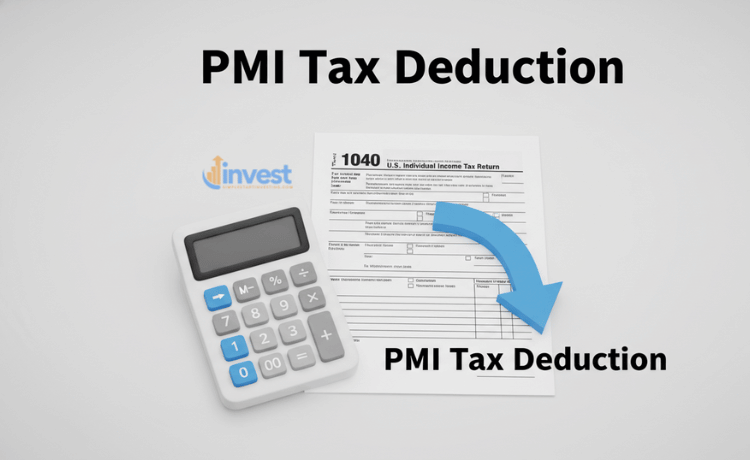
This means if you itemize your deductions on your tax return, you may be able to deduct the amount you paid for Private Mortgage Insurance from your taxable income. However, there are income limits. If your household earns more than a certain amount, this deduction may be reduced or eliminated.
Important Note: Tax laws are complex and can change; please check the current IRS guidelines or consult a tax professional before filing.
Summary: How to Handle PMI Like a Pro
Private Mortgage Insurance doesn’t have to be a permanent burden. It is a tool that helps you get into a home sooner, provided you have a plan to get rid of it.
- Don’t fear it: If it’s the only way to buy a home in a rising market, it might be worth the cost.
- Monitor your equity: Keep an eye on your home’s value and your loan balance.
- Be proactive: Call your lender the moment you think you have 20 percent equity.
- Consider a Conventional Loan: It gives you the most flexibility to remove the insurance fee without refinancing.
By understanding the rules of Private Mortgage Insurance, you take control of your housing costs and move one step closer to true financial independence.
Disclaimer: This content is for educational purposes only and does not constitute financial, legal, or tax advice. Mortgage regulations and tax laws can change; always consult with a qualified professional regarding your specific situation.