Imagine you are planning a massive road trip across the United States, from New York to California. At the start of the trip, you are full of energy, driving fast, and taking scenic detours. But as you get closer to your destination, you slow down, become more cautious, and focus entirely on arriving safely.
In the world of investing, Target Date Funds act as your professional driver for this journey. They are designed for people who want to build wealth for retirement without having to manage every single turn of the steering wheel.
Whether you just opened your first 401(k) at work or you are looking for a simple way to enter the stock market, understanding how Target Date Funds work can be the difference between a stressful retirement and a comfortable one. Let’s break down everything you need to know about this “set-it-and-forget-it” strategy.
What Exactly is a Target Date Fund?
At its core, a Target Date Fund is a type of mutual fund or exchange-traded fund (ETF) that automatically changes its mix of investments over time. The “target date” is the year you plan to retire or stop working.
When you buy into one of these funds, you aren’t just buying one stock like Apple (AAPL) or Tesla (TSLA). Instead, you are buying a “basket” that contains thousands of different stocks and bonds. The unique part is that the fund is programmed to grow more conservative as you get older.
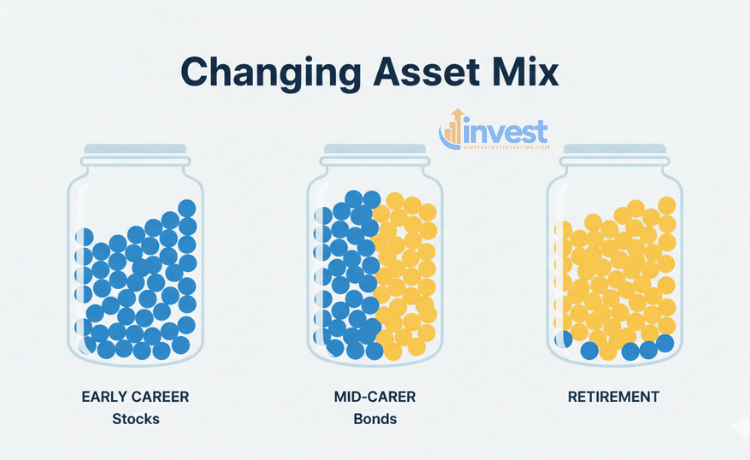
The Simple Explanation Think of it like a “smart” investment bucket. When you are young and have 30 years until retirement, the bucket is mostly filled with stocks because you want high growth. As the years pass, a professional manager slowly swaps some of those stocks for safer bonds to protect the money you’ve already made.
A Real-World Example Let’s say you are 25 years old today and plan to retire around age 65. You might choose a “Target Date 2065” fund. This year, the fund might be 90 percent stocks (companies like Amazon or Walmart) and 10 percent bonds. By the time the year 2060 rolls around, that same fund might have shifted to 40 percent stocks and 60 percent bonds to reduce the risk of a market crash right before you retire.
The Common Beginner Misconception Many beginners think that the “date” in the name is the day the fund expires or the day they must take all their money out. They worry that if they pick a 2050 fund, the account will close on January 1st, 2050.
The Correct Logic The date is simply a label to help the fund manager know your timeline. The fund continues to exist long after that date. It just reaches its most “conservative” state at that point. You can keep your money in it as long as you want; the date is just the finish line for the fund’s aggressive growth phase.
Understanding the “Glide Path” Without the Math
The most important term you will hear regarding Target Date Funds is the “glide path.” While it sounds like something from an aviation manual, it is actually a very simple financial concept.
The glide path describes the gradual shift in how your money is invested. Imagine an airplane coming in for a landing. When it is high in the sky, it moves fast. As it approaches the runway, it slows down and levels out for a gentle touchdown. Your investment risk follows this same path.

How it moves over time
Early in your career, the fund focuses on “accumulation.” This means it takes more risks to try and grow your 1,000 dollars into 10,000 dollars. It buys shares in growing companies across the globe.
As you get within 10 years of your target date, the fund enters the “preservation” phase. The goal shifts from “making as much as possible” to “not losing what you have.” The fund manager reduces the amount of volatile stocks and increases the amount of stable government bonds or cash equivalents.
Why this matters for your peace of mind
Market crashes are a normal part of investing. If the stock market drops by 20 percent when you are 25, it doesn’t matter much because you have 40 years for it to recover. But if the market drops 20 percent the year before you retire, it could be devastating. The glide path is designed to prevent that late-stage disaster automatically.
Why Target Date Funds Are Perfect for Beginners
The biggest hurdle for new investors is “analysis paralysis.” There are thousands of stocks, thousands of bonds, and hundreds of different strategies. Most people get overwhelmed and end up doing nothing at all. Target Date Funds solve this by offering three major benefits.
1. Instant Diversification
Diversification is a fancy word for “not putting all your eggs in one basket.” If you only bought shares of one tech company and that company had a bad year, your entire savings would drop.
Inside a single Target Date Fund, you typically own:
- Large US companies (like Microsoft or Costco)
- Small US companies
- International companies in Europe and Asia
- Government and corporate bonds
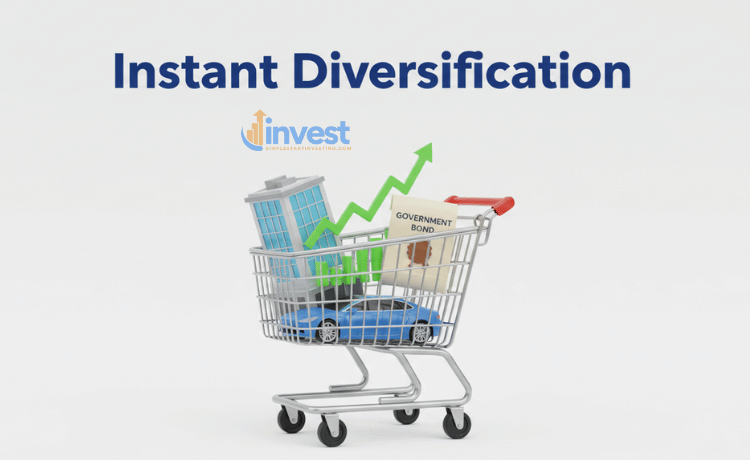
Example: If you invest 500 dollars into a Target Date Fund, that small amount of money is immediately spread across thousands of businesses worldwide. It is mathematically much safer than trying to pick five winning stocks on your own.
2. Automatic Rebalancing
In a normal brokerage account, if your stocks do really well, they might start to make up too much of your portfolio. You would normally have to sell some stocks and buy bonds to keep your risk level correct. This is called rebalancing.
With a Target Date Fund, the fund manager does this for you every single day. If the stock market has a huge week, the manager sells a tiny bit of those gains and moves them into bonds to keep the fund on its “glide path.” You never have to log in and do the math yourself.
3. Low Maintenance
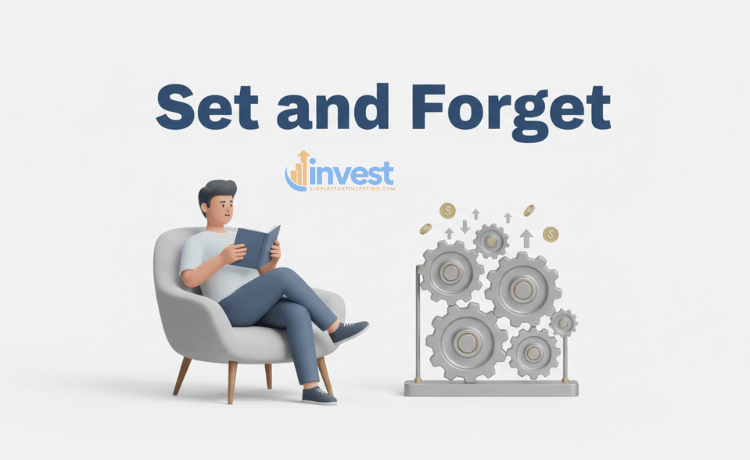
This is the ultimate “set-it-and-forget-it” tool. You can set up an automatic contribution from your paycheck into a 2055 or 2060 fund and not look at it for a decade. The fund will continue to adjust itself as you age.
The Common Beginner Misconception New investors often think they need to “help” the fund by buying other things alongside it. They might buy a Target Date Fund and then also buy a separate Tech ETF or a Gold fund.
The Correct Logic A Target Date Fund is designed to be your entire portfolio. Adding more things often ruins the careful balance the fund manager has created. It’s like adding extra salt to a meal that a professional chef has already perfectly seasoned—you usually just end up making it worse.
The Two Types: “To” vs. “Through”
When researching Target Date Funds, you might notice a small but vital difference in how they are managed once they hit the target year.
The “To” Strategy
A “To” retirement fund reaches its most conservative point exactly on the target date. If you pick a 2030 fund, by the time 2030 arrives, the fund will have the highest amount of bonds it will ever have. It is designed for people who plan to withdraw a large chunk of money or buy an annuity right when they retire.
The “Through” Strategy
A “Through” retirement fund continues to adjust even after the target date has passed. It assumes you will be retired for 20 or 30 years and still need some growth to keep up with inflation. It stays a little more “aggressive” for longer.
A Real-World Example Imagine two people retiring this year.
- Person A has a “To 2025” fund. It is very heavy in cash and short-term bonds because it wants to be 100 percent safe on retirement day.
- Person B has a “Through 2025” fund. It still holds about 30 or 40 percent stocks because it wants the money to keep growing slowly to cover bills in the year 2040.
Common Beginner Misconception Many people assume all funds with the same date are the same. They think a “Vanguard 2050” fund is identical to a “Fidelity 2050” fund.
The Correct Logic Every company has a different “recipe” for their glide path. Some are more aggressive, and some are more conservative. It is important to look at the “Asset Allocation” (the mix of stocks vs. bonds) to make sure it matches your personal comfort with risk.
How to Choose the Right Target Year
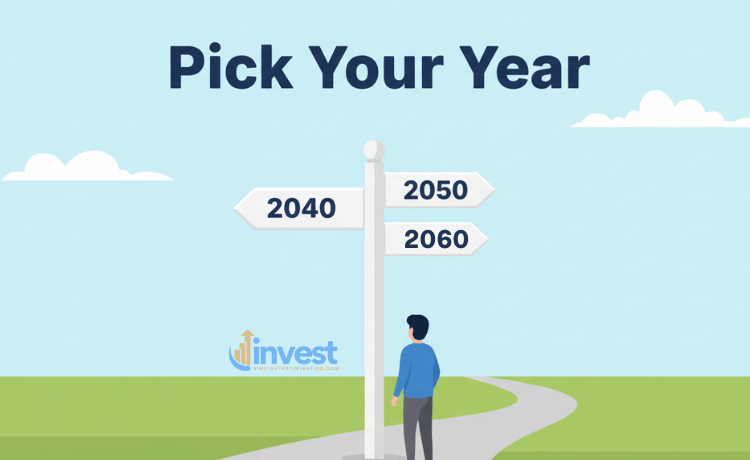
Choosing a fund is the easiest part of this process, but there is a small trick to it. Most experts suggest choosing the fund year closest to when you will turn 65.
The Simple Calculation (By Words) Take the year you were born and add 65 to it. If you were born in 1995, adding 65 gives you the year 2060. You would look for a “Target Date 2060” fund.
However, you can adjust this based on your “Risk Tolerance.”
- If you are aggressive: You might choose a date 5 years later than your retirement (e.g., choosing 2065 instead of 2060). This keeps your money in stocks for a longer period.
- If you are conservative: You might choose a date 5 years earlier (e.g., 2055 instead of 2060) to start moving into safe bonds sooner.
The Common Beginner Misconception Beginners often feel they are “locked in” to the date they choose. They worry that if they choose a 2050 fund but decide to retire in 2045, they will face penalties or be unable to get their money.
The Correct Logic You can sell your shares of a Target Date Fund at any time, just like any other mutual fund. The date is a guide for the manager, not a legal contract for you. If your plans change, you can simply sell the 2050 fund and buy a different one, or just keep it.
Costs and Fees: What to Watch For
While Target Date Funds are convenient, they are not free. You pay an “expense ratio,” which is a yearly fee taken as a percentage of your investment.
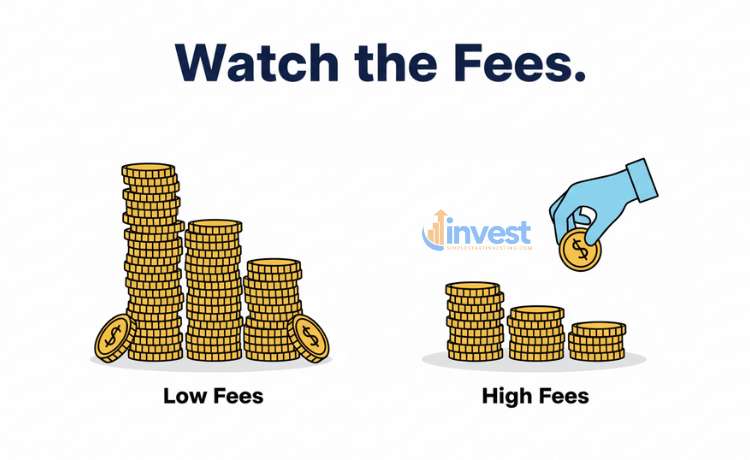
Because these funds are actually “funds of funds” (meaning they hold other funds inside them), some companies used to charge double fees. Thankfully, that is less common now, but you still need to be careful.
A Simple Fee Example Imagine you have 10,000 dollars invested.
- Fund A has an expense ratio of 0.10 percent. This means you pay 10 dollars a year for the management.
- Fund B has an expense ratio of 0.75 percent. This means you pay 75 dollars a year.
Over 30 years, that 65-dollar difference, compounded by lost growth, can add up to tens of thousands of dollars missing from your retirement nest egg.
Where to look: Always look for “Index-based” Target Date Funds. These usually have much lower fees because they use computers to track the market rather than high-paid human stock-pickers. Large providers like Vanguard, Schwab, and Fidelity offer very low-cost index versions.
Are Target Date Funds Right for You?
To decide if this strategy fits your life, ask yourself how much time you want to spend thinking about the stock market.
These funds are great if:
- You want a “hands-off” approach.
- You don’t want to learn how to rebalance a portfolio.
- You want to avoid the emotional stress of choosing individual stocks.
- You want a professional to manage your risk as you get older.
These funds might not be for you if:
- You enjoy researching individual companies like JPMorgan (JPM) or Nvidia (NVDA).
- You have a very complex tax situation that requires specific bond types.
- You want to be significantly more aggressive or conservative than the “average” person your age.
Taking the First Step
If you have a 401(k) or 403(b) through your employer, there is a very high chance that a Target Date Fund is already your “default” investment. If you haven’t looked at your account since you started your job, your money might already be working for you in one of these funds.
If you are opening an Individual Retirement Account (IRA) on your own, simply search for “Target Date” followed by your estimated retirement year.
Summary Checklist for Beginners:
- Find your year: Add 65 to your birth year.
- Check the fees: Look for an expense ratio below 0.50 percent if possible (lower is always better).
- Check the mix: Look at the “Holdings” to see if the stock-to-bond ratio feels right for you.
- Stay the course: The beauty of this strategy is that it works best when you leave it alone.
Investing doesn’t have to be a second full-time job. By using a Target Date Fund, you are hiring a professional “pilot” to handle the technical details of your flight to retirement, leaving you free to enjoy the journey.
Disclaimer: This content is for educational purposes only and does not constitute financial, legal, or tax advice. Investment involve risk, and past performance does not guarantee future results. Please consult with a qualified financial professional before making any investment decisions.