
Imagine it is the day after a wonderful holiday season. You had a great time with your family, the gifts were a hit, and the dinner was perfect. But then, you open your banking app and see a massive credit card balance staring back at you. That “holiday hangover” isn’t from the eggnog; it is from the realization that you have to spend the next six months paying off what you spent in December.
This is a cycle many people in the US struggle with every year. We know Christmas is coming on December 25th. We know our car will eventually need new tires. We know our best friend’s wedding is next summer. Yet, when these events arrive, they often feel like financial emergencies that force us to swipe a credit card and hope for the best.

There is a better way to handle these predictable life events without the stress or the debt. It is a simple but powerful strategy called Sinking Funds. In this guide, we are going to break down exactly what they are, why they are different from your emergency fund, and how you can start using them today to take control of your future spending.
What Are Sinking Funds?
At its core, a Sinking Fund is just a fancy name for a very simple concept: saving small amounts of money over time for a specific, future expense. Think of it as a “planned spending” bucket. You are essentially telling your money exactly where to go before the bill even arrives.
The term “sinking fund” originally came from the corporate world, where businesses would set aside money to pay off a debt or replace a large asset. However, in personal finance, it has become the gold standard for managing non-monthly expenses. Instead of being surprised by a 600-dollar car repair or a 2,000-dollar vacation, you “sink” a little bit of money into a dedicated account every single month.
By the time the event happens, the money is already sitting there, waiting to be spent. You don’t have to worry about where the money will come from or how it will affect your ability to pay rent. You have already done the hard work of saving, one month at a time.
Why Beginners Often Get Sinking Funds Wrong
When you are first starting your financial journey, it is easy to mix up different types of savings. A common mistake is thinking that your Savings Account is one big pile of money that can be used for anything. If you have 5,000 dollars in a single account, it might look like you are doing great.
However, if you haven’t assigned a “job” to those dollars, you might accidentally spend your “new roof” money on a “spontaneous weekend trip.” Beginners often fall into the trap of mental accounting—trying to remember in their head that part of the money is for taxes and part is for a new laptop. This almost always leads to overspending.
Another huge misconception is the belief that “whatever is left over at the end of the month” will go into savings. For most people, there is rarely anything left over unless they make a plan. Sinking funds turn that around by making your future goals a “bill” that you pay to yourself every month.
Sinking Fund vs. Emergency Fund: The Crucial Difference
This is the area where most people get confused. They think, “I have an emergency fund, so why do I need sinking funds?” Understanding the difference between these two is the secret to a stress-free financial life.
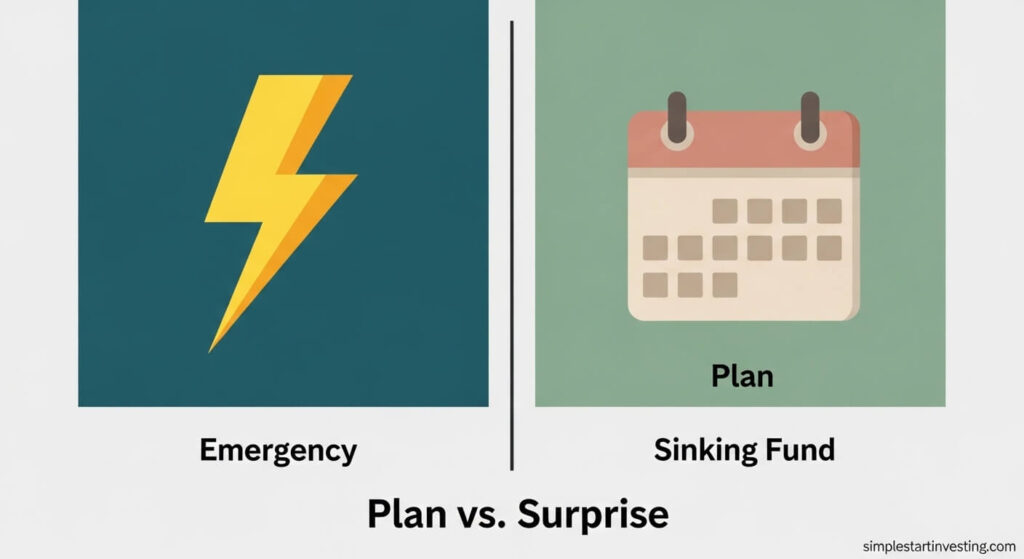
An Emergency Fund is for the “Uh-oh” moments in life—the things you cannot predict. This includes a sudden job loss, a major medical crisis, or an unexpected flight home for a family emergency. You hope you never have to use this money, but it is there as a safety net to keep you from falling into debt when life goes sideways.
A Sinking Fund, on the other hand, is for the “I know this is coming” moments. These are expected expenses that just don’t happen every single month. Christmas is not an emergency; it happens every December. Your car needing an oil change is not an emergency; it is part of owning a vehicle. Your annual Amazon Prime or Netflix subscription is not a surprise.
If you use your emergency fund to pay for a vacation or a new set of tires, you are leaving yourself vulnerable. When a real emergency actually happens, your safety net will be gone. Sinking funds protect your emergency fund by covering the predictable bumps in the road.
The Psychological Power of Sinking Funds
There is a huge psychological benefit to this method that goes beyond just the numbers. When you have a dedicated sinking fund for something like a vacation, you can spend that money with zero guilt.
Usually, when we go on a trip, there is a little voice in the back of our heads wondering if we can really afford that fancy dinner or that extra souvenir. But when you have been saving 200 dollars a month specifically for that trip, and you have the full amount ready in cash, that voice goes silent.

You have given yourself permission to spend. You aren’t “stealing” from your rent money or your retirement. You are simply executing a plan you made months ago. This shifts your relationship with money from one of constant anxiety to one of intentionality and freedom.
Common Sinking Fund Categories for Life Events
You might be wondering what exactly you should be saving for. While everyone’s life is different, here are some of the most common categories that people in the US use to stay on track.
Holidays and Gifts
This is the most popular sinking fund for a reason. Between gifts, travel, and special meals, the end of the year is expensive. By spreading that cost over twelve months, you can enjoy the holidays without a “bill hangover” in January. This can also include birthdays, anniversaries, and weddings you plan to attend.
Home and Car Maintenance
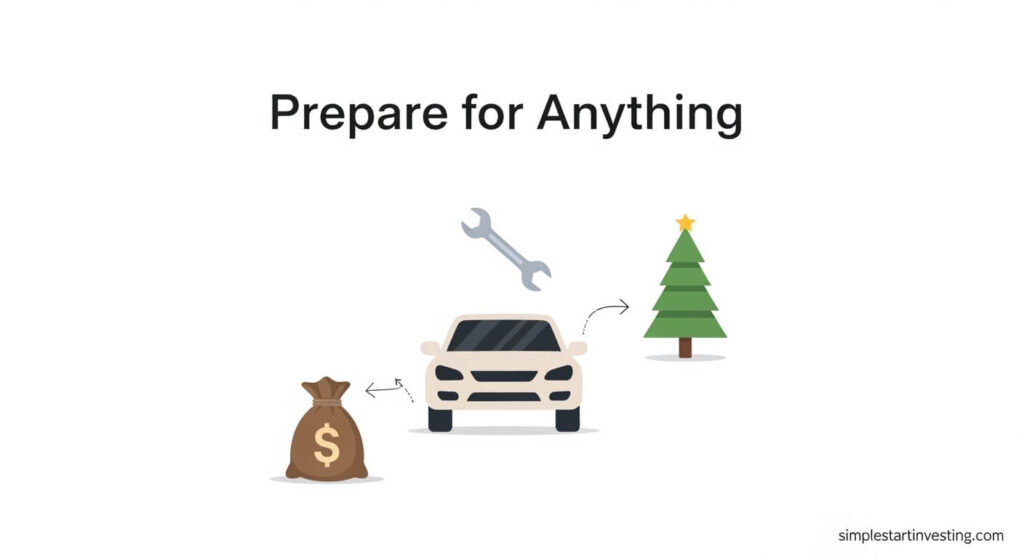
If you own a home or a car, things will break. It is a fact of life. Setting aside a small amount each month for things like oil changes, new tires, or a leaky faucet means you won’t have to scramble when the check engine light comes on.
Annual Subscriptions and Taxes
Many services offer a discount if you pay annually rather than monthly. This includes car insurance, gym memberships, or professional certifications. Additionally, if you are a freelancer or have a side hustle, you should have a sinking fund for your quarterly or annual taxes.
Travel and Vacations
Whether it is a big international trip or just a long weekend at the beach, travel is much more enjoyable when it is pre-paid. You can have a general “Travel” fund or separate funds for specific trips you are planning.
Big Purchases (The “Upgrade” Fund)
Are you still using a laptop from ten years ago? Is your phone screen cracked? Instead of waiting for these items to die completely, you can start a sinking fund to replace them. This allows you to buy the model you actually want when the time is right, rather than being forced to buy the cheapest option available because you didn’t have the cash.
How to Calculate Your Sinking Fund Goals (The Simple Way)
You don’t need a degree in finance or a complex spreadsheet to figure out your sinking fund numbers. It all comes down to a simple logic: How much do I need, and when do I need it?
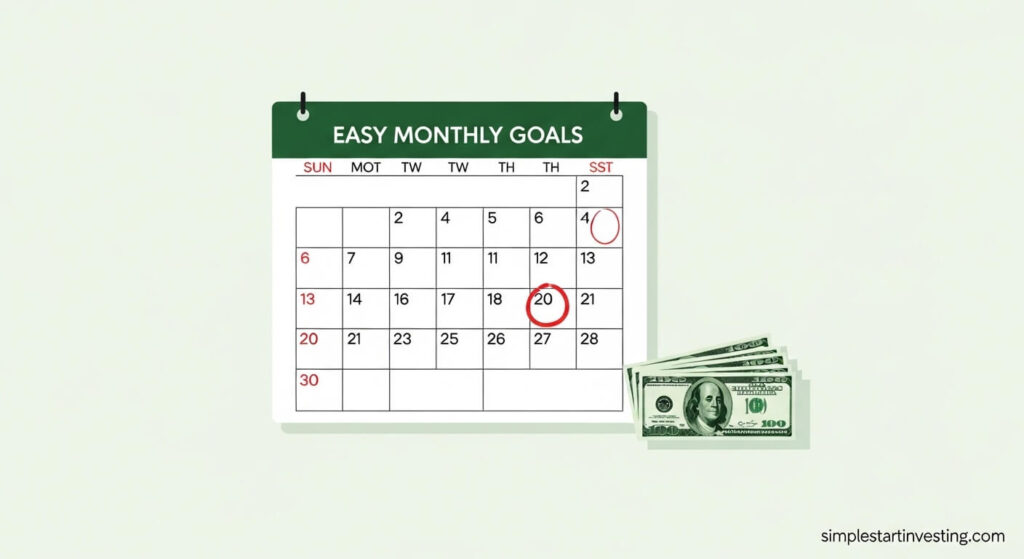
Let’s look at a real-life example. Suppose you want to spend 1,200 dollars on Christmas gifts and travel this year. If it is currently January, you have twelve months until you need that money. To find your monthly goal, you just take that 1,200 dollars and divide it by the twelve months. That means you need to set aside 100 dollars every single month.
If you find that 100 dollars a month is too much for your current budget, you have two choices: you can either find ways to cut expenses elsewhere to make room for that 100 dollars, or you can adjust your goal. Maybe you decide to spend 600 dollars on Christmas instead. In that case, you only need to save 50 dollars a month.
The power of this method is that it forces you to be realistic about your lifestyle. It shows you exactly what your dreams “cost” on a monthly basis, allowing you to make adjustments long before you are standing at a cash register with a credit card.
Where Should You Keep This Money?
Now that you know what you are saving for, where do you put the cash? You want a place that is safe, easy to access, but also separate from your daily spending money.
High-Yield Savings Accounts (HYSA)
The best place for sinking funds is usually a High-Yield Savings Account. These accounts are offered by many online banks and typically pay a much higher interest rate than a traditional brick-and-mortar bank. While the interest won’t make you rich overnight, it is “free money” that helps your savings grow a little faster.
Multiple Accounts or “Buckets”
Some modern banks allow you to create “buckets” or “envelopes” within a single savings account. This is incredibly helpful for sinking funds. You can have one account labeled “Savings,” but inside it, you can see exactly how much is for “Car Repairs,” “Vacation,” and “Christmas.”

If your bank doesn’t offer this, you can simply open multiple savings accounts and nickname them. Having a separate account named “Wedding Guest Fund” makes it much harder to accidentally spend that money on a pizza delivery.
Common Mistakes to Avoid
Even with a great plan, there are a few pitfalls that beginners should watch out for.
One mistake is trying to save for too many things at once. If you try to start ten different sinking funds on a tight budget, you might only be putting 5 dollars into each one. This can feel discouraging because the progress is so slow. It is often better to pick the two or three most important categories and focus on those first.
Another mistake is “borrowing” from one fund to pay for another. If you take money out of your car repair fund to go to a concert, you aren’t actually solving your problem; you are just moving the stress to a later date. Treat each fund as a sacred commitment to your future self.
Finally, don’t forget to review your funds regularly. Life changes! Maybe you decided not to go on that big trip, or maybe you found a way to save money on your car insurance. Check your goals every few months to make sure they still align with what you actually want and need.
The “Sinking Fund” Mindset for Long-Term Success
Using sinking funds is more than just a budgeting trick; it is a mindset shift. It is about moving from a “reactive” life where things happen to you, to a “proactive” life where you are in the driver’s seat.
When you have sinking funds in place, the “emergencies” that used to ruin your month become nothing more than a minor inconvenience. You stop fearing the mailbox because you know you have the money for the bills inside. You stop feeling guilty about spending because you know exactly where every dollar came from.
For a beginner, this is one of the fastest ways to feel “rich” without actually getting a raise. Financial peace doesn’t come from having a million dollars; it comes from knowing that you can handle whatever life throws your way. Sinking funds are the tools that build that confidence.
Start small. Pick one event coming up in the next six months—maybe a birthday or a car registration fee. Calculate how much you need, divide it by the months you have left, and start that fund today. Once you feel the relief of paying for that expense in cash, you will never want to go back to the old way again.
Disclaimer: This content is for educational purposes only and does not constitute financial advice. Financial regulations and bank offerings can change, so always verify current terms with your financial institution or a qualified professional.