Investing in real estate often feels like a dream of “mailbox money.” You buy a property, a tenant moves in, and you collect checks every month. However, many new investors overlook the two most significant risks to their cash flow: having nobody in the house and having the wrong person in the house.
When your rental property sits empty, it is known as a vacancy. Every day the house is vacant is a day you are losing money. It can be tempting to rush and grab the first person who shows interest just to stop the bleeding. But rushing into a lease without proper tenant screening is often a much more expensive mistake than leaving the property empty for a few more weeks.

In the world of US real estate, a “bad tenant” can cost you thousands of dollars in legal fees, property damage, and months of unpaid rent. This guide will help you understand how to balance the urgency of filling a vacancy with the necessity of finding a high-quality tenant to protect your investment.
Understanding the True Cost of a Vacant Property
Most new landlords think of vacancy in terms of a monthly loss. If the rent is 2,000 dollars a month and the house is empty for 30 days, they feel like they lost 2,000 dollars. While that is true, the cost often goes deeper. Even when no one is living there, you still have to pay the mortgage, the property taxes, the insurance, and the utilities to keep the pipes from freezing or the grass from overgrowing.

If you are paying 1,500 dollars a month for the mortgage and taxes, and the house stays empty, you aren’t just “not making” 500 dollars in profit; you are actively losing 1,500 dollars out of your personal savings. This pressure is why many beginners make poor decisions. They see their bank account shrinking and decide to lower their standards just to get a signature on a lease.
However, a professional investor looks at vacancy as a cost of doing business. It is better to lose one month of rent (2,000 dollars) than to deal with an eviction that could take six months and cost 10,000 dollars in lost income and legal costs. Patience during the tenant screening phase is actually a form of insurance for your wealth.
Why a Bad Tenant Is More Expensive Than No Tenant
It sounds counterintuitive, but an empty house is usually safer for your finances than a house occupied by a destructive or non-paying tenant. In many parts of the United States, eviction laws are complex and can take a long time to navigate.
If a tenant stops paying rent in their second month, you cannot simply change the locks. You must go through a legal process. During this time—which can last three to six months in some states—you receive zero income, yet you still have to pay all the property expenses. On top of that, you might have to pay an attorney 2,000 to 5,000 dollars to handle the paperwork.
When the tenant finally leaves, you may find the property in poor condition. Replacing carpets, painting walls, and fixing broken appliances can easily cost another 3,000 dollars. When you add it all up, a “bad” tenant could cost you the equivalent of an entire year’s worth of profit. This is why tenant screening isn’t just an extra step; it is the most critical part of your risk management strategy.
The Essentials of a Solid Tenant Screening Process
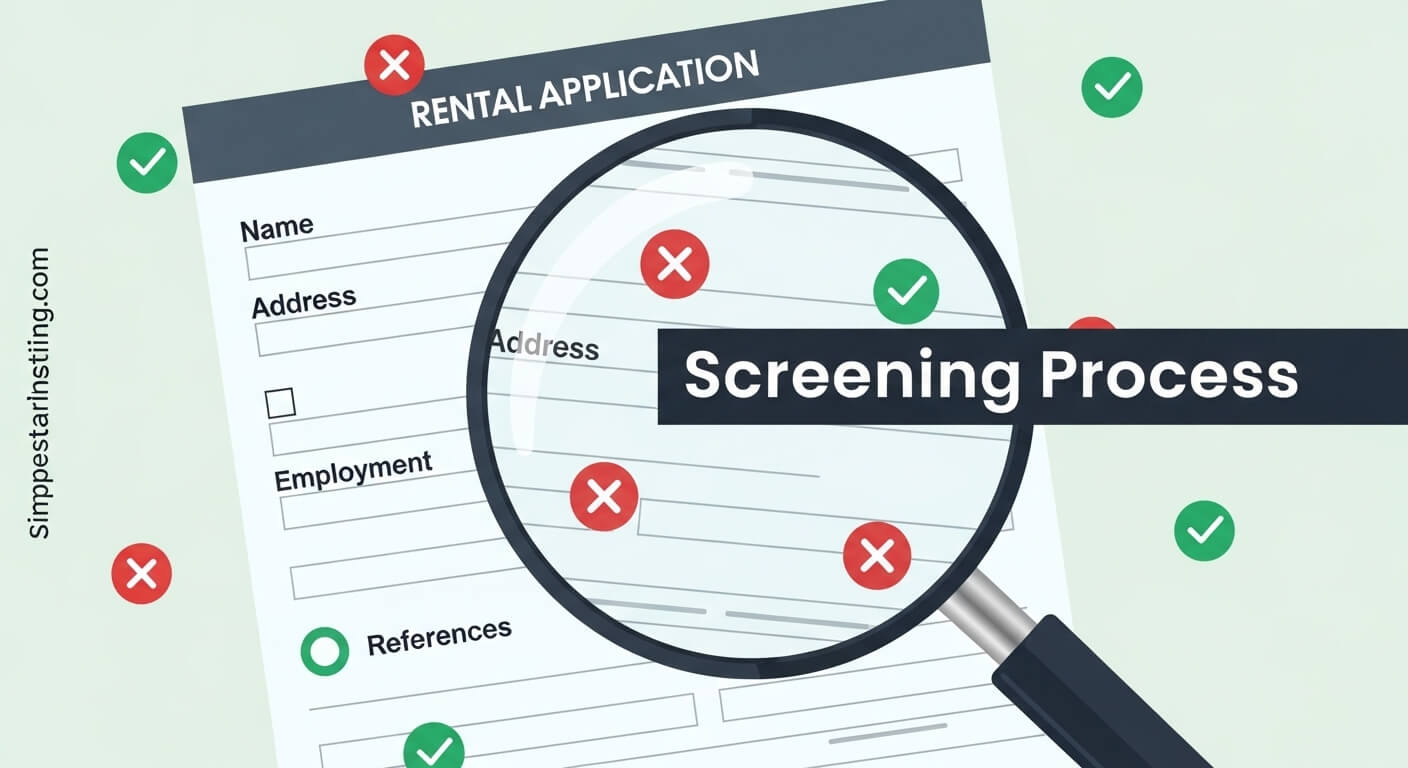
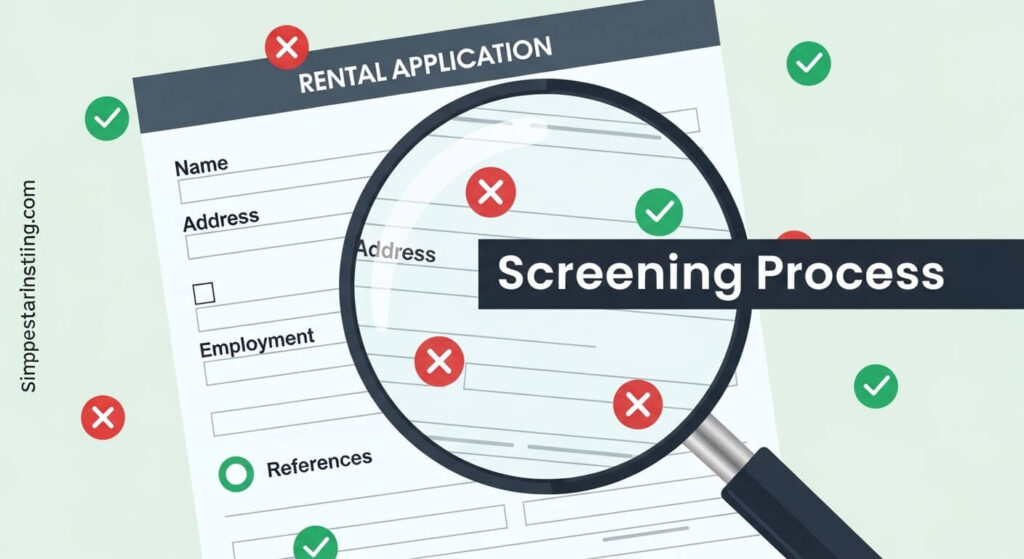
A professional screening process is your filter. It allows the good, responsible tenants through while catching the “red flags” before they become your problem. For a beginner in the US market, there are four main pillars you should look at.
1. Proof of Income and Employment
The general rule in the US rental market is that a tenant’s gross monthly income (before taxes) should be at least three times the monthly rent. If the rent is 2,000 dollars, the household should ideally earn 6,000 dollars per month.
Why three times? Because life happens. People have car repairs, medical bills, and groceries to buy. If a tenant spends more than half of their income on rent, one small emergency could make them unable to pay you. Always ask for recent pay stubs or tax returns if they are self-employed to verify this income.
2. Credit History and Financial Responsibility
You don’t necessarily need a tenant with a perfect 800 credit score, but you do want to see a history of paying bills on time. A credit report tells a story. Does this person prioritize their obligations? Do they have thousands of dollars in unpaid utility bills or past-due credit cards?
If someone has a low score because of student loans but has never missed a car or rent payment, they might still be a great tenant. However, if they have a history of “collections” from previous landlords, that is a major warning sign that you should not ignore.
3. Background and Eviction History
In the US, you can use specialized services to check if an applicant has a criminal record or, more importantly, a history of evictions. An eviction on a record is often a deal-breaker for most experienced landlords. It shows that a previous dispute reached the point where a court had to intervene to remove them. Past behavior is the best predictor of future behavior.
4. Direct References from Previous Landlords
Never rely solely on the reference from the current landlord. Why? Because if the tenant is terrible, the current landlord might give them a glowing review just to get them out of their house and into yours!
Instead, ask for the contact information of the landlord from two or three years ago. That person has no “skin in the game” and will usually give you an honest answer about whether the tenant paid on time and took care of the property.
Navigating Fair Housing Laws
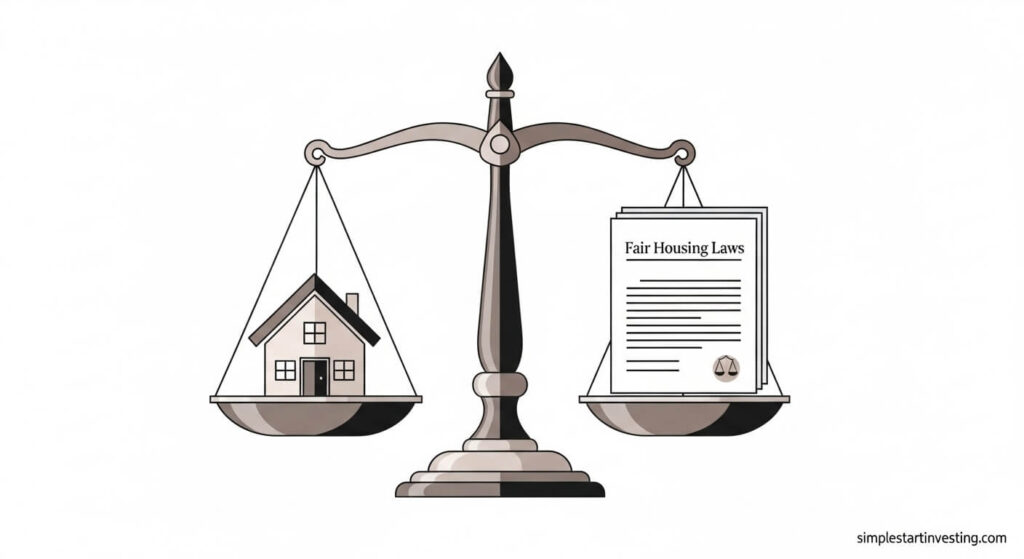
As a landlord in the United States, you must follow the Fair Housing Act. This federal law prohibits discrimination based on race, color, national origin, religion, sex, familial status, or disability. Many states and cities have additional protected classes, such as source of income or sexual orientation.
The best way to stay safe and legal is to have a consistent set of written standards. For example, if you require a 650 credit score and 3x income for one person, you must require it for everyone. You cannot “feel better” about one applicant and give them a pass while being strict with another.
If you deny an applicant based on their credit report, the law requires you to send them an “Adverse Action Notice” explaining why. Staying organized and fair doesn’t just protect you from lawsuits; it helps you find the most qualified tenants objectively.
How to Reduce Vacancy Without Sacrificing Quality
If your property is sitting empty for too long, you might feel the urge to skip the tenant screening steps. Instead of lowering your standards, try these strategies to attract more high-quality applicants:
- Improve the Presentation: High-quality tenants have choices. If your photos are dark or the house smells like old carpet, they will move on to the next listing. Professional photos and a deep clean are small investments that pay off by attracting better candidates.
- Price it Right: Sometimes a property is vacant because the rent is 200 dollars higher than the neighbors. It is better to lower the rent by 100 dollars and get a great tenant quickly than to wait three months for someone willing to pay the higher price.
- Be Responsive: Great tenants usually find a place within a week. If you take three days to answer an email or a text, the “A-grade” tenants will already be gone, leaving you with the applicants who were rejected everywhere else.
The Logic of Professional Management
Many beginners wonder if they should handle tenant screening themselves or hire a property manager. A property manager usually charges about 8% to 10% of the monthly rent, plus a fee for finding a new tenant.
If you have the time to learn the laws, run the reports, and call the references, you can save that money. However, for a new investor, a property manager can be a shield. They have the systems in place to spot fake pay stubs and can handle the awkwardness of rejecting an applicant. Whether you do it yourself or hire a pro, the goal remains the same: protecting your asset.
Setting Expectations from Day One
A good relationship with a tenant starts during the screening process. When you are thorough, it shows the tenant that you are a professional who cares about the property. This sets a standard. If they see that you check their references and verify their income, they understand that you will also be the type of landlord who expects the rent on time and performs regular inspections.
On the flip side, if you are disorganized and “easy” during the application, a difficult tenant may see you as an easy target for late payments or poor property care. Your screening process is your first “walk-through” of how the entire lease period will go.
Final Thoughts for the New Investor
The fear of a vacant house is real, especially when the mortgage bill arrives. But remember: the goal of real estate investing is to build wealth, not just to collect a check that you immediately have to spend on repairs or lawyers.

By treating tenant screening as a non-negotiable part of your business, you turn your rental from a stressful gamble into a predictable source of income. It is always better to have an empty house for 45 days while waiting for a responsible family than to have a tenant move in on day 10 who ends up costing you your peace of mind and your profits.
Take a deep breath, stick to your criteria, and remember that “no tenant” is always better than a “bad tenant.”
Disclaimer: This content is for educational purposes only and does not constitute financial, legal, or real estate advice. Laws regarding rentals and tenant screening vary by state and city; always consult with a local professional or legal counsel before making leasing decisions.