
Imagine checking your bank account on a random Tuesday and seeing a balance that is two or three thousand dollars higher than you expected. Maybe it is that long-awaited tax refund from the IRS, or perhaps your hard work at the office finally triggered a performance bonus. Your heart rate speeds up. Suddenly, that new espresso machine or the latest smartphone seems like a perfectly reasonable purchase.

In the world of psychology, we call this “found money.” It feels different from the money you earn in your bi-weekly paycheck, even though the dollars are exactly the same. Learning the art of handling found money is often the turning point where a beginner investor starts thinking like a seasoned pro. It is not just about the math; it is about mastering your own brain.
What Exactly Is Found Money?
To your bank account, a dollar is a dollar. However, to your brain, not all dollars are created equal. Handling found money refers to how we manage unexpected or non-routine sums of cash, such as tax refunds, work bonuses, inheritance, or even a lucky find in an old coat pocket.
Psychologists use a term called “mental accounting” to explain this. We tend to put our money into different mental folders. There is the “hard-earned salary” folder, which we use for boring things like rent and groceries. Then, there is the “found money” folder. Because this money didn’t come from our regular grind, we often treat it as “free,” leading us to spend it much more recklessly than we would with our regular paycheck.
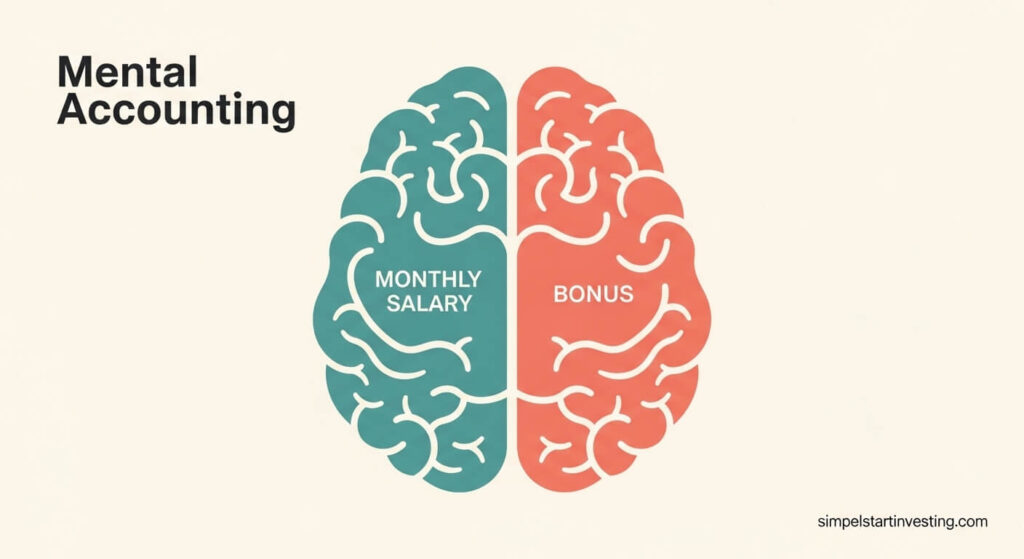
The reality is that whether you worked forty hours a week for it or the government sent it back to you in April, that money represents your time and effort. Treating it with the same respect as your salary is the first step toward building real wealth.
The Great Tax Refund Myth
Every year, millions of Americans celebrate their tax refund as if it were a gift from the government. You might hear people say, “I can’t wait for my refund so I can finally afford a vacation.” While the check feels like a win, it is important to understand the mechanics behind it.
A tax refund is simply the government returning money that you overpaid throughout the year. Essentially, you gave the IRS an interest-free loan. If you receive a 3,000 dollar refund, that means you gave the government about 250 dollars every single month for a year, and they didn’t pay you a penny in interest for the privilege of holding it.

When you look at it this way, handling found money from a tax refund becomes less about a “gift” and more about “recovering your own assets.” Instead of feeling like you just won the lottery, try to view it as the return of your hard-earned cash that was temporarily out of your reach.
Why Bonuses Feel “Extra” (And Why They Aren’t)
Work bonuses are another common source of found money. Whether it is a sign-on bonus, a holiday gift, or a performance-based incentive, these checks often arrive separately from your regular pay. This separation triggers that “mental accounting” trap we discussed earlier.
In the U.S., you might notice that your bonus check looks significantly smaller than the “gross” amount your boss promised. This is because the IRS often requires employers to withhold taxes on bonuses at a flat supplemental rate, which is currently 22 percent for amounts under one million dollars. When you add in Social Security and Medicare taxes, nearly a third of your bonus might vanish before it hits your account.
Because the “net” amount is smaller than expected, many people feel a sense of “use it or lose it.” They spend what remains quickly because it feels like a disappearing asset. A pro approach to handling found money involves looking at the gross amount, acknowledging the taxes paid, and then treating the remainder as a tool for your future self, not just a treat for your current self.
The Psychological Trap of “Easy Come, Easy Go”
Why do we find it so hard to save a bonus but so easy to save for a house from our monthly salary? It comes down to the “Windfall Effect.” When we receive money we didn’t specifically “plan” for in our daily budget, our brain’s reward system—driven by dopamine—takes over.
We start thinking about all the things we’ve denied ourselves throughout the year. We tell ourselves, “I’ve worked so hard, I deserve this.” And you do deserve good things! But there is a difference between a reward and a reflex.
If you spend the entire windfall on a luxury item, the joy usually lasts a few days or weeks. However, if you use that money to wipe out a high-interest credit card debt, the relief and the extra cash in your pocket every month will last for years. Handling found money effectively is about choosing long-term peace of mind over short-term dopamine hits.
A Pro Strategy: The “Split Method”
You don’t have to be a monk to be good with money. In fact, if you try to save 100 percent of every bonus, you might eventually burn out and rebel against your own budget. A much more sustainable way of handling found money is the Split Method.
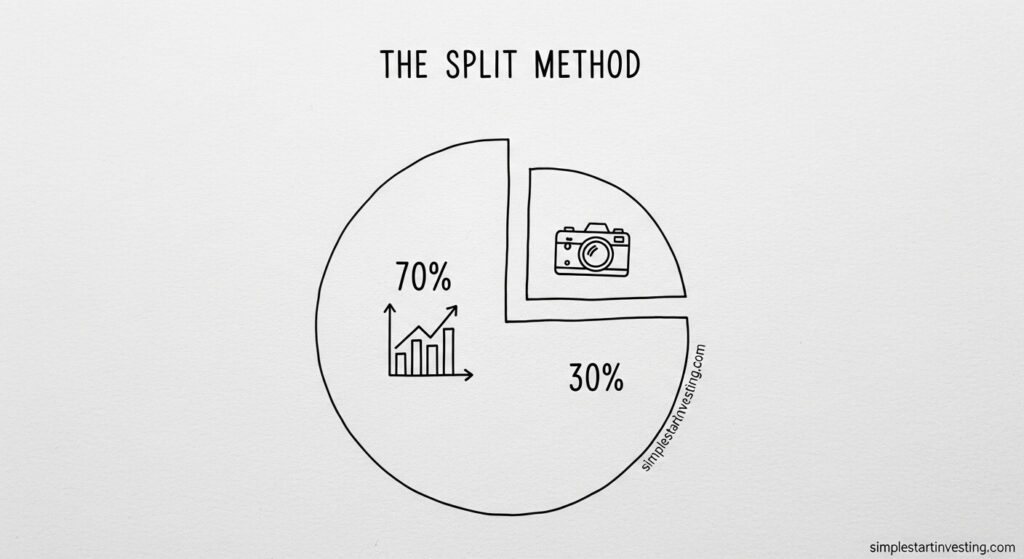
Think of your windfall as a pie. Instead of eating the whole thing now or putting the whole thing in the freezer for later, you divide it. A popular way to do this is the 70/30 split.
You take 70 percent of the money and put it toward “Future You.” This could mean adding it to your emergency fund, paying down debt, or contributing to a retirement account like a Roth IRA or a 401k. Then, you take the remaining 30 percent and give it to “Current You.” This is your “fun money.” You can spend this 30 percent on whatever you want—guilt-free.
By allowing yourself a small portion to enjoy now, you satisfy the psychological urge to celebrate, while the larger portion does the heavy lifting for your financial security.
Step 1: Secure the Foundation
Before you even think about the stock market or luxury purchases, handling found money requires a quick check of your financial basement. If your basement is flooding, you don’t buy new furniture for the living room.
First, look at your emergency fund. Most experts suggest having three to six months of basic living expenses tucked away in a high-yield savings account. If you don’t have at least 1,000 dollars set aside for a rainy day, your tax refund or bonus should probably go straight there. Having this “buffer” is what keeps a car breakdown from becoming a financial disaster.
Second, look at high-interest debt. If you have a credit card charging you 20 percent or 25 percent interest, that is a financial emergency. Paying off a 1,000 dollar balance on a high-interest card is essentially the same as “earning” a 25 percent return on your money, completely risk-free. You won’t find that kind of deal anywhere else in the financial world.
Step 2: Investing in Your Future Self
Once the emergencies are handled, handling found money shifts toward growth. This is where you start using these “lump sums” to jumpstart your investing journey.
For many beginners in the U.S., the best place to start is a workplace 401k or an Individual Retirement Account (IRA). If your employer offers a “match”—meaning they put in a dollar for every dollar you contribute up to a certain point—that is the closest thing to “free money” you will ever find.
If you have already maxed out your employer match, consider a Roth IRA. This is a special type of account where you put in money that has already been taxed (like your bonus or refund). The magic happens later: the money grows, and when you take it out in retirement, you don’t owe the IRS a single cent in taxes on the gains.
Using found money to fund these accounts is a brilliant move because it doesn’t lower your take-home pay from your regular job. You are building wealth without feeling the “pinch” in your daily life.
Navigating the Impulse to “Lifestyle Creep”
One of the biggest dangers in handling found money is something called lifestyle creep. This happens when your spending increases every time your income increases.
If you get a 5,000 dollar bonus and immediately trade in your reliable car for a more expensive one with a higher monthly payment, you haven’t actually gotten ahead. You’ve just increased your “burn rate.”

The goal is to keep your “needs” (rent, utilities, basic food) stable while using windfalls to increase your “net worth.” Net worth is simply everything you own minus everything you owe. When you use a bonus to pay off a loan or buy an investment, your net worth goes up. When you use it to commit to a new monthly bill, your financial freedom actually goes down.
Common Mistakes Beginners Make
Even with the best intentions, it is easy to stumble when handling found money. One common mistake is “counting your chickens before they hatch.”
People often spend their tax refund in their heads—or even on a credit card—months before the check actually arrives. If the IRS delays your refund or your bonus is smaller than expected due to taxes, you end up in a hole. Never commit found money to a purchase until the cash is cleared in your bank account.
Another mistake is ignoring the “boring” wins. It feels much more exciting to buy a 500 dollar gadget than it does to put 500 dollars toward a boring car insurance premium for the next six months. However, prepaying necessary expenses is a high-level pro move. It reduces your monthly stress for the rest of the year, giving you more “mental bandwidth” to focus on your career or your side hustle.
How to Handle a Windfall Without Stress
If you find yourself feeling overwhelmed by a sudden influx of cash, the best thing to do is… nothing. At least for a week.
Financial advisors often suggest a “cooling off period” for any significant amount of found money. Put the money in a basic savings account and let it sit there for seven to ten days. This allows the initial “dopamine spike” to fade.
Once the excitement has settled, sit down with a piece of paper and write out your top three financial goals. Does this money help you reach them? If you want to buy a house in two years, that bonus is a brick in your future front porch. If you want to retire early, that tax refund is an extra month of freedom you just bought for yourself.
Viewing the money through the lens of your goals makes it much easier to say “no” to impulse buys and “yes” to your long-term dreams.
Turning “Found Money” Into a Habit
The most successful investors aren’t necessarily the ones who make the most money; they are the ones who are most consistent. Handling found money like a pro means creating a system that works every time.
Eventually, you won’t even have to think about it. When a bonus hits, your brain will automatically trigger the “Split Method.” You’ll feel the joy of a nice dinner (the 30 percent) and the deep satisfaction of watching your investment account grow (the 70 percent).
This balance is the key to a healthy relationship with money. You aren’t denying yourself a life, but you aren’t sacrificing your future for a fleeting moment of shopping. You are in control.
Final Thoughts for the Simple Starter
Money is often 20 percent head knowledge and 80 percent behavior. You now have the head knowledge: you know that a tax refund is an interest-free loan you gave the government, and you know that bonuses are taxed differently but should be treated like regular income.
The behavior part is up to you. The next time you find yourself with “extra” cash, take a deep breath. Acknowledge the hard work that went into earning that money. Then, make a plan that honors both your current happiness and your future security. That is how you stop being a “beginner” and start being the master of your financial destiny.
Remember, the goal of handling found money isn’t just to see numbers on a screen go up. It is to buy yourself options, safety, and time. And those are things that no luxury item can ever truly replace.
Disclaimer: This content is for educational purposes only and does not constitute financial, legal, or tax advice. Financial regulations and tax laws can change frequently; please consult with a qualified professional or check the latest IRS guidelines for your specific situation.