
Choosing your Social Security claiming age is one of the most significant financial decisions you will ever make. It is not just about a monthly check; it is about how much total wealth you will have for the rest of your life. For many people entering their 60s, the temptation to take the money as soon as possible is incredibly strong.
However, the math behind waiting can be life-changing. While you can start as early as 62, the government rewards those who wait until 70 with significantly larger payments. In this guide, we will break down how the timing works, why so many people get it wrong, and how you can decide what is best for your unique situation.
Understanding the Basics of Your Social Security Claiming Age
Before diving into the “when,” we have to understand the “what.” Social Security was designed to be a safety net that replaces a portion of your income when you stop working. The amount you get depends on two things: how much you earned during your working years and the specific Social Security claiming age you choose.
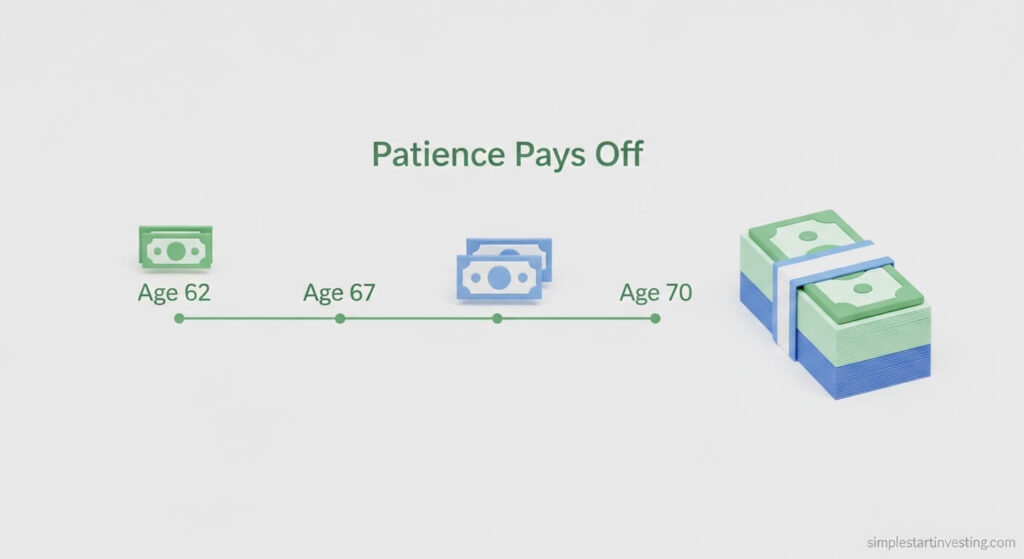
The government sets what is called a Full Retirement Age. For most people born in 1960 or later, that age is 67. Think of this as your “baseline.” If you claim exactly at this age, you get 100% of the benefit you earned. If you move away from that baseline—either earlier or later—the amount of your check changes permanently.
If you decide to claim early at age 62, you are essentially asking for your money sooner. Because the Social Security Administration expects to pay you for more years, they reduce the size of each check. On the flip side, if you wait until age 70, they reward your patience by increasing your monthly benefit for the rest of your life.
The Cost of Taking Social Security at Age 62
For many, age 62 feels like a magic number. You have worked hard for decades, and the idea of finally getting some of that tax money back is appealing. Some people claim early because they are worried about their health, while others simply want to stop working as soon as possible.
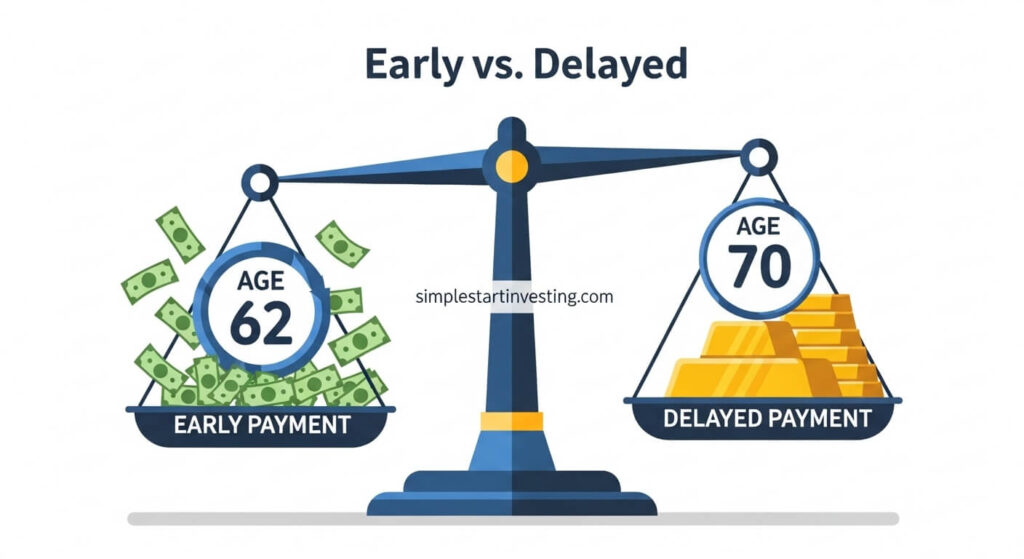
However, claiming early comes with a steep “early bird” penalty. If your Full Retirement Age is 67 and you start at 62, your monthly check will be reduced by about 30%. This is not a temporary reduction; it lasts for as long as you live.
Let’s look at a simple example. Imagine your baseline benefit at age 67 is 2,000 dollars per month. If you decide to start at 62, that check drops to 1,400 dollars. You are giving up 600 dollars every single month in exchange for getting the money five years early. Over twenty or thirty years of retirement, that 600-dollar difference adds up to a massive amount of missed wealth.
The Power of Waiting Until Age 70
If 62 is the “early” option and 67 is the “standard” option, then age 70 is the “premium” option. Once you pass your Full Retirement Age, the government adds a “delayed retirement credit” to your account for every month you wait. This credit amounts to an 8% increase for every full year you delay.
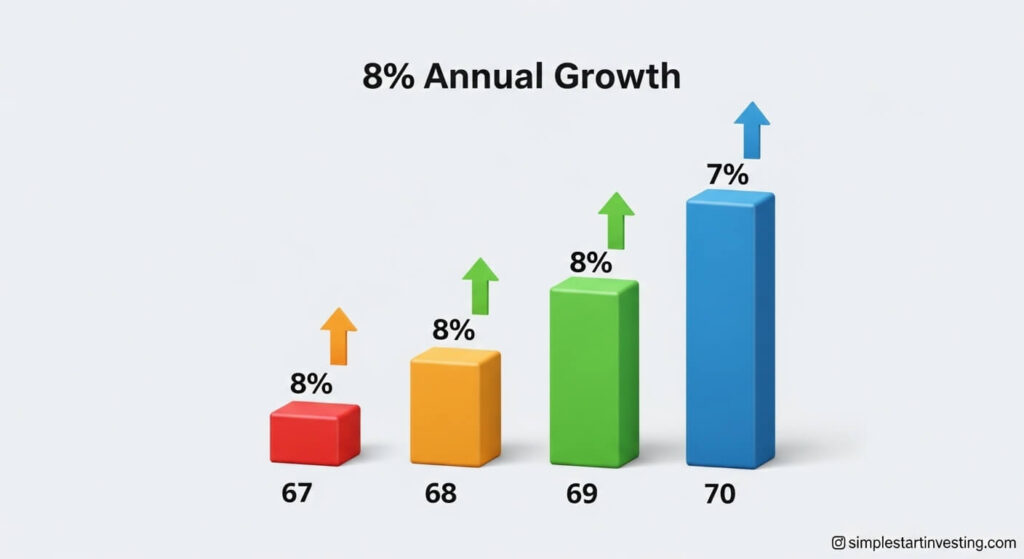
This 8% increase is guaranteed by the government. In the world of investing, finding a guaranteed 8% return is almost impossible. By waiting from age 67 to age 70, your benefit grows by 24%.
Going back to our example: if your benefit at age 67 was 2,000 dollars, waiting until age 70 would boost that check to 2,480 dollars. Compare that to the 1,400 dollars you would have received at age 62. By waiting eight years, you have nearly doubled your monthly income. This extra money acts as a powerful hedge against inflation and rising healthcare costs later in life.
Why Do Many People Choose the Wrong Social Security Claiming Age?
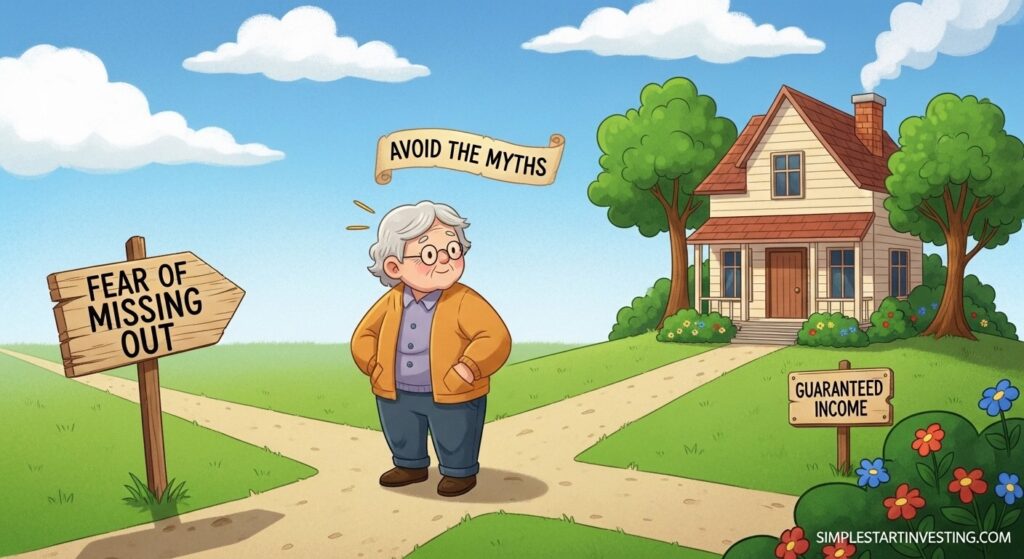
Despite the clear financial benefits of waiting, the majority of Americans claim their benefits before they reach age 70. Why does this happen? Often, it is driven by fear or a misunderstanding of how the system works.
One of the biggest myths is the fear that “the money will run out.” You might hear headlines about the Social Security trust fund being depleted. This leads people to claim at 62 because they want to “get theirs” before it’s gone. While the system faces challenges, it is backed by tax revenue. Even in a worst-case scenario, experts agree the system would still pay out a large majority of benefits.

Another common mistake is the “I can invest it better” argument. Some people take the money at 62, thinking they will put it in the stock market and make a fortune. To beat the 8% annual increase you get from waiting, your investments would have to perform incredibly well every single year, after taxes and fees. For the average person, this is a very risky bet compared to the guaranteed growth of Social Security.
The Concept of the Break-Even Point
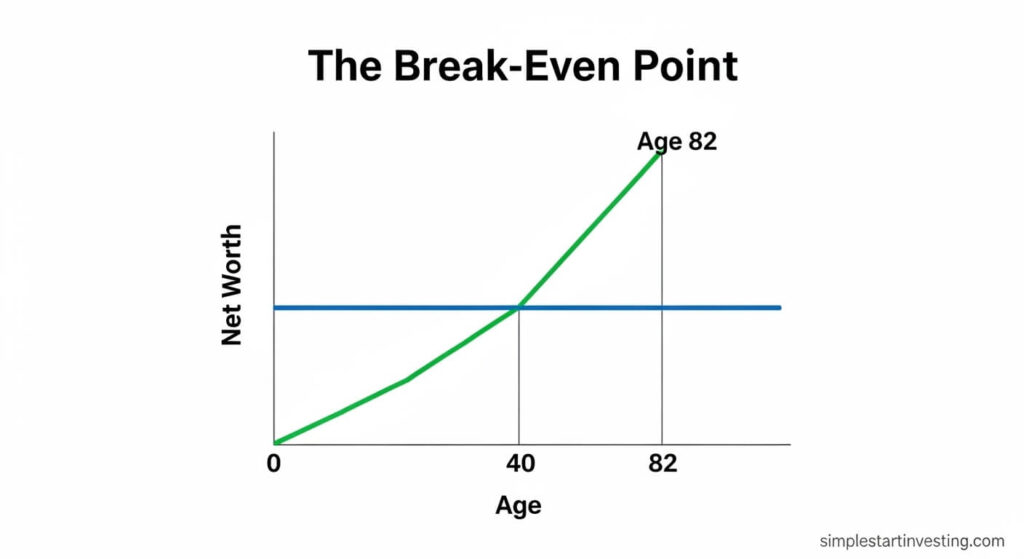
To make a smart choice about your Social Security claiming age, you need to understand the “break-even point.” This is the age at which the total amount of money you have received from waiting becomes more than the total amount you would have received by starting early.
When you start at 62, you get a “head start.” You are collecting checks for 96 months before the person who waits until 70 even gets their first dime. However, once the 70-year-old starts, their checks are much larger. Eventually, the person who waited will catch up in total dollars sent to their bank account.
For most people, the break-even point is somewhere around age 80 to 82. If you believe you will live past your early 80s, waiting until 70 almost always results in more total lifetime wealth. With modern medicine and healthier lifestyles, many retirees today are living well into their 90s, making the “wait until 70” strategy more effective than ever.
How Health and Longevity Impact Your Decision
Your health is the ultimate “wild card” in this equation. If you have a chronic illness or a family history of shorter lifespans, claiming early might actually be the logical choice. There is no point in waiting for a massive check at age 70 if you aren’t around to enjoy it.
However, we often underestimate how long we will live. If you are in good health at age 62, there is a very high probability you will reach that break-even age of 82. In this case, your Social Security claiming age should reflect a “long-game” mindset.
Think of Social Security as longevity insurance. It is the only part of your retirement plan that is guaranteed to never run out, no matter how long you live. The larger that check is, the less you have to worry about outliving your other savings, like your 401k or IRA.
Impact on Spousal and Survivor Benefits
Your decision doesn’t just affect you; it can also impact your spouse. This is a detail that many beginners overlook. If you were the higher earner in your marriage, your monthly benefit often determines the “survivor benefit” your spouse will receive if you pass away first.
If you claim at 62 and receive a reduced check, you are also locking in a smaller survivor benefit for your spouse. If you wait until 70, you are maximizing the safety net for your partner. This makes waiting a powerful act of financial protection for your family.
In a dual-income household, sometimes the best strategy is a “mixed” approach. One spouse (usually the lower earner) might claim early to provide some immediate cash flow, while the higher earner waits until 70 to lock in the highest possible benefit for the couple’s long-term future.
Tax Implications You Should Know
It is a common surprise for retirees to find out that Social Security benefits can be taxed. Whether or not you pay taxes on your benefits depends on your “combined income.” This includes your adjusted gross income, non-taxable interest, and half of your Social Security benefits.
If you are still working a part-time job or have significant withdrawals from a traditional IRA, taking Social Security on top of that could push you into a higher tax bracket. This is another reason why some people choose to delay. By waiting until they are fully retired and their other income drops, they might keep more of their Social Security check in their pocket rather than giving it back to the IRS.
The Working While Claiming Trap
If you are younger than your Full Retirement Age and you are still working, there is a “retirement earnings test” you should be aware of. If you earn more than a certain limit (which changes every year), the government will temporarily withhold part of your Social Security benefits.
This often leads to a frustrating situation where you claim at 62, but because you are still working your job at Walmart or Costco, you don’t even get to keep the full “early” check. While the money isn’t lost forever—the government will eventually adjust your benefit upward once you reach Full Retirement Age—it defeats the purpose of claiming early for extra cash.
If you plan to keep working until at least 67, it usually makes very little sense to claim Social Security before then.
How to Determine Your Personal Strategy
There is no “one-size-fits-all” answer to the best Social Security claiming age. It requires a look at your entire financial picture. You should ask yourself a few key questions:
First, do you actually need the money right now to survive? If you are unemployed or have no other savings, claiming early is a necessity, not a choice. Safety and stability come first.
Second, what is your health status? If you are energetic and come from a long-lived family, waiting is statistically the better bet.
Third, how do your other assets look? If you have a large 401k, you might choose to “spend down” some of those investments between ages 62 and 70 so you can let your Social Security benefit grow. This essentially uses your private savings to “buy” a higher guaranteed government pension.
Psychological Benefits of a Larger Check
Beyond the math, there is a huge psychological benefit to having a larger Social Security check. Markets fluctuate. Your stock portfolio might be up 20% one year and down 15% the next. That volatility can be incredibly stressful when you are 85 years old.
Social Security is different. It arrives on the same day every month, and it usually gets a Cost of Living Adjustment (COLA) to help with inflation. When that check is 3,000 dollars instead of 1,500 dollars, it provides a level of peace of mind that is hard to put a price on.
Many people who wait until 70 report feeling much more confident in their retirement because their “floor”—the minimum amount of money they get no matter what—is so much higher.
Common Misconceptions About the 8% Increase
Some people think the 8% increase is just a “bonus” that ends at some point. It doesn’t. That increase is baked into your base benefit for the rest of your life. Furthermore, every time the government issues a Cost of Living Adjustment (COLA) for inflation, it is calculated based on your current benefit.
If the COLA is 3%, a 3% raise on a 2,500-dollar check is much more meaningful than a 3% raise on a 1,500-dollar check. By waiting until 70, you are not just getting a bigger check today; you are ensuring that every future inflation raise is also larger. This is how you protect your purchasing power over a twenty or thirty-year retirement.
Summary: Is Waiting Until 70 Worth It?
For the majority of people who are in decent health and have other ways to cover their bills in their 60s, waiting until age 70 is one of the smartest financial moves available. It offers a level of guaranteed, inflation-protected growth that you simply cannot find anywhere else in the financial world.
However, the “right” Social Security claiming age is the one that allows you to sleep at night. If you are stressed about bills or have health concerns, taking the money earlier is a perfectly valid choice. The key is to make that choice based on facts and long-term planning, rather than fear or a misunderstanding of the rules.
Take the time to look at your Social Security statement online. See what your specific numbers are for 62, 67, and 70. Talk with your family about your longevity and your goals. When you understand the “why” behind the numbers, you can move into retirement with confidence, knowing you have maximized the benefits you worked so hard to earn.
Disclaimer: This content is for educational purposes only and does not constitute financial advice. Regulations regarding Social Security can change; always check the official Social Security Administration (SSA.gov) website for the most current rules and individual benefit estimates.