You are sitting at your kitchen table, finishing a cup of coffee, when your phone pings with an urgent text. It claims to be from the Internal Revenue Service (IRS), stating there is an issue with your tax return and you owe money immediately. Your heart starts to race. This is exactly what fraudsters want you to feel.
Understanding tax scams is your best defense against losing your hard-earned money. These criminals rely on fear and the fact that most people find taxes intimidating. However, when you know the specific “playbook” the IRS uses to contact taxpayers, these scams become much easier to spot.
This year, scammers are getting more sophisticated, using artificial intelligence to mimic official voices and creating fake websites that look identical to the real thing. But no matter how high-tech the scam becomes, the fundamental rules of how the government operates remain the same.
The Reality of Tax Scams
A tax scam is any attempt by a third party to trick you into giving up your money or personal information by pretending to be associated with tax authorities. These criminals might claim you owe a debt, or they might promise you an unexpectedly large refund to get your Social Security Number.
Many beginners believe that if a caller has the last four digits of their Social Security Number or knows their address, they must be official. This is a common misunderstanding. In reality, much of this information is unfortunately available on the dark web due to past data breaches.
Falling for these tricks can lead to identity theft, drained bank accounts, and years of paperwork to fix your credit. By learning to identify the red flags now, you protect your financial future and gain peace of mind during the busy tax season.
How the IRS Actually Contacts You
The most important thing to remember is that the IRS almost always starts with a letter sent through the U.S. Postal Service. This is their primary and official method of communication. They do not send “surprise” notices through other channels.
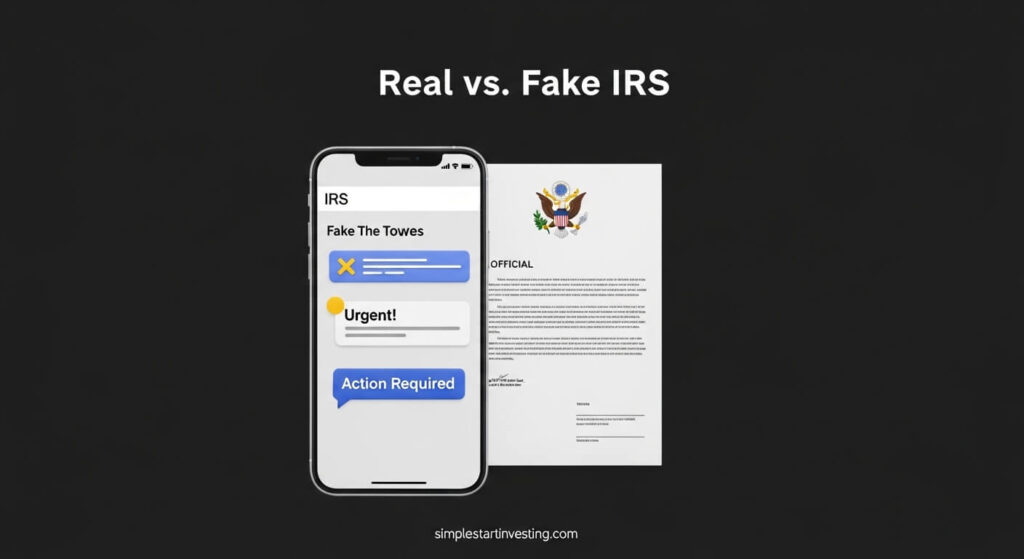
If you receive a notification, it will likely be a formal letter on official stationery with a specific notice number in the top right corner. You can actually take that notice number and look it up on the official IRS website to verify what it is for.
The agency does not use text messages, social media direct messages, or emails to discuss your personal tax issues. If you see a “DM” from someone claiming to be a tax agent, you can be 100% certain it is a scam. They also do not leave urgent, threatening voicemails demanding a call back to avoid arrest.
The Rise of AI and High-Tech Fraud
In the current landscape, technology has given scammers new tools. They now use AI-generated voices that sound professional and calm, rather than the robotic or heavily accented voices of the past. Some even use “deepfake” technology to create videos or audio that sounds exactly like a legitimate government official.
Another high-tech tactic is Number Spoofing. This is when a criminal masks their real phone number so your caller ID displays “IRS” or a Washington D.C. area code. Just because your phone says it is the government calling does not mean it actually is.
Even with these tools, the scammers’ goals remain the same: they want you to act quickly without thinking. They create an artificial sense of urgency, telling you that “the police are on their way” or “your license will be revoked in two hours” unless you pay.
Common Tax Scam Scenarios to Watch For
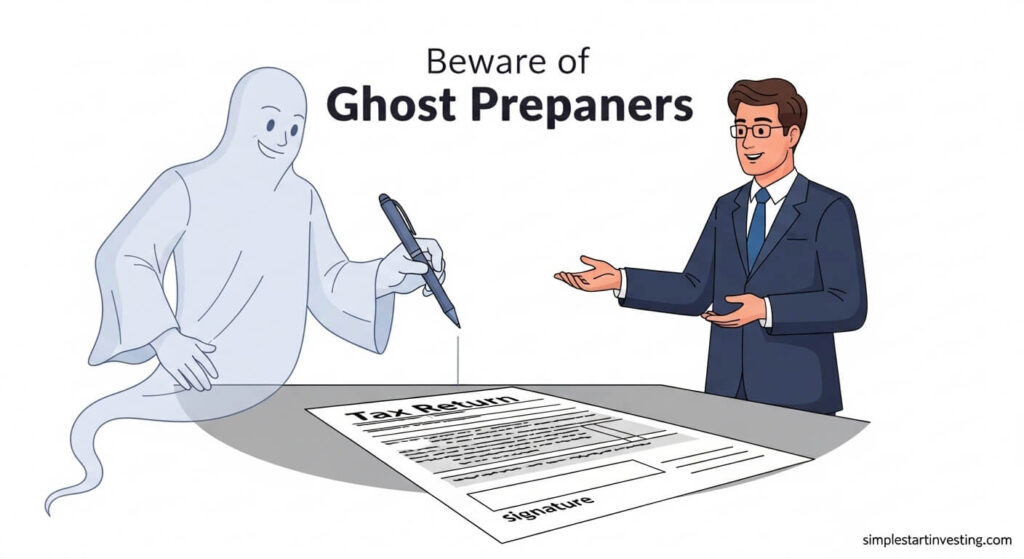
One of the most frequent scams involves the Ghost Preparer. This is a person who offers to file your taxes for a fee but refuses to sign the return as the preparer. They might promise you a massive refund by claiming fake deductions you aren’t entitled to.
If a preparer asks you to sign a blank return or tells you that their fee is based on a percentage of your refund, walk away immediately. Legitimate professionals charge based on the complexity of the work, not by taking a cut of your tax money.
Another common trick is the Fake Refund Scam. You might receive an email or text saying, “Your tax refund is ready. Click here to claim it.” Once you click, you are taken to a fake site that asks for your bank account details and Social Security Number. The IRS never sends links like this.
Red Flags: How to Spot a Fraudster in Seconds
The easiest way to identify a scammer is by how they ask you to pay. The IRS has very specific ways they accept money, such as through their official online portal or by a check made out to the U.S. Treasury.
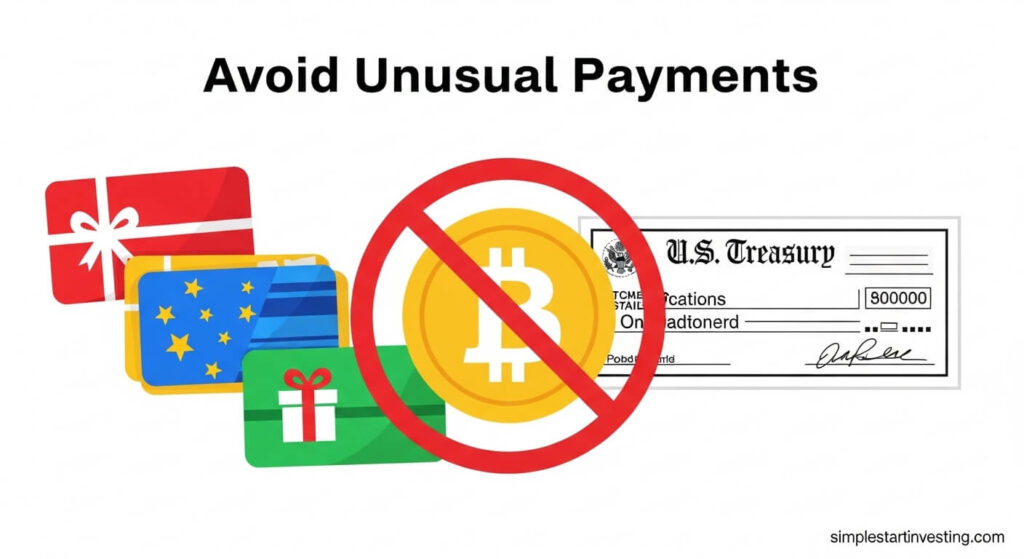
If someone asks you to pay using Gift Cards, Wire Transfers, or Cryptocurrency, it is a scam every single time. No government agency will ever ask you to go to a local pharmacy, buy a stack of gift cards, and read the numbers over the phone.
Another red flag is the demand for immediate payment. The IRS always provides a process for you to question or appeal the amount they say you owe. They will never demand that you pay a bill right this second without giving you the chance to verify the debt.
The “Identity Verification” Trap
Scammers often pretend to be helping you. They might call and say they noticed “suspicious activity” on your account and need to “verify your identity.” To do this, they ask for your full Social Security Number or your Electronic Filing PIN.
While the IRS does have identity verification processes, they will never initiate them via an unsolicited phone call. If you truly need to verify your identity, the IRS will send you a letter (Notice 5071C) with instructions on how to use their official, secure online tool.
Think of your tax information like the keys to your house. You wouldn’t give your keys to someone who knocked on your door just because they were wearing a shirt that said “Security.” You should be just as protective of your financial data.
Why Do These Scams Work?
Scammers are experts in psychology. They know that taxes are one of the few things that truly scare the average person. They use “High-Pressure Tactics” to bypass your logical brain and trigger your “fight or flight” response.
When you are scared, you don’t stop to think, “Wait, why would the IRS want a Target gift card?” You only think about stopping the “police” from coming to your house. Understanding this psychological trick allows you to take a deep breath and stay calm when you get a suspicious message.
The scammers also count on people not knowing the law. For example, the IRS cannot have you arrested on the spot for a tax mistake. There is a long, legal process involving multiple written notices before any serious collection action like a lien or levy occurs.
What to Do If You Are Targeted
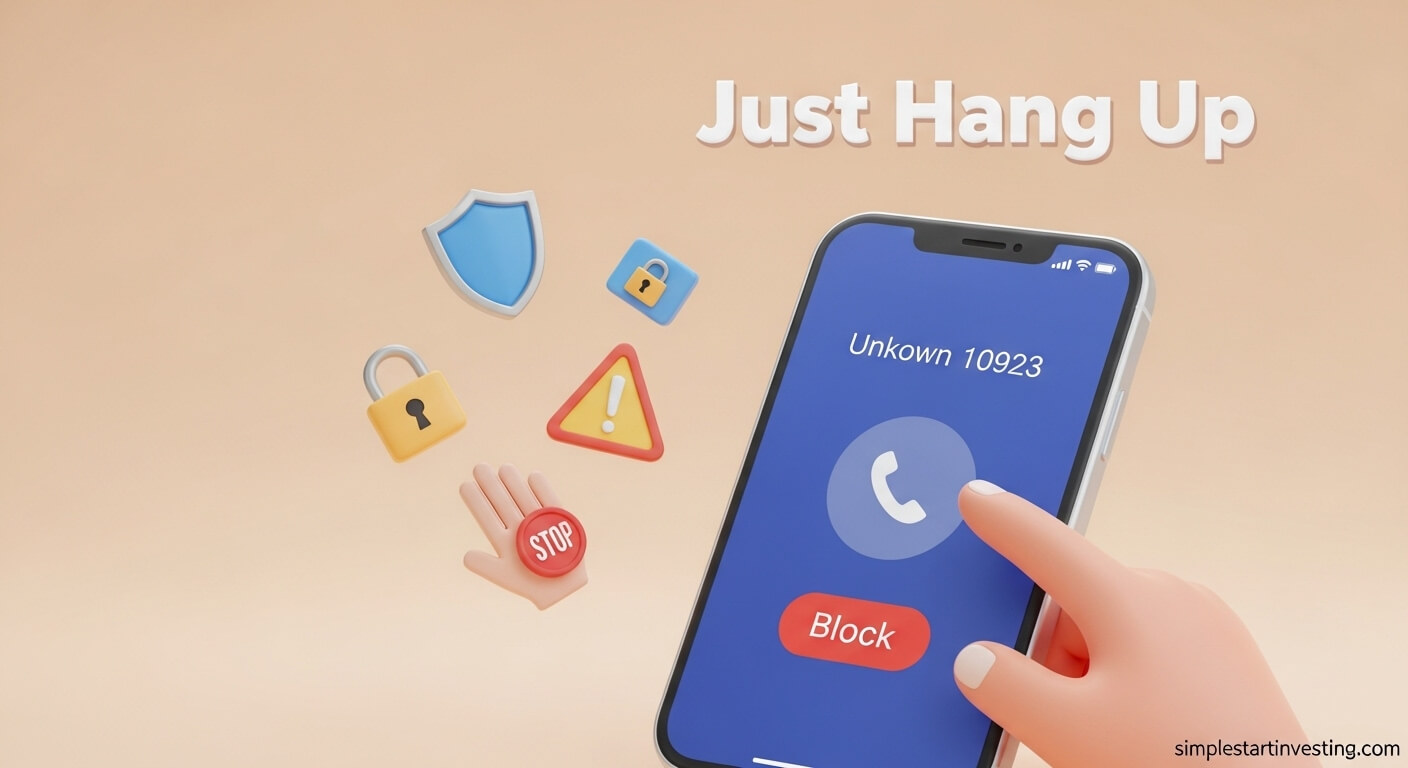
If you receive a suspicious phone call, the best thing you can do is hang up. Do not engage with the caller, do not press any numbers on your keypad, and do not try to “prank” them. Engaging only confirms that your phone number is active, which can lead to more calls.
If you get a suspicious email, do not click any links or download any attachments. These can contain Malware that steals information from your computer. Instead, you should report the email to the IRS by forwarding it to their official phishing email address.
If you are genuinely worried that you might owe taxes, go directly to the source. Open your web browser, type in IRS.gov, and log into your official account or call the verified IRS customer service number. Never use a phone number provided by a suspicious caller.
Protecting Your Personal Information
Prevention is just as important as detection. One way to protect yourself is to file your taxes as early as possible. Scammers often use stolen Social Security Numbers to file fake returns early in the season to steal refunds. If you file first, their attempt will be rejected by the IRS system.
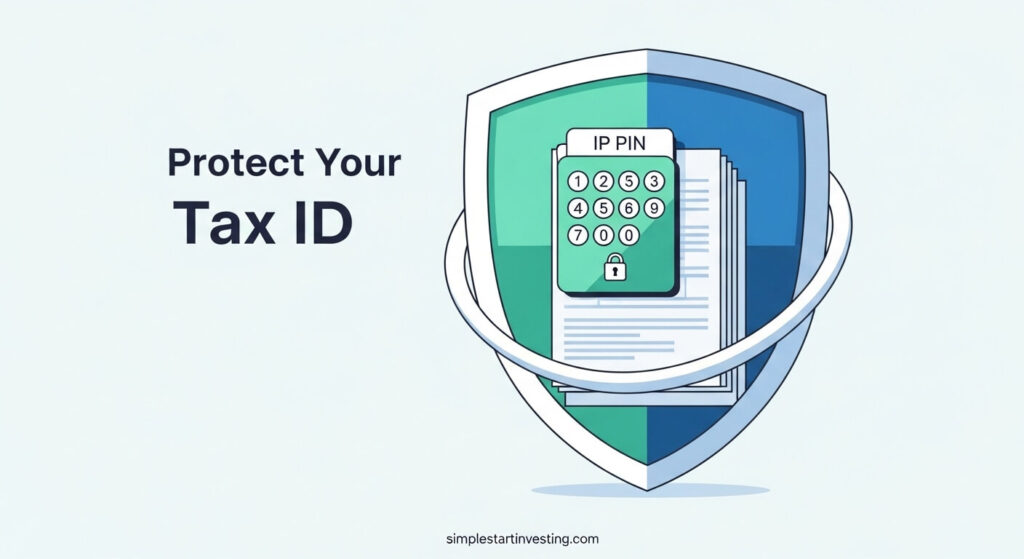
You should also consider getting an IP PIN (Identity Protection Personal Identification Number). This is a six-digit number assigned by the IRS that adds an extra layer of security to your tax return. Even if a scammer has your Social Security Number, they cannot file a return without this PIN.
Always be careful with where you share your information. Avoid using public Wi-Fi when accessing your financial accounts or filing your taxes. Use a secure, private connection and ensure that any website you use for taxes starts with “https” and has a padlock icon in the address bar.
Reporting the Fraudsters
When you report a scam, you aren’t just protecting yourself; you are helping the authorities track down these criminal networks. There are several places where you can report tax-related fraud depending on how it happened.
If you receive a scam call, you can report it to the Treasury Inspector General for Tax Administration (TIGTA). They have a specific website dedicated to IRS Impersonation Scam reporting. You can also report phishing emails directly to the IRS at phishing@irs.gov.
Additionally, the Federal Trade Commission (FTC) tracks all types of scams. Reporting to them helps create a broader picture of how fraudsters are operating across the country, which helps law enforcement develop better tools to catch them.
The Difference Between a Mistake and a Scam
Sometimes, the IRS really does need to contact you. Maybe you made a typo on your return or forgot to include a form. It is important to distinguish between a legitimate issue and a criminal attempt to steal from you.
A legitimate IRS notice will clearly explain the issue, provide a contact number, and give you a deadline to respond. It will not use aggressive language or threaten you with jail time. If the letter is polite, professional, and asks you to mail in documentation or use a secure government website, it is likely real.
If you are ever in doubt, a local Certified Public Accountant (CPA) or an Enrolled Agent can help you review the notice. These professionals deal with the IRS every day and can quickly tell you if a communication is authentic or a scam.
The Cost of Staying Informed
Education is your most valuable asset in the world of finance. Scammers thrive on the “information gap”—the space between what is true and what you think might be true. By filling that gap with knowledge, you make yourself an impossible target.
The IRS will never “un-retire” its basic rules. No matter how many apps are created or how many AI tools come out, the government still relies on due process. They will always write to you first, they will always give you a chance to appeal, and they will never ask for payment in “magic” digital currency or store cards.
Stay vigilant, keep your personal documents in a secure place, and never let a stranger on the phone rush you into a financial decision. Your money belongs to you, and with the right information, you can keep it that way.
Disclaimer: This content is for educational purposes only and does not constitute financial or legal advice. Tax laws and scam tactics can change; always verify information with the official IRS website or a qualified tax professional.