Many people feel a sense of dread when they look at their retirement account options. You log into your 401(k) or IRA portal and see a long list of confusing names, ticker symbols, and percentages. It feels like you need a finance degree just to pick where your money goes. If you have ever wished for an “autopilot” button for your investments, you are looking for Target Date Funds.
Target Date Funds are designed specifically for people who want to build wealth without spending hours every week analyzing the stock market. They are often called “all-in-one” funds because they handle the most difficult parts of investing for you: choosing what to buy and adjusting those choices as you get older.
What Exactly Is a Target Date Fund?
At its core, a Target Date Fund is a type of mutual fund or ETF that automatically changes its investment mix over time. The “Target Date” in the name refers to the year you plan to retire. For example, if you are 30 years old today and plan to retire around age 65, you would look for a fund with the year 2060 in its name.
When you invest in one of these funds, you aren’t just buying one stock. You are buying a tiny slice of thousands of different companies and bonds all at once. The fund manager takes your money and spreads it across the entire market. This diversification is the first step in protecting your savings from the ups and downs of any single company.
The beauty of Target Date Funds lies in their simplicity. You pick the year closest to your retirement, and the fund does the rest. It is essentially a professional portfolio manager working for you, making sure your money is in the right place at the right time.
How the “Target Date” Works in Real Life
Imagine you are planning a long road trip from New York to Los Angeles. When you first start out, you drive fast on the open highway to cover as much ground as possible. As you get closer to your final destination in a busy city, you slow down, become more cautious, and focus on arriving safely rather than moving quickly.
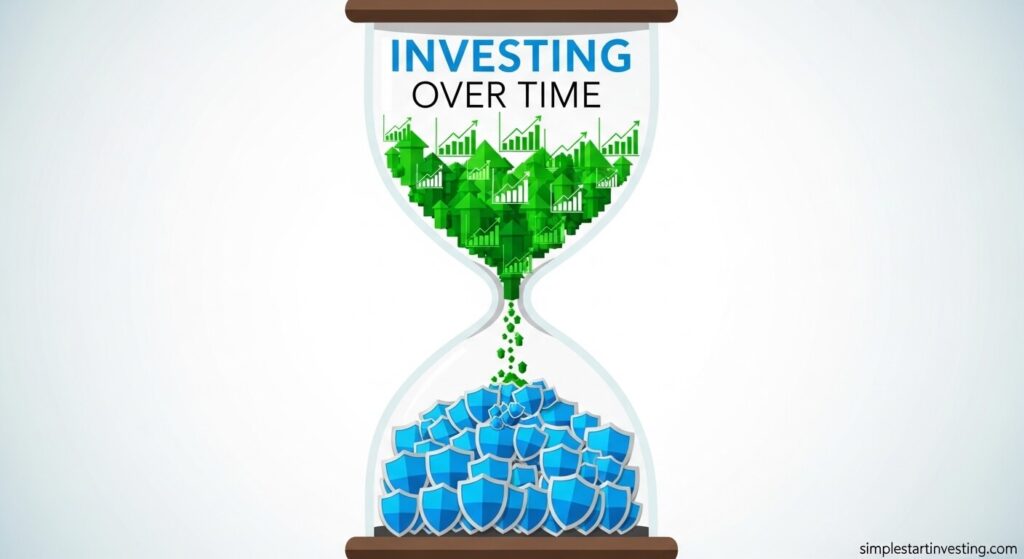
Target Date Funds follow this exact logic. When the “Target Date” is 30 or 40 years away, the fund is aggressive. It puts most of your money into stocks because stocks have the highest potential for growth over long periods. Even if the market crashes next year, you have decades for it to recover.
As the years pass and you get closer to that retirement year, the fund “slows down.” It automatically sells some of those aggressive stocks and buys more conservative investments, like bonds or cash equivalents. By the time you actually reach your retirement year, the fund has shifted to a much safer posture to protect the nest egg you’ve built.
The Secret Sauce: Understanding the “Glide Path”
In the world of finance, this transition from aggressive to conservative is called a “glide path.” It is the most important feature of Target Date Funds, yet many beginners don’t realize it exists.

Think of an airplane landing. The pilot doesn’t just drop the plane onto the runway from 30,000 feet. They follow a gradual, downward path until the wheels touch the ground softly. Your investment risk follows a similar “glide.”
The Early Years (High Growth)
If your fund is dated 2055 or 2060, it is currently in the high-growth phase. Usually, around 90 percent of the money is in stocks. Stocks are like the engine of your retirement car—they provide the power to grow your wealth. While they can be volatile, they are necessary to beat inflation and build a significant balance over 30 years.
The Middle Years (Balanced)
As you reach your 40s or 50s, the glide path starts to tilt. The fund might move to a mix of 60 percent stocks and 40 percent bonds. At this stage, you still want growth, but you also want a “buffer.” If the stock market drops, your bonds act like a shock absorber, preventing your total balance from falling as far as it would if you were 100 percent in stocks.
The Final Approach (Preservation)
When you are only five years away from retirement, the fund becomes very conservative. The goal shifts from “making money” to “not losing what I already have.” You might see the fund move to 30 percent stocks and 70 percent bonds. This ensures that a sudden market crash right before you retire doesn’t force you to work for another five years.
Why Beginners Often Misunderstand These Funds
Even though Target Date Funds are built for simplicity, there are several common myths that can lead to big mistakes. Clearing these up is essential for your long-term success.
Myth 1: The Fund Guarantees You’ll Have Money by That Date
This is the biggest misunderstanding. A 2050 fund does not guarantee that you will have a specific amount of money in the year 2050. It also doesn’t guarantee that you won’t lose money. Like any investment involving stocks and bonds, there is market risk. If the entire global economy struggles, your fund balance will go down. The “Target Date” is just a strategy for how the money is managed, not a legal promise of a specific outcome.
Myth 2: All “2050 Funds” Are the Same
If you compare a 2050 fund from Vanguard to one from Fidelity or Charles Schwab, they will look different. Every company has its own philosophy on the “glide path.” Some might stay aggressive longer, while others might play it safe much sooner. It is always a good idea to look at the “Asset Allocation” section of the fund details to see exactly how much they are putting in stocks versus bonds today.
Myth 3: You Need to Buy Multiple Target Date Funds
Some beginners think they should “diversify” by buying a 2045, 2050, and 2055 fund. This is actually counterproductive. Since each fund is already fully diversified, buying three different years just makes your retirement plan messy. It’s like trying to drive three cars to the same destination. Pick the one year that best matches your retirement goal and stick with it.
The “Lazy” Benefit: Saving You From Yourself
The greatest advantage of Target Date Funds isn’t actually the math or the stocks—it’s the psychology. Most people are their own worst enemies when it comes to investing. When the news says the market is crashing, people get scared and sell their investments at the worst possible time. When the market is booming, they get greedy and buy too much of the “hot” stock.
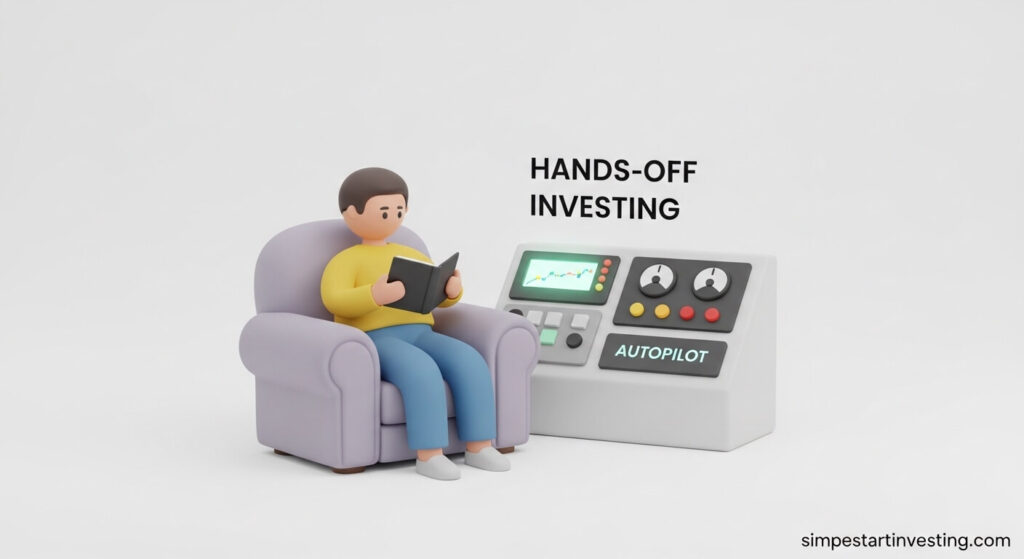
Target Date Funds remove the need for you to make these emotional decisions.
- Automatic Rebalancing: If stocks have a great year, they will eventually represent too much of your portfolio. A human investor might forget to fix this. A Target Date Fund automatically sells the “high” stocks and buys the “low” bonds to keep your risk level on track.
- Consistency: Because you don’t have to manage it, you are less likely to “tinker” with it. Research shows that investors who leave their accounts alone often perform better than those who try to time the market.
- Time Savings: Instead of researching individual companies or trying to learn the difference between “Large Cap” and “Small Cap” stocks, you can spend your time on your career, your family, or your hobbies.
Understanding the Real Cost: The Expense Ratio
Nothing in the financial world is truly free. When you use Target Date Funds, you pay a fee called an “Expense Ratio.” This is an annual fee taken as a percentage of your investment to pay the people managing the fund.
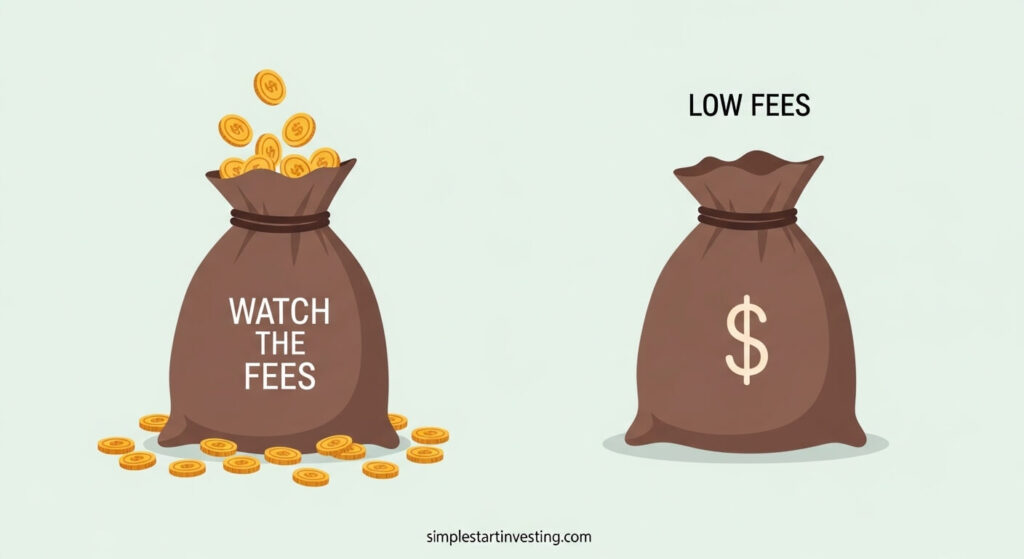
Because these funds are “all-in-one” and require professional management of the glide path, they can sometimes be slightly more expensive than if you bought individual index funds yourself. However, for most beginners, this small fee is well worth the convenience.
Let’s look at how this works in plain English. If you have 1,000 dollars in a fund with an expense ratio of 0.50 percent, you are paying 5 dollars a year to the fund company. If you find a “low-cost” provider with an expense ratio of 0.10 percent, you are only paying 1 dollar a year for every 1,000 dollars invested.
Over 30 years, these small differences can add up. When choosing a fund, always look for “low-cost” or “Index-based” Target Date Funds. These usually have much lower fees because they use computer algorithms rather than expensive human pickers to choose the stocks.
Is a Target Date Fund Right for You?
While these funds are excellent for many, they aren’t for everyone. You might be a good candidate for a Target Date Fund if:
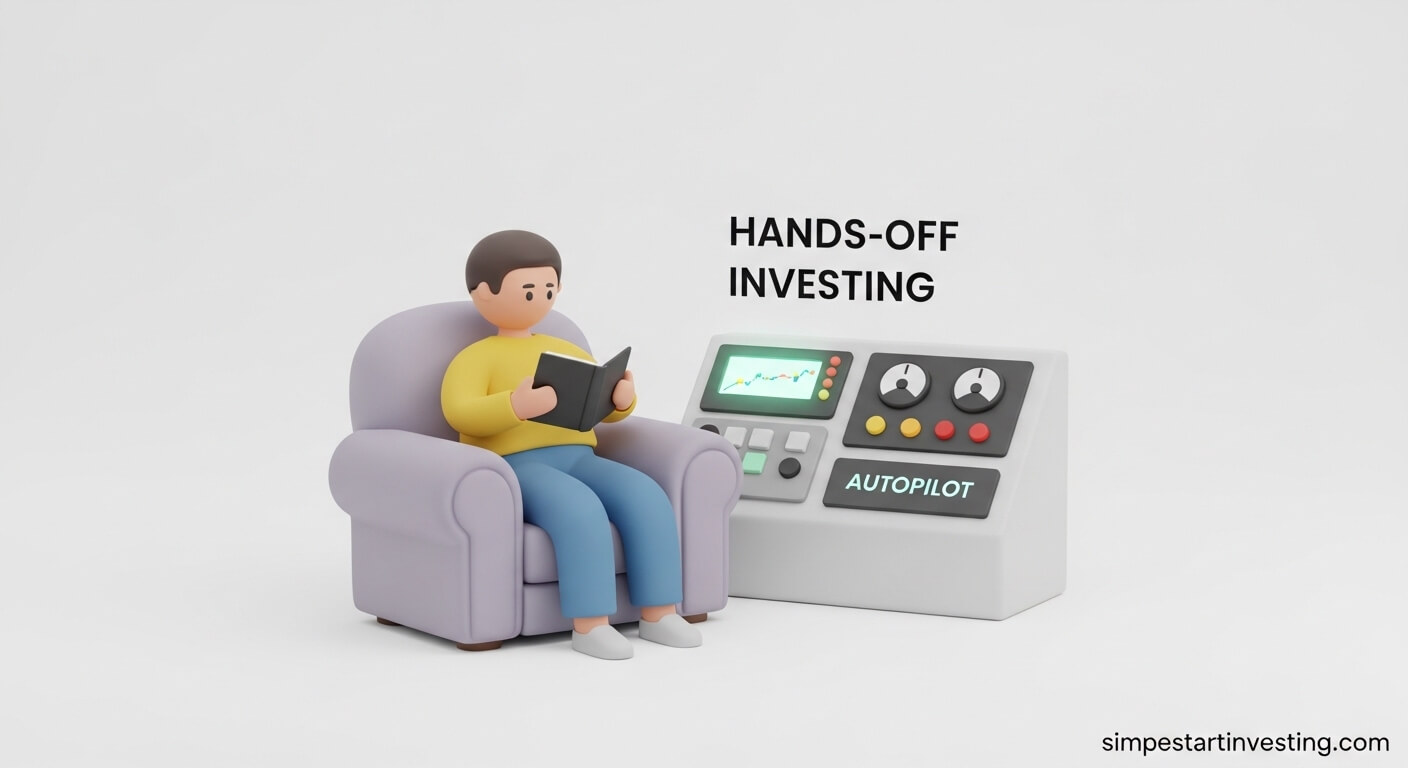
- You are a “Hands-Off” Investor: You want to set up an automatic contribution from your paycheck and not think about it again for ten years.
- You Feel Overwhelmed: If looking at a list of 50 different mutual funds makes your head spin, the “all-in-one” nature of a TDF is a perfect solution.
- You Want a “Managed” Risk Profile: You want to make sure your investments get safer as you get older, but you don’t trust yourself to remember to make those changes manually.
On the other hand, you might want to skip these funds if you enjoy the research process and want to build a custom portfolio. Some investors also find that TDFs can be slightly “tax-inefficient” if held in a regular brokerage account (outside of a 401k or IRA) because the fund’s internal selling can trigger taxes for you.
How to Get Started Today
If you decide that Target Date Funds are the right path for you, the setup is simple.
First, estimate the year you will turn 65 (or whatever age you wish to retire). If you are 25 now, that year is roughly 40 years away. Look for the fund ending in the nearest five-year increment, such as “Retirement 2065.”

Second, check your 401(k) or IRA provider. Most major companies like Vanguard, Fidelity, BlackRock (iShares), and State Street offer these funds. Look for the words “Index” in the name if you want the lowest fees.
Finally, set up your “Auto-Pay.” The real magic of retirement isn’t just the fund you choose; it’s the habit of consistently putting money into it. Whether it is 50 dollars a month or 500 dollars, the Target Date Fund will work tirelessly in the background to grow that money and protect it as you age.
The Long-Term Perspective
Investing for retirement is a marathon, not a sprint. The biggest hurdle for most people is simply getting started. We often wait because we are afraid of making the “wrong” choice. Target Date Funds solve this problem by providing a “good enough” choice that is better than 90 percent of what people do on their own.
By choosing a fund that matches your retirement year, you are making a sophisticated financial decision without the stress. You are embracing the power of the global economy and the wisdom of a declining risk profile.
Remember, you don’t need to be a genius to retire wealthy. You just need a plan that works while you sleep. For the vast majority of Americans, the “lazy” way is actually the smartest way to ensure a comfortable future.
Disclaimer: This content is for educational purposes only and does not constitute financial advice. Investment regulations and fund structures can change, so it is important to review current IRS guidelines and consult with a qualified professional before making significant financial decisions.