
As a parent, one of the most rewarding things you can do is set your child up for a solid financial future. Maybe you’ve opened a custodial account, bought a few shares of a favorite tech company like Apple or Disney, or started a small college fund in their name. It feels like a smart move—and it usually is.
However, many parents are caught off guard when tax season rolls around. They expect that because the money belongs to a child who doesn’t even have a job, the taxes will be zero. That is where a specific rule called the Kiddie Tax comes into play.
The IRS created the Kiddie Tax decades ago to prevent a very specific strategy. In the past, wealthy parents would shift their high-earning investments into their children’s names to take advantage of the child’s much lower tax bracket. To close this loophole, the government decided that once a child’s investment income crosses a certain line, it should be taxed at the same rate as the parents.

In this guide, we are going to break down exactly how the Kiddie Tax works, who it affects, and what you need to know to keep your child’s financial growth on track without any nasty surprises from the IRS.
What Exactly Is the Kiddie Tax?
At its simplest, the Kiddie Tax is a set of rules that determines the tax rate for “unearned income” received by children.
When we talk about income, the IRS generally looks at two types. There is earned income, which is money made from working a job, like mowing lawns or working at a local grocery store. Then there is unearned income, which is money generated by assets. This includes things like interest from a savings account, dividends from stocks, or profits made when you sell an investment for more than you paid for it.
The Kiddie Tax only cares about that second category: the money your money makes. If your child’s investments start performing very well, the IRS steps in and says, “Wait a minute, this looks more like the parents’ investment strategy than a child’s piggy bank.”
Once the unearned income hits a specific threshold, the tax rate jumps from the child’s low rate (which might be 0% or 10%) to the parents’ marginal tax rate (which could be as high as 37%).
Who Falls Under These Rules?
Not every child with a savings account has to worry about this. The IRS has very specific criteria for who is subject to the Kiddie Tax. Generally, it applies if the child meets all of the following conditions:
First, the child’s unearned income must exceed the annual threshold. For this year, that threshold is usually around 2,600 dollars, though this number can adjust slightly for inflation each year.
Second, the child must fall into one of the following age groups:
- They are under the age of 19 at the end of the tax year.
- They are a full-time student aged 19 to 23 who does not earn enough money to provide more than half of their own financial support.
Third, at least one of the child’s parents must be alive at the end of the year. Finally, the child cannot be filing a joint tax return for the year (for example, if they were a 23-year-old married student).
If your child fits these descriptions, you need to look closely at how much their investments earned throughout the year.
How the Tax “Buckets” Work
To understand how the Kiddie Tax is calculated, imagine three different buckets. Each dollar your child earns from investments goes into these buckets in a specific order.
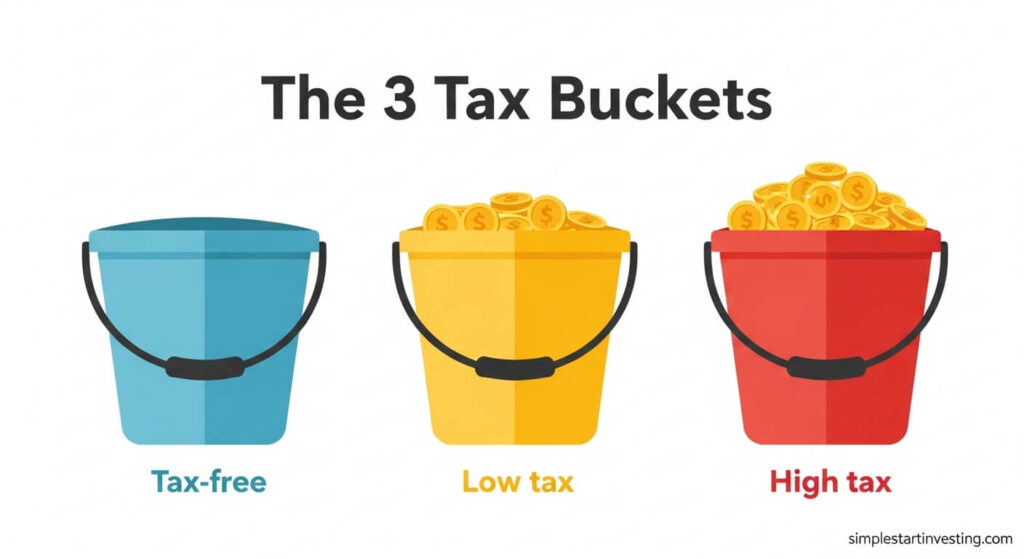
The First Bucket: The Tax-Free Zone The first portion of your child’s investment income is protected by what the IRS calls the standard deduction for a dependent’s unearned income. For this year, the first 1,300 dollars of unearned income is generally tax-free. If your child’s total dividends and interest for the year are only 800 dollars, you don’t even have to worry about the Kiddie Tax.
The Second Bucket: The Child’s Rate Zone The next portion, another 1,300 dollars, is taxed at the child’s own tax rate. Since most children have very little earned income, their tax rate is usually the lowest possible bracket, which is currently 10%.
The Third Bucket: The Parent’s Rate Zone This is where the Kiddie Tax actually kicks in. Any unearned income above the combined total of the first two buckets (which is 2,600 dollars for this year) is taxed at the parents’ tax rate.
Let’s look at a quick example. Imagine you bought shares of a high-growth company for your 12-year-old daughter years ago. This year, those shares paid out 5,000 dollars in dividends.
The first 1,300 dollars would be tax-free. The next 1,300 dollars would be taxed at her low 10% rate. That leaves 2,400 dollars remaining. That last 2,400 dollars will be taxed at your personal income tax rate. If you are in a high tax bracket, like 32% or 35%, that is a significant difference compared to what a child would normally pay.
Why Beginners Often Get Confused
The biggest misconception for beginners is the idea that “money in the child’s name belongs only to the child.” While that is true legally—the money in a custodial account like a UTMA or UGMA does belong to the minor—the IRS views the tax liability differently.
Another common point of confusion is the difference between having an account and “realizing” income. You could have 100,000 dollars in a brokerage account for your child, but if the stocks just sit there and grow in value without being sold, and they don’t pay dividends, there is no unearned income to tax. The Kiddie Tax only triggers when the investment actually pays out cash (dividends/interest) or when you sell a stock for a profit (capital gains).
Parents also often forget that the age limit extends all the way to 24 for full-time students. Many people assume that once a child turns 18, they are “on their own” for taxes. But if you are still supporting your child while they are in college, and they have a significant investment account, the Kiddie Tax could still apply to them.
The Difference Between Earned and Unearned Income
It is vital to keep these two types of income separate in your mind. The Kiddie Tax never applies to money your child earns from a job.
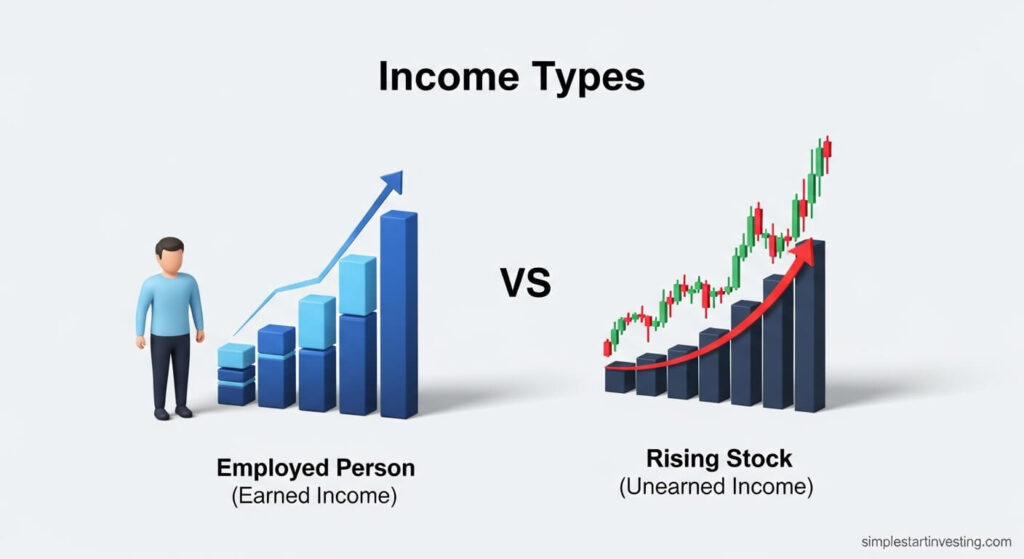
If your 17-year-old son works a summer job at Walmart and earns 5,000 dollars, that money is taxed at his normal rate. He gets to keep more of that money because his personal tax bracket is very low. Even if he earns 10,000 dollars, the Kiddie Tax doesn’t touch it.
However, if that same son has a brokerage account that earned 5,000 dollars in interest and dividends, the Kiddie Tax rules apply to that 5,000 dollars because he didn’t “work” for it in the eyes of the IRS.
This distinction is why many financial experts suggest that if a child wants to save their own hard-earned money, a Roth IRA for minors might be a better choice. Money inside a Roth IRA grows tax-free, and as long as it stays in the account for retirement, the Kiddie Tax isn’t an issue.
Common Mistakes That Lead to a Higher Tax Bill
One major mistake is selling too much stock in one year to pay for a child’s expenses, like a car or college tuition.

Suppose you sell a large chunk of stock in your child’s custodial account to pay for their freshman year of college. If the profit (capital gain) from that sale is 10,000 dollars, a large portion of that will be pushed into the “third bucket” and taxed at your high rate.
A better approach might be spreading those sales out over several years to stay under the threshold, or looking into other types of accounts that have different tax rules, such as a 529 College Savings Plan.
Another mistake is failing to file the correct forms. When the Kiddie Tax applies, you usually have to fill out IRS Form 8615 and attach it to the child’s tax return. In some cases, parents can choose to include the child’s income on their own return using Form 8814, but this isn’t always the best move and can sometimes result in paying even more in taxes due to how it affects other deductions.
How to Handle the Kiddie Tax Wisely
Understanding these rules doesn’t mean you should stop investing for your kids. It just means you should be strategic.
For most families, the 2,600-dollar threshold is quite generous. You can have a decent amount of money in a standard savings account or a small portfolio of stocks without ever hitting the limit. For example, if an account earns a 2% dividend yield, you would need over 130,000 dollars in the account before you even reached the threshold where the Kiddie Tax starts.

If you are lucky enough to have more than that set aside for your child, you might consider “tax-efficient” investments. These are investments that don’t pay out much cash annually but instead grow in value over time. Since you only pay the tax when the investment is sold, you have more control over when that income is recognized.
Additionally, many parents prefer 529 plans for education savings. Money in a 529 plan grows tax-free and can be withdrawn tax-free for qualified education expenses. Best of all, it is generally not subject to the Kiddie Tax rules at all.
How This Knowledge Helps You Decide
Knowing about the Kiddie Tax helps you avoid “accidental” taxes. It allows you to look at your child’s accounts once a year and say, “Okay, we are getting close to the limit. Maybe we shouldn’t sell those stocks until next January.”
It also helps you manage your expectations. If you are planning to use a custodial account to fund a major purchase for your child, you can factor in the tax cost ahead of time. You won’t be left wondering why the IRS is asking for a bigger check than you expected.
Financial literacy is about more than just picking the right stocks; it’s about understanding the environment those stocks live in. Taxes are a huge part of that environment. By keeping an eye on the Kiddie Tax thresholds, you ensure that more of your hard-earned money stays in your child’s hands and less goes to the government.
Final Thoughts for the Beginner Investor
The Kiddie Tax can sound intimidating, but it is really just the government’s way of saying “nice try” to people attempting to hide their own income in their children’s names. For the vast majority of families starting out, your child’s small investments will likely stay well within the tax-free or low-tax zones.
As your child’s wealth grows, just remember to keep those three “buckets” in mind. Monitor the dividends, be careful with large stock sales, and always double-check the current year’s limits, as the IRS does adjust them for inflation.
By staying informed, you can continue to build that bright financial future for your children with confidence and clarity.
Disclaimer: This content is for educational purposes only and does not constitute financial or tax advice. Tax laws are subject to change, and you should always consult with a qualified tax professional or check the latest IRS publications for your specific situation.