Have you ever looked at your paycheck and wondered where all the money went? You see your gross pay at the top, but the amount that actually hits your bank account is much smaller. Most of that gap is usually federal income tax. While we all have to pay our share, many people are actually overpaying the government every single month without realizing it. They wait until April to get a big tax refund, essentially giving the government an interest-free loan.
If you would rather have that money in your pocket today to pay for groceries, invest in the stock market, or build your emergency fund, you need to understand how to adjust W-4 withholding. The W-4 form is the document you give your employer to tell them how much tax to take out of your pay. By making a few simple updates to this form, you can take control of your cash flow and stop waiting for a once-a-year “bonus” that was actually your money all along.
What Exactly Is the W-4 Form?
Think of the W-4 form as a remote control for your paycheck. When you start a new job at a company like Walmart or Amazon, the human resources department asks you to fill out this form. Your answers tell the payroll system how to calculate the federal income tax withholding for every pay period.

If you tell the form you have many dependents or high deductions, the system takes out less tax, and your paycheck gets bigger. If you tell the form you have extra income from a side hustle or no dependents, the system takes out more tax, and your paycheck gets smaller. The goal is to get this number as close to your actual tax bill as possible so you don’t owe a mountain of money at the end of the year, but you also don’t overpay.
How it works for beginners: The W-4 is officially called the “Employee’s Withholding Certificate.” It doesn’t actually pay your taxes; it just estimates them. At the end of the year, when you file your tax return, the IRS looks at how much you actually owed versus how much was “withheld” via your W-4. If you withheld ten thousand dollars but only owed eight thousand, the IRS sends you back the two thousand dollar difference. That is your refund.
A real-world example at the office: Imagine Sarah works at Apple (AAPL). When she started, she was single and just filled out the basics on her W-4. Every two weeks, the company takes five hundred dollars out of her check for federal taxes. By the end of the year, she has paid thirteen thousand dollars. However, when she does her taxes, she realizes she only really owed eleven thousand dollars. The IRS sends her a check for two thousand dollars in April. Sarah feels like she won the lottery, but in reality, she just let the government hold her two thousand dollars for an entire year for free.
A common mistake: Many beginners believe that a large tax refund is a gift from the government or a sign that they are “good” at doing their taxes. They often use the refund as a forced savings account because they struggle to save money on their own throughout the year.
The right financial logic: A refund is a sign of an interest-free loan you gave to the government. If Sarah had adjusted her W-4 to withhold less, she could have had an extra one hundred and sixty-six dollars in every monthly paycheck. She could have put that money into a high-yield savings account or bought shares of an index fund, earning interest or dividends for herself instead of letting the government have the benefit of that cash.
Why You Should Aim for a “Zero” Refund
The ideal financial situation for many experts is to have a “zero” refund. This means you paid exactly what you owed—no more, no less. While being off by a few hundred dollars is normal, a massive refund usually means your monthly budget is tighter than it needs to be. When you adjust W-4 withholding, you are choosing to have your money now rather than later.
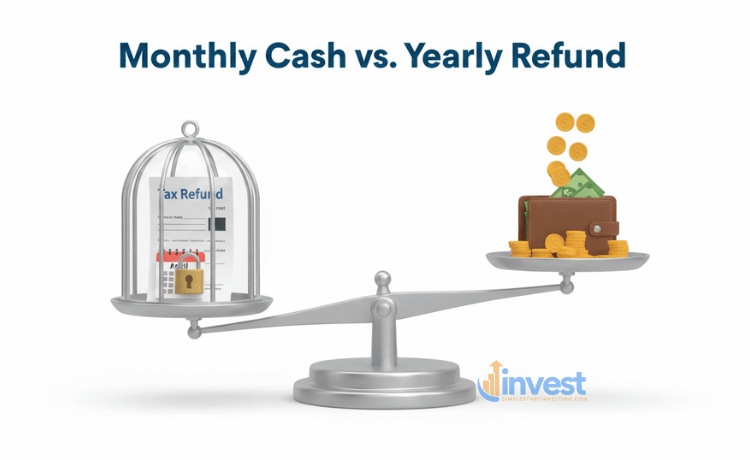
In the current economy, money today is worth more than money tomorrow. If you have high-interest credit card debt or you are trying to save for a house, having an extra two hundred or three hundred dollars a month is a game-changer. It allows you to avoid debt or build wealth faster. By the time April rolls around, that money could have already been working for you for months.
Breaking Down the W-4 Form Step-by-Step
The IRS updated the W-4 form recently to make it more accurate, but it can still look intimidating. Let’s walk through the logic of the main sections so you can feel confident making changes.
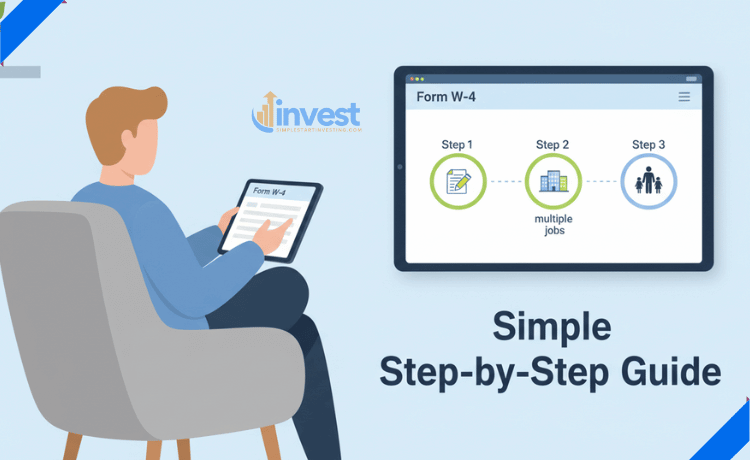
Step 1: Your Personal Information
This is the easy part. You provide your name, address, and Social Security number. The most important choice here is your “Filing Status.” You can choose Single, Married Filing Jointly, or Head of Household.
The Logic: Your filing status determines your standard deduction. For example, if you are married and filing jointly, the government assumes you have a much larger portion of income that isn’t taxed at all compared to a single person. Selecting the wrong status here is the fastest way to have the wrong amount of tax taken out.
Step 2: Multiple Jobs or Spouse Works
This section is for households where there is more than one source of income. If you have two jobs, or if you are married and your spouse also works at a place like Costco or Target, the IRS needs to know.
The Logic: When you have two jobs, each employer only knows about the money they pay you. They might think you are in a low tax bracket. But when you combine both incomes, you might actually be in a much higher bracket. If you don’t check the box in Step 2 or use the worksheet, both jobs will under-withhold, and you will end up owing a lot of money in April.
A real-world example: Mark works at Tesla (TSLA) and his wife works at JPMorgan Chase (JPM). If they both mark “Married Filing Jointly” but don’t account for each other’s income in Step 2, their employers will both give them the full “Married” tax break. When they file their taxes together, the IRS will realize they took the same tax break twice. They might end up owing five thousand dollars.
A common mistake: Beginners often leave Step 2 blank because they think the IRS “already knows” they are married or have another job. Your employer’s payroll system does not talk to the IRS in real-time about your other income. You have to tell it.
The right financial logic: To ensure accuracy, use the “Multiple Jobs Worksheet” on the form or, better yet, the online IRS Tax Withholding Estimator. This ensures your combined income is taxed at the correct rate throughout the year.
Step 3: Claiming Dependents
This is where you can significantly increase your take-home pay if you have children or other people you support financially.
The Logic: For 2026, the child tax credit has adjusted. Generally, you can claim two thousand two hundred dollars for each qualifying child under age seventeen. You can also claim five hundred dollars for other dependents, like an elderly parent you care for.
Instead of waiting to claim these credits on your tax return, Step 3 allows you to “pre-claim” them. This reduces the amount of tax withheld from your check immediately.
A simple math example: If you have one child, you are eligible for a two thousand two hundred dollar credit. If you put this on your W-4, your employer will divide that two thousand two hundred dollars by the number of pay periods in the year. If you get paid twice a month (twenty-four times a year), your employer will withhold about ninety-one dollars less from every single paycheck. That is ninety-one dollars of extra cash you get to keep every two weeks.
Step 4: Other Adjustments (The “Pro” Section)
This section is where you can really fine-tune your paycheck. It has three main parts:
- Step 4(a) – Other Income: If you have income that doesn’t have taxes taken out, like interest from a bank account, dividends from stocks like Microsoft (MSFT), or a side hustle, you can list it here. This tells your employer to take out extra tax from your main paycheck so you don’t have to pay a big bill later.
- Step 4(b) – Deductions: If you plan to claim more than just the standard deduction—perhaps because you have a large mortgage or give a lot to charity—you list the extra amount here. This tells your employer to take out less tax.
- Step 4(c) – Extra Withholding: This is a simple box where you can tell your employer to take out an exact extra dollar amount, like fifty dollars, from every check.
A common mistake: Many people are afraid to use Step 4 because they don’t want to “mess up.” They worry that if they ask for more money now, they will get in trouble with the IRS.
The right financial logic: As long as you are honest and use the worksheets provided by the IRS, you are not doing anything wrong. The goal of adjust W-4 withholding is accuracy. If you know you have a side business making an extra five thousand dollars a year, putting that in Step 4(a) is the most responsible thing you can do to avoid a surprise tax bill.
When Should You Change Your W-4?
You don’t just fill out a W-4 when you start a job and forget it forever. You can—and should—submit a new W-4 to your employer whenever your life changes. Most companies allow you to do this through an online payroll portal like Workday or Gusto.
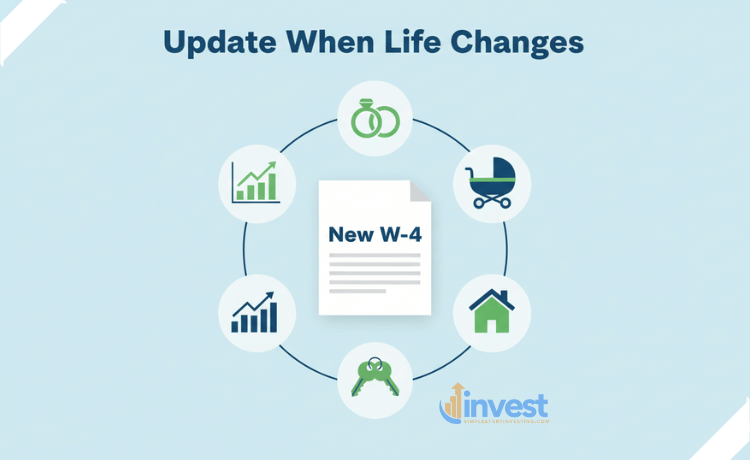
Key moments to update your withholding:
- You got married or divorced: Your filing status changes your tax rate and your deduction amounts.
- You had a baby: You are now eligible for the Child Tax Credit, which means you can take home more money every month.
- You bought a home: Mortgage interest can often be a deduction that reduces your tax bill.
- You started a side hustle: If you are making money on Etsy, Uber, or freelance writing, you might need to withhold more from your “9-to-5” job to cover the extra taxes.
- You got a big raise: Higher income might push you into a higher tax bracket.
The Secret Weapon: The IRS Tax Withholding Estimator
If all of this feels like too much math, the IRS has a free tool that does the hard work for you. It is called the Tax Withholding Estimator.
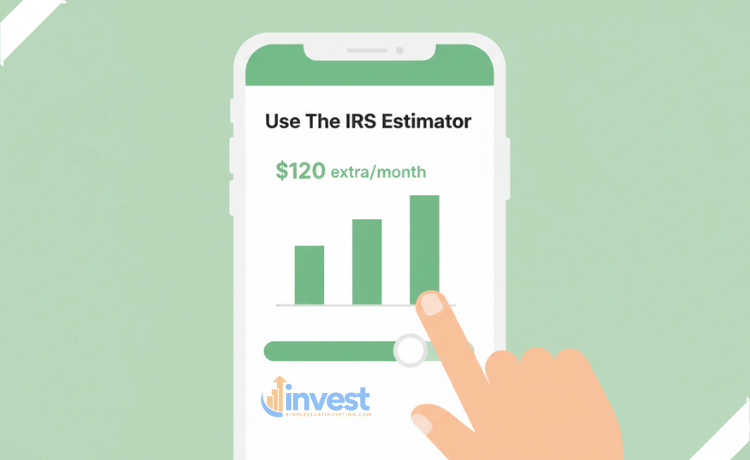
To use it, you will need your most recent pay stubs for you and your spouse. The tool will ask you questions about your income, your kids, and your investments. At the end, it will tell you exactly how to fill out each line of your W-4.
It even has a “slider” tool. If you want a one thousand dollar refund next year, you move the slider to one thousand, and it tells you what to write on the form. If you want a zero dollar refund and the maximum paycheck possible, you move the slider to zero. It is the most accurate way for a beginner to adjust W-4 withholding without needing a degree in accounting.
Example of using the tool: Imagine John works at FedEx. He realizes his last tax refund was five thousand dollars. He goes to the IRS website and uses the Estimator. The tool tells him that if he puts four thousand dollars in Step 3 of his W-4, he will get about four hundred dollars more in his monthly pay and still end up with a small refund of one thousand dollars. John does this, and now he uses that four hundred dollars a month to pay off his car loan early.
Common Misconceptions About Withholding
Many beginners are held back by myths they’ve heard about taxes. Let’s clear a few up so you can make the best decision for your wallet.
Myth 1: “If I take home more money, I’ll be in a higher tax bracket and pay more in total.”
This is a very common fear. People worry that “bumping up” their paycheck will somehow trick them into a higher tax category.
The Truth: The total amount of tax you owe for the year is based on your total income, not on how much you withhold. If you earn sixty thousand dollars, you owe a set amount of tax on that sixty thousand dollars regardless of whether you pay it monthly through your W-4 or all at once in April. Adjusting your withholding doesn’t change what you owe; it just changes when you pay it.
Myth 2: “The HR department will think I’m struggling if I ask for more money.”
Some employees feel embarrassed to update their W-4 to get a bigger paycheck, fearing it looks like they are desperate for cash.
The Truth: Payroll departments at large companies like Walmart or General Motors handle thousands of these forms. It is a purely administrative process. They don’t look at your W-4 and judge your financial status. In fact, most financial professionals view “zeroing out” your refund as a sign of high financial literacy.
Myth 3: “I can just write ‘Exempt’ and pay no taxes at all.”
Some people think they can just claim to be exempt from taxes to get their full gross pay.
The Truth: You can only claim “Exempt” if you had no tax liability last year and expect to have no tax liability this year. For most working adults making more than the standard deduction (which is fifteen thousand dollars for a single person this year), claiming exempt is not allowed and can lead to heavy penalties from the IRS.
Summary of the “Adjust W-4 Withholding” Strategy
To get the most out of your hard-earned money, follow this simple path:
- Check your last tax return: Did you get a refund bigger than one thousand dollars? If yes, you are overpaying the government.
- Use the IRS Estimator: Spend fifteen minutes with your pay stubs on the official IRS website.
- Update your form: Log into your company’s payroll portal and update the digital W-4.
- Watch your next check: You should see your “Net Pay” (the amount that goes into your bank) increase.
- Put that money to work: Don’t just spend the extra cash on coffee. Use it to pay down debt, build your “rainy day” fund, or invest in companies you believe in.
By taking these steps, you are no longer a passive observer of your finances. You are the manager of your own wealth. The W-4 is just a piece of paper, but when used correctly, it is a powerful tool to improve your daily life and your long-term financial future.
Please note: Tax laws and IRS regulations are subject to change. It is always a good idea to check the current year’s guidelines on IRS.gov or consult with a qualified tax professional regarding your specific situation.
Disclaimer: This content is for educational purposes only and does not constitute financial, legal, or tax advice. Always consult with a certified tax professional or financial advisor before making significant changes to your tax strategy.