The idea of the government stepping in to take a piece of what you’ve worked your whole life to build is a scary thought. You might have heard people whisper about the “death tax” at family gatherings or seen headlines about wealthy families losing half their fortune to the IRS. It sounds like something out of a movie, but for most Americans, the reality is much less dramatic.
When we talk about estate tax basics, we are looking at a specific type of tax that is triggered when someone passes away and transfers their wealth to their heirs. It is not a tax on the person who died, nor is it technically a tax on the people receiving the money. It is a tax on the “estate” itself—the legal entity that holds your stuff after you’re gone but before it reaches your family.

The good news is that under current rules, the vast majority of people will never owe a single penny in federal estate taxes. However, the rules are changing very soon. Understanding how this works now is the best way to ensure your house, your savings, and your legacy end up where you want them to be.
What Exactly is the Federal Estate Tax?
Think of the federal estate tax as a final accounting with the government. When you pass away, the IRS looks at everything you owned—your home, your bank accounts, your stocks, and even your jewelry. They add up the total value of all these items to determine your “Gross Estate.”
Once they have that total, they allow for certain deductions. For example, if you have a mortgage or other debts, those are subtracted from the total. If you leave money to a charity, that is subtracted too. Whatever is left is your “Taxable Estate.”
Now, here is the part that surprises many people: the government doesn’t just start taxing that amount from the first dollar. There is a massive “shield” known as the estate tax exemption. You only pay taxes on the amount that exceeds this shield. If your total wealth is below that limit, your family pays zero federal estate tax.
The Current Landscape and Why It’s Changing
Right now, the exemption limit is at an all-time high. Because of laws passed several years ago, individuals can pass on millions of dollars without triggering the tax. For a married couple, that shield is doubled. This is why, currently, fewer than one out of every one thousand people who pass away actually owe this tax.
However, we are approaching a “sunset” period. The laws that created these high limits are scheduled to expire at the end of this year. Unless Congress steps in to pass new laws, the amount you can shield from the IRS is expected to drop significantly—likely by about half.
If you are a homeowner in an expensive area or have been diligently saving in a 401k for decades, you might find yourself much closer to that new, lower limit than you expected. This shift is why understanding estate tax basics has suddenly become a priority for middle-class families, not just the ultra-wealthy.
What Counts as Your Estate?
One of the biggest mistakes beginners make is thinking the IRS only cares about the cash in their bank account. In reality, the definition of an “estate” is incredibly broad. The government wants to see the fair market value of everything you have an “incident of ownership” in at the time of your death.

Your Home and Real Estate
Your primary residence is usually the biggest piece of the puzzle. If your home was bought forty years ago for 50,000 dollars but is now worth 1 million dollars, the IRS counts the 1 million dollars toward your estate limit. They also count any vacation homes, rental properties, or land you own, even if those properties are in a different state.
Retirement Accounts and Investments
Your 401k, IRA, and brokerage accounts are all included. Even though these accounts might have beneficiaries listed, they still count toward the total value of your estate for tax purposes.
Life Insurance
This is where many people get caught off guard. If you own a life insurance policy on your own life, the payout—the death benefit—is often included in your taxable estate. For example, if you have a 2 million dollar life insurance policy intended to take care of your kids, that 2 million dollars is added to your other assets when the IRS calculates the tax. This single item can easily push a family over the exemption limit.
Business Interests
If you own a small business, a partnership, or even a side hustle with significant equipment or value, that must be appraised and added to the total.
The Marriage Advantage: Portability Explained
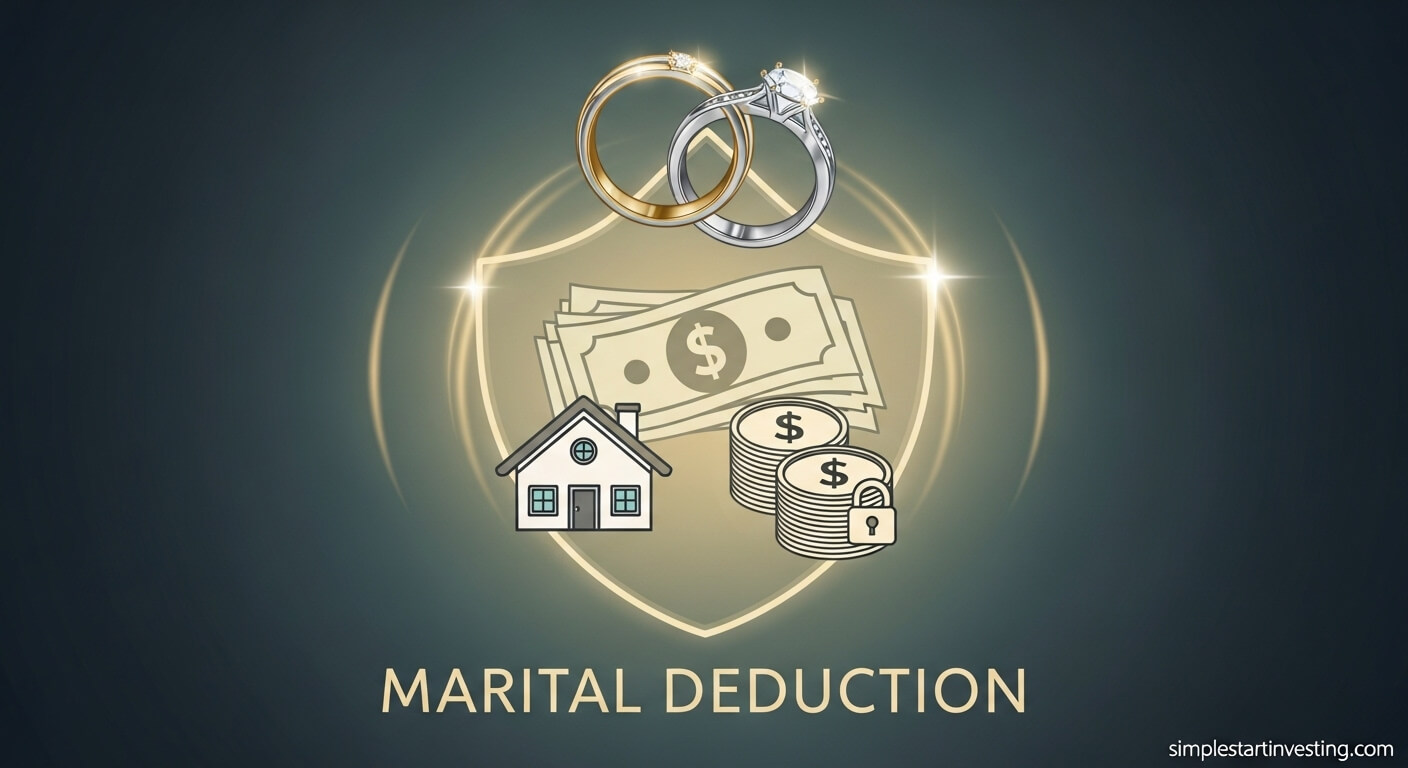
The tax code offers a very generous “pass” for married couples. Generally, you can leave an unlimited amount of money or property to your spouse without any tax being triggered. This is known as the unlimited marital deduction.

But what happens to the exemption shield of the first spouse to die? Does it just disappear? Not necessarily. There is a concept called portability. This allows a surviving spouse to “pick up” the unused portion of their late partner’s exemption and add it to their own.
Let’s look at a simple scenario. Imagine the current limit is 13 million dollars. A husband passes away and leaves everything to his wife. Because of the marital deduction, no tax is paid. Since he didn’t “use” his 13 million dollar shield to protect transfers to other people, his wife can file a tax return to claim that 13 million dollars. Now, she has her own 13 million dollar shield plus his 13 million, giving her a total of 26 million dollars in protection.
This is a powerful tool, but it is not automatic. The surviving spouse must file a specific tax return with the IRS shortly after the first spouse passes away to “elect” portability, even if no tax is owed at that time. Failing to do this simple paperwork is a common mistake that can cost families millions later on.
State Estate Taxes vs. Federal Estate Taxes
While much of the talk is about the federal government, you cannot ignore your local state laws. Many people live in states that have their own version of an estate tax or an “inheritance tax.”
The “trap” here is that state limits are often much, much lower than the federal limit. While the federal government might let you pass on 13 million dollars tax-free, your state might start taxing you once your estate hits 1 million or 2 million dollars.
If you live in a state with a low limit, you could owe hundreds of thousands of dollars to your state capital even if you owe zero to the IRS in Washington D.C. It is vital to check the specific rules for the state where you live and the state where you own any property.
The “Step-Up in Basis” Miracle
While we are talking about taxes, we have to mention one of the biggest benefits of the current system: the step-up in basis. This is a rule that can save your heirs a fortune in capital gains taxes.

Normally, if you buy a stock for 10 dollars and sell it for 100 dollars, you pay tax on the 90 dollar profit. But if you hold that stock until you pass away and leave it to your daughter, her “basis” (the price the IRS thinks she paid for it) is “stepped up” to the value on the day you died.
If the stock is worth 100 dollars when you pass, and she sells it the next week for 100 dollars, her taxable profit is zero. She essentially gets to bypass all the taxes on the growth that happened during your lifetime. This is why “holding until death” is a cornerstone strategy in estate tax basics.
Why You Can’t Just Give Everything Away Today
A common question people ask is: “Can I just give all my money to my kids the day before I die to avoid the tax?” The IRS is one step ahead of you on that one. They use what is called a “Unified Credit,” which links the gift tax and the estate tax together.
Every dollar you give away during your life (above a certain annual small limit) eats away at your lifetime estate tax shield. If you have a 13 million dollar shield and you give away 5 million dollars today, you only have 8 million dollars of protection left for your estate when you pass.
There is a small silver lining: the annual gift tax exclusion. You are allowed to give a specific amount of money to as many different people as you want every year without it counting against your lifetime shield. This year, that amount is 18,000 dollars per person.
If you have three children and six grandchildren, you and your spouse could technically give 18,000 dollars to each of them every single year. For a large family, this “slow leak” strategy can move a massive amount of wealth out of your taxable estate over a decade or two without ever touching your main exemption shield.
Common Myths About Estate Taxes
Because this topic is complex, misconceptions are everywhere. Let’s clear up a few of the big ones.
Myth 1: The government takes half of everything. The top federal estate tax rate is currently 40 percent. However, remember that this only applies to the amount over the exemption. If you are 1 dollar over the limit, you only pay 40 cents in tax, not 40 percent of your entire fortune.
Myth 2: Only billionaires need to worry. While that has been true recently, the upcoming drop in exemption limits means that anyone with a nice home in a city like San Diego or New York, plus a solid retirement account, could suddenly find themselves in the “taxable” zone.
Myth 3: Life insurance is always tax-free. While life insurance payouts are generally free of income tax for the beneficiary, they are very often included in the estate tax calculation. This is a critical distinction that many families miss.

Simple Strategies to Protect Your Assets
Even if you think you might be near the tax limit, there are ways to manage the situation. Most of these involve basic planning with a professional.
- Charitable Giving: Anything you leave to a qualified non-profit is deducted from your estate. You can support a cause you love and reduce your tax bill at the same time.
- Irrevocable Trusts: Some people use specific types of trusts to move assets out of their name legally. If you don’t “own” it anymore, the IRS can’t tax it when you die. However, these are permanent decisions and require giving up control.
- Paying for Education or Medical Bills: The IRS allows you to pay for someone else’s tuition or medical expenses directly to the institution without it counting as a gift. This is a great way to help grandchildren without eating into your tax shield.
How to Know if You’re at Risk
The best way to start is by doing a “mock audit” of yourself. Sit down and list out everything you own at its current resale value. Don’t forget the life insurance and the old retirement accounts from previous jobs.
If that total number is anywhere near 6 or 7 million dollars, you need to start paying attention. Because the laws are shifting back to these lower levels soon, being proactive now is the only way to ensure your family isn’t left with a massive tax bill they weren’t expecting.
Understanding estate tax basics isn’t about being greedy or unpatriotic; it’s about making sure the plans you’ve made for your loved ones actually come to fruition. The tax code is full of “traps” for the unprepared, but it is also full of “off-ramps” for those who take the time to learn the rules.
Disclaimer: This content is for educational purposes only and does not constitute financial, legal, or tax advice. Tax laws are subject to change, and you should consult with a qualified professional regarding your specific situation.