Buying a home is often the biggest milestone in a person’s financial life. You save for the down payment, you find the perfect neighborhood, and you finally sign the papers. But as many new homeowners soon discover, the cost of owning a home doesn’t stop at your mortgage payment.
There is a recurring bill that every homeowner must face: property taxes. For someone just starting out, this bill can feel like a mysterious, ever-changing number that the government just “decides” on. However, understanding property taxes for beginners is the first step toward true financial control.
In this guide, we will break down exactly how these taxes work, how your local government calculates them, and why your neighbor might be paying a completely different amount than you are—even if your houses look identical.
What Exactly Are Property Taxes?
At its simplest level, a property tax is a fee you pay to your local government for the privilege of owning real estate. Unlike your income tax, which goes to the federal government (IRS) to fund things like the military or national parks, property taxes stay local.
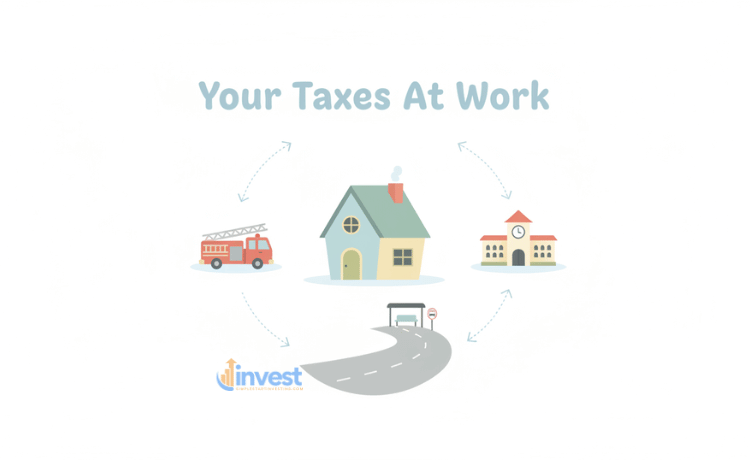
Think of it as a membership fee for your community. This money goes directly toward the services you use every day. It builds the roads you drive on, pays the salaries of the police officers and firefighters who keep you safe, and funds the public schools where your children learn.
Because these taxes are local, every city and county in the U.S. has its own set of rules. This is why a house in a quiet suburb in Texas might have a much higher tax bill than a similar house in a beach town in Florida. The “membership fee” depends entirely on what your local community needs to function.
The Core Concept: Assessed Value vs. Market Value
One of the most confusing parts for new homeowners is the difference between what their home is “worth” and what it is “taxed on.” To understand property taxes for beginners, you must distinguish between market value and assessed value.
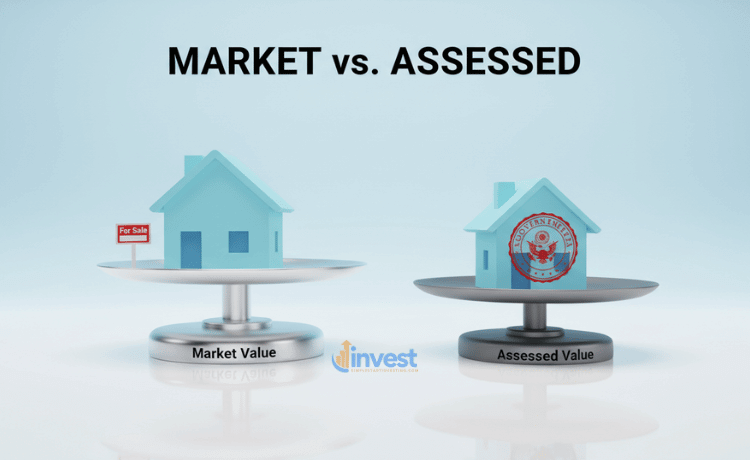
Simple Explanation Market value is the price a buyer is willing to pay for your home right now. If you put a “For Sale” sign in your yard and someone offers you 450,000 dollars, that is your market value. Assessed value, however, is a number assigned by a local government official called a “Tax Assessor.” This official looks at your home and decides its value specifically for tax purposes.
Real-World Example Imagine you buy a beautiful home in Atlanta for 400,000 dollars. This is the market value. However, the county tax assessor might use a rule where they only tax 40 percent of a home’s value. In this case, your “assessed value” for tax purposes would be 160,000 dollars. When the tax bill comes, you aren’t paying a percentage of the 400,000 dollars; you are paying a percentage of that 160,000 dollars.
Common Misconception Many beginners believe that if the housing market crashes and their home’s “Zestimate” or market value drops, their property tax bill will automatically go down the next month. They think the tax office watches the daily real estate market as closely as a Realtor does.
The Correct Mindset In reality, tax assessments often lag behind the market. The government might only re-evaluate your home’s value once every two or three years. While market value fluctuates daily based on buyer demand, your tax bill is based on a “snapshot” taken by the assessor. You should view the assessed value as a slow-moving baseline, not a real-time reflection of your wealth.
How the Bill is Calculated (Without the Math)
You might see terms like “millage rate” or “tax levy” on your bill. While these sound academic, they are just fancy ways of saying “the percentage the government takes.”
To find your tax amount, the local government takes your assessed value and multiplies it by the local tax rate.
For example, let’s say your home has an assessed value of 300,000 dollars. If your local town has a tax rate of 1 percent, your annual bill would be 3,000 dollars. If you live in a high-tax area with a rate of 2 percent, that same home would cost you 6,000 dollars a year.
It is important to remember that this “total rate” is actually a combination of several smaller rates. You might pay a small piece to the county, another piece to the city, a larger piece to the school district, and even a tiny piece to the local library or park fund. All these small slices add up to your one big property tax bill.
Note: Regulations regarding tax rates and assessment cycles change frequently. Always check with your local county tax office for the most current guidelines in your specific area.
The “Escrow” Bucket: How You Actually Pay
Most new homeowners don’t write a giant check to the tax office every year. Instead, they pay their taxes in small increments as part of their monthly mortgage payment. This is handled through something called an Escrow Account.

Simple Explanation Think of an escrow account as a mandatory savings account managed by your bank. Every month, when you pay your mortgage, the bank takes a portion of that money and puts it into this “bucket.” When your property tax bill is due at the end of the year, the bank takes the money out of the bucket and pays the government for you.
Real-World Example Let’s say your property taxes are 3,600 dollars for the year. Instead of asking you for 3,600 dollars all at once in December, your bank will add 300 dollars to your mortgage bill every month. By the time December rolls around, the bank has collected exactly enough to pay the bill. If you see your mortgage payment go up suddenly, it’s often because your property taxes increased, and the bank needs to collect more to fill the bucket.
Common Misconception Beginners often think their “mortgage payment” is fixed for 30 years if they have a fixed-rate loan. They are shocked when their monthly bill increases by 50 or 100 dollars a year later. They feel like the bank lied to them about their “fixed” rate.
The Correct Mindset While your loan’s principal and interest (the money you borrowed) stays the same, your total monthly payment is dynamic. Property taxes and home insurance premiums change every year. You must accept that your monthly housing cost will likely drift upward over time, even with a fixed-rate mortgage, because the “escrow” portion of your payment is tied to local government decisions and inflation.
Why Do Property Tax Bills Go Up?
It can be frustrating to see your tax bill rise when you haven’t even changed anything about your house. Usually, there are three main reasons for an increase.
- The Community Needs More Money: The local school board or city council might vote to increase the tax rate to fund a new high school or fix aging bridges.
- Market Growth: If everyone’s home in your neighborhood is suddenly selling for much more than it used to, the tax assessor will eventually notice and raise the assessed value of all homes in that area.
- Home Improvements: This is the one you can control. If you add a swimming pool, finish your basement, or add an extra bedroom, you are increasing the value of your property. The tax assessor will see the building permits you filed and will likely increase your home’s assessed value to reflect these upgrades.
If you are planning a major renovation, always factor in the “tax man’s share.” A 50,000-dollar kitchen remodel doesn’t just cost 50,000 dollars once; it could add hundreds of dollars to your tax bill every single year for as long as you own the home.
Hidden Savings: The Power of Tax Exemptions
Most people don’t realize that the government offers “discounts” on property taxes. These are known as exemptions, and they can save you thousands of dollars if you know how to apply for them.
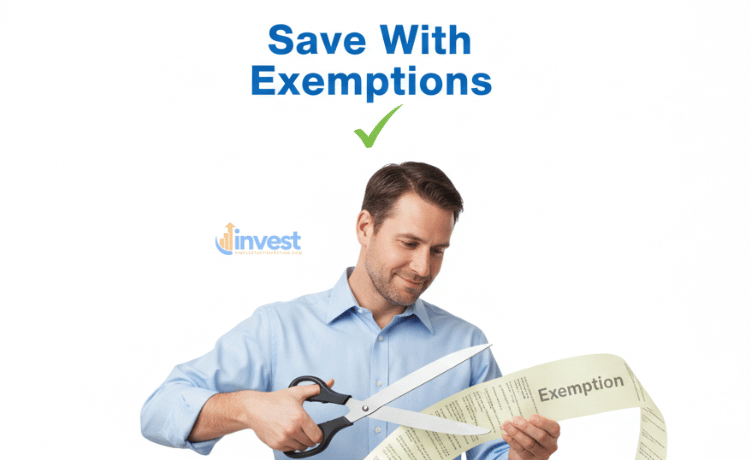
Simple Explanation An exemption is a rule that allows you to hide a portion of your home’s value from being taxed. It’s like a coupon for your tax bill. The most common one is the Homestead Exemption, which is available in many states for people who use their home as their primary residence (not a rental property).
Real-World Example Imagine your home is assessed at 250,000 dollars. In your state, there is a “Homestead Exemption” worth 50,000 dollars. If you apply for it, the government will act as if your home is only worth 200,000 dollars when they calculate your bill. Even though your house is still great, you are only paying taxes on a smaller portion of it.
Common Misconception Many beginners assume these discounts are automatic. They think the government knows this is their primary home and will just give them the discount. Unfortunately, if you don’t fill out the paperwork, the government will happily charge you the full amount.
The Correct Mindset You should treat property tax exemptions like a “financial scavenger hunt.” Every time you buy a house, or when you turn 65, or if you are a veteran, you should check your county’s website. These exemptions are your legal right, but they require you to be proactive. Failing to file for a Homestead Exemption is essentially leaving free money on the table.
What to Do if Your Bill is Too High: The Appeal Process
Believe it or not, the tax assessor can make mistakes. They might think your house has four bedrooms when it only has three, or they might think your lot is bigger than it actually is. When this happens, you have the right to “appeal” or challenge the value they placed on your home.
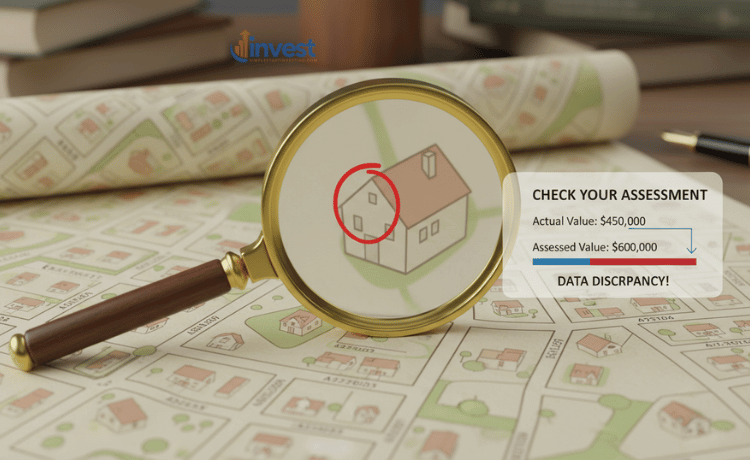
Simple Explanation Appealing is a formal way of saying, “Hey, I think you valued my house too high, and here is the proof.” You aren’t arguing that taxes are bad; you are arguing that the specific number they assigned to your house is inaccurate compared to similar houses in your neighborhood.
Real-World Example Suppose the county assesses your home at 500,000 dollars. However, you look at recent sales on a site like Zillow and see that three identical houses on your street sold for only 450,000 dollars. You can take those “comps” (comparable sales) to the tax board and ask them to lower your assessment to match the reality of the neighborhood.
Common Misconception New homeowners often fear that if they appeal their tax assessment, the government will “get mad” and find reasons to raise their taxes even more, or that the process requires an expensive lawyer.
The Correct Mindset The appeal process is a standard, professional procedure. In many counties, it is as simple as filling out a one-page form and providing a few photos or sales records. It is a business negotiation, not a legal battle. Many homeowners successfully lower their bills every year simply by showing that the assessor’s data was slightly out of date.
The Big Picture: Property Taxes and Your Budget
When you are looking at a house for sale, don’t just look at the price tag. Look at the “total cost of ownership.” A 300,000-dollar house in a high-tax county can actually be more expensive per month than a 350,000-dollar house in a low-tax county.
In recent years, especially with changes to federal tax laws (like the SALT deduction limits), the impact of property taxes on your overall financial health has become even more significant. For the current tax year, the IRS allows you to deduct up to 40,000 dollars of state and local taxes (including property taxes) if you itemize your deductions. This is a significant increase from previous years and can provide major relief for homeowners in high-tax areas.
Understanding property taxes for beginners means looking beyond the “sticker price” of a home. It means investigating the local tax rates, checking for exemptions, and being prepared for that monthly escrow payment to fluctuate. When you master these “ongoing costs,” you move from being a hopeful house-hunter to a prepared, confident homeowner.
Disclaimer: This content is for educational purposes only and does not constitute financial or legal advice. Tax laws vary by location and are subject to change; please consult with a qualified tax professional or your local tax assessor’s office for specific guidance.