Imagine waking up on payday, checking your bank account, and knowing exactly where every single dollar needs to go. No more guessing if you can afford that dinner out, and no more stressing about whether you have enough for rent at the end of the month. This sense of peace is exactly what the 50/30/20 budgeting rule is designed to provide.
For many people starting their financial journey in the United States, the word “budget” feels like a prison sentence. It sounds like a list of things you aren’t allowed to do. But the 50/30/20 budgeting rule is different. It is a flexible, bird’s-eye view of your money that focuses on balance rather than restriction. It doesn’t ask you to track every single penny spent on a pack of gum; instead, it asks you to look at the big picture of your life.
In this guide, we are going to break down this rule so you can stop wondering where your money went and start telling it where to go. Whether you are working your first job at a company like Walmart or you are a seasoned professional at a tech giant like Amazon, this framework works because it scales with your income.
What is the 50/30/20 Budgeting Rule?
At its heart, the 50/30/20 budgeting rule is a simple division of your take-home pay into three specific buckets. It was popularized by Elizabeth Warren, a legal expert and U.S. Senator, as a way to help families stay out of debt and build wealth without needing a degree in finance.
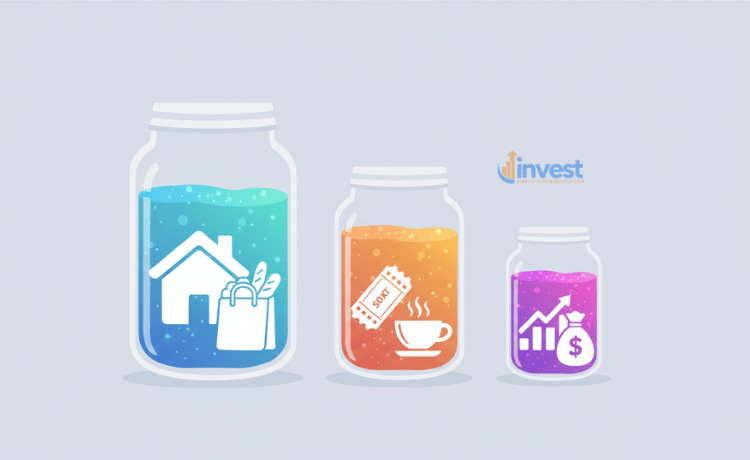
The logic is straightforward. You take your total income after taxes have been taken out and you split it up like this:
- 50 percent goes toward your Needs.
- 30 percent goes toward your Wants.
- 20 percent goes toward your Savings and Investing.
By using these three broad categories, you ensure that your basic survival is covered, you still get to enjoy your life today, and you are consistently building a better future for yourself tomorrow.
Why beginners often get this wrong
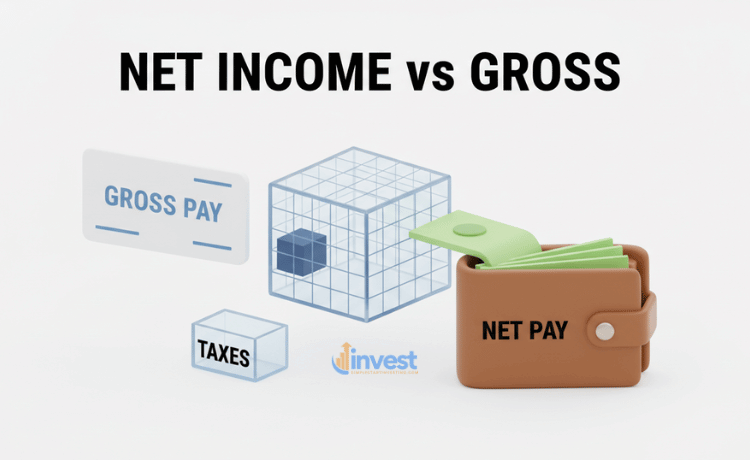
Most beginners try to budget by looking at their “gross income,” which is the big number on their offer letter before the government takes its share. This is a major mistake because you never actually see that full amount in your bank account.
How to think about it correctly
You must always base your budget on your “net income” or “take-home pay.” This is the actual amount that lands in your Chase or Bank of America account every two weeks. If you make 4,000 dollars a month but only 3,000 dollars actually hits your bank account after taxes and health insurance, your 50, 30, and 20 allocations must be based on that 3,000 dollars.
The First Bucket: 50 Percent for Needs
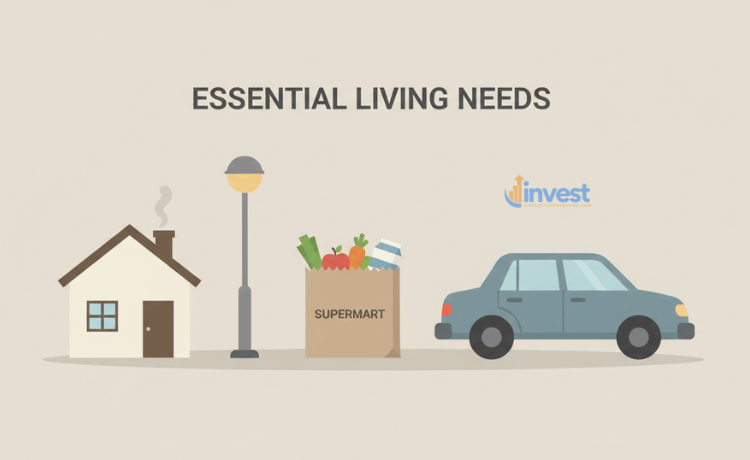
The largest portion of your income, exactly half, should go toward your absolute essentials. These are the bills that, if left unpaid, would seriously damage your life or your ability to work.
Common examples of “Needs” in the American market include:
- Housing: Your rent or mortgage payment.
- Utilities: Electricity from a provider like Duke Energy, water, and heat.
- Groceries: The basic food you buy at stores like Costco or Kroger (not the fancy organic snacks, but the fuel you need to survive).
- Transportation: Your car payment for a reliable vehicle like a Toyota, car insurance (think Geico or State Farm), and gas.
- Minimum Debt Payments: The minimum amount you must pay on your student loans or credit cards to avoid late fees.
The Plain English explanation
A “Need” is something you cannot live without. If you stop paying for it, there are immediate and harsh consequences, like losing your home or having your car repossessed.
A real-world example
Let’s say you live in a city like Dallas, Texas. Your rent is 1,200 dollars, your car insurance and gas cost 300 dollars, and your groceries and utilities cost another 500 dollars. In total, your needs are 2,000 dollars. To follow the 50/30/20 budgeting rule perfectly, your total take-home pay would need to be 4,000 dollars.
A common beginner mistake
Many people mistake “convenience” for a “need.” For example, someone might say they “need” to pay for a premium DoorDash subscription because they are too busy to cook.
The mindset shift
While time is valuable, a “need” is about survival and obligation. If things got really tough, you could cancel DoorDash and walk to the store. You cannot easily “cancel” your rent. Identifying what is truly a necessity is the first step to financial freedom.
The Second Bucket: 30 Percent for Wants
This is the part of the 50/30/20 budgeting rule that people love. It acknowledges that you are a human being who wants to have fun. You shouldn’t have to wait until you are 65 to enjoy your hard-earned money.

“Wants” include things like:
- Entertainment: Your Netflix, Disney+, or Spotify subscriptions.
- Dining Out: That Saturday night dinner at Olive Garden or your morning Starbucks run.
- Hobbies: Gym memberships at Equinox or buying new gear for your hiking trips.
- Shopping: Buying a new pair of Nike shoes or the latest iPhone from Apple when your current one still works fine.
- Travel: Saving up for a weekend trip to Florida or a flight on Delta to visit family.
The Plain English explanation
A “Want” is anything that makes your life better or more enjoyable but isn’t required for you to keep your job or stay healthy and safe.
A real-world example
Imagine you take home 3,000 dollars a month. According to the rule, you can spend 900 dollars on whatever you want. This could be 200 dollars for dining out, 100 dollars for various streaming services, 300 dollars for a new outfit, and 300 dollars set aside for a future vacation.
A common beginner mistake
New budgeters often feel guilty about the “Wants” category and try to set it to zero. They think, “I’ll just save everything!” This almost always leads to “budget burnout.” It is like going on a crash diet; eventually, you get so hungry for a treat that you binge-spend and give up on the budget entirely.
The mindset shift
The 30 percent for wants is there to make your financial plan sustainable. By giving yourself “guilt-free” permission to spend nearly a third of your money on things you love, you are much more likely to stick to the budget for years, not just weeks.
The Third Bucket: 20 Percent for Savings and Investing
This is where wealth is built. While the first 50 percent takes care of your present and the 30 percent makes your present fun, the final 20 percent takes care of your future self.

This bucket is used for:
- Emergency Funds: Building a safety net in a high-yield savings account (like those offered by Ally or Marcus by Goldman Sachs) so you can handle a surprise 500-dollar car repair.
- Retirement Contributions: Putting money into a 401(k) at work or a Roth IRA.
- Investing in the Stock Market: Buying shares of great American companies like Microsoft (MSFT) or Tesla (TSLA).
- Debt Pay-Down: Making extra payments on your high-interest credit cards beyond the minimum required.
The Plain English explanation
Think of this 20 percent as “paying yourself first.” Before you give your money to the landlord or the movie theater, you are setting aside a portion that belongs to you forever. This money works for you while you sleep.
A real-world example
If your take-home pay is 5,000 dollars, you should be moving 1,000 dollars into your savings and investment accounts every single month. Over a few years, that 1,000 dollars a month, if invested in a diversified group of stocks like those in the S&P 500, could grow into a significant fortune. For instance, if you invested that 1,000 dollars every month and earned a modest return, after 10 years, you wouldn’t just have the 120,000 dollars you put in; you would likely have much more because of the power of compound growth.
A common beginner mistake
Many beginners wait until the end of the month to see what is “left over” to save. Usually, by the 28th of the month, the “leftover” amount is zero dollars because they spent it on random wants.
The mindset shift
You must treat your savings and investments like a bill you owe to your future self. As soon as your paycheck hits your account, move that 20 percent out immediately. If you don’t see it, you won’t spend it.
Why the 50/30/20 Budgeting Rule Works So Well
The reason the 50/30/20 budgeting rule is the gold standard for beginners is its simplicity. Most people fail at budgeting because they try to create fifty different categories for things like “dry cleaning” and “pet toys.”
When life gets messy—maybe your pet needs a vet visit or your dry cleaner raises prices—those complex budgets break. But with the 50/30/20 rule, you only have three big buckets to worry about. If your pet’s vet bill is high this month, you know it either comes out of “Needs” (if it’s an emergency) or you have to reduce your “Wants” (eating out less) to cover it.
It adapts as you earn more
When you get a raise at your job—say, at a company like Home Depot or Costco—your budget automatically scales. If your paycheck goes up by 500 dollars, you know that 250 dollars can go toward a nicer apartment (Needs), 150 dollars can go toward a better hobby (Wants), and 100 dollars must go toward your investments (Savings).
How to Calculate Your Numbers Without a Calculator
Let’s walk through the logic of calculating your 50/30/20 budgeting rule totals using a simple example. We will use 4,000 dollars as a round number for take-home pay.
First, to find your “Needs” (50 percent), you simply take your total and cut it in half.
- If you have 4,000 dollars, half of that is 2,000 dollars. That is your limit for rent, food, and bills.
Next, to find your “Savings” (20 percent), think of it as two dollars for every ten dollars you earn.
- If you earn 4,000 dollars, you can think of that as forty groups of 100 dollars. For each 100 dollars, you save 20 dollars.
- Twenty times forty is 800 dollars. So, 800 dollars goes to your future.
Finally, the remaining amount is for your “Wants” (30 percent).
- You take your total (4,000 dollars), subtract your needs (2,000 dollars), and subtract your savings (800 dollars).
- What is left is 1,200 dollars. This is your “fun money” for the month.
By walking through the logic this way, you don’t need a complex spreadsheet to know if you are on track.
What if the Rule Doesn’t Fit Your Life?
In 2026, we have to be realistic. If you live in a high-cost city like San Francisco or New York City, your rent alone might take up 50 percent of your income. Does that mean the 50/30/20 budgeting rule has failed you?

Not at all. The rule is a framework, not a law. If your “Needs” are 60 percent because of high rent, you must make a choice. You can reduce your “Wants” to 20 percent, or you can reduce your “Savings” to 10 percent temporarily while you work on increasing your income.
The goal isn’t to hit the percentages perfectly every single month. The goal is to use the percentages as a North Star. If you realize your “Needs” are at 70 percent, the rule is telling you that you are “house poor” and might need a roommate or a side hustle to bring that number back down toward 50 percent.
Moving From Saving to Investing
Once you have mastered the 50/30/20 budgeting rule, your 20 percent bucket becomes very exciting. For a beginner, the first priority in this bucket is an “Emergency Fund.” You want to have enough cash in a safe place to cover three to six months of your “Needs.”
Once that safety net is built, you can start investing. This is where you buy pieces of companies. When you buy a share of a company like Alphabet (Google) or NVIDIA, you become a partial owner. As those companies grow and provide services to the world, the value of your shares can increase.
Instead of just spending your money at these businesses, you are now profiting from them. This shift from “consumer” to “owner” is the ultimate goal of the 50/30/20 budgeting rule.
A common myth about investing
Many people think you need thousands of dollars to start the 20 percent bucket.
The reality
In today’s market, many apps allow you to buy “fractional shares.” This means if a share of a big company costs 200 dollars, but you only have 20 dollars this week in your “Savings” bucket, you can buy a tiny piece of that company. The most important thing is the habit of consistency, not the size of the initial investment.
Steps to Start Today
- Look at your bank statement: Find out exactly how much money hit your account last month.
- Identify your “Needs”: Total up your rent, utilities, insurance, and basic groceries. If this is more than half of your income, look for ways to trim.
- Automate your “Savings”: Set up a transfer to your savings or brokerage account for the day after you get paid.
- Enjoy your “Wants”: Take that 30 percent and spend it without the usual “money stress.”
The 50/30/20 budgeting rule isn’t about being perfect. It’s about being aware. It gives you a language to talk about your money and a plan to follow so that you can live the life you want today while building the wealth you need for tomorrow.
Disclaimer: This content is for educational purposes only and does not constitute financial, legal, or tax advice. Regulations regarding taxes and retirement accounts can change; please check current IRS guidelines or consult with a certified financial professional for your specific situation.