You just landed a promotion at work. After months of hard work at a company like Amazon or Costco, your manager gives you the good news: a 10,000 dollar annual raise. You feel amazing. You start thinking about that newer SUV at the dealership or upgrading to a high-end apartment in a trendier part of town. This feeling is natural, but it is also where most people hit a wall on their journey to wealth.
The phenomenon you are experiencing is called lifestyle creep. It is one of the most common reasons why people who earn six-figure salaries in the US still find themselves living paycheck to paycheck. If you want to reach financial freedom early, understanding and managing lifestyle creep is more important than picking the “perfect” stock or finding a “get rich quick” scheme.
In this guide, we will break down what lifestyle creep is, why it happens, and how you can use your rising income to buy your freedom instead of just buying more “stuff.”
What Exactly Is Lifestyle Creep?
In simple terms, lifestyle creep (also known as lifestyle inflation) occurs when your standard of living improves as your income increases. As you make more money, things that used to be “luxuries” slowly become “necessities.”
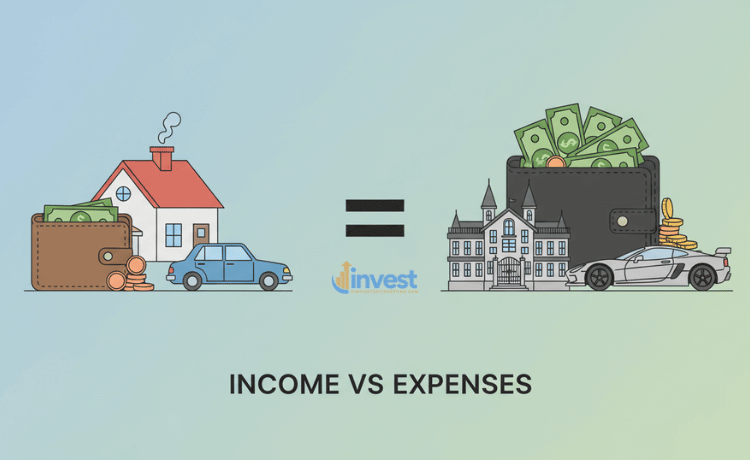
When you were in college, a 10 dollar meal felt like a treat. After a few years in the workforce, you might find yourself spending 25 dollars on lunch every day without thinking twice. The problem isn’t the lunch itself; it is the fact that your spending is rising at the exact same rate as your earnings. This keeps your “gap”—the money left over for investing—at zero.
The 4-Step Breakdown of Lifestyle Creep
The Explanation: Imagine your income is a rising tide. If your “spending boat” rises at the same speed as the water, you never actually get closer to the shore of financial freedom. You are just floating higher. To get ahead, you need the water (income) to rise while keeping the boat (spending) as steady as possible.
A Real-World Example: Let’s look at a professional working at Walmart’s corporate headquarters. They start with a salary of 60,000 dollars and live in a modest one-bedroom apartment. Two years later, they get promoted and now earn 80,000 dollars. Instead of keeping the apartment, they move into a luxury condo with a gym and pool that costs an extra 800 dollars a month. They also trade their reliable Toyota for a new BMW with a 600 dollar monthly payment. Despite earning 20,000 dollars more per year, they actually have less money at the end of the month than they did before.
The Common Mistake: Most beginners believe that “earning more money” is the primary solution to financial stress. They think, “If I just made 20,000 dollars more, I would finally be able to save.”
The Mindset Shift: The truth is that financial freedom is determined by the percentage of your income you keep, not just the total amount you earn. You don’t need a higher salary to start building wealth; you need a wider gap between what you earn and what you spend.
Why Your Brain Wants You to Spend More
It is important to understand that lifestyle creep isn’t a sign of being “bad with money.” It is actually a result of human psychology. In the US, we are constantly surrounded by advertisements and social media influencers showing off the “best” life. This creates a psychological effect called Hedonic Adaptation.

Hedonic Adaptation is the tendency of humans to quickly return to a relatively stable level of happiness despite major positive or negative events. When you buy a brand-new Tesla, you get a massive spike of dopamine. You feel successful. But after three months, that Tesla is just “your car.” The thrill is gone, but the high monthly payment remains. To get that same “high” again, you feel the need to buy something even more expensive.
Social Pressure and “Keeping Up with the Joneses”
In American culture, we often use spending as a way to signal our status to others. If your friends all start wearing designer clothes or taking luxury vacations to Hawaii, you might feel “behind” if you don’t do the same. This social pressure is a major driver of lifestyle creep.
However, true wealth is what you don’t see. It is the money in your 401(k), your Roth IRA, or your brokerage account at Fidelity or Vanguard. Spending money to look rich is the fastest way to stay poor.
The “Invisible” Cost of Upgrading Your Life
Lifestyle creep doesn’t always happen in big bursts like buying a house. Often, it happens through small, “invisible” upgrades that add up over time. These are often recurring costs that drain your bank account every single month.
The Trap of Subscriptions and Small Luxuries
Think about the services you use daily. Perhaps you upgraded from the basic Netflix plan to the 4K version. Then you added Disney+, HBO Max, and a premium gym membership. Separately, these costs seem small—maybe only 15 or 20 dollars each. But when you add ten of these “small” upgrades together, you are suddenly spending 200 dollars a month on things you barely use.
The Explanation: Every time you add a recurring expense, you are increasing your “burn rate.” This is the amount of money you must earn just to stay at zero. The higher your burn rate, the more “trapped” you are in your job.
A Real-World Example: Consider someone who shops at Target. Initially, they only buy what is on their list. As their income grows, they start adding “premium” items to the cart—organic snacks, high-end skincare, and home decor they don’t really need. This “basket creep” can easily add 100 dollars to every grocery trip. Over a year, that is thousands of dollars that could have been invested in an S&P 500 index fund.
The Common Mistake: Beginners often think, “It’s only 10 dollars; it won’t make a difference.”
The Mindset Shift: In the world of investing, every 10 dollars has a “future value.” If you invested that 10 dollars into a company like Apple or Microsoft and let it grow for 20 years, it could be worth significantly more. When you spend it on a subscription you don’t watch, you aren’t just losing 10 dollars today; you are losing the wealth that money could have created for your future self.
How to Calculate the True Cost of Lifestyle Creep (No Formulas Needed)
You don’t need complex math to see how lifestyle creep slows you down. Think of your financial journey as a race toward a finish line. That finish line is the point where your investments pay for your life, and you no longer have to work.
If your lifestyle costs 40,000 dollars a year, your “finish line” is much closer than if your lifestyle costs 80,000 dollars a year. When you let your expenses creep up, you are actually moving the finish line further away from you while you are trying to run toward it.
The Power of Keeping Your Expenses Level
Let’s use a simple comparison.
Imagine Two friends, Alex and Jordan. Both start earning 50,000 dollars and spend 40,000 dollars. They both save 10,000 dollars a year. Five years later, they both earn 100,000 dollars.
Alex lets lifestyle creep take over. Alex buys a bigger house and a fancy car. Alex now spends 90,000 dollars a year. Alex is still only saving 10,000 dollars a year, just like when they earned half as much.
Jordan decides to keep their lifestyle the same. Jordan still spends 40,000 dollars a year. Now, Jordan is saving 60,000 dollars every single year.
In this scenario, Jordan is building wealth six times faster than Alex, even though they earn the exact same salary. Jordan will be able to retire decades earlier. This is the “magic” of avoiding lifestyle creep.
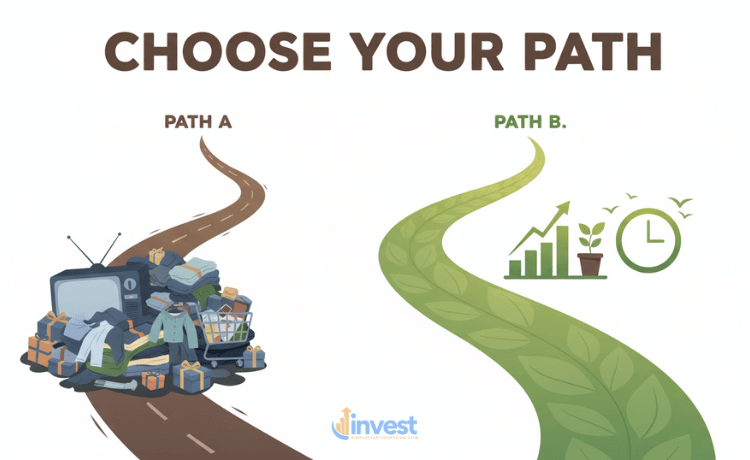
5 Practical Strategies to Defeat Lifestyle Creep
Now that we know what it is and why it’s dangerous, how do we stop it? Here are five practical steps you can take today.
1. The “50-Percent Rule” for Raises
When you get a raise or a bonus, it is tempting to spend all of it. Instead, try the 50-percent rule. Take half of your raise and use it to improve your current life—maybe a nicer dinner once a month or a small hobby. Take the other 50 percent and immediately “hide” it by increasing your automatic contributions to your 401(k) or Savings Account.
This way, you still get to feel the reward of your hard work, but you are also accelerating your path to freedom.

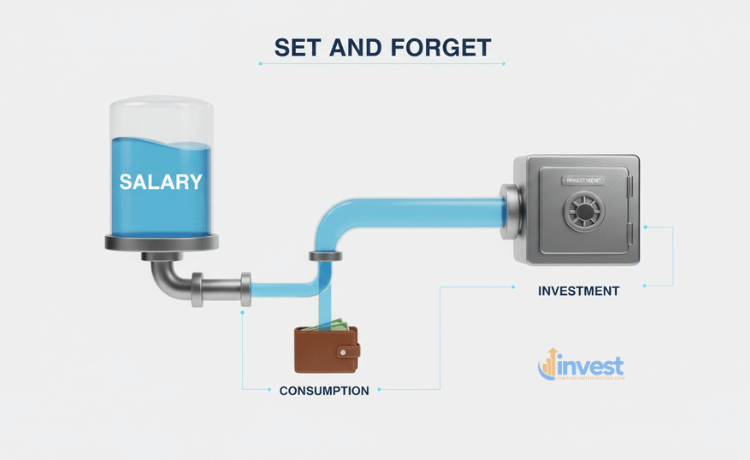
2. Automate Your Wealth
The best way to avoid spending money is to never see it in your checking account in the first place. Use your employer’s payroll system to send a portion of your check directly to a high-yield savings account or an investment account at a firm like Charles Schwab. If the money isn’t in your main account, you won’t count on it for your daily spending.
3. Practice Value-Based Spending
Instead of cutting everything out, focus on what actually brings you joy. This is called Value-Based Spending. If you truly love traveling, keep that in your budget. But to afford it, look at the areas you don’t care about—perhaps you are spending too much on a car you just use for commuting, or on clothes you rarely wear. Cut the things that don’t matter so you can fund the things that do.
4. The 24-Hour (or 30-Day) Rule
For any non-essential purchase over a certain amount (like 100 dollars), wait 24 hours before buying it. For larger items like a new MacBook or furniture from West Elm, wait 30 days. Often, the “must-have” feeling is just a temporary dopamine hit. After a day or a month, you will likely realize you don’t actually need the item, and the urge to spend will vanish.
5. Review Your “Automatic” Expenses Annually
Set a date once a year to look through your bank statements. Look for recurring charges. Ask yourself: “Am I still getting value from this?” If you haven’t used that streaming service or that gym in three months, cancel it. It is much easier to prevent lifestyle creep if you “weed the garden” of your expenses regularly.
Mindset Shift: The Freedom of “Enough”
The ultimate weapon against lifestyle creep is a strong sense of what is “enough.” In a world that constantly tells you that you need more, better, and faster, there is a quiet power in being content with what you have.

Choosing Time Over Stuff
When you avoid lifestyle creep, you aren’t “depriving” yourself. You are making a trade. You are trading a slightly fancier car today for the ability to never have to worry about money ten years from now. You are trading “status” for “freedom.”
The Explanation: Money is simply a tool that buys you choices. The less you require to live a happy life, the more choices you have. If you have low expenses and a large investment portfolio, you have the choice to leave a job you hate, start a business, or spend more time with your family.
A Real-World Example: Imagine someone who works at Google. They could easily afford a 2 million dollar home. But they choose to live in a 700,000 dollar home and drive a used Honda. Because their expenses are low, they have enough saved to retire at age 40. Their coworker, who bought the 2 million dollar home and two luxury SUVs, is forced to keep working 60 hours a week until they are 65 just to pay the bills.
The Common Mistake: Beginners often think that “living below your means” means living a miserable, cheap life.
The Mindset Shift: Living below your means is actually the most relaxing way to live. It eliminates the stress of “not having enough” and provides the ultimate luxury: peace of mind and the control of your own time.
Conclusion: Your Future Self Will Thank You
Avoiding lifestyle creep is a marathon, not a sprint. There will be times when you want to splurge, and that is okay. The goal isn’t to live like a monk; the goal is to be intentional.
By keeping your spending in check as your income grows, you turn your career into a wealth-building machine. You move from the cycle of “earn to spend” to the cycle of “earn to invest.”
Start today by looking at your last paycheck. If you got a raise recently, where did that money go? If it just “disappeared” into your daily spending, it’s time to take control. Redirect that money toward your future, and watch how quickly your financial freedom arrives.
Note: Regulations regarding tax accounts and investment limits can change annually. Please check current IRS guidelines or consult with a financial professional for the most up-to-date information.
Disclaimer: This content is for educational purposes only and does not constitute financial, legal, or tax advice. Always do your own research or consult with a qualified professional before making significant financial decisions.