When you finally find that perfect house and your offer gets accepted, the excitement is real. You are officially “under contract.” But then, your real estate agent mentions two terms that sound almost identical: the home appraisal and the home inspection. If you are a first-time buyer, it is easy to assume they are the same thing. After all, both involve a professional walking through the house with a clipboard, right?
Actually, confusing these two steps is one of the most common mistakes beginners make. Understanding the difference between a home appraisal vs inspection is vital because one protects your bank while the other protects your wallet. If you get them mixed up, you might end up buying a “money pit” or losing your dream home because of a financing glitch.
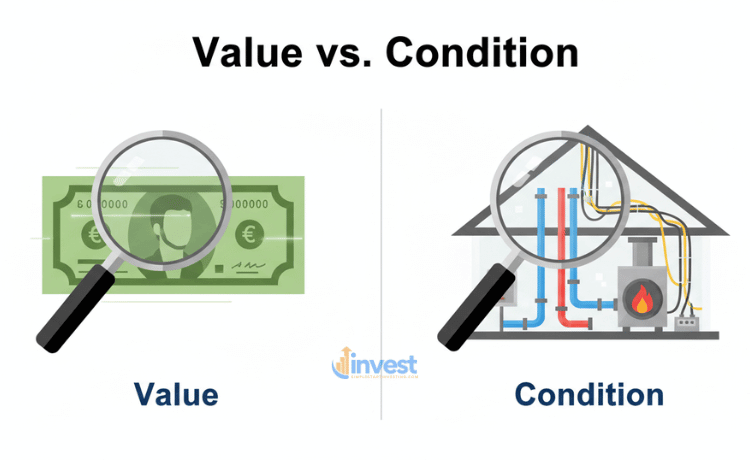
In this guide, we will break down exactly what each process does, why you need both, and how to handle the results like a pro. Whether you are worried about the roof or the resale value, we have you covered.
What is a Home Appraisal? (The Lender’s Shield)
A home appraisal is an unbiased professional opinion of a home’s value. When you apply for a mortgage, the bank does not just take your word for it that the house is worth 400,000 dollars. They need proof. They hire a licensed appraiser to look at the property and compare it to similar homes that sold recently in the same neighborhood.
The appraiser’s job is to make sure the bank isn’t lending you more money than the house is actually worth. If you stop paying your mortgage, the bank has to sell the house to get its money back. They want to be 100% sure the house can be sold for at least the amount of the loan.

How it works in plain English
Think of an appraisal like a “price check” at a grocery store, but for a house. The appraiser looks at the “bones” of the deal. They check the square footage, the number of bedrooms, the location, and the general condition. Then, they look at “comps”—short for comparable sales. If three houses just like yours sold for 350,000 dollars last month, the appraiser likely won’t say your house is worth 450,000 dollars, even if you really love it.
Real-world example
Imagine you are buying a lovely townhouse in a popular suburb. You agreed to pay 350,000 dollars. The appraiser visits the home. They see that similar townhouses on the same street sold for 345,000 dollars and 352,000 dollars. Because the price you offered is “in the ballpark” of what others paid, the appraisal comes back at 350,000 dollars. The bank is happy, and your loan moves forward.
A common beginner mistake
Many new buyers think that if a house “appraises for the value,” it means the house is in perfect condition. This is a dangerous assumption. An appraiser might see a 20-year-old roof and note that it is “functional,” but they won’t climb up there to check for tiny leaks or loose shingles. That isn’t their job.
The right financial logic
The appraisal is about the market value, not the mechanical health. Even if a house has a leaky faucet or a broken dishwasher, it might still be worth the asking price based on the location and the size of the lot. Never use an appraisal as a substitute for a health checkup of the home.
What is a Home Inspection? (The Buyer’s Shield)
A home inspection is a deep dive into the physical condition of the property. While the appraiser is looking at the “what it’s worth” side of things, the inspector is looking at “how it works.” You, the buyer, hire the inspector. They are your private investigator for the house.
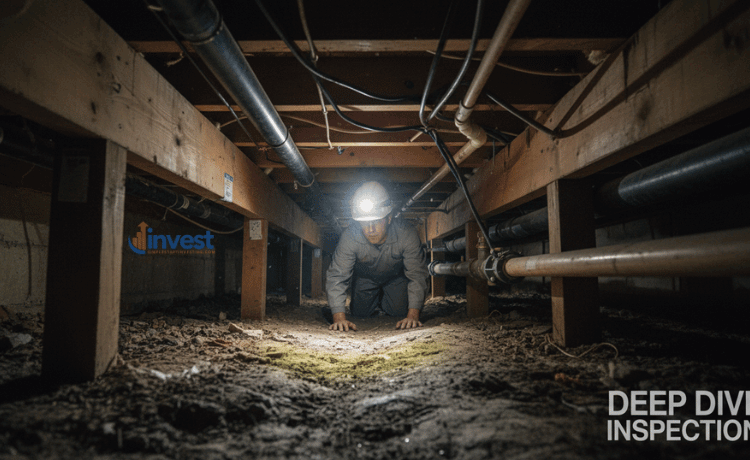
A good inspector will spend three to four hours poking around in places you didn’t even know existed. They crawl into attics, check the electrical panel, test every light switch, and run the water to look for leaks. Their goal is to find every defect, from a flickering light to a cracked foundation.
How it works in plain English
If the appraisal is a price check, the inspection is a “mechanic’s inspection” for a used car. You wouldn’t buy a car just because the price is fair; you want to know if the engine is about to explode. The inspector provides a massive report—often 50 pages or more—with photos showing exactly what needs repair.
Real-world example
Let’s look at a house being sold by a big company like Walmart or a major developer. Even brand-new homes can have issues. A buyer hires an inspector for a 400,000 dollar suburban home. The inspector finds that the HVAC system (the heating and cooling) is original from 15 years ago and is failing. They also find “active” termite damage in the crawlspace. These are “invisible” problems that an appraiser would likely miss, but they could cost the buyer 15,000 dollars to fix.
A common beginner mistake
Beginners often think the home inspection is a “pass or fail” test. It isn’t. An inspector won’t tell you, “You shouldn’t buy this house.” Instead, they give you the facts. Every house has issues—even new ones. Your job isn’t to find a perfect house; it’s to decide which problems you are willing to fix and which ones are deal-breakers.
The right financial logic
The inspection gives you negotiating power. If the inspector finds 10,000 dollars worth of necessary repairs, you can go back to the seller and ask them to lower the price or give you a “credit” at closing to cover the costs. This keeps your cash in your pocket.
Home Appraisal vs Inspection: Who Pays and Who Benefits?
One of the biggest differences is who the professional is actually working for. Even though you usually pay for both, their loyalties lie in different places.
The Cost and Ownership
- The Appraisal: Usually costs between 300 and 500 dollars. The lender (your bank) orders it, but the fee is added to your closing costs. The appraiser works to protect the bank’s investment.
- The Inspection: Usually costs between 300 and 600 dollars (more if you add specialized tests like radon or mold). You hire them directly. They work for you and only you.
Why the difference matters
If an appraiser finds a major problem, they tell the bank. The bank might then refuse to give you the loan until the seller fixes it. If an inspector finds a major problem, they tell you. You get to decide if you want to tell the bank, or if you just want to walk away from the deal quietly using your “inspection contingency.”
Dealing with the “Appraisal Gap” (The Money Gap)
In a competitive market, you might offer more for a house than the appraiser thinks it is worth. This is called an “appraisal gap,” and it is one of the most stressful parts of buying a home.

How the logic works
Let’s say you offered 400,000 dollars for a house. You plan to put down 20%, which is 80,000 dollars. This means you need a loan for 320,000 dollars.
However, the appraiser comes back and says the house is only worth 380,000 dollars. The bank says, “We will only lend you money based on the 380,000 dollar value.”
Now you have a 20,000 dollar “gap.” The seller wants 400,000 dollars, but the bank is only treating the house like a 380,000 dollar asset.
Your options when the appraisal is low
- Negotiate: Ask the seller to drop the price to 380,000 dollars.
- Meet in the middle: You pay 390,000 dollars, and the seller drops their price by 10,000 dollars. You would have to bring an extra 10,000 dollars in cash to the closing table to cover the gap.
- Dispute it: You can ask the lender for a “reconsideration of value” if you think the appraiser missed some recent high-priced sales in the area.
- Walk away: If you have an appraisal contingency in your contract, you can cancel the deal and get your deposit back.
The common mistake
Many beginners believe the bank will “just figure it out” or adjust the loan. They don’t. The bank’s numbers are strict. If there is a gap, someone has to pay for it in cash—either the buyer pays more, or the seller accepts less.
How to Use Your Inspection Report as a Tool
Once you have your inspection report, don’t panic. It will look like a long list of things “wrong” with the house. Even the best houses have 30 or 40 items on the list.

Focus on the “Big Three”
When looking at an inspection, ignore the small stuff like a loose doorknob or a cracked outlet cover. Focus on the “Big Three”:
- Safety: Electrical hazards, mold, or lead paint.
- Structure: Foundation cracks or sagging roofs.
- Mechanicals: A broken furnace, a failing water heater, or old plumbing.
Real-world example
You are buying a house with a “finished basement.” The inspector finds moisture behind the walls that the appraiser didn’t see. This moisture could lead to mold. Because you have an inspection report, you can ask the seller to hire a professional to waterproof the basement before you close. If they say no, you can walk away and find a drier house.
Why You Absolutely Need Both
You might be tempted to skip the inspection to save 500 dollars or to make your offer more attractive to the seller. In a “hot” market, this is a common tactic, but for a beginner, it is incredibly risky.
The risk of skipping
Imagine you buy a house for 500,000 dollars. It appraises perfectly, so the bank gives you the loan. You move in and discover the sewer line is collapsed—a 15,000 dollar repair. Because you skipped the inspection to “save money” or “win the bid,” you are now stuck with that bill.
The synergy of the two
The home appraisal vs inspection combo is your ultimate safety net.
- The appraisal ensures you aren’t overpaying for the neighborhood.
- The inspection ensures you aren’t overpaying for the condition.
Together, they make sure your investment is sound both on paper and in person.
Preparing for the Unexpected in 2026
The real estate market is always changing. Currently, appraisal standards are becoming more digital and data-driven. Organizations like Fannie Mae and Freddie Mac are using new reporting systems that make appraisals faster but also more precise.
At the same time, home inspectors are using high-tech tools like drones to check roofs and infrared cameras to find hidden leaks. While these technologies make the process better, the fundamental goal remains the same: protecting you and your lender.
A Final Mindset Shift
Don’t view these steps as “hurdles” to get over. View them as “filters.” They are there to catch problems before they become your problems. If an appraisal comes in low or an inspection finds a major defect, it might feel like a failure, but it is actually the system working to protect your financial future.
Regulations and market conditions can change quickly. It is always a good idea to check current guidelines from the Department of Housing and Urban Development (HUD) or consult with a local real estate professional to see how these rules apply to your specific area.
Summary Checklist for Beginners
To keep it simple, here is how you should think about these two critical steps:
The Home Appraisal:
- Who it’s for: The Lender.
- The Goal: Market Value.
- The Result: A dollar amount.
- The Big Risk: Overpaying or failing to get a loan.
The Home Inspection:
- Who it’s for: You (The Buyer).
- The Goal: Physical Condition.
- The Result: A detailed repair list.
- The Big Risk: Buying a house with hidden, expensive defects.
By keeping these two processes separate and respecting what each one does, you will navigate the home-buying journey with much more confidence. You aren’t just buying a place to sleep; you are making one of the biggest financial decisions of your life. Treat it with the care it deserves.
Disclaimer: This content is for educational purposes only and does not constitute financial or legal advice. Real estate laws and market conditions vary by state; please consult with a licensed professional in your area before making any purchasing decisions.