
Imagine you are walking through a bustling city center. You see a massive Walmart on one corner, a McDonald’s on another, and almost everyone you pass is carrying an iPhone. These companies are not just businesses; they are institutions. They have been around for decades, they have survived economic storms, and they are likely to be here for decades more. In the world of investing, we call the stocks of these reliable giants Blue Chip stocks.

If you are just starting your investing journey, the stock market can feel like a chaotic ocean. Blue Chip stocks are often seen as the sturdy, reliable ships that can help you navigate that ocean with a bit more confidence. They represent the largest, most financially sound companies in the United States and around the world. But what exactly makes a stock a “Blue Chip,” and why do they hold such a special place in the portfolios of both beginners and billionaire investors?
In this guide, we are going to peel back the layers of these market leaders. We will explore where the name comes from, why they are considered the “gold standard” of stability, and how you can use them to build a solid foundation for your financial future.
The Origin of the Name: Why “Blue Chip”?
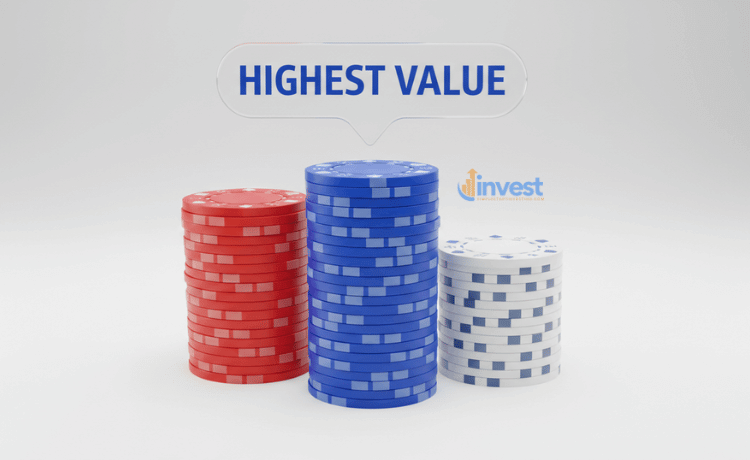
The term “Blue Chip” actually comes from the game of poker. In a standard set of poker chips, there are usually red, white, and blue chips. Historically, the blue chips held the highest monetary value. In the early 1920s, a writer at Dow Jones named Oliver Gingold noticed that certain stocks were trading at very high prices—often 200 dollars or more per share. He began referring to them as Blue Chip stocks.
Over time, the definition shifted. Today, a stock isn’t called a “Blue Chip” just because its price is high. Instead, the name refers to the quality and reliability of the company. It describes a company that has a long history of growth, a reputation for quality products, and the financial strength to weather almost any economic disaster.
Think of it like choosing a car. A startup tech company might be a flashy, experimental electric bike—it could go fast, but it might break down. A Blue Chip stock is like a high-end, heavy-duty truck. It is built to last, it can carry a heavy load, and you can trust it to get you where you need to go, even when the road gets bumpy.
What Defines a Blue Chip Stock?
There is no official list or government agency that “labels” a company as a Blue Chip. However, the investing community generally agrees on several key characteristics. When you are looking at companies like Microsoft (MSFT) or Johnson & Johnson (JNJ), you will see these traits shining through.
1. Massive Market Capitalization
Market capitalization, or “market cap,” is a fancy way of saying how much a company is worth in total on the stock market. To find this, you would take the total number of shares available and multiply it by the current price of one share. For example, if a company has 1,000 shares and each share costs 100 dollars, the market cap is 100,000 dollars.
Blue Chip stocks are almost always “Large-Cap” stocks. In the U.S. market, this usually means the company is worth at least 10 billion dollars. Many of them, like Apple (AAPL) or Amazon (AMZN), are actually worth trillions of dollars. This massive size gives them a “buffer” against market shocks.
2. A Proven Track Record
You won’t find a brand-new startup in the Blue Chip category. These companies have usually been public for many years, often decades. They have lived through recessions, high-interest rates, and changes in political leadership. They have proven that their business model works not just during the “good times,” but also when things get difficult.
3. Industry Leadership
A Blue Chip company is usually at or near the very top of its industry. Walmart (WMT) is a leader in retail. Visa (V) is a leader in payments. Disney (DIS) is a leader in entertainment. They have what investors call a “moat”—a competitive advantage that makes it very hard for other companies to come in and take their customers.
Deep Dive: The Power of Stability
The Simple Explanation Stability in the stock market means that while the stock price will still go up and down, it tends to be less “wild” than smaller companies. When the economy hits a rough patch, people might stop buying luxury sports cars, but they will still buy toothpaste from Procter & Gamble (PG) or groceries from Costco (COST). This consistent demand keeps these companies stable.
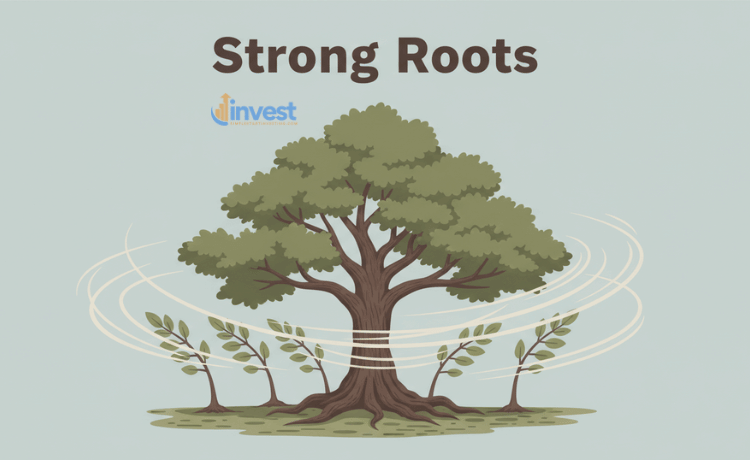
A Real-World Example Consider a company like Coca-Cola (KO). Even if there is a global economic slowdown, millions of people around the world will still buy a soda or a bottle of water every single day. Because their revenue is so predictable, the stock price doesn’t usually crash as hard as a speculative tech startup might during a market panic.
The Beginner’s Common Mistake Many new investors believe that “stable” means the stock price never goes down. They might buy a Blue Chip stock today and feel frustrated or scared if the price drops by 5% next week, thinking they chose a “bad” company.
The Correct Financial Logic Even the strongest companies in the world are subject to the laws of the stock market. A Blue Chip stock can still lose value. However, the “correct” way to view them is through the lens of resilience. A Blue Chip stock is much more likely to recover and reach new highs over the long term because the underlying business is so healthy. You aren’t buying them to get rich by next Friday; you are buying them because they are likely to be more valuable ten years from now.
Why Blue Chips Often Pay Dividends
One of the most attractive features of Blue Chip stocks for beginners is their tendency to pay dividends.
What is a Dividend?
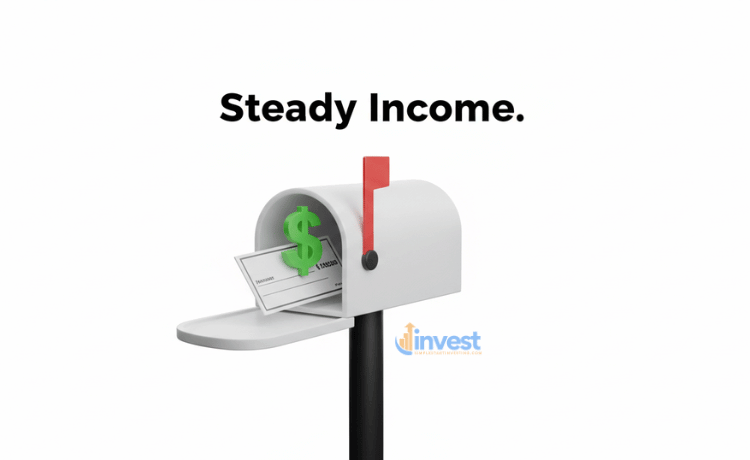
Think of a dividend as a “thank you” payment from the company to you, the shareholder. When a large company like Home Depot (HD) makes a profit, they have a choice: they can keep all that money to build new stores, or they can give some of it back to the people who own the stock. Because Blue Chip companies are already so large, they often have more cash than they need for growth, so they share the wealth with you.
How it Works (Without Complex Math)
If you own shares in a company that pays a dividend, they will typically send a small amount of cash into your brokerage account every three months.
Imagine you own 10 shares of a company, and they decide to pay a dividend of 1 dollar per share every year. At the end of the year, you will have received a total of 10 dollars just for holding the stock. If the stock price also goes up during that year, you win twice! You get the “capital appreciation” (the stock value rising) and the “income” (the cash payment).
Many Blue Chips are known as Dividend Aristocrats. These are elite companies that have not only paid a dividend every year but have actually increased the amount they pay every year for at least 25 consecutive years. This is a massive sign of financial health.
Deep Dive: The Dividend “Safety Net”
The Simple Explanation Dividends act as a cushion. Even if the stock market is “flat” (meaning prices aren’t moving up), you are still earning a return on your money through those cash payments. It’s like owning a rental property; even if the house doesn’t go up in value this year, you are still collecting rent every month.

A Real-World Example Let’s look at Johnson & Johnson (JNJ). They have increased their dividend for over 60 years in a row. Through wars, financial crises, and pandemics, they kept sending checks to their investors. If you started with 1,000 dollars and the company paid a 3% dividend, you would get 30 dollars in cash that year. Many investors choose to “reinvest” that 30 dollars to buy even more shares, which creates a “snowball effect” over time.
The Beginner’s Common Mistake New investors often chase “high yield” stocks—companies that promise to pay a massive 10% or 15% dividend. They think, “Why buy a Blue Chip paying 2% when I can get 10% elsewhere?”
The Correct Financial Logic A very high dividend is often a “red flag.” It might mean the company is in trouble and is trying to lure investors in, or that the stock price has crashed so hard the percentage looks high. Blue Chips usually pay a sustainable dividend. It is better to have a 2% or 3% dividend that is guaranteed to grow than a 10% dividend that might be canceled next month because the company ran out of money.
How to Identify Blue Chip Stocks
Since there isn’t a “Certified Blue Chip” stamp, how do you find them? The easiest way is to look at major Stock Market Indices. An index is just a list of stocks that represent a piece of the market.
The Dow Jones Industrial Average (The Dow)
The Dow is a list of 30 of the most significant companies in the United States. Almost every company on this list is considered a Blue Chip. It includes names like American Express (AXP), Boeing (BA), and Cisco (CSCO). When you hear on the news that “the market is up,” they are often talking about the Dow.
The S&P 500
This index tracks the 500 largest publicly traded companies in the U.S. While not every company in the S&P 500 is a “Blue Chip” (some might be slightly more volatile or newer), the top 100 companies in this index are the heart of the Blue Chip world.
Household Name Test
A simple, though not scientific, way to spot a Blue Chip is the “Kitchen Table Test.” If you can sit at your kitchen table and name 5 things in your house made by that company, and your parents or grandparents also used those products, it’s likely a Blue Chip. Companies like PepsiCo (PEP) or Procter & Gamble (PG) (which makes everything from Tide detergent to Crest toothpaste) fit this perfectly.
The Pros and Cons of Investing in Blue Chips
No investment is perfect. While Blue Chip stocks are great for beginners, you should understand both sides of the coin.
The Benefits (Pros)
- Lower Volatility: They don’t usually experience the massive 50% overnight drops that small, speculative stocks might.
- Passive Income: The regular dividend payments provide cash you can use or reinvest.
- Liquidity: These stocks are traded by millions of people. This means you can sell your shares and get your cash almost instantly during market hours.
- Safety in Numbers: Because big pension funds and “institutional investors” (like banks) own these stocks, they are less likely to be manipulated or disappear overnight.
The Drawbacks (Cons)
- Slower Growth: You shouldn’t expect a Blue Chip stock to double in price in a single year. They are already giants; it’s hard for a trillion-dollar company to grow as fast as a small startup.
- Higher Entry Price: Historically, some Blue Chip shares cost hundreds of dollars each. (However, most modern brokerages now allow you to buy “fractional shares,” meaning you can invest as little as 1 dollar).
- Institutional Risk: While they are stable, they aren’t immune to change. Think of companies like General Electric or IBM—once the kings of the market, they struggled as technology changed. Even a giant can stumble if it fails to innovate.
Deep Dive: The “Too Big to Fail” Myth
The Simple Explanation Just because a company is a household name doesn’t mean it is a “safe” bet forever. The world changes. Companies that were “Blue Chips” forty years ago might not even exist today because they didn’t keep up with the times.
A Real-World Example Think of Intel (INTC). For decades, they were the undisputed kings of computer chips. They were the ultimate Blue Chip. However, as mobile phones and Artificial Intelligence became more important, other companies like Nvidia (NVDA) started to take their lead. Intel remained a “giant,” but its stock performance struggled because it lost its edge.
The Beginner’s Common Mistake Beginners often think, “I’ll just buy one Blue Chip stock, like Apple, and put all my money there because it’s safe.”
The Correct Financial Logic True safety comes from diversification. Even the best Blue Chip can have a bad year or face a lawsuit. Instead of picking just one “winner,” a better strategy for a beginner is to own a “basket” of Blue Chips across different industries—some tech (Microsoft), some healthcare (UnitedHealth), some retail (Walmart), and some finance (JPMorgan Chase). This way, if one industry has a bad year, the others can help keep your portfolio steady.
How to Start Investing in Blue Chip Stocks
If you are ready to add some of these giants to your portfolio, you don’t need a million dollars to start. Here is the step-by-step logic for a beginner:

- Open a Brokerage Account: Use a reputable U.S. broker.
- Look for “Fractional Shares”: If you want to buy Microsoft but one share costs 400 dollars and you only have 50 dollars, fractional shares allow you to buy “part” of a share. You would own 12.5% of a share, and you would even get 12.5% of the dividend!
- Consider an ETF: If picking individual companies feels overwhelming, you can buy an Exchange-Traded Fund (ETF) that focuses on Blue Chips. For example, an ETF that tracks the “Dow Jones” buys all 30 Blue Chip stocks for you in one single investment.
- Set it and Forget it: Blue Chip investing works best over years and decades. Don’t check the price every hour. Let the company do the hard work of making products and earning profits while you go about your life.
Summary: Building Your Financial Fortress
Blue Chip stocks are the bedrock of a conservative, long-term investment strategy. They offer a unique blend of size, history, and financial rewards through dividends. While they won’t make you an overnight millionaire, they are designed to preserve and steadily grow your wealth.
By focusing on these industry leaders, you are betting on the continued success of the global economy. You are aligning yourself with companies that have the resources to hire the smartest people, buy the best technology, and survive the toughest times.
Remember, the goal of a “Simple Start” is not to beat the market with a lucky guess, but to build a foundation that allows you to sleep soundly at night. Blue Chips are the bricks and mortar of that foundation.
Disclaimer: This content is for educational purposes only and does not constitute financial advice. The stock market involves risk, and past performance of “Blue Chip” companies does not guarantee future results. Please consult with a qualified financial professional before making any investment decisions.