
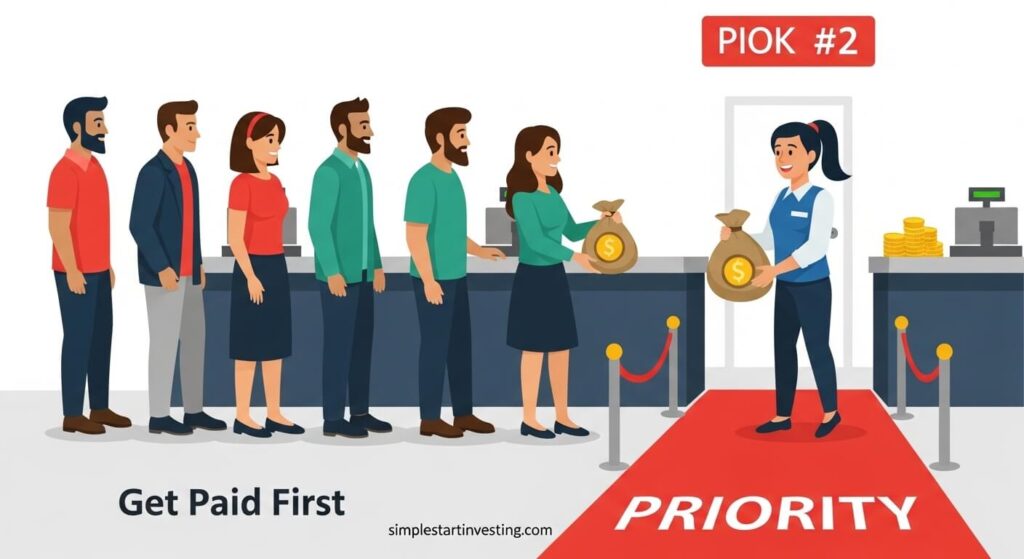
Imagine you are standing in line at a popular local bakery. The shop has two types of customers: the regulars and the “Preferred” members. When the fresh batch of cookies comes out, the Preferred members always get served first. Even if there are only ten cookies left and fifty people in line, those Preferred members get their treat before a single regular customer gets a crumb.
In the world of investing, preferred stocks work almost exactly like that bakery membership. They occupy a unique middle ground in the financial world, sitting right between the stability of bonds and the growth potential of common stocks. If you have ever felt that bonds are too “boring” but the stock market feels like a wild roller coaster, understanding preferred stocks might be the bridge you are looking for.

Many beginners overlook this asset class because it sounds complicated or “exclusive.” However, once you peel back the layers, you will see that preferred stocks are simply a way to own a piece of a company while prioritizing steady, predictable income over the chance of hitting a massive jackpot. Let’s break down exactly what makes these “hybrid” assets tick and why they might—or might not—fit into your personal financial journey.
What Are Preferred Stocks Exactly?
To understand preferred stocks, you first have to understand the two heavyweights of the investing world: stocks and bonds. When you buy a regular “common” stock, you are buying a tiny piece of ownership. If the company grows, your stock price goes up. If they pay a dividend, you might get a slice of the profit.
When you buy a bond, you are essentially acting as a lender. You give the company money for a set period, and they promise to pay you back with interest. You don’t own any part of the company; you just own their debt.
Preferred stocks are the “platypus” of the financial animal kingdom. They have the bill of a duck (the fixed income of a bond) but the body of a mammal (the ownership structure of a stock). When you buy a preferred share, you are an owner, but your experience will feel a lot more like being a lender.
The company issues these shares to raise money, just like common stock. However, they promise to pay you a specific, fixed dividend amount on a regular schedule. Unlike common stock dividends, which can go up or down based on the company’s mood or quarterly profits, preferred dividends are generally set in stone from the day the shares are issued.
Why the Word “Preferred”?
The name isn’t just a marketing gimmick to make you feel fancy. It refers to a very specific legal hierarchy in the world of corporate finance. In the eyes of the law and the company’s accountants, preferred shareholders have “preference” over common shareholders in two major scenarios.
1. The Dividend Waiting List
As we mentioned with the bakery example, preferred shareholders get paid their dividends first. If a company like a major bank or a utility provider hits a rough patch and realizes they don’t have enough cash to pay everyone, they are legally required to pay the full dividend to preferred shareholders before they can give a single penny to the common shareholders.
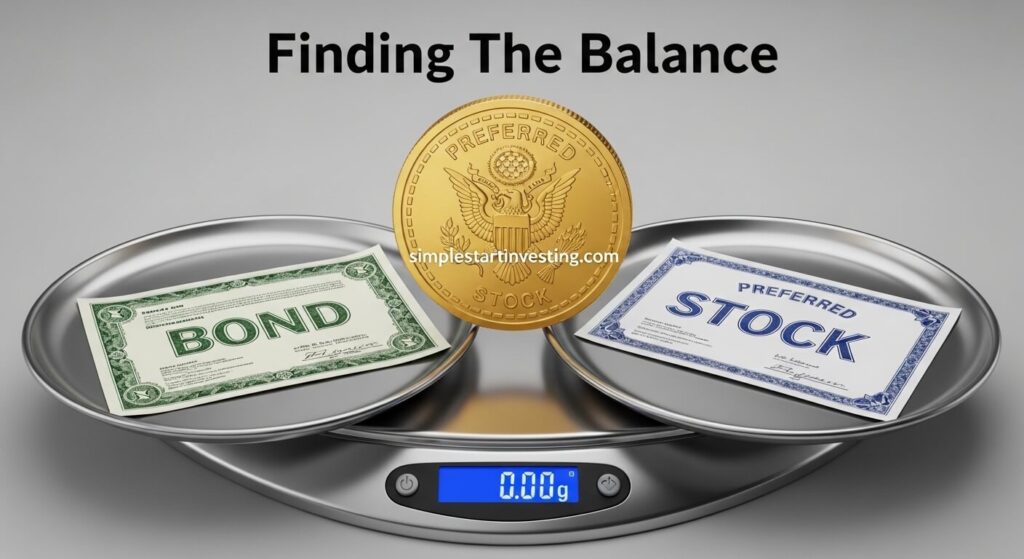
For a beginner, this adds a layer of “income insurance.” You know that as long as the company is making even a little bit of money, you are at the front of the line for your payout.
2. The Worst-Case Scenario: Liquidation
Nobody likes to think about a company going bankrupt, but it is a reality of the market. If a company goes out of business and has to sell off all its desks, computers, and buildings (a process called liquidation), the cash is handed out in a specific order.
First, the government gets its taxes. Second, the bondholders and lenders get paid back because they are creditors. Third—and this is your spot—the preferred stockholders get whatever is left. Finally, if there is anything left after that (which there often isn’t), the common stockholders get their share. Being “preferred” means you have a much better chance of getting some of your investment back than the average investor if things go south.
The Bond-Like Qualities of Preferred Stocks
If you look at a preferred stock on a trading app, it might look like a regular stock, but it behaves very differently. One of the biggest differences is how the price moves.
Common stocks move based on how much people think the company will grow in the future. Preferred stocks move primarily based on interest rates. Because the dividend on a preferred stock is fixed—say, 5 dollars per year—it acts like a “fixed-income” instrument.
If you have a preferred stock that pays 5%, and suddenly new bonds in the market start paying 7%, your preferred stock becomes less attractive. Why would someone pay full price for your 5% yield when they can get 7% elsewhere? Consequently, the price of your preferred stock might drop. Conversely, if interest rates in the general economy fall, your “locked-in” high dividend becomes very valuable, and the price of your shares might go up.
The Trade-Off: What You Give Up
In finance, you rarely get something for nothing. To get that “preferred” status and the steady check in the mail, you have to sign away a few rights that common stockholders cherish.
No Voting Rights
When you own common shares of a company, you usually get to vote on who sits on the board of directors or whether the company should merge with another giant. Preferred stockholders almost never have voting rights. You are essentially a “silent partner.” You get your check, you keep your seat at the table, but you don’t get a say in how the kitchen is run.
Limited “Upside” Potential
This is the part that catches many beginners off guard. If you bought common stock in a tech company ten years ago and the company’s value tripled, your stock price would likely triple too.
Preferred stocks don’t work that way. Because their value is tied to their fixed dividend, their price tends to stay relatively stable near the “Par Value” (the price they were originally issued at, often 25 dollars in the U.S. market). You won’t see your 25-dollar preferred share turn into 500 dollars, even if the company becomes the most successful business on Earth. You are trading that “moonshot” potential for the “steady paycheck” of dividends.
Common Misunderstandings About Preferred Stocks
Because they are a hybrid, it is very easy to misunderstand how they fit into a portfolio. Here are the most frequent mistakes beginners make.
Thinking They Are “Safe” Like Savings Accounts
Just because preferred stockholders are ahead of common stockholders doesn’t mean the investment is “safe” in the way a bank account is. If the company goes completely under, you can still lose every penny. Preferred stocks are still equity, not a guaranteed debt. They are riskier than bonds from the same company.
Ignoring the “Callable” Feature
This is a technicality that can bite you if you aren’t careful. Most preferred stocks are callable. This means that after a certain number of years, the company has the right to buy the shares back from you at the original price (the Par Value).
Imagine you bought a preferred stock for 27 dollars because it pays a great dividend, but the company’s “call price” is 25 dollars. If the company decides to “call” the stock, they will force you to sell it back to them for 25 dollars, and you just lost 2 dollars per share. Always check if a stock is callable before diving in.
Confusing Them with “Preferred Rewards”
Don’t confuse “preferred stock” with a “preferred checking account” or a “gold card” at a department store. One is a financial security regulated by the SEC; the other is a marketing loyalty program.
Understanding the “Cumulative” Feature
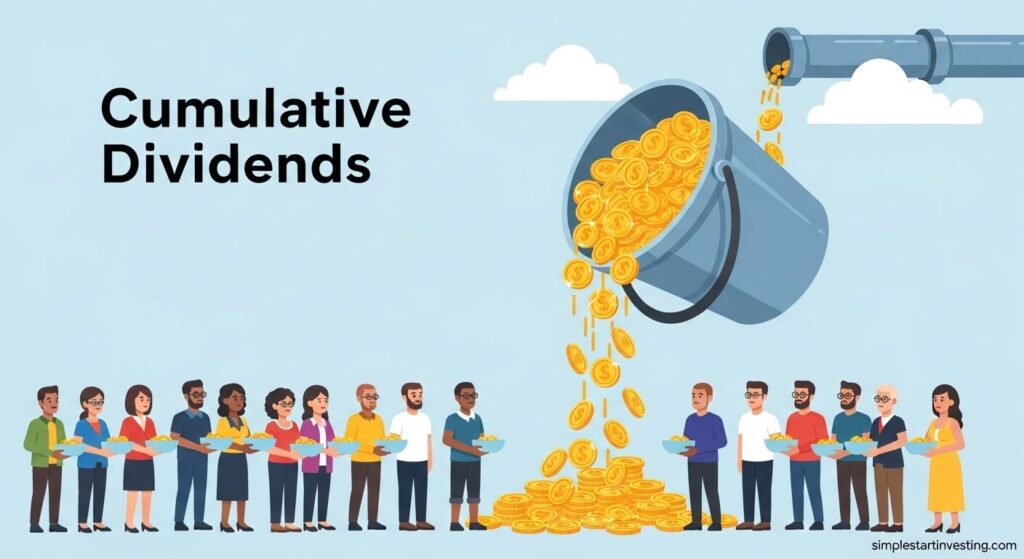
When researching preferred stocks, you will often see the word cumulative. This is one of the most investor-friendly features in existence.
If a preferred stock is “cumulative,” and the company runs out of money and misses three dividend payments, they aren’t off the hook. Those missed payments go into a “bucket.” Before the company is allowed to pay a single cent to common shareholders in the future, they must first empty that bucket and pay you all the back-payments they missed.

If a stock is “non-cumulative,” and they miss a payment, it’s just gone. Most beginners prefer (pun intended) the cumulative version for that extra layer of protection.
Tax Benefits: A Hidden Bonus
In the United States, preferred stocks often come with a nice tax perk. Many of the dividends paid by preferred stocks are considered Qualified Dividends.
Without getting into complex math, this basically means the IRS taxes that income at a lower rate than your regular paycheck. If you are in a higher tax bracket, getting a 5% dividend that is “qualified” can actually put more money in your pocket than getting 5% interest from a regular bond, which is usually taxed at higher ordinary income rates.
Note: You should always check the current tax code or talk to a professional, as these rules can change.
How to Think About the Numbers
Let’s look at a simple scenario to see how a preferred stock might work in your portfolio compared to a common stock.
Suppose a famous coffee company, let’s call it “Star-Bucks-Co,” issues both common and preferred shares. You decide to buy 100 shares of the preferred stock at 25 dollars per share. The company promises a 6% annual dividend.
In this case, 6% of your 25-dollar share means you will receive 1.50 dollars per share every year. Since you have 100 shares, you can expect 150 dollars in your account every year, usually paid out in quarterly chunks of 37.50 dollars.
Even if the coffee company has a bad year and their common stock price drops from 100 dollars to 50 dollars, your “contract” for that 1.50 dollars per share remains the same. As long as the company isn’t literally closing its doors, you continue to collect your 150 dollars a year. However, if the coffee company invents a new drink that makes their profits quadruple, the common stockholders might see their shares double in value, while your shares will likely stay right around that 25-dollar mark.
You chose the “guaranteed” 150 dollars over the “gamble” of the common stock’s growth.
Are Preferred Stocks Right for a Beginner?
The answer depends entirely on your goals.
Preferred stocks might be for you if:
- You are looking for a higher yield than what most bonds or savings accounts offer.
- You want a predictable stream of income (passive income) to help pay bills or reinvest.
- You have a lower tolerance for the massive price swings often seen in common stocks.
Preferred stocks might NOT be for you if:
- You are young and trying to grow a small amount of money into a huge fortune over 30 years.
- You want to have a vote in how companies are run.
- You are worried about rising interest rates making your fixed-income assets lose value.
How Most People Start: Preferred ETFs
Buying individual preferred stocks can be tricky because you have to read a lot of fine print regarding “call dates” and “cumulative rights.” For many beginners in the U.S. market, the easiest way to get exposure is through an Exchange-Traded Fund (ETF) that specializes in preferred stocks.
An ETF is like a basket. Instead of buying one preferred stock from one bank, you buy one share of the ETF, and it owns hundreds of different preferred stocks for you. This spreads out your risk. If one company in the basket fails, it only represents a tiny fraction of your total investment. It’s a “set it and forget it” way to enter this hybrid market.
Final Thoughts for the New Investor
Preferred stocks are a powerful tool for anyone who values income and priority. They aren’t the “get rich quick” vehicle of the stock world, but they are the “stay steady” vehicle. By understanding that you are trading voting rights and huge growth for a higher place in the payment line and a fixed dividend, you can make an informed decision about whether this hybrid asset belongs in your brokerage account.
Remember, every investment involves a trade-off between risk and reward. Preferred stocks simply offer a different balance than the ones you might be used to hearing about on the news. They provide a “middle path” for those who want to participate in the success of corporate America without the full intensity of the common stock market.