If you are running a business all by yourself, you might feel like you are missing out on the “fancy” benefits that big corporate employees get. You probably don’t have a human resources department handing you a shiny brochure about a retirement match. But here is a secret: the Solo 401(k) is often much more powerful than the plans offered by giant tech companies or Wall Street banks.
For anyone navigating the world of Solo 401(k) for beginners, this account is designed specifically for people like you—the freelancers, the consultants, and the side-hustlers who work for themselves. It allows you to save for your future while significantly lowering your tax bill today.
In this guide, we are going to break down exactly how this tool works, why it is a game-changer for solopreneurs, and how you can start using it to build a massive nest egg.
What Exactly Is a Solo 401(k)?
At its core, a Solo 401(k) is a retirement savings plan designed for a business owner who has no employees. Think of it as a standard 401(k) you would get at a big company like Amazon or Walmart, but with a special twist: you are both the boss and the worker.
Because you wear two hats, the government allows you to contribute to the plan in two different ways. This “double-dipping” is what makes the Solo 401(k) one of the most effective ways to save a lot of money in a short amount of time.
The Simple Explanation
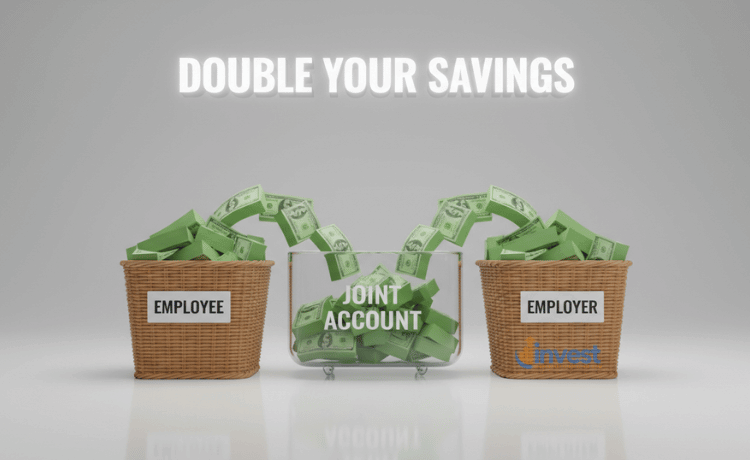
Imagine you have two buckets for your retirement savings. One bucket is for you as the “employee” of your business. The other bucket is for you as the “employer” or owner of the business. You can put money into both buckets every year, which means your total savings can grow much faster than if you only had one bucket.
A Real-World Example
Let’s say you are a freelance graphic designer who earns 100,000 dollars a year. If you were working at a traditional company, you might only be allowed to put a portion of your paycheck into their plan.
With a Solo 401(k), you can put 24,500 dollars into your “employee” bucket. Then, your business can add even more money—up to 25 percent of your compensation—into your “employer” bucket. By the time you are done, you might have moved 40,000 dollars or more into your retirement account, which is way more than most corporate workers are allowed to save.
The Common Mistake
Many beginners think they can’t have a Solo 401(k) if they already have a “day job” with a 401(k). They assume they are restricted to just one retirement plan.
The Correct Mindset
You can actually have both! If you have a side business, you can open a Solo 401(k) for that business even if you have a 401(k) at your full-time job. The only rule is that your total “employee” contributions across all plans cannot exceed the annual limit, which is 24,500 dollars this year. However, your side business can still make “employer” contributions based on your side income, helping you save even more.
The Power of the “Two-Hat” Strategy
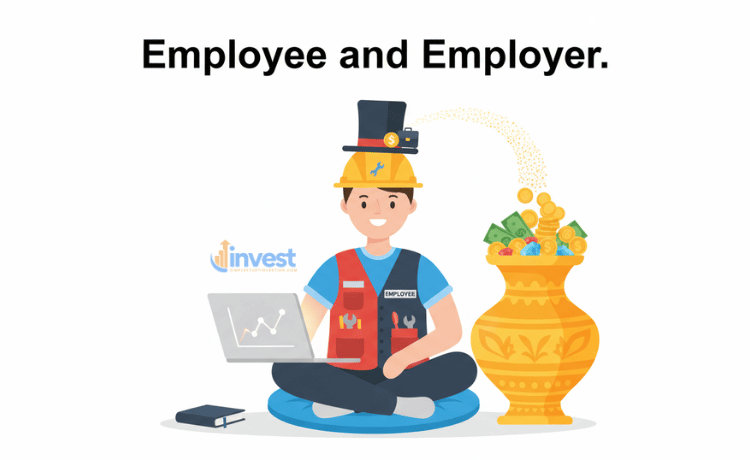
The magic of the Solo 401(k) lies in your ability to contribute as both the employer and the employee. Understanding this dual role is the key to mastering Solo 401(k) for beginners.
The Employee Contribution (Elective Deferral)
As the employee, you can contribute up to 100 percent of your earned income, as long as it doesn’t go over the annual limit. For this year, that limit is 24,500 dollars. If you are age 50 or older, the government gives you a “catch-up” bonus, allowing you to add another 8,000 dollars, bringing your employee total to 32,500 dollars.
The Employer Contribution (Profit Sharing)
As the boss, your business can also contribute. This is usually calculated as 25 percent of your net self-employment income (or 20 percent if you are a sole proprietor).
When you combine these two parts, the total amount you can put away is staggering. For this year, the absolute maximum is 72,000 dollars. If you are 50 or older, that total jumps to 80,000 dollars.
A Simple Arithmetic Example
Suppose you earn 80,000 dollars from your consulting business.
- You put 24,500 dollars into the plan as the employee.
- Your business then adds another 16,000 dollars (which is 20 percent of your income) as the employer.
- Total saved: 40,500 dollars.
You just put away more than half of your income into a tax-advantaged account! This would be impossible with almost any other type of retirement plan.
The Common Mistake
Beginners often think the 72,000 dollar limit is a “goal” they must hit. They worry that if they can’t save that much, the plan isn’t for them.
The Correct Mindset
The limits are a ceiling, not a floor. You can contribute 500 dollars or 50,000 dollars. The beauty of the Solo 401(k) is that it scales with your success. Whether you are just starting out or making six figures, it provides the most “room” for your money to grow.
Traditional vs. Roth: Which One Should You Choose?
When you set up your Solo 401(k), you often have to choose between two “flavors”: Traditional or Roth. This decision affects when you pay taxes on your money.
Traditional Solo 401(k)
With a Traditional plan, you get a tax break now. If you put 10,000 dollars into your account, you don’t pay income tax on that 10,000 dollars this year. It lowers your taxable income immediately. However, when you take the money out in retirement, you will pay taxes on it then.
Roth Solo 401(k)
With a Roth plan, you pay taxes now. You don’t get a deduction today, but the money grows completely tax-free. When you retire and take the money out, you don’t owe the government a single penny, even if your account has grown from 10,000 dollars to 100,000 dollars by investing in stocks like Tesla or Apple.
Real-World Strategy
Think about where you are in your career. If you are just starting and your income is lower, a Roth might be better because your tax rate is likely lower now than it will be in the future. If you are a high-earner making 200,000 dollars a year, the Traditional plan might be better because the immediate tax savings are worth a lot more to you today.
The Common Mistake
Many people assume “employer” contributions can be Roth. Until recently, employer contributions had to be Traditional (pre-tax).
The Correct Mindset
Thanks to new regulations like the SECURE Act 2.0, some plans now allow employer contributions to be Roth as well. However, this is still a new feature and not every bank or brokerage offers it yet. Always check with your plan provider to see if they support “Roth Employer Contributions” if that is a priority for you.
The “Spouse Loophole”: Doubling Your Savings
One of the most unique features of a Solo 401(k) is that it is the only “solo” plan that allows for one exception to the “no employees” rule: your spouse.

If your spouse works in your business—even part-time—they can be part of your Solo 401(k) plan. This effectively doubles everything we just talked about.
How It Works
If your spouse helps you with administrative tasks, marketing, or bookkeeping for your business, you can pay them a fair wage. Once they are an employee, they can also contribute up to 24,500 dollars as an employee and the business can add a 25 percent employer match for them too.
A Real-World Example
Imagine a husband and wife running an e-commerce store together. If the business makes enough profit, they could potentially move 144,000 dollars (72,000 dollars each) into their retirement accounts in a single year. That is a massive amount of wealth being shielded from taxes.
The Common Mistake
Some people try to add their spouse to the plan without actually paying them or having them do real work. They think it’s just a paper-only strategy.
The Correct Mindset
The IRS requires that your spouse actually performs work for the business and that their pay is “reasonable” for the tasks they do. If you pay your spouse 50,000 dollars to check the mail once a week, the IRS will likely complain. But if they manage your social media or handle your billing, it is a perfectly legal and highly effective strategy.
The “Loan” Feature: Access to Your Money
Usually, putting money into a retirement account means it is “locked away” until you are 59 and a half years old. If you take it out early, you face heavy penalties. But the Solo 401(k) has a special feature that most other small business plans (like a SEP IRA) do not: The Loan Option.
The Simple Explanation
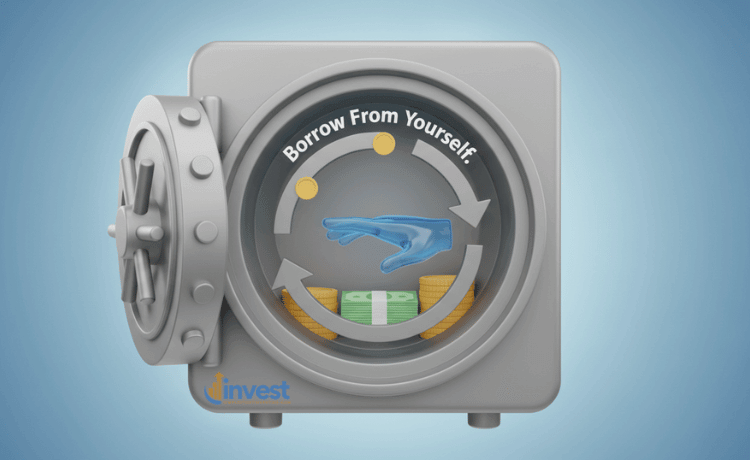
A Solo 401(k) allows you to borrow money from yourself. You can take out a loan for up to 50 percent of your account balance, with a maximum of 50,000 dollars.
Why This is Great for Beginners
As a business owner, you might face an emergency or a sudden opportunity. Maybe you need cash to buy more inventory or to cover a slow month. Instead of going to a bank for a high-interest loan, you can “borrow” from your Solo 401(k). You pay the interest back to yourself, so the money stays in your ecosystem.
The Common Mistake
Beginners sometimes view the loan as “free money.” They forget that if they don’t pay it back on time (usually within five years), the IRS treats it as a withdrawal, and you’ll owe taxes and a 10 percent penalty.
The Correct Mindset
Use the loan feature as a last resort or for high-ROI business investments. It is a safety net, not a checking account. Having the option to access your cash provides peace of mind, which is vital when you are working for yourself.
Solo 401(k) vs. SEP IRA: Which is Better?
If you are researching Solo 401(k) for beginners, you will likely see another plan mentioned: the SEP IRA. Both are great, but the Solo 401(k) often wins for two big reasons.

1. You Can Save More with Less Income
With a SEP IRA, you can only contribute as the employer (up to 25 percent of your income).
- In a SEP IRA, to save 24,500 dollars, you would need to earn nearly 100,000 dollars.
- In a Solo 401(k), you can save that same 24,500 dollars even if you only earned 24,500 dollars (because of the employee contribution).
2. The Roth Option
Most Solo 401(k) plans offer a Roth version. Many SEP IRAs are strictly Traditional. If you want that tax-free growth, the Solo 401(k) is usually the better path.
The Common Mistake
People choose the SEP IRA because it is slightly easier to set up at a big bank. They trade long-term tax benefits for ten minutes of saved paperwork.
The Correct Mindset
While a Solo 401(k) requires a bit more setup (you need to adopt a “Plan Document”), the higher contribution limits and loan options usually make the extra effort well worth it. Don’t let a little bit of paperwork stop you from potentially saving thousands more in taxes.
Important Rules and Deadlines
To keep your Solo 401(k) in the good graces of the IRS, there are a few “guardrails” you need to know about.
The “No Employee” Rule
The “Solo” in Solo 401(k) is serious. If you hire a full-time employee (someone who works more than 1,000 hours a year), you can no longer have a Solo 401(k). You would have to convert it to a standard 401(k) and offer it to your employee as well.
The 250,000 Dollar Threshold
Once your account balance reaches 250,000 dollars, you have to file a special form with the IRS called Form 5500-EZ. It is just an information form to let them know how much is in the plan. It doesn’t cost you anything, but if you forget to file it, the penalties can be very high.
Setup Deadline
You generally need to establish your plan by December 31st of the year you want it to count for. However, you often have until your tax filing deadline (usually April of the following year) to actually put the money into the account.
Common Mistake
Wait until April 14th to try and open a plan for the previous year.
The Correct Mindset
Think ahead. Open your plan in the summer or fall so you have everything ready to go. You don’t have to fund it immediately, but having the account open gives you the flexibility to make moves when tax season arrives.
How to Get Started in 3 Steps
If you are ready to take control of your financial future, here is how you can set up your plan today.
Step 1: Get an EIN
Even if you are a sole proprietor, you should get an Employer Identification Number (EIN) from the IRS. It is free and takes ten minutes on their website. Most banks require this to open a Solo 401(k).
Step 2: Choose a Provider
You can open a Solo 401(k) at most major brokerages like Charles Schwab, Fidelity, or Vanguard. Some specialized providers allow you to invest in alternative assets like real estate or private companies, though these often come with higher fees.
Step 3: Adopt a Plan Document
The brokerage will provide you with a “Plan Document.” This is a legal form that says your business is officially starting a retirement plan. You sign it, keep a copy for your records, and you are officially a 401(k) plan sponsor!
Final Thoughts for the Solo Business Owner
Being a solopreneur is a brave and rewarding path. You take all the risks, but you also get all the rewards. The Solo 401(k) is the government’s way of rewarding your entrepreneurial spirit.
By understanding how to use your “two hats”—the employee and the employer—you can build a retirement fund that rivals even the highest-paid executives at JPMorgan or Microsoft.
Start small if you have to. The most important thing is to get the account open and start the habit. Your future self, sitting on a beach or traveling the world, will thank you for the work you did today.
Disclaimer: This content is for educational purposes only and does not constitute financial, legal, or tax advice. Regulations regarding retirement accounts can change; please consult with a certified financial planner or tax professional before making any investment decisions.