If you have ever opened a financial news website and felt like you were reading a different language, you are not alone. Between the flashing red numbers, the complex charts, and the talking heads using words like “quantitative easing” or “derivative yields,” the stock market can feel like a private club for math geniuses.
But what if I told you that some of the world’s most successful investors, like Warren Buffett, use a strategy that is actually easier for a regular person to follow than a Wall Street analyst? It is called the Circle of Competence.
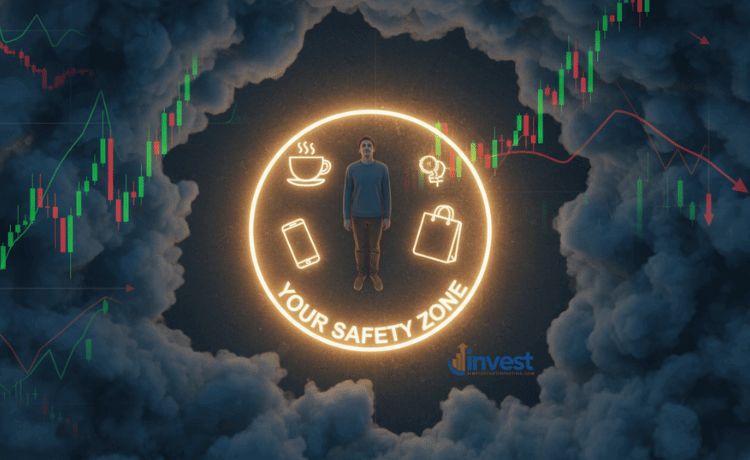
The Circle of Competence is the idea that you don’t need to know everything about the thousands of companies on the stock market. You only need to be an expert in a few areas that you already understand from your daily life, your job, or your hobbies. By staying inside this “circle,” you can avoid expensive mistakes and find great opportunities that others might miss.
In this guide, we will break down exactly how to find your own circle and how to use it to build a more confident investing future.
1. What Exactly is the Circle of Competence?
At its heart, the Circle of Competence is about honesty. It is the boundary between what you truly understand and what you only think you understand.
The Plain English Explanation
Think of your knowledge like a literal circle drawn on the floor. Everything inside the circle is a business or industry where you understand how they make money, who their customers are, and what their biggest problems might be. Everything outside the circle is “magic” or “noise”—things you might have heard of, but you couldn’t explain to a ten-year-old.
Investing inside your circle means you are playing a game where you have an advantage. Investing outside it means you are basically guessing, which is a dangerous way to handle your hard-earned money.
Real-World US Example
Imagine you have worked as a nurse in a major American hospital for ten years. You know which medical supply companies provide the best heart monitors. You see which software the doctors complain about every day and which new drug reps are always in the building.
When a company like Johnson & Johnson (JNJ) or a specialized medical tech firm comes across your radar, you already have “boots on the ground” knowledge. You understand the product better than a hedge fund manager in a skyscraper who has never stepped foot in an ICU. That knowledge is firmly inside your Circle of Competence.
Common Beginner Mistake
Many beginners think they need to find the “next big thing” in an industry they know nothing about. They hear a rumor about a breakthrough in “quantum computing” or “biotech gene-editing” and rush to buy shares because it sounds futuristic.
The Correct Mindset
The goal of investing isn’t to be the smartest person in every room. It is to be the most disciplined person in one or two rooms. You don’t get extra points in the stock market for “difficulty.” A profit made from a simple grocery store stock like Costco (COST) spends exactly the same as a profit made from a complex semiconductor company.
2. Why Your 9-to-5 Job is a Research Gold Mine
Most people spend forty hours a week becoming experts in their field, yet they never realize that this is their greatest investing edge.

The Plain English Explanation
Your professional expertise gives you “insider” perspective (without the illegal “insider trading” part). You see trends in your industry months or even years before they show up in a financial report. You know if a competitor is starting to steal customers or if a certain type of software is becoming the new industry standard.
Real-World US Example
Suppose you work in the construction industry. You notice that every job site you visit is now exclusively using Caterpillar (CAT) machinery because their new electric models are saving contractors thousands of dollars in fuel costs.
While the “experts” on TV are debating global interest rates, you are seeing a tangible, real-world reason why one company is winning. Because you understand the “why” behind the sales, you can make a much more informed decision than someone just looking at a spreadsheet.
Common Beginner Mistake
Beginners often ignore what they see at work because it feels “boring.” They assume that because they understand it, it must not be a “sophisticated” investment. They look for something “exciting” instead, like a trendy social media app they don’t even use.
The Correct Mindset
Value “boring” expertise. If you can explain exactly why a company’s product is better than the competition because you use it every day at work, you have a massive head start. That professional “vantage point” is often more valuable than any fancy chart.
3. The “Grocery Store” Edge: Investing as a Consumer
You don’t just have expertise from your job; you have it from your wallet. Every time you choose one brand over another, you are conducting market research.

The Plain English Explanation
Companies like Apple (AAPL), Amazon (AMZN), and Walmart (WMT) didn’t become giants by accident. They became giants because millions of Americans—including you—decided their products were worth the money. If you find yourself (and everyone you know) obsessed with a specific brand or service, that company might be inside your Circle of Competence.
Real-World US Example
Look at Starbucks (SBUX). You don’t need a finance degree to see their “moat” (their competitive advantage). You see the long lines at the drive-thru every morning. You see people willing to pay six dollars for a coffee they could make at home for fifty cents. You see their app being used by almost every person in the store.
If you understand why people are loyal to that brand, you understand the business model. You know that if Starbucks raised their prices by twenty-five cents, most people wouldn’t even blink. That is a very powerful piece of business data.
Common Beginner Mistake
A common error is confusing a “cool product” with a “good business.” Just because you like a new vegan snack doesn’t mean the company making it is a good investment. You have to understand if they can actually make a profit after paying for the ingredients, the shipping, and the advertising.
The Correct Mindset
Use your life as a filter. If you see a store that is always crowded, or a service that your friends can’t stop talking about, put it on a “watchlist.” Then, do the work to see if the “math” of the business matches the “hype” of the product.
4. The Danger Zone: Knowing When to Say “I Don’t Know”
The most important part of the Circle of Competence isn’t the circle itself—it’s the edge. Knowing where your knowledge stops is what keeps you out of trouble.

The Plain English Explanation
In the world of investing, “I don’t know” is a superpower. There are thousands of stocks out there. You only need to find a few “winners” over your lifetime to build significant wealth. This means you can safely ignore 99 percent of the market. If a business sounds too complicated, or if you can’t explain how it makes money in three sentences, it belongs in the “Too Hard” pile.
Real-World US Example
Think about a high-growth tech stock like NVIDIA (NVDA). For some people, especially those in IT or gaming, this is squarely inside their circle. They understand the “GPU” (Graphics Processing Unit) market and why artificial intelligence needs these chips.
But for a real estate agent or a teacher, trying to predict the future of semiconductor architecture might be outside their circle. If you buy it just because it’s “going up,” you won’t know when to sell if it starts “going down,” because you don’t truly understand the underlying technology.
Common Beginner Mistake
New investors often feel a “Fear Of Missing Out” (FOMO). They see a stock like a new “green energy” startup skyrocketing and feel like they must buy in, even if they don’t know the difference between a kilowatt and a kilovolt.
The Correct Mindset
It is perfectly okay to miss out on a big winner if it was outside your circle. You aren’t “losing” money by not buying something you don’t understand. You are protecting your capital for the day you find an opportunity that you do understand deeply.
5. How to Define and Expand Your Circle
Finding your circle isn’t a one-time event; it’s a process of self-discovery and lifelong learning.

Step 1: Audit Your Daily Life
Take a piece of paper and write down the five things you spend the most money on every month (besides rent or mortgage). Is it Target, Netflix, your Tesla car payments, or perhaps your Home Depot DIY projects? These are your first clues.
Step 2: Leverage Your Education and Career
What did you study? What do you do for work? If you are an accountant, you might understand “Fintech” (financial technology) companies better than most. If you are a teacher, you might see which “EdTech” platforms the school district is actually adopting.
Step 3: Read and Observe
Once you find a company that interests you, start reading. But don’t start with complex stock reports. Read the company’s “About Us” page. Read reviews from their customers. If you live near one of their locations, go visit as a “secret shopper.”
Step 4: Expand Slowly
You can grow your circle, but do it carefully. If you want to invest in “Renewable Energy” but know nothing about it, spend six months reading books and articles about how the power grid works. Don’t put a single dollar into a stock until you can explain the industry’s basic economics.
6. Understanding the “Economics” (Without the Math)
You don’t need a calculator to understand if a business is healthy. You just need to look at the “flow” of money.
The Plain English Explanation
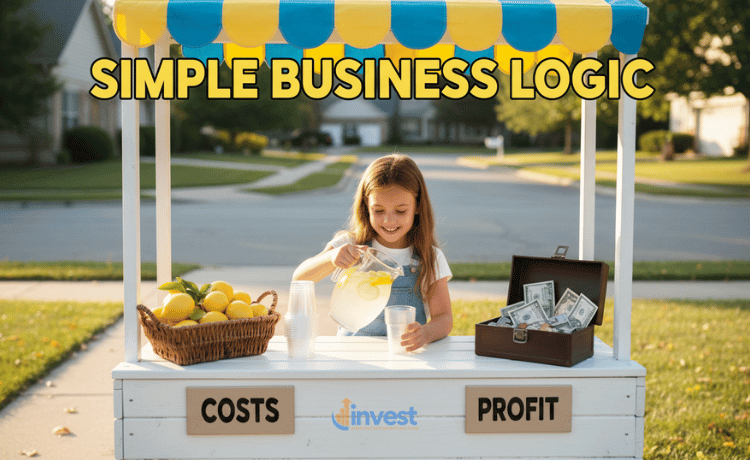
A good business is like a lemonade stand. To understand it, you need to know three simple things:
- How much does it cost to make the lemonade (ingredients, cups)?
- How much can you sell it for?
- How many people are walking by the stand every day?
If the “ingredients” cost 1 dollar and you sell the cup for 3 dollars, you have a 2 dollar profit. If the landlord of the sidewalk suddenly demands 2 dollars in rent per day, you need to sell at least one cup just to “break even.” This is the basic logic of any business, whether it’s a local bakery or a global giant like Alphabet (Google).
US Example: The Subscription Model
Think about Adobe (ADBE). They used to sell software in a box for 500 dollars. Now, they charge a monthly fee of around 30 to 50 dollars.
- The Logic: Even though 50 dollars is less than 500, they get that money every single month forever. They don’t have to convince the customer to buy a new box every year. This “recurring revenue” makes the business much more predictable. If you understand why people keep paying that monthly bill, you understand Adobe’s economics.
Common Beginner Mistake
Beginners often focus only on the “Stock Price” (the number on the screen). They think a stock at 10 dollars is “cheaper” than a stock at 1,000 dollars.
The Correct Mindset
The stock price is just the “label.” The real value is the business underneath. Always ask: “Is this company making more money today than it did last year? And is it likely to make even more next year?” If you can’t answer that based on what you know about their products, stay away.
7. Staying Updated: The 2026 Perspective
In today’s fast-moving world, even a “circle” can change. For example, in 2026, we are seeing Artificial Intelligence (AI) being integrated into almost every business, from how Walmart manages its shelves to how JPMorgan Chase detects fraud.
The Plain English Explanation
You don’t need to be an AI programmer to understand how it affects your circle. You just need to see if the companies you know are using new tools to become more efficient. If a company you understand is using technology to lower their costs (like using AI to answer customer service calls instead of a huge call center), that makes the “lemonade stand” more profitable.
Example: The “Eco-Friendly” Shift
Many American consumers in 2026 are prioritizing sustainability. If you notice that your favorite clothing brand is losing customers because they aren’t “green” enough, but a competitor is booming because of their recycled materials, that is a shift in the “Circle of Competence” for the retail industry. Your eyes and ears on the ground are better than any delayed news report.
Conclusion: Your Edge is Hidden in Plain Sight
The Circle of Competence is the ultimate “equalizer” for the beginner investor. You don’t need to compete with the supercomputers of Wall Street by trying to out-math them. You compete by being a better observer of the world around you.
Start with what you know. Stick to what you understand. Be brave enough to say “no” to the things that confuse you. By doing this, you aren’t just “picking stocks”—you are building a portfolio of businesses that you actually believe in.
Investing doesn’t have to be a mystery. Sometimes, the best opportunities are the ones you use every single day.
Disclaimer: This content is for educational purposes only and does not constitute financial advice. Investing involves risk, including the possible loss of principal. Always perform your own research or consult with a qualified financial professional before making any investment decisions.