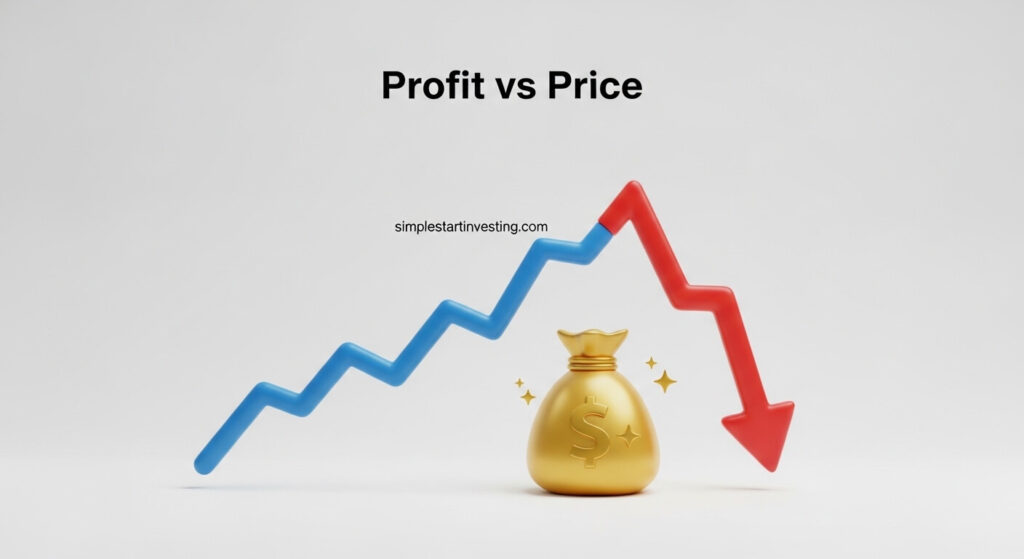
Imagine you have been following a company for months. You have watched their products fly off the shelves, you have seen their ads everywhere, and you finally decided to buy a few shares. The big day arrives: the quarterly report. You check the news and see a headline screaming that the company just made a record-breaking profit of 1 billion dollars.
You feel like a genius. You expect the stock price to skyrocket. But when you look at your brokerage account, the price is plummeting. It is down 5%, then 7%, then 10%. You are confused, frustrated, and maybe even a little bit angry. How can a company make more money than ever before and still see its stock price crash?
This is the central mystery of Earnings Season for many new investors. It feels like the stock market is broken or that the “big players” are playing a game you don’t understand. The truth is that the stock market does not just reward companies for making money. It rewards them for meeting or exceeding very specific expectations about the future.
In this guide, we are going to pull back the curtain on Earnings Season. We will look at what happens during these high-stakes meetings, why “beating the numbers” isn’t always enough, and why the words of a CEO can sometimes be worth more than a billion dollars in profit.
What Exactly is Earnings Season?
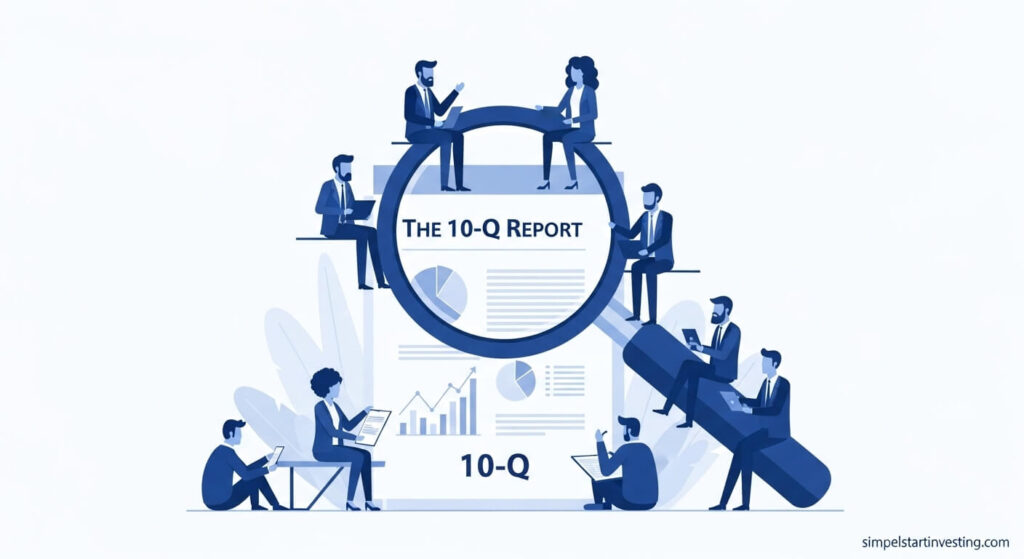
In the United States, the law requires public companies—the ones you can trade on the stock market—to tell the truth about their finances. Every three months, these companies must file a report with the Securities and Exchange Commission (SEC). This report is known as a 10-Q.
Earnings Season is the period, usually lasting a few weeks, when most of the big companies release these reports at the same time. This typically happens in January, April, July, and October. It is like “report card week” for the entire stock market.
During this time, companies don’t just hit “send” on a document. They usually hold an Earnings Call. This is a live conference call or webcast where the top executives, like the CEO (Chief Executive Officer) and the CFO (Chief Financial Officer), talk to investors and journalists. They explain what happened over the last three months and, more importantly, what they think will happen next.
The Secret Ingredient: Wall Street Expectations
To understand why a stock price moves, you have to understand that the stock market is a “forward-looking machine.” Investors aren’t usually buying a stock because of what it did yesterday; they are buying it for what it will do tomorrow.
Before a company reports its earnings, professional researchers called Equity Analysts spend hundreds of hours trying to predict exactly how much money the company made. They look at credit card data, shipping logs, and foot traffic in stores. They then average all these predictions together to create what we call the Consensus Estimate.

This estimate is the “benchmark.” If the analysts collectively think a company will make 100 million dollars, the stock price usually adjusts to reflect that 100 million dollar expectation long before the report even comes out.
The “Beat, Meet, or Miss” Scenario
When the company finally reports its actual numbers, the market compares them to that consensus estimate:
- A Beat: The company made more money than analysts expected.
- A Meet: The company made exactly what was expected.
- A Miss: The company made less than what was expected.
Here is the kicker: If a company makes a huge profit but that profit is still less than what analysts predicted, it is considered a “miss.” Even though the company is healthy and profitable, the stock price might drop because it didn’t live up to the “hype” that was already baked into the price.
Why Profit Isn’t the Only Number That Matters
New investors often make the mistake of looking only at the Net Income (the bottom-line profit). However, Wall Street is much more interested in the quality of that profit.
Let’s use a simple example. Imagine a lemonade stand. Last month, they made 500 dollars. This month, they made 600 dollars. On the surface, that looks like growth. But what if you found out that they only made more money because they sold their wooden stand for 200 dollars and now they are renting a table?
Their “profit” went up, but their actual business of selling lemonade might be struggling. In the corporate world, analysts look at Revenue (total sales) just as closely as profit. If a company’s profit went up only because they cut costs or sold off a building, but their actual sales are shrinking, investors will get nervous. They want to see that more people are actually buying the product or service.
Guidance: The Real Reason Stocks Crash
If you take only one thing away from this article, let it be this: Guidance is usually more important than the actual earnings.
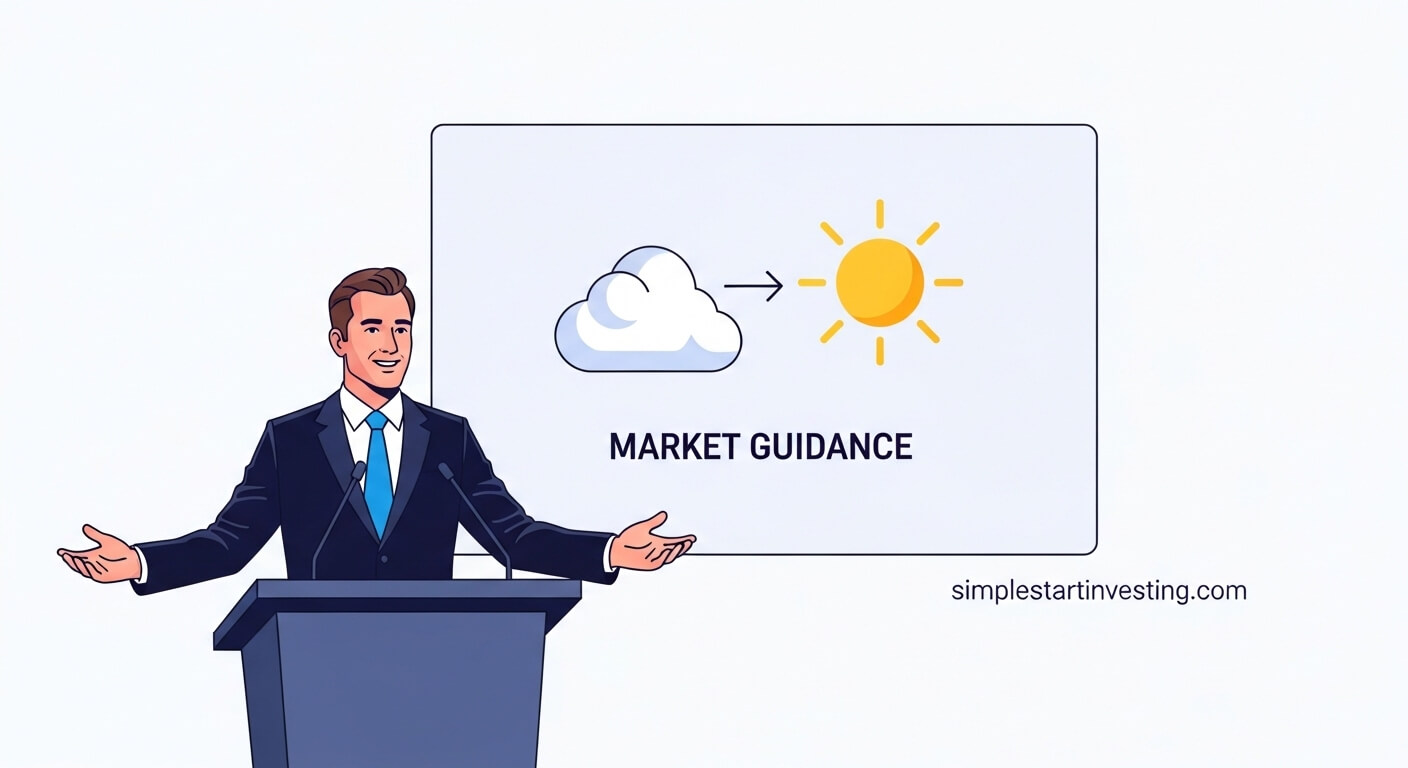
Guidance is when the company gives its own “weather forecast” for the next few months or the rest of the year. After they talk about the money they just made (which is the past), they talk about the money they expect to make (which is the future).
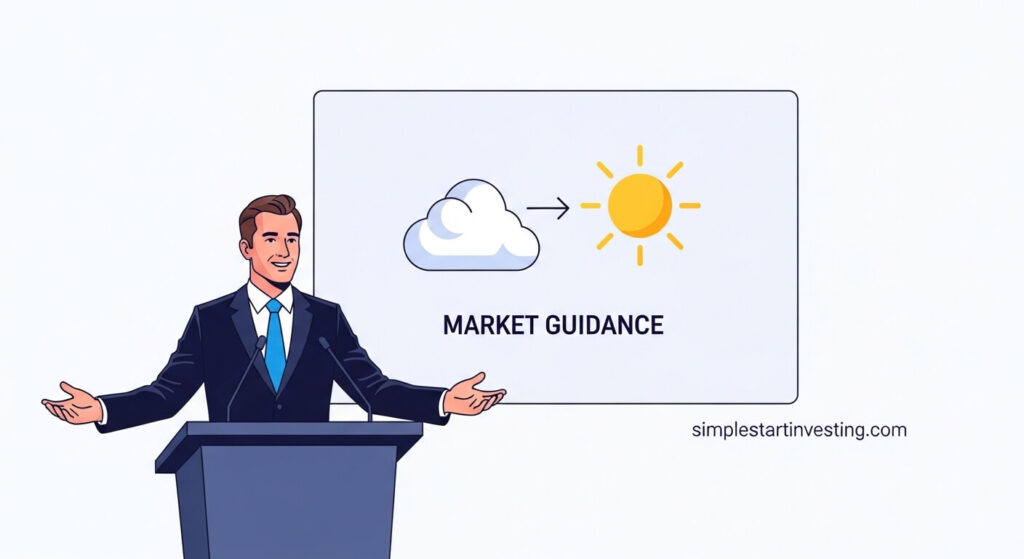
This is where the drama happens. Imagine a tech giant reports incredible profits for the holiday season. Everyone is cheering. But then, the CFO says, “We expect sales to slow down by 20 percent next quarter because people are spending less money.”
Instantly, the record profit they just reported becomes “old news.” Investors start selling because the future looks cloudy. This is why you will often see a company “beat” every estimate but still see their stock price drop double digits. The market isn’t reacting to what happened; it is reacting to the warning about what is coming.
The Role of the Q&A Session
After the executives finish their prepared speeches, they open the floor to questions from those professional analysts we mentioned earlier. This part of the Earnings Call is often the most revealing.
Analysts will try to “corner” the executives with tough questions:
- “Why are your shipping costs rising so fast?”
- “Are you losing customers to your smaller competitor?”
- “How much of your profit came from a one-time tax break?”
The tone of the CEO’s voice and how they answer these questions can sway the market. If a CEO sounds hesitant or can’t explain a problem, it creates uncertainty. And if there is one thing the stock market hates more than bad news, it is uncertainty. When investors are unsure, they tend to sell first and ask questions later.
Whisper Numbers and Market Sentiment
Sometimes, the official analyst estimate isn’t the real target. There is something called a Whisper Number. This is an unofficial expectation that circulates among traders and high-level investors.
If the official estimate for a company’s earnings is 1 dollar per share, but everyone “whispers” that it will actually be 1.10 dollars, then a report of 1.05 dollars—even though it technically “beat” the official estimate—will feel like a disappointment.
Furthermore, the general “mood” of the market matters. During a Bull Market (when prices are rising and everyone is optimistic), investors might forgive a small miss. But during a Bear Market (when prices are falling and everyone is scared), even a perfect earnings report might not be enough to stop people from selling.
The “Buy the Rumor, Sell the News” Phenomenon
You might have heard this common phrase in investing circles. It describes a situation where a stock price climbs for weeks leading up to an earnings report because everyone expects great news.
By the time the news actually breaks, everyone who wanted to buy the stock has already bought it. There are no “new” buyers left to push the price higher. Those who bought early decide to take their profits and sell. This massive wave of selling pushes the price down, even if the news was exactly as good as they hoped.
For a beginner, this can feel like a trap. You wait for the good news to be confirmed before you buy, but by the time you buy, the professionals are already exiting their positions.
Common Pitfalls for New Investors
Understanding Earnings Season is about managing your own emotions as much as it is about understanding numbers. Here are some of the most common mistakes beginners make during this time:
1. Overreacting to the “After-Hours” Move
Many earnings reports are released after the stock market closes at 4:00 PM Eastern Time. The stock price can move wildly in “after-hours trading” because there are fewer people buying and selling. A stock might look like it is down 10% at 4:30 PM, but by the time the market opens the next morning, it might have recovered most of that. Don’t panic based on the first number you see on your screen.
2. Ignoring the Context
A company doesn’t exist in a vacuum. If a giant retailer reports bad earnings, it might not be because they are a bad company. It might be because the entire economy is slowing down, or because gas prices are so high that people aren’t driving to stores. Always look at how other companies in the same industry are performing.
3. Playing “Earnings Roulette”
Some new traders try to gamble on earnings by buying options or large amounts of stock the day before a report. They hope for a 20% jump overnight. This is extremely risky. Because of all the factors we have discussed—expectations, guidance, and “sell the news”—even a “good” report can result in a loss. Professional investors call this “gambling,” not “investing.”
How to Use Earnings Reports Like a Pro
Instead of trying to guess which way the price will swing tomorrow, use Earnings Season as a way to “check the pulse” of your investments.
- Read the Transcript: You don’t have to listen to the whole hour-long call. You can find written transcripts on financial websites. Look for what the CEO said about their biggest challenges.
- Focus on the Long Term: If you believe in a company’s mission and its product, a one-day drop after an earnings call shouldn’t scare you away. In fact, if the company is still healthy but the stock dropped because of a small “miss,” it might even be a chance to buy more at a lower price.
- Watch the Debt: If a company is making a profit but their interest payments on their debt are growing faster than their sales, that is a red flag you will only find by digging into the report.

Summary: It’s All About the Story
At the end of the day, an Earnings Call is a storytelling event. The numbers are the facts, but the Guidance and the Q&A are the narrative.
The stock market isn’t just a calculator that adds up profits. It is a collection of millions of people trying to guess what the world will look like in six months, a year, or a decade. When a stock price drops after a profitable quarter, the market is telling you that the “story” of that company’s future has changed, even if the “story” of its past looks great.
By understanding the difference between profit and expectations, you can stop feeling like a victim of market volatility and start seeing the opportunities that Earnings Season provides.
Step-by-Step Logic: Understanding “Beating the Estimate”
Let’s look at how the math actually works in the mind of an analyst, using simple numbers.
Imagine a company called “Smartphone Co.”
- Analysts look at how many phones were sold and predict the company will earn 2 dollars for every share of stock that exists.
- Because everyone believes this, the stock price sits at 100 dollars.
- The company releases its report. It shows they actually earned 2 dollars and 10 cents per share.
- This is a “beat” of 10 cents.
- However, during the call, the CEO says they are having trouble getting parts for their next phone. They now think next quarter they will only earn 1 dollar and 50 cents.
- Suddenly, the 10-cent “win” from today doesn’t matter. Investors see a 50-cent “loss” coming in the future.
- Investors sell their shares to avoid that future loss, and the price drops from 100 dollars down to 90 dollars.
Even though the company earned 10 cents more than expected today, the stock is down because the “expectation” for the future dropped by 50 cents.
Disclaimer: This content is for educational purposes only and does not constitute financial advice. Market conditions can change rapidly, and you should always consult with a qualified professional or conduct your own thorough research before making any investment decisions.