Investing often feels like a “set it and forget it” activity. You pick some solid stocks like Apple (AAPL) or Amazon (AMZN), add some bonds for safety, and let time do the heavy lifting. However, the market is constantly moving. Some of your investments will grow faster than others, which slowly changes the DNA of your portfolio. Without you realizing it, a “safe” plan can turn into a high-risk gamble over a few years.
This is where portfolio rebalancing comes in. It is the simple, disciplined process of bringing your investment mix back to its original goal. Think of it as a routine check-up for your money. It ensures that you aren’t accidentally taking on more risk than you can handle, while also forcing you to do the one thing every professional investor dreams of: selling high and buying low.
What Exactly is Portfolio Rebalancing?
At its simplest, portfolio rebalancing is the act of resetting your investment percentages. When you first started, you likely chose a specific “recipe” for your money. Maybe you decided that 70 percent of your money should be in stocks for growth and 30 percent should be in bonds for stability. This “recipe” is called your target allocation.
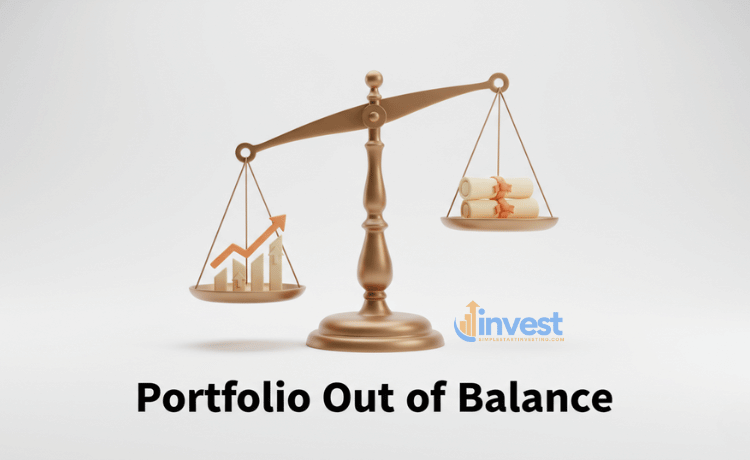
Over the course of a year, the stock market might perform exceptionally well. Your shares of companies like Costco (COST) or NVIDIA (NVDA) might skyrocket in value. Meanwhile, your bonds might stay the same or grow very slowly. By the end of the year, your “recipe” has changed. Instead of the 70/30 mix you planned, you might now have 85 percent in stocks and only 15 percent in bonds.
The 4-Step Breakdown of Rebalancing Logic:
- Plain English: Rebalancing is just moving money from the “winners” that have grown too large and putting it into the “underdogs” that haven’t grown as much, so your total mix stays exactly where you want it.
- Real-World Example: Imagine you start with 1,000 dollars. You put 500 dollars in a tech fund and 500 dollars in a boring savings fund. A year later, tech booms and your 500 dollars becomes 800 dollars. Your savings fund is still 500 dollars. Your total is now 1,300 dollars, but your tech side is much larger than half. To rebalance, you would sell some tech and move it to savings until both sides are equal again at 650 dollars each.
- The Beginner Mistake: Many new investors think, “Why would I sell my best performers? That’s the money that’s making me rich!”
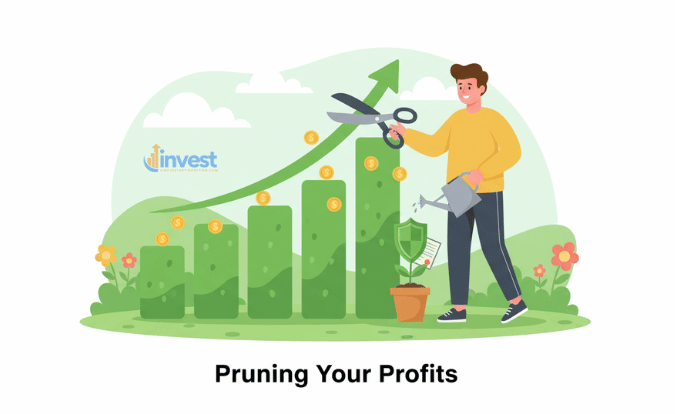
- The Correct Mindset: You aren’t “punishing” your winners; you are “harvesting” your profits. By selling a bit of what went up, you lock in those gains and protect yourself from a future market crash that would hit your now-bloated stock position much harder.
Why Is Rebalancing So Important for Beginners?
The primary reason to practice portfolio rebalancing isn’t to make the most money possible—it is to control your risk. Risk is like a thermostat. If it gets too high, you might panic and sell everything during a market dip. If it’s too low, you won’t reach your retirement goals.
When your portfolio “drifts” (meaning the percentages change on their own), your risk level drifts too. If you intended to have a balanced portfolio but let it grow into a 90 percent stock portfolio because the market was hot, you are now exposed to much deeper losses if the market turns.
The “Hidden Risk” of Success
Let’s look at a stock like Tesla (TSLA). It has had years where it grew incredibly fast. If a beginner had 10 percent of their money in Tesla and it tripled in value, that single stock might now represent 30 percent of their entire life savings. While that feels great during the boom, a 20 percent drop in Tesla would now hurt their total bank account three times more than it would have originally. Rebalancing helps you prune those overgrown branches before they become a danger to the whole tree.
The Step-by-Step Logic of How to Rebalance
You don’t need a PhD or a complex spreadsheet to do this. You just need to follow a logical path once a year. Here is how you do it without any math symbols or formulas.
1. Identify Your “Home Base”
First, look back at your original plan. Did you want to be “Aggressive” (mostly stocks), “Moderate” (a mix), or “Conservative” (mostly bonds and cash)? Write down those target percentages. For this example, let’s say your home base is 60 percent stocks and 40 percent bonds.
2. Check Your Current Reality
Log into your brokerage account (like Fidelity, Vanguard, or Schwab) and look at the “Asset Allocation” or “Current Value” section. You might see that because stocks went up, you are now at 75 percent stocks and 25 percent bonds.
3. Calculate the “Gap”
To get from 75 percent stocks back down to 60 percent, you need to reduce your stock holdings by 15 percent of your total portfolio value.
- Example: If your total portfolio is worth 10,000 dollars, and you want to move from 75 percent down to 60 percent, you would identify that you have 1,500 dollars “too much” in stocks.
- The Beginner Mistake: Beginners often try to rebalance by selling everything and starting over.
- The Correct Mindset: You only need to move the “excess.” You are simply shifting the weight from one foot to the other to stand up straight again.
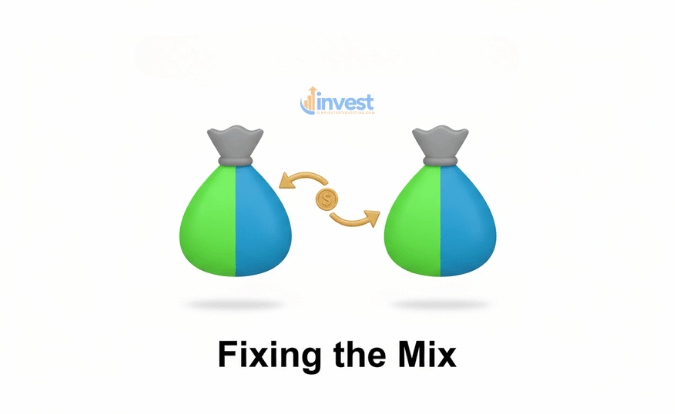
4. Execute the Trade
You sell the 1,500 dollars worth of your stock funds and immediately use that cash to buy 1,500 dollars worth of your bond funds. Once the trades settle, you are back at your 60/40 “Home Base.”
Common Rebalancing Pitfalls to Avoid
Even though the concept is simple, human emotions often get in the way. Here are the most common traps for new investors.
1. Waiting for the “Perfect Time”
Many people say, “I’ll rebalance after the market goes up just a little bit more.” This is called market timing, and it almost never works. The point of rebalancing is that it is a disciplined schedule, not a prediction. Whether the market is up, down, or sideways, you stick to your plan.
2. Forgetting About Taxes
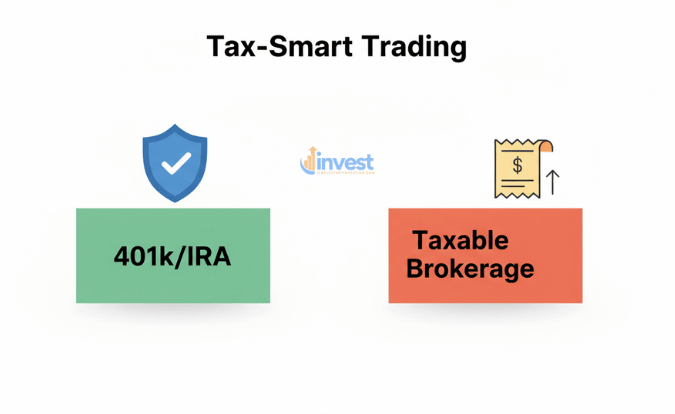
In the United States, selling an investment for a profit in a “taxable” brokerage account triggers Capital Gains Tax.
- The Beginner Mistake: Selling stocks to rebalance and being surprised by a big tax bill in April.
- The Correct Mindset: If you are investing in a 401k or an IRA (Individual Retirement Account), you can usually rebalance without paying any taxes on the trades. If you are in a regular taxable account, you might choose to rebalance by “adding new money” to the underperforming assets instead of selling the winners.
3. Over-Rebalancing
You don’t need to do this every week or even every month. Doing it too often leads to high transaction fees and unnecessary stress. Most experts suggest doing it just once a year or when your mix gets off-track by more than 5 percent.
Rebalancing and the IRS: What You Need to Know
Because we are looking at the current year, it is important to understand how the IRS views these moves. When you sell an asset like Walmart (WMT) or JPMorgan (JPM) for more than you paid for it, you have a “gain.”
If you have held that stock for more than one year, it is considered a “Long-Term Capital Gain.” For this year, the tax rates for most people are 0 percent, 15 percent, or 20 percent depending on your total income. If you are a single filer making less than 49,450 dollars this year, your tax rate on those gains might actually be 0 percent!
However, if you’ve held the stock for less than a year, it’s a “Short-Term Gain,” and you’ll pay taxes at your normal income rate, which is usually much higher.
Note: Tax laws and income thresholds can change every year. Always check the current IRS guidelines or talk to a tax professional before making large trades in a taxable account.
A Healthier Way to View Your Portfolio
Think of your portfolio like a garden. If you plant tomatoes and cucumbers, you want both to thrive. If the tomatoes start growing over the fence and choking out the cucumbers, you have to prune the tomatoes. You aren’t “mad” at the tomatoes for growing well; you are just making sure the cucumbers have enough sun to grow too.
In the financial world, those “tomatoes” are your high-growth stocks like TSLA or AMZN. The “cucumbers” are your stable investments like treasury bonds or value stocks. Rebalancing is just the act of gardening. It keeps the environment healthy so that you can enjoy the harvest 10, 20, or 30 years from now.
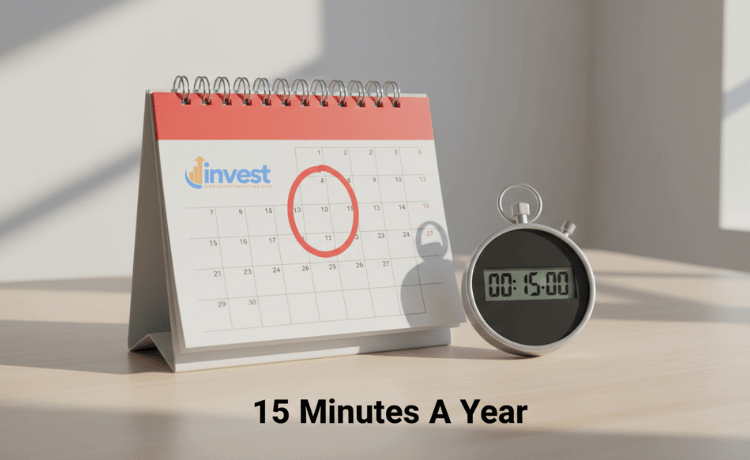
Summary of the “15-Minute Task”
- Log in once a year (perhaps on your birthday or New Year’s Day).
- Compare your current percentages to your goal.
- Sell a small portion of what grew too much.
- Buy more of what stayed flat or went down.
- Log out and go enjoy your life.
By doing this, you naturally follow the golden rule of investing: you are selling when prices are high and buying when prices are relatively lower. It’s the simplest way to protect your hard-earned gains.
Disclaimer: This content is for educational purposes only and does not constitute financial, legal, or tax advice. Investing involves risk, including the potential loss of principal. Past performance is not indicative of future results. Please consult with a qualified professional before making any investment decisions.