
Finding your dream home is a lot like dating. In the beginning, everything looks perfect. You love the open-concept kitchen, the sunlight hitting the hardwood floors, and that cozy backyard perfect for summer barbecues. However, just like in dating, it is what is underneath the surface that truly matters. This is where the home inspection comes in.
A professional home inspection is your chance to pull back the curtain and see the house for what it really is. While most homes will have a few minor scratches or a leaky faucet, certain home inspection red flags are much more serious. These are the issues that could cost you tens of thousands of dollars shortly after you move in.
If you are a first-time buyer, it is easy to get overwhelmed by a forty-page inspection report. You might see a list of fifty items and think the house is falling down. Most of those items are usually “maintenance” issues—things you can fix over a weekend with a trip to the local hardware store. But the real home inspection red flags are different. They are the “deal-breakers” that affect the safety, structure, and long-term value of your investment.
What Exactly Is a Home Inspection?
Before we dive into the warning signs, let’s clear up what an inspection actually is. Think of it as a “physical exam” for a house. A licensed professional walks through the property for two to four hours, checking the “bones” of the building. They look at the roof, the electrical system, the plumbing, and the foundation.

Many beginners confuse an inspection with an appraisal. An appraisal is for the bank; it tells them how much the house is worth so they can justify the loan. An inspection is for you; it tells you if the house is actually safe and well-maintained.
In the current US market, skipping this step is one of the biggest mistakes you can make. Even in a competitive “seller’s market,” having a professional eye on the property protects your bank account from “money pits.”
Red Flag 1: Foundation and Structural Stability
The foundation is the most important part of the house. If the foundation fails, everything else—the walls, the roof, the windows—will eventually follow.

Why It Matters
Foundation issues often start small but can escalate into astronomical repair costs. While some “settling” is normal as a house ages, major shifts can mean the soil underneath is unstable or the original construction was flawed.
Real-World Example
Imagine you are looking at a beautiful colonial-style home in Virginia. During the walkthrough, you notice a door in the hallway that won’t close properly—it keeps popping open. Then, you see a horizontal crack in the basement wall that is wider than a quarter-inch. An inspector would likely flag this as a major structural concern. Fixing a major foundation issue can easily cost 20,000 dollars to 50,000 dollars depending on the severity.
Common Beginner Mistake
New buyers often think, “It’s an old house; a few cracks add character!” or “I’ll just patch that crack with some cement and it will be fine.”
The Correct Financial Logic
Cosmetic cracks are usually vertical and thin. Horizontal cracks or “stair-step” cracks in brickwork often indicate the house is shifting significantly. Patching a structural crack is like putting a band-aid on a broken leg. You must address the root cause, which often requires a structural engineer, not just a handyman.
Red Flag 2: The Hidden Life of Your Roof
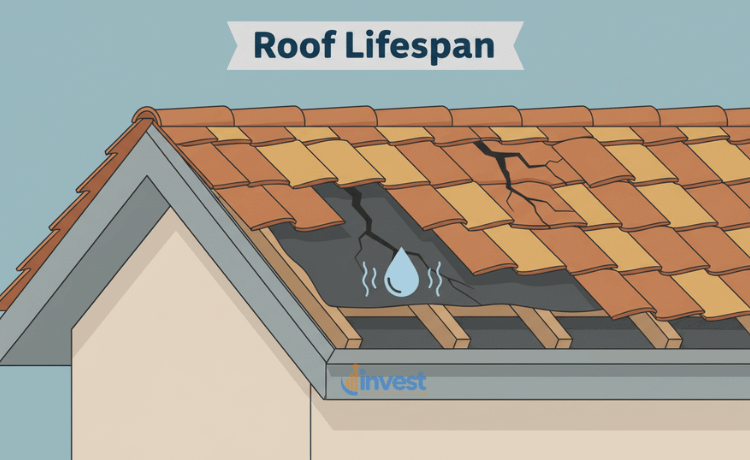
The roof is your home’s first line of defense against the elements. A failing roof is a “silent” red flag because most people don’t climb up there to check during an open house.
Why It Matters
A typical asphalt shingle roof in the US lasts about twenty to twenty-five years. If a roof is at the end of its lifespan, you are looking at an immediate expense of 10,000 dollars to 15,000 dollars for a standard-sized home. Furthermore, a leaky roof leads to wood rot and mold inside the attic.
Real-World Example
Consider a home for sale in a rainy climate like Seattle. The house looks great, but the inspector notes “curling” shingles and missing granules. They also find “ponding” water on a flat section of the roof. To a beginner, it looks “okay” from the ground, but these are signs that the shingles have lost their waterproof integrity.
Common Beginner Mistake
Many buyers assume that if they don’t see water dripping from the ceiling, the roof is fine. They think they can “wait a few years” before replacing it.
The Correct Financial Logic
Roofing issues are cumulative. By the time you see a brown stain on your living room ceiling, the insulation in your attic is likely already ruined and mold has started to grow. Replacing a roof early is an investment that protects the entire interior value of the home.
Red Flag 3: Water Damage and the “M” Word (Mold)
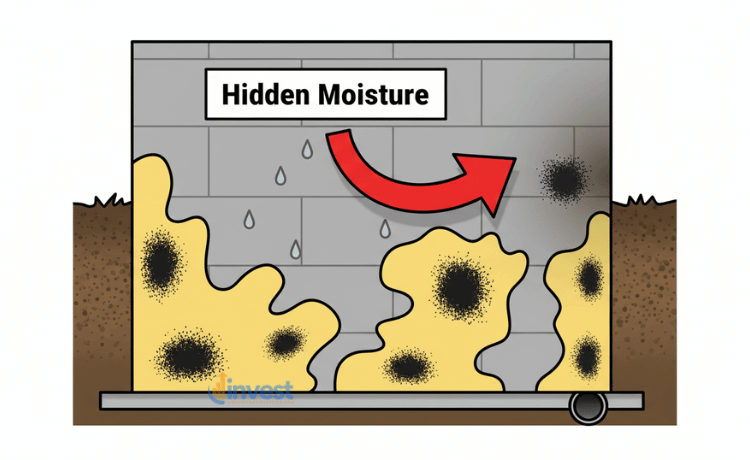
Water is the “enemy” of a house. Whether it comes from a leaky pipe, a flooded basement, or a poorly graded yard, moisture leads to one terrifying result: mold.
Why It Matters
Mold is not just a cleaning problem; it is a health and structural problem. Remediation (the professional process of removing mold) is incredibly expensive because it involves tearing out drywall, treating the area with chemicals, and fixing the moisture source.
Real-World Example
You find a house with a “finished basement” that would make a great movie room. But when you walk down there, you notice a faint, musty smell—like a damp towel left in a gym bag. You see “efflorescence,” which is a white, powdery substance on the concrete walls. This is a sign that water is seeping through the foundation from the outside.
Common Beginner Mistake
Buyers often think a “musty smell” can be fixed with a dehumidifier or some scented candles. They believe mold is something you can just “wipe away” with bleach.
The Correct Financial Logic
If you can smell it or see signs of moisture, the problem is likely hidden behind the walls. Mold remediation can cost 3,000 dollars for a small area, but if it has spread through the HVAC system, you could be looking at 20,000 dollars or more. Always find the source of the water first.
Red Flag 4: Electrical Gremlins and Outdated Panels
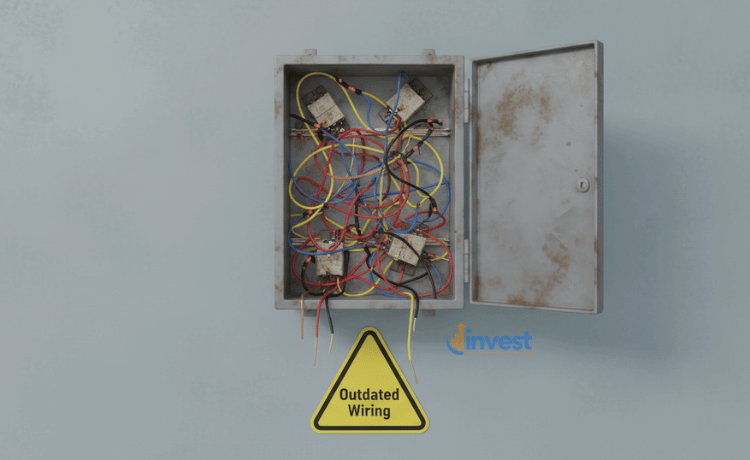
Electricity is one of the leading causes of house fires in the US. In older homes, the electrical system might not be built to handle modern lifestyles (think of all our laptops, big-screen TVs, and electric vehicle chargers).
Why It Matters
Older homes often have “knob and tube” wiring or “aluminum” wiring, both of which are considered fire hazards by modern insurance companies. Additionally, certain brands of electrical panels, such as Federal Pacific (FPE) or Zinsco, are notorious for failing to trip during a power surge, leading to fires.
Real-World Example
You are looking at a charming house built in the 1950s. The inspector opens the electrical panel and sees “double-tapped” breakers—where two wires are shoved into a spot meant for only one. They also notice that the kitchen doesn’t have GFCI outlets (the ones with the “test” and “reset” buttons) near the sink.
Common Beginner Mistake
New homeowners often think, “The lights turn on, so the electricity is fine.” They don’t realize that their insurance company might refuse to cover the home—or charge a massive premium—if the electrical panel is a known hazard.
The Correct Financial Logic
Upgrading an entire electrical panel can cost 2,000 dollars to 4,000 dollars, but rewiring an entire house can cost over 15,000 dollars. This isn’t just a convenience issue; it is a fundamental safety issue that affects your ability to even get a mortgage.
Red Flag 5: Plumbing Nightmares (Beyond a Leaky Faucet)
Plumbing issues can be hidden deep underground or behind thick layers of plaster. While a dripping sink is an easy fix, the “pipes” themselves are the concern.

Why It Matters
Homes built before the 1960s often have galvanized steel pipes that rust from the inside out, leading to low water pressure and eventually, burst pipes. Homes built in the 1980s and 90s might have “Polybutylene” piping, which was the subject of massive class-action lawsuits because the fittings tend to fail without warning.
Real-World Example
In an older neighborhood in Chicago, the inspector runs the water in the upstairs bathtub and notices the water is slightly brown for the first few seconds. Then, they use a specialized camera to “scope” the sewer line and find that tree roots have cracked the main pipe leading to the street.
Common Beginner Mistake
Buyers often focus on the “pretty” parts—the new faucets or the shiny showerhead. They don’t think about the “veins” of the house that carry the water in and out.
The Correct Financial Logic
Replacing a main sewer line can cost 5,000 dollars to 15,000 dollars and involves digging up your front yard or driveway. It is a “unseen” cost that adds zero aesthetic value to your home but is absolutely necessary for it to function.
Red Flag 6: The Heart of the Home: HVAC Health
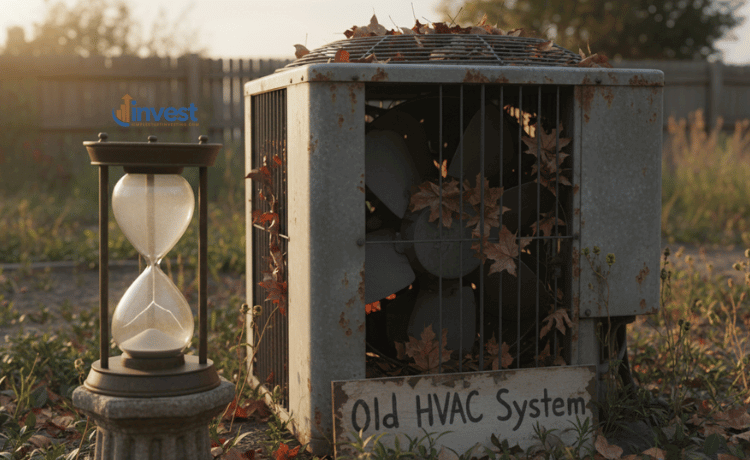
The HVAC (Heating, Ventilation, and Air Conditioning) system is usually the most expensive appliance in the house.
Why It Matters
In the US, a new furnace or central air conditioning unit can cost 6,000 dollars to 12,000 dollars. If both are old and failing, you are facing a massive bill right after closing. Additionally, older units use refrigerants (like R-22) that are being phased out by the EPA, making repairs extremely expensive because the parts and fluids are rare.
Real-World Example
A seller says the “AC works great!” But the inspector looks at the manufacturing date on the unit outside and sees it is twenty-two years old. The average lifespan is fifteen to twenty years. Even if it “works” today, it is living on “borrowed time.”
Common Beginner Mistake
“If it blows cold air, it’s fine.” Buyers don’t look at the age of the unit or the maintenance records. They assume they can just fix it if it breaks.
The Correct Financial Logic
An old HVAC system is inefficient, meaning your monthly utility bills will be much higher. If a system is past its “useful life,” you should budget for its replacement immediately, rather than hoping it lasts another winter.
Red Flag 7: Termites and Other Uninvited Guests
Pests like termites are often called “silent destroyers” because they eat the house from the inside out without making a sound.
Why It Matters
Termites can cause significant structural damage to the wooden frame of a house. In some parts of the US, like the South and Southwest, termite inspections are mandatory, but in other areas, they are optional. You should always get one.
Real-World Example
The house has a fresh coat of paint and looks perfect. However, in the crawlspace, the inspector finds “mud tubes” climbing up the concrete foundation. They poke a wooden beam with a screwdriver, and it goes right through because the wood is hollowed out.
Common Beginner Mistake
Thinking, “I’ll just spray some bug killer.” They don’t realize that if the bugs have reached the structural beams, the damage is already done.
The Correct Financial Logic
Termite treatment is relatively affordable (500 dollars to 1,500 dollars), but repairing the structural wood they destroyed can cost tens of thousands. Always look for the damage, not just the bugs.
How to Negotiate When You Find Red Flags
The goal of a home inspection is not to “win” against the seller. It is to make sure you are making an informed decision. If your inspector finds one of these seven home inspection red flags, you have three main options:
- Ask for a Repair: You can ask the seller to fix the issue before you close the deal. Make sure a licensed professional does the work and provides receipts.
- Ask for a Credit: This is often better. The seller gives you a discount on the price (or pays your closing costs) so you have the cash to fix it yourself with a contractor you trust.
- Walk Away: If the issues are too big (like a crumbling foundation) and the seller won’t budge, you can use your “inspection contingency” to cancel the contract and get your deposit back.

A Note on Perspective
No house is perfect. Even a brand-new construction will have a list of small issues. The key is to separate the “small stuff” (peeling paint, a loose doorknob) from the “big stuff” (the 7 red flags listed above).
Summary for Your Journey
Buying a home is the largest purchase you will likely ever make. Don’t let the excitement of a beautiful kitchen blind you to the reality of the home’s condition. By keeping an eye out for these home inspection red flags, you can protect your financial future and ensure your “dream home” doesn’t turn into a nightmare.
As you move forward, remember that regulations and building codes can change based on your specific state or city. Always check current local guidelines or consult with a professional inspector in your area before making a final decision.
Disclaimer: This content is for educational purposes only and does not constitute financial or legal advice. Home buying involves significant risk, and you should always consult with qualified professionals before making any real estate transaction.