
Millions of hard-working Americans overlook one of the most powerful financial tools available during tax season: the Earned Income Tax Credit. If you work and have a low-to-moderate income, this credit isn’t just a way to reduce what you owe; it is often a way to put thousands of dollars back into your pocket as a refund.
For many, the tax season is a time of stress and worry about how much money they might owe the government. However, the Earned Income Tax Credit changes that dynamic entirely. It is specifically designed to reward work and provide a financial cushion for individuals and families who are building their financial foundation.
Understanding the Earned Income Tax Credit is the first step toward claiming what you have rightfully earned. This guide will break down everything a beginner needs to know about how this credit works, who is eligible, and how it can significantly impact your financial health this year.
What Exactly Is the Earned Income Tax Credit?
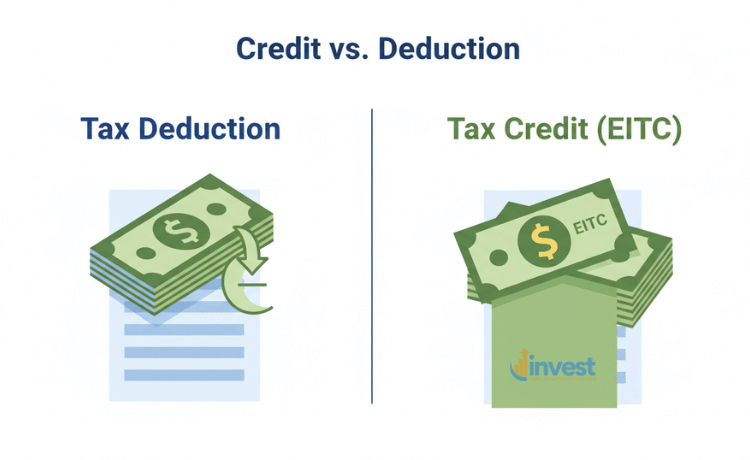
At its core, the Earned Income Tax Credit is a “refundable” tax credit. To understand this, we first need to distinguish between a tax deduction and a tax credit. A deduction lowers the amount of your income that is taxed. A credit, however, is much more powerful. It is a dollar-for-dollar reduction of the actual tax you owe.
The “refundable” part is the real magic of the EITC. Most tax credits can only bring your tax bill down to zero. If you owe 500 dollars and have a 1,000 dollar non-refundable credit, you pay zero, but you lose the remaining 500 dollars. With a refundable credit like the EITC, if you owe zero dollars in taxes but qualify for a 1,000 dollar credit, the government actually sends you a check for that 1,000 dollars.
A Simple Way to Think About It
Imagine you are at a grocery store. A “deduction” is like a coupon that takes a few cents off the price of an item. A “refundable credit” is like having a gift card that is worth more than your total bill; the cashier doesn’t just let you leave with your groceries for free—they actually hand you the leftover cash from the gift card.
A Real-World Example
Consider Sarah, who works as a dedicated associate at Walmart. She earned 30,000 dollars this year and has two children. Because of her income level and family size, she might owe very little in federal income tax. When she files her return, she discovers she qualifies for the Earned Income Tax Credit. Even though she already paid some taxes through her paycheck, the credit is so large that it wipes out her tax bill and results in a refund check for several thousand dollars.
The Common Beginner Mistake
Many beginners assume that if they didn’t earn enough money to “owe” taxes, they shouldn’t bother filing a tax return. They think, “If the government doesn’t want money from me, why should I fill out the paperwork?”
The Correct Mindset
You must file a tax return to claim the Earned Income Tax Credit, even if you do not owe any taxes and are not otherwise required to file. By not filing, you are essentially leaving “free money” on the table that the government has set aside specifically to help workers like you.
What Counts as “Earned Income”?
To qualify for the Earned Income Tax Credit, you must have what the IRS calls “earned income.” This sounds simple, but it is a specific category that confuses many new filers.
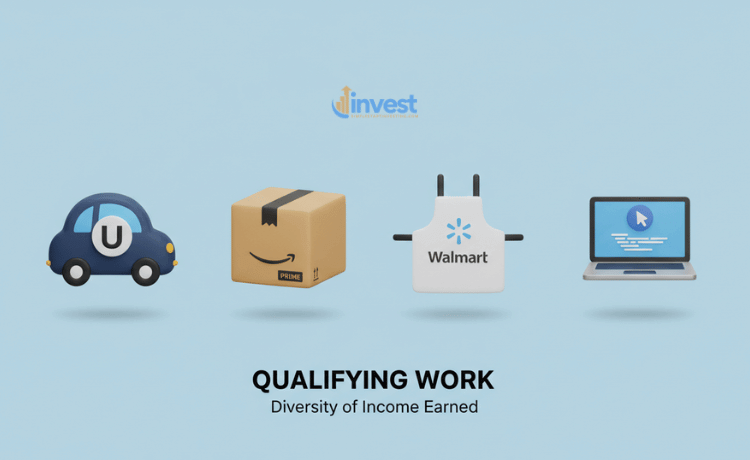
Earned income includes wages, salaries, tips, and other taxable employee pay. It also includes net earnings from self-employment. If you drive for Uber, sell handmade crafts on Etsy, or work as a freelance consultant for companies like Amazon, that money counts as earned income.
What is NOT Earned Income?
It is equally important to know what does not count. This includes interest and dividends from investments (like owning shares of Apple or Tesla), social security benefits, unemployment benefits, or alimony. The IRS wants to see that you are actively working to receive this specific credit.
An Everyday Example
Let’s look at Mark. Mark is retired but receives 20,000 dollars a year from his pension and 5,000 dollars from stock dividends. Since none of this money comes from an active job or self-employment, Mark does not have “earned income” in the eyes of the IRS for this credit. He would not qualify for the EITC, even though his total income is low.
The Common Beginner Mistake
Some people believe that all money coming into their bank account counts toward the EITC. They might think their unemployment checks will help them qualify for a bigger credit.
The Correct Mindset
The EITC is a “work incentive.” Its purpose is to encourage people to stay employed or keep their small businesses running. If your only income for the year was from government assistance or investments, you won’t qualify for this specific credit.
The Rules for Investment Income
While the EITC is for workers, the IRS also looks at how much “passive” money you made. If you have too much investment income, you are disqualified from the credit, even if your job pays very little.
For this year, if your investment income (like capital gains from selling Nvidia stock or interest from a high-yield savings account) exceeds 11,600 dollars, you cannot claim the Earned Income Tax Credit. The government assumes that if you have enough extra cash to generate over 11,000 dollars in passive profit, you do not need the extra help provided by the EITC.
A Numeric Example
Imagine Jessica works part-time at Starbucks and earns 15,000 dollars. However, she inherited some stock years ago and sold a portion of it this year for a profit of 12,000 dollars. Because her investment profit of 12,000 dollars is higher than the 11,600 dollar limit, she is disqualified from the EITC, despite her low wages at the coffee shop.
The Common Beginner Mistake
New investors often forget to track their “capital gains” (profits from selling assets). They might think that because their “day job” pay is low, they are a shoe-in for the credit.
The Correct Mindset
Financial health is about the big picture. The IRS uses the investment income limit as a “wealth test.” To ensure you qualify, you need to be aware of how selling stocks or earning large amounts of interest might impact your eligibility for tax breaks.
How Family Size Impacts Your Credit Amount
The Earned Income Tax Credit is unique because it grows significantly based on how many “qualifying children” you have. While single people without children can claim it, the amount they receive is much smaller compared to a family with three or more children.
The IRS has strict rules for who counts as a qualifying child. They must meet tests based on relationship (son, daughter, stepchild, foster child, brother, sister, etc.), age (under 19, or under 24 if a full-time student), and residency (they must live with you in the United States for more than half the year).

How the Math Works (In Plain English)
If you are a single filer with no children, your maximum credit might be around 600 dollars. If you have one child, that maximum jumps to nearly 4,000 dollars. If you have three or more children, the maximum credit can exceed 7,000 dollars. This is why the EITC is often cited as one of the most effective anti-poverty programs in the United States.
A Real-World Example
Consider two neighbors. David is single and works at a local hardware store. Maria is a single mother with three kids and works at a nearby hospital. They both earn 25,000 dollars. David might get a small EITC refund of a few hundred dollars. Maria, because of her three qualifying children, could receive a refund of over 7,000 dollars. This difference reflects the higher cost of living and raising a family.
The Common Beginner Mistake
Many people think that as long as they provide money for a child (like child support), they can claim that child for the EITC.
The Correct Mindset
The “Residency Test” is crucial. To claim a child for the EITC, that child must actually live with you for more than six months of the year. If you pay support but the child lives with the other parent, you generally cannot claim the EITC for that child.
The “Phase-In” and “Phase-Out” Logic
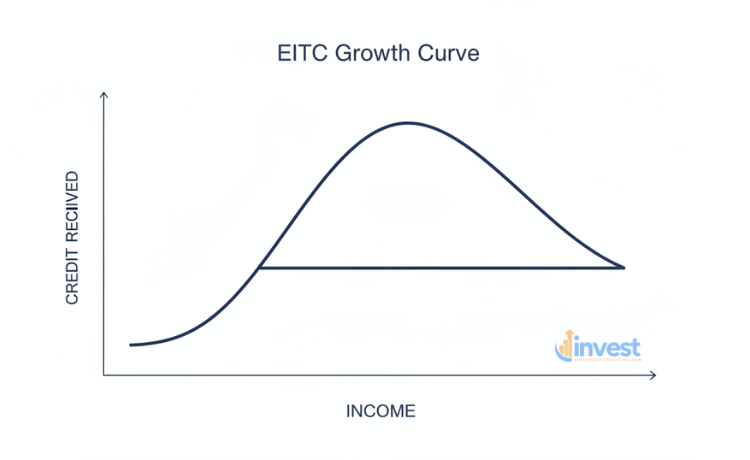
The Earned Income Tax Credit is designed like a bell curve.
- Phase-In: As you start earning money, the credit grows. For every dollar you earn, the government gives you a certain percentage back.
- Plateau: You reach a point where the credit stays at its maximum level for a certain income range.
- Phase-Out: As you start earning more (approaching middle-class levels), the credit slowly decreases until it reaches zero.
This structure ensures that the most help goes to those who are working but still struggling to make ends meet.
A Simple Example
Think of it like a “matching” program. For the first few thousand dollars you earn at McDonald’s, the government matches a portion of your pay in the form of a tax credit. Once you earn enough to be stable, say 20,000 dollars for a single person, the government starts to slowly reduce that match because you are becoming more self-sufficient.
The Common Beginner Mistake
Some workers fear that getting a raise or working overtime at Costco will “ruin” their taxes because they might lose the EITC. They worry that earning 1,000 dollars more will cause them to lose 2,000 dollars in credits.
The Correct Mindset
While the credit does “phase out,” it does so gradually. In almost every situation, earning more money through work will leave you with more total money in your pocket, even after the reduction of the tax credit. Never turn down a raise or a better job opportunity just to stay eligible for a tax credit.
Why the IRS Watches the EITC Closely
Because the Earned Income Tax Credit results in large cash refunds, it is a frequent target for errors and even fraud. Consequently, the IRS examines these claims very carefully.
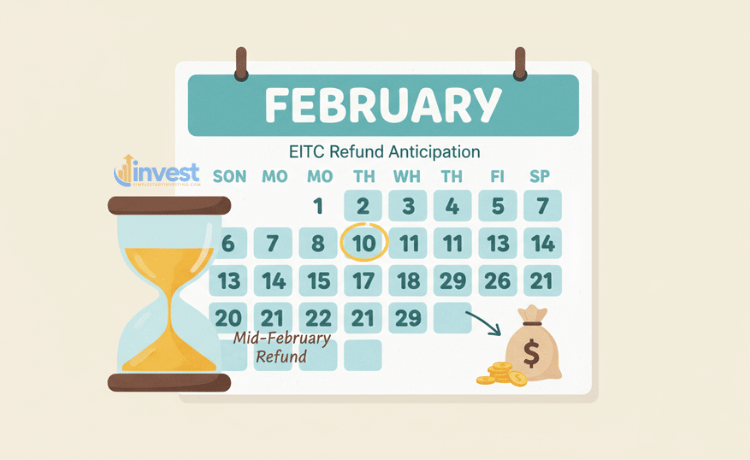
By law (the PATH Act), the IRS cannot issue refunds that include the EITC before mid-February. This gives the agency extra time to verify that the income reported by the taxpayer matches what the employer reported.
A Real-World Example
If you file your taxes on January 20th and you are expecting a 5,000 dollar refund because of the EITC, do not expect that money in your bank account the following week. The IRS will hold that refund until they have completed their basic checks, which usually means the money arrives in late February or early March.
The Common Beginner Mistake
Many beginners rely on their tax refund to pay urgent bills in early February. They get frustrated when the money doesn’t arrive as fast as their friends’ refunds (who might not be claiming the EITC).
The Correct Mindset
When planning your finances, treat the EITC refund as “late February money.” Don’t spend it in your mind before it hits your bank account. Patience and accuracy are key to avoiding an audit or a long delay.
How to Claim the Credit Successfully
Claiming the Earned Income Tax Credit doesn’t require a degree in accounting, but it does require attention to detail. You must have a valid Social Security number for yourself, your spouse (if filing jointly), and any qualifying children.

Most tax software programs will automatically calculate the EITC for you based on the income and family information you provide. However, you should always double-check your “Form 1040” to see if “Schedule EIC” is attached. This is the specific form that lists your qualifying children’s information.
A Simple Step-by-Step
First, gather all your W-2 forms from your employers and 1099 forms if you did gig work. Second, ensure you have the correct Social Security numbers and birth dates for your children. Third, when using tax software, answer the questions about your “residency” and “relationship” to your children honestly.
The Common Beginner Mistake
Some people try to “share” a child for tax purposes. For example, a mother and a grandmother both living in the same house might both try to claim the same child to get two EITC checks.
The Correct Mindset
Only one person can claim a specific qualifying child. If two people claim the same child, the IRS will flag both returns, and the refund will be delayed for months while they figure out who is legally entitled to the credit. Communication within the family is essential before filing.
Common Myths About the EITC
There are several myths that prevent people from claiming this life-changing credit. Let’s clear them up.
Myth 1: “I’m not a parent, so I don’t qualify.” Actually, workers between the ages of 25 and 64 who do not have children can still qualify for a smaller version of the EITC. While the amount is lower (usually a few hundred dollars), it still helps offset the taxes you paid throughout the year.
Myth 2: “If I claim the EITC, I’ll get audited.” While the IRS does check EITC claims carefully, as long as your information is honest and accurate, you have nothing to fear. The credit is there for you to use.
Myth 3: “The EITC will reduce my other benefits like Food Stamps or Medicaid.” In almost all cases, tax refunds (including the EITC) are not counted as “income” when determining eligibility for benefit programs like SNAP (Supplemental Nutrition Assistance Program) or Medicaid. It is a “tax event,” not a monthly income stream.
Summary of the Earned Income Tax Credit
The Earned Income Tax Credit is a powerful ally for the American worker. It rewards your effort at your job by reducing your tax burden and, in many cases, providing a significant financial boost through a refundable check.
To make the most of it:
- Ensure your income is “earned” from a job or business.
- Keep your investment income below the annual limit (11,600 dollars this year).
- Verify your children meet the relationship, age, and residency tests.
- Always file a tax return, even if your income is very low.
By understanding these “rules of the road,” you can navigate tax season with confidence and ensure that you are taking full advantage of the programs designed to support your financial journey.
Note: Tax laws and regulations can change annually. Please check the current IRS guidelines or consult with a tax professional for the most up-to-date information.
Disclaimer: This content is for educational purposes only and does not constitute financial or tax advice. Always consult with a qualified tax professional or refer to official IRS publications for your specific situation.