Congratulations, you are a homeowner! You’ve navigated the mountain of paperwork, survived the inspections, and finally have the keys in your hand. Most new owners spend their first few weeks thinking about paint colors, furniture layouts, and where to hang the family photos. But there is a silent partner in your homeownership journey that often goes uninvited to the housewarming party: the home maintenance fund.
The excitement of owning a home can quickly fade the moment you realize that there is no landlord to call when the faucet leaks or the air conditioner starts making a sound like a plane taking off. In the world of real estate, the transition from renter to owner is a shift from being a “consumer” of housing to being the “manager” of an asset. This asset needs constant care to keep its value and to keep you safe and comfortable.
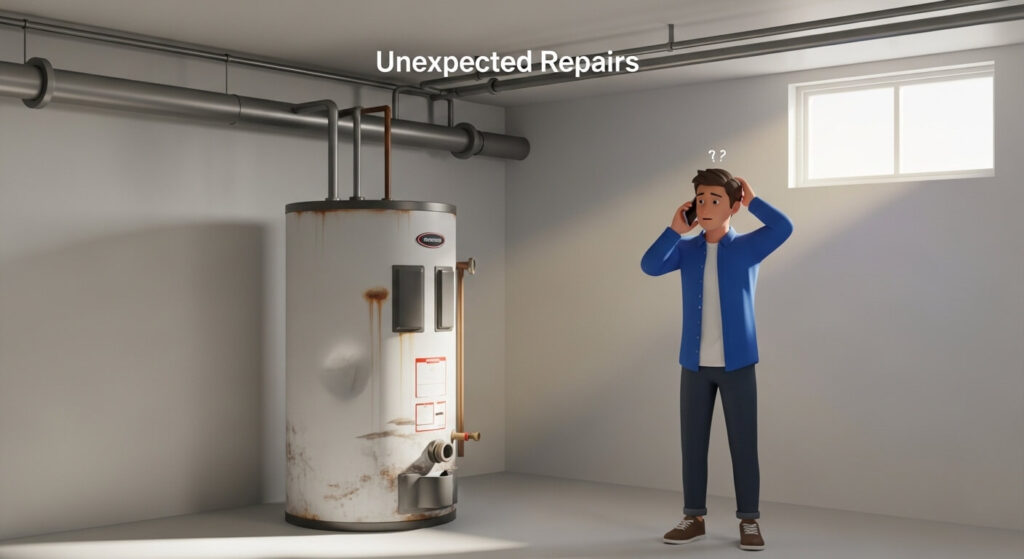
Understanding how to build a home maintenance fund is perhaps the most overlooked skill in personal finance for beginners. Many people wait until something breaks to figure out how they will pay for it. This leads to high-interest credit card debt and immense stress. Today, we are going to dive deep into a simple, effective strategy called the 1% Rule to ensure you are never caught off guard by the costs of keeping your home in top shape.
What Exactly Is a Home Maintenance Fund?
Before we get into the numbers, let’s define what we are talking about. A home maintenance fund is a dedicated pool of savings used specifically for the upkeep and repair of your home. It is different from your general emergency fund. While an emergency fund is for “total life” disasters like losing a job, your maintenance fund is a “sinking fund” for the inevitable.
Think of it this way: a roof wearing out over twenty years isn’t an “emergency”—it is a scheduled event. Your HVAC system reaching the end of its life after fifteen years is a certainty. A home maintenance fund treats these events as expected expenses rather than shocking surprises. It covers everything from the small stuff, like replacing air filters and smoke detector batteries, to the big-ticket items like plumbing overhauls or foundation repairs.
By setting this money aside, you are essentially “pre-paying” for the repairs that haven’t happened yet. This proactive approach turns a potentially five-figure disaster into a manageable withdrawal from a savings account.
Why Beginners Often Get It Wrong
Most first-time homeowners fall into a few common traps when it comes to budgeting for their property. The most frequent mistake is looking only at the PITI—Principal, Interest, Taxes, and Insurance. While your bank uses these numbers to see if you can afford a mortgage, they don’t care about your broken dishwasher.
If your monthly mortgage payment is 2,000 dollars, many people assume that is the total cost of living in that house. In reality, you should be adding a “maintenance premium” on top of that every single month. When homeowners ignore this, they find themselves “house poor,” where they have a beautiful home but no cash to fix the things that make it livable.
Another misconception is that a new home doesn’t need a home maintenance fund. People think, “The house was built last year; nothing will break for a decade.” While you might not need a new roof anytime soon, new homes settle. Lawns need landscaping. Filters need changing. More importantly, if you don’t start saving during the “quiet years” when the house is new, you won’t have the massive lump sum required when the water heater, dishwasher, and roof all decide to retire at the same time twelve years from now.
Introducing the 1% Rule
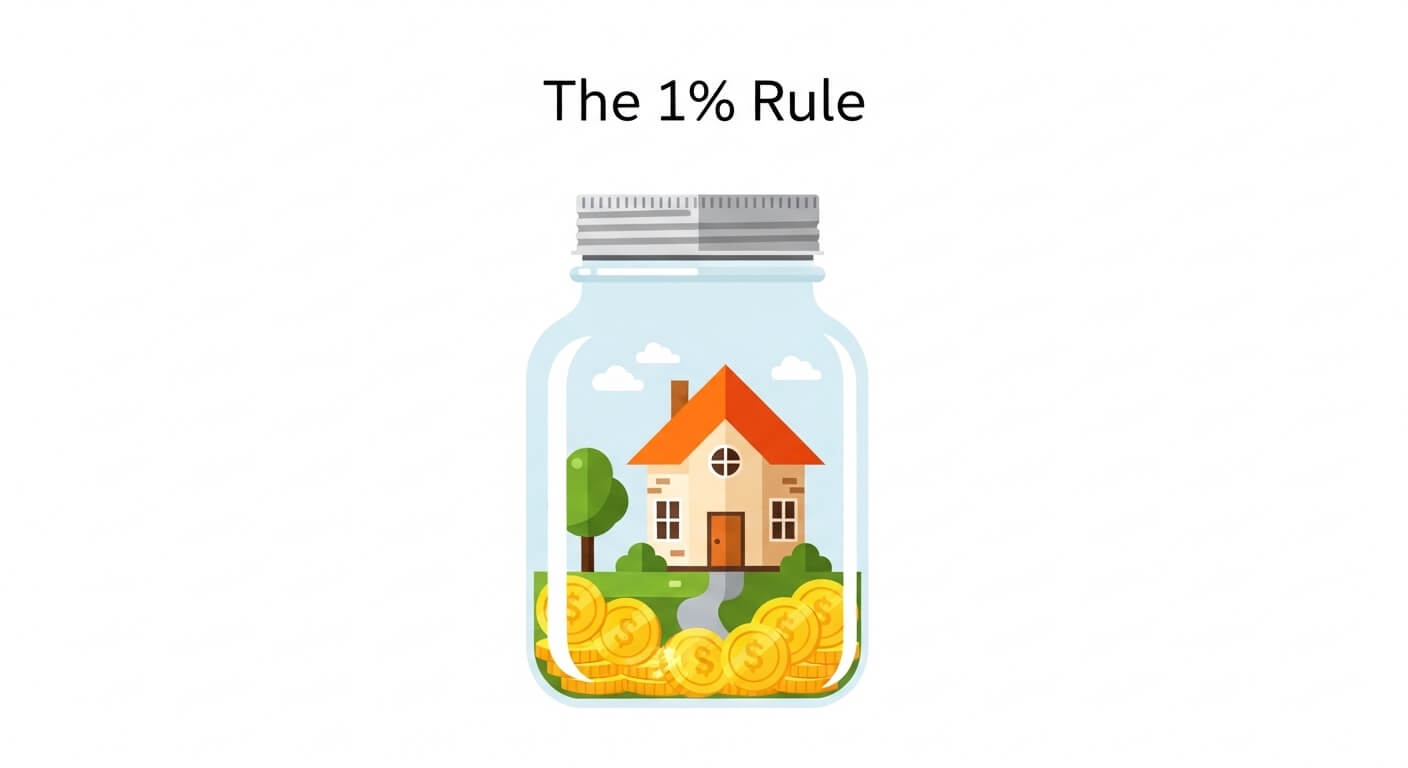
The 1% Rule is a classic rule of thumb used by financial experts and savvy real estate investors to estimate annual maintenance costs. It is remarkably simple: you should plan to spend at least one percent of your home’s purchase price on maintenance and repairs every year.
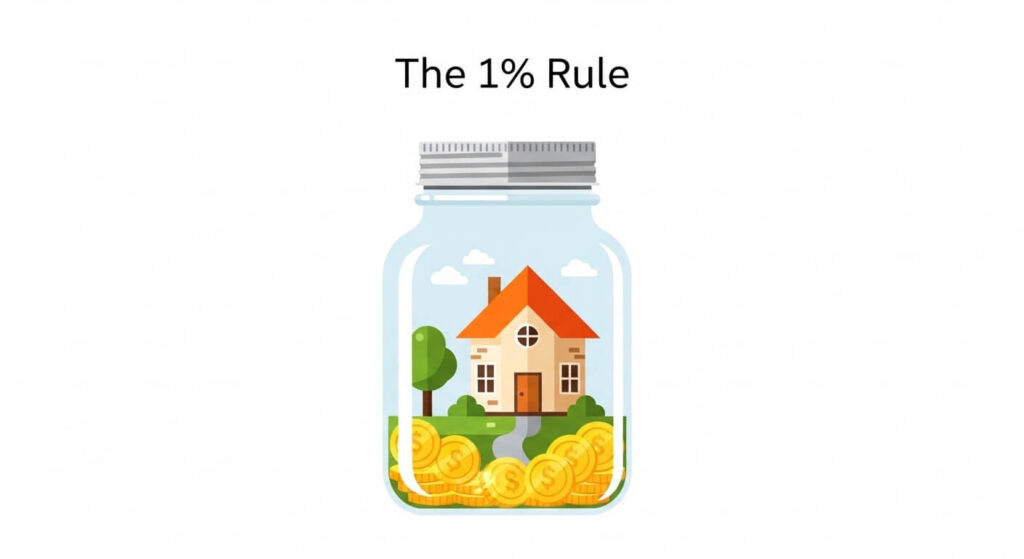
Let’s look at how this works in practice with a simple example. Suppose you purchased a home for 400,000 dollars. According to the 1% Rule, you should expect to spend roughly 4,000 dollars per year on upkeep. If you break that down into a monthly savings goal, you would aim to set aside about 333 dollars each month into your home maintenance fund.
Now, it is important to understand that this is an average. In some years, you might only spend 500 dollars on minor plumbing and some garden mulch. In other years, you might spend 10,000 dollars because the exterior needs to be repainted and the furnace died. The goal of the rule is to ensure that over a long period, you have enough money to cover both the “pennies” and the “thousands.”
When the 1% Rule Might Not Be Enough
While the 1% Rule is a great starting point for someone new to investing in real estate or homeownership, it isn’t a one-size-fits-all solution. There are several factors that might require you to bump that percentage up to two or even three percent.
The Age of the Home
A home built in the 1950s is a different beast than one built in 2024. Older homes often have aging infrastructure—think galvanized steel pipes that are corroding from the inside or electrical systems that weren’t designed for today’s high-tech appliances. If you own an older home, the 1% Rule is your “floor,” but you should probably aim for a higher target to be safe.

The Local Climate
Weather plays a massive role in how quickly a house degrades. If you live in an area with extreme humidity, wood rot and mold become constant battles. If you are in a region with heavy snow and ice, your roof and gutters take a beating every winter. Coastal homes deal with salt air that can corrode metal fixtures and HVAC units much faster than inland properties. In these environments, your home maintenance fund needs to be more robust.
The Condition at Purchase
If you bought a “fixer-upper” at a discount, the 1% Rule based on the purchase price will almost certainly be too low. If you bought a 300,000 dollar house that needs 50,000 dollars in immediate work, your maintenance needs are much higher than a move-in ready home at the same price point. In this case, many experts suggest calculating your 1% based on the market value of the home rather than what you paid for it.
An Alternative Method: The Square Foot Rule
If the 1% Rule feels a bit too vague for you, some homeowners prefer the Square Foot Rule. This method suggests saving one dollar for every square foot of livable space in your home, every year.
For example, if you have a 2,500-square-foot home, you would save 2,500 dollars per year, which comes out to about 208 dollars per month. This method can be particularly useful in markets where home prices are extremely high. In a city like San Francisco, a tiny 1,000-square-foot condo might cost one million dollars. Using the 1% Rule would suggest saving 10,000 dollars a year for maintenance, which might be overkill for such a small space. The Square Foot Rule provides a reality check in those scenarios.
However, for most of the American market, the 1% Rule is the gold standard because it accounts for the total value and complexity of the property’s systems.
Maintenance vs. Improvements: Don’t Confuse the Two
A major pitfall for beginners is dipping into their home maintenance fund for things that aren’t actually maintenance. It is vital to distinguish between a repair and an improvement.
- Maintenance: Fixing a leak, replacing a broken window, servicing the heater, or cleaning the gutters. These tasks keep the house in its current condition.
- Improvement: Installing granite countertops, adding a deck, or finishing a basement. These tasks increase the value of the home and change its functionality.

Your home maintenance fund is for keeping the lights on and the water out. If you use that money to buy a fancy new refrigerator just because you like the look of it, you won’t have the cash when the roof starts leaking. Think of maintenance as “defensive” spending and improvements as “offensive” spending. Always prioritize the defense.
Where Should You Keep This Money?
Because you might need this money at any moment—pipes don’t give a two-week notice before they burst—you need to keep your home maintenance fund in a place that is both safe and accessible.
The best option for most people is a High-Yield Savings Account (HYSA). These accounts are separate from your regular checking account, which helps prevent “accidental” spending. They are also liquid, meaning you can transfer the money to your checking account within a day or two. As an added bonus, these accounts currently pay a much higher interest rate than traditional big-bank savings accounts, meaning your money will grow a little bit while it waits to be used.
Do not invest this money in the stock market. While the market is great for long-term goals like retirement, it is too volatile for a maintenance fund. You don’t want to find out you need a 5,000 dollar furnace replacement right when the stock market has dropped twenty percent.
How to Start If You Have Zero Savings
If you are reading this and realizing you don’t have a dime set aside for your home, don’t panic. The best time to start was the day you closed on the house, but the second-best time is today.
- Analyze Your Budget: Look at your monthly income and see where you can carve out a “Maintenance Line Item.” Even if you can’t hit the full 1% target right away, start with 100 dollars a month.
- Automate It: Set up an automatic transfer from your paycheck or your checking account to your dedicated savings account. If you never see the money, you won’t miss it.
- The “Found Money” Strategy: If you get a tax refund, a bonus at work, or a cash gift, put a portion of it directly into your home maintenance fund. This is a great way to “jumpstart” the account to a healthy level.
- Audit Your Home: Take a walk around your property. How old is the roof? How old is the water heater? If you know the water heater is ten years old (near the end of its life), you should prioritize building that fund even faster.

The High Cost of Neglect
Some homeowners try to save money by simply not doing maintenance. They skip the annual HVAC tune-up or ignore the small spot of mold in the corner of the attic. This is a classic case of being “penny wise and pound foolish.”
Deferred maintenance is a debt that always comes due with interest. A 150 dollar gutter cleaning might seem annoying, but ignoring it can lead to water pooling at your foundation, which could cost 15,000 dollars to fix later. A small leak under the sink that would cost 50 dollars in parts to fix can rot your cabinetry and floorboards if left for a year, leading to a 3,000 dollar kitchen repair.
Beyond the repair costs, neglected maintenance destroys your home’s resale value. When you eventually decide to sell, a savvy inspector will find all the things you ignored. The buyer will then ask for a massive credit, or worse, walk away from the deal entirely. Keeping a healthy home maintenance fund is essentially an insurance policy for your home’s equity.
Practical Steps for the First Year
If you are in your first year of homeownership, here is a simple logic to follow to get your home maintenance fund on the right track:
- First 3 Months: Focus on the “low-cost, high-impact” items. Change all filters, test smoke detectors, and buy a basic tool kit.
- Months 4 to 9: Observe how the house handles the seasons. Do the gutters overflow during spring rain? Does the basement feel damp in the summer? Use these observations to adjust your savings goals.
- By Month 12: You should aim to have at least 0.5% of the home’s value saved. By the end of year two, you should be at the full 1% or higher.
Remember, the goal isn’t to be perfect; the goal is to be prepared. Homeownership is a marathon, not a sprint. By respecting the 1% Rule and consistently feeding your home maintenance fund, you move from a place of anxiety to a place of control. You can enjoy your home knowing that you have the resources to handle whatever life (or the plumbing) throws your way.
Investing in your home isn’t just about the purchase price; it’s about the daily commitment to keeping it a safe, functional, and valuable place for you and your family to live.
Disclaimer: This content is for educational purposes only and does not constitute professional financial, legal, or real estate advice. Always consult with a qualified professional before making significant financial decisions.