When you hear the word “investing,” your mind probably jumps straight to the stock market. You might think of high-speed trading, fluctuating graphs, and the thrill of owning a piece of a giant tech company. But there is another side to the financial world that is often quieter, steadier, and arguably just as important for your long-term success: Bonds for beginners.
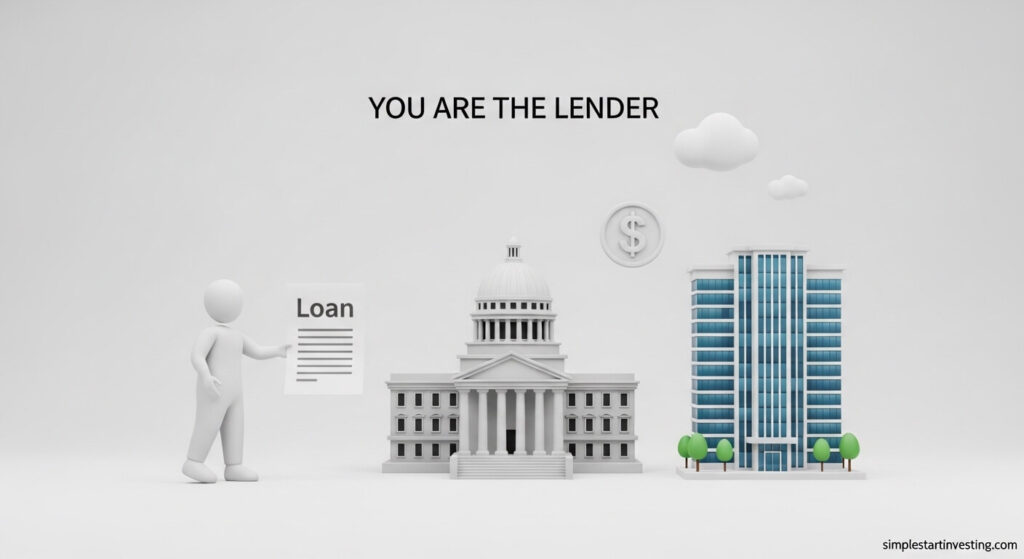
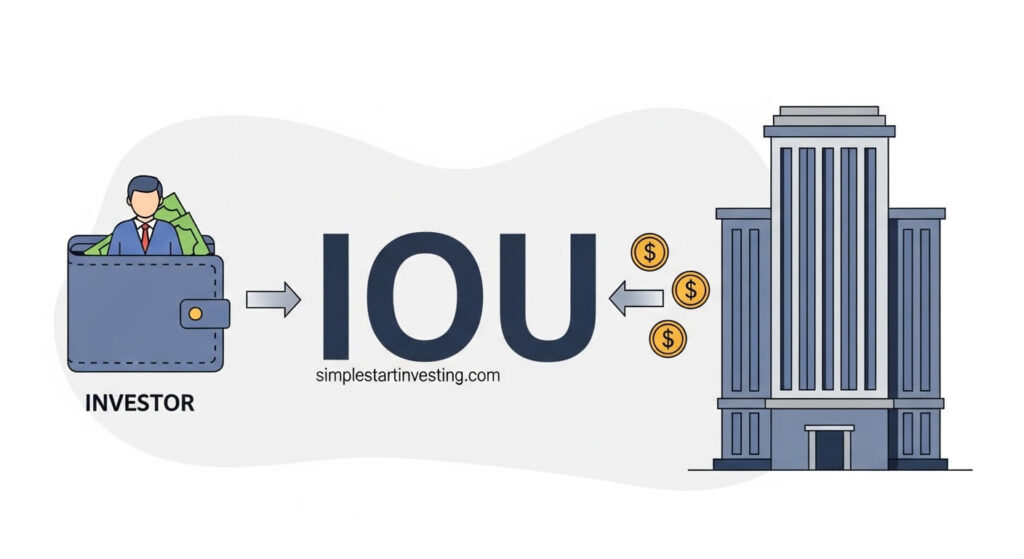
If stocks make you a “part-owner” of a company, bonds make you the “bank.” When you buy a bond, you aren’t buying a slice of a business; you are lending your hard-earned money to an organization—like the U.S. government or a major corporation—in exchange for regular interest payments and the promise that you’ll get your original money back later.
For a lot of people starting out, bonds feel intimidating because the language sounds like “banker-speak.” However, once you strip away the jargon, the concept is incredibly simple. This guide will walk you through everything you need to know about how bonds work, why they belong in your portfolio, and how to avoid the common traps that catch new investors off guard.
What Exactly is a Bond?
Think of a bond as a formal “IOU.” Imagine your friend wants to open a lemonade stand but doesn’t have the cash for lemons and sugar. They ask you for 100 dollars. In return, they promise to pay you 5 dollars every year as a “thank you” for the loan, and at the end of five years, they will give you your original 100 dollars back.
In the professional world, that 100 dollars is the Principal. The 5 dollars you get every year is the Interest (often called a “coupon”). The five-year mark when you get your big check back is the Maturity.
When you invest in bonds for beginners, you are doing exactly this, but on a much larger scale. Instead of a lemonade stand, you are lending to the United States Treasury to build roads or to a company like Walmart to open new warehouses.
Why Do Entities Issue Bonds?
You might wonder why a massive company or the government needs your money. Why don’t they just use their own? The reality is that big projects require massive amounts of capital upfront.
The government uses bonds to fund public services, infrastructure, and even the military. Corporations use them to expand their operations, buy out competitors, or invest in new technology. Issuing bonds is often cheaper for these entities than taking out a traditional bank loan, and it allows them to borrow from thousands of small investors like you simultaneously.
The Three Pillars of a Bond
To understand any bond you see listed on a brokerage site, you only need to look at three specific things:
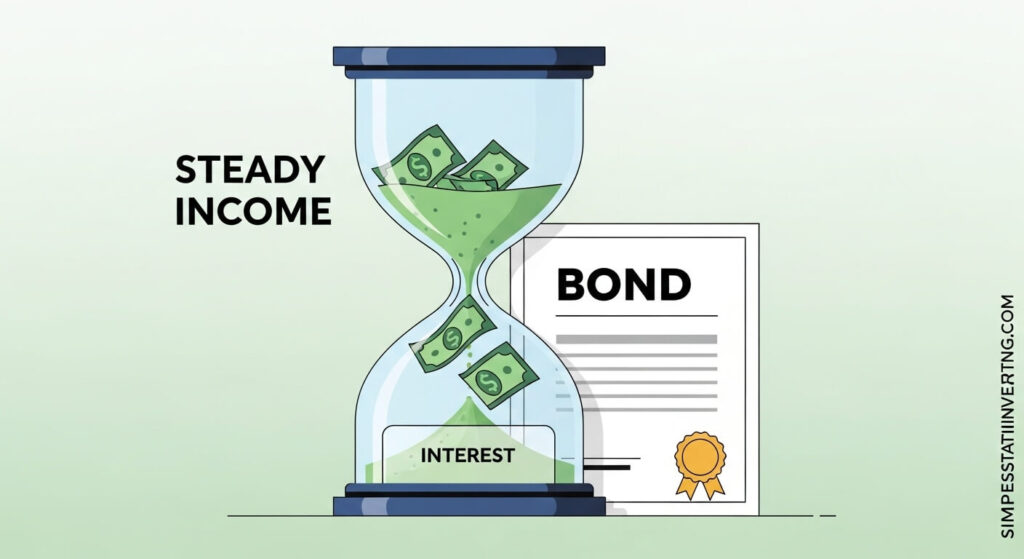
1. The Face Value (Par Value)
This is the amount the bond is worth when it is first issued and the amount you will receive back when the bond reaches its end date. In the U.S., most individual bonds are issued in increments of 1,000 dollars. Even if the price of the bond changes while you own it, the “face value” remains the anchor of the deal.
2. The Coupon Rate (Interest Rate)
This is the annual interest rate the issuer promises to pay you. If a bond has a face value of 1,000 dollars and a coupon rate of 5%, you will receive 50 dollars every year. Usually, this is split into two payments of 25 dollars every six months.
3. The Maturity Date
This is the “expiration date” of the loan. Some bonds are short-term (lasting only a few months), while others are long-term (lasting 10, 20, or even 30 years). On this date, the relationship ends: the issuer gives you back your principal, makes the final interest payment, and the bond “matures.”
Why Beginners Often Get Bonds Wrong
One of the biggest misconceptions about bonds for beginners is that they are “risk-free.” While they are generally more stable than stocks, they are not a “guaranteed” way to never lose money.
New investors often think that if they buy a bond for 1,000 dollars, it will always be worth 1,000 dollars until it matures. This is false. If you decide to sell your bond to another investor before the maturity date, the price might be higher or lower than what you paid.
Another mistake is assuming all bonds are the same. Lending money to the U.S. government (which can print its own money) is a very different risk level than lending money to a startup tech company that hasn’t made a profit yet. Understanding the “who” behind the bond is just as important as the “how much.”
The Different Types of Bonds in the U.S. Market
When you start looking at your investment options, you’ll see four main categories. Each serves a different purpose for your wallet.
U.S. Treasury Bonds
These are backed by the “full faith and credit” of the United States government. Because the U.S. has never defaulted on its debt, these are considered among the safest investments in the world. They are the benchmark for all other bonds.
- Treasury Bills (T-Bills): Short-term (1 year or less).
- Treasury Notes: Medium-term (2 to 10 years).
- Treasury Bonds: Long-term (up to 30 years).
Corporate Bonds
These are issued by companies like Apple, Amazon, or Costco. They carry more risk than government bonds because companies can go bankrupt. To compensate you for that extra risk, corporate bonds almost always pay a higher interest rate than Treasuries.
Municipal Bonds (Munis)
These are issued by states, cities, or counties to fund local projects like schools or highways. The “superpower” of municipal bonds is their tax status. Often, the interest you earn is exempt from federal income tax, and sometimes state and local taxes too. This makes them very popular with investors in higher tax brackets.
Agency Bonds
These are issued by government-sponsored enterprises like Fannie Mae or Freddie Mac. They aren’t “official” Treasury debt, but they are very close and usually pay slightly more interest.
How Interest Rates Affect Your Bonds
This is the part that trips up most beginners, so let’s use a simple real-world logic.
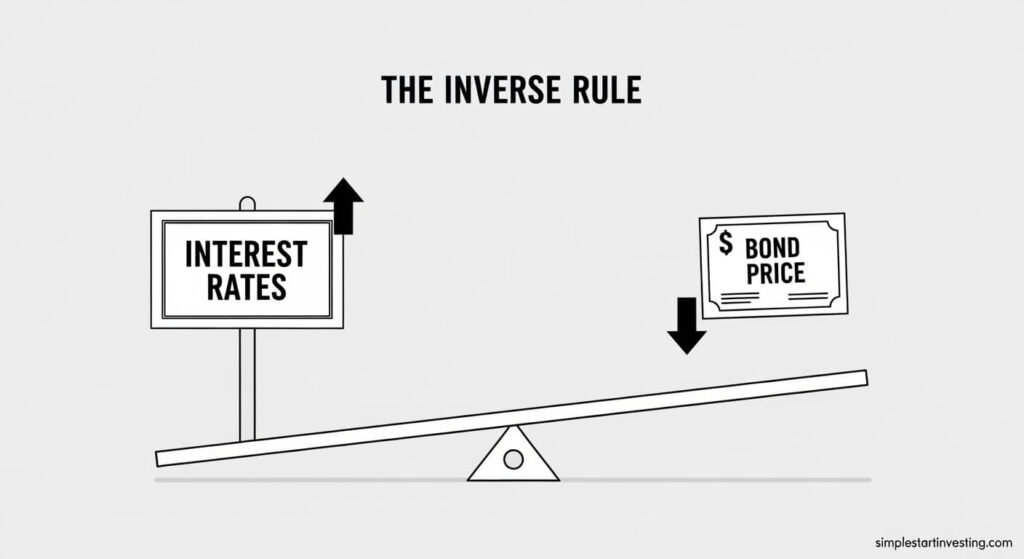
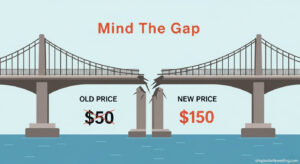
Imagine you own a bond that pays 5% interest. Suddenly, the Federal Reserve raises interest rates, and now new bonds are being issued at 7% interest. If you want to sell your 5% bond, nobody is going to pay full price for it because they could just go buy a new one that pays 7%. To convince someone to buy your “older” bond, you have to lower the price.
The Golden Rule: When interest rates go up, the value of existing bonds goes down. When interest rates go down, the value of existing bonds goes up.
However, if you don’t plan on selling your bond and you just want to hold it until the maturity date, these price swings don’t affect you. You will still get your 5% interest and your full principal back at the end. The “loss” only becomes real if you sell early.
The Risks You Need to Know
Even though we call bonds “fixed income,” they aren’t without their dangers.
Default Risk (Credit Risk)
This is the risk that the company or city you lent money to goes broke and can’t pay you back. This is why “Bond Ratings” exist. Agencies like Moody’s or Standard & Poor’s give bonds grades. “AAA” is the gold standard, while anything below a certain level is considered “High Yield” or “Junk Bonds”—meaning they pay a lot of interest because the risk of them failing is high.
Inflation Risk
Imagine your bond pays you 3% interest, but the price of milk, gas, and rent goes up by 5% this year. Even though you have “more” money, your money actually buys less than it did before. Inflation is the natural enemy of bonds.
Call Risk
Some bonds have a “call provision.” This means if interest rates drop, the company can basically “refinance” their debt. They pay you back early and stop the interest payments. This is annoying for you because you now have to find a new place to invest your money, likely at a lower interest rate.
How to Start Investing in Bonds
For a beginner, there are two main paths to becoming a lender.
1. Buying Individual Bonds
You can go to a site like TreasuryDirect.gov to buy government bonds directly from the source, or use a brokerage account to buy specific corporate bonds. This gives you total control, but it requires more work to manage and can be expensive if you want to buy many different types to stay safe.
2. Bond Funds and ETFs
Most beginners find it easier to buy a “Bond Fund” or an “Exchange-Traded Fund” (ETF). Instead of lending to one company, you are putting your money into a giant pool that lends to hundreds or thousands of different entities at once.
- Pros: It’s easy, cheap, and gives you instant diversification.
- Cons: These funds don’t have a “maturity date,” so the value of your investment will fluctuate based on interest rates forever.
The Role of Bonds in a “Simple Start” Portfolio
Why bother with bonds if stocks usually grow faster over time? The answer is Balance.
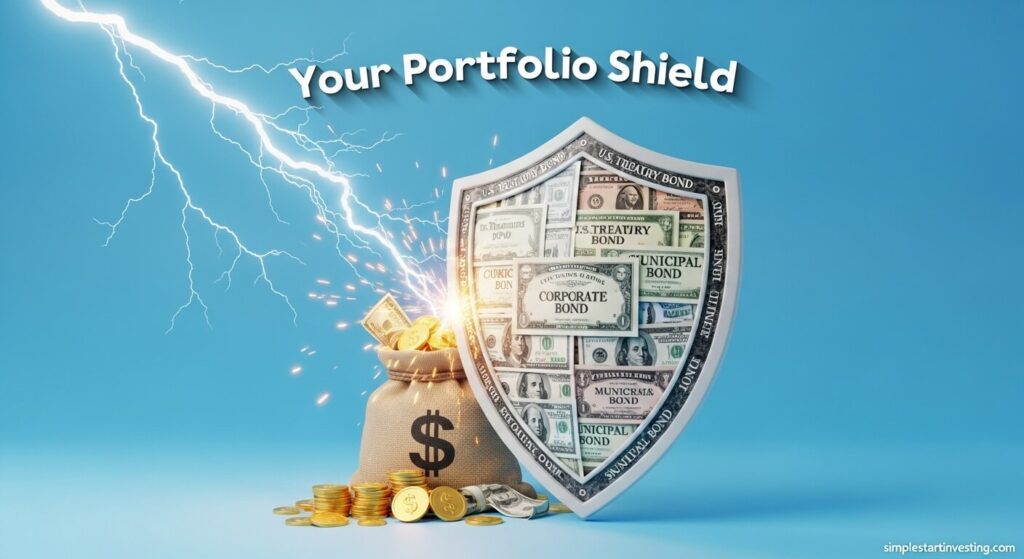
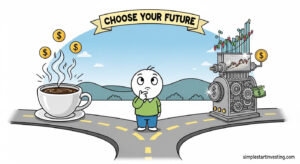
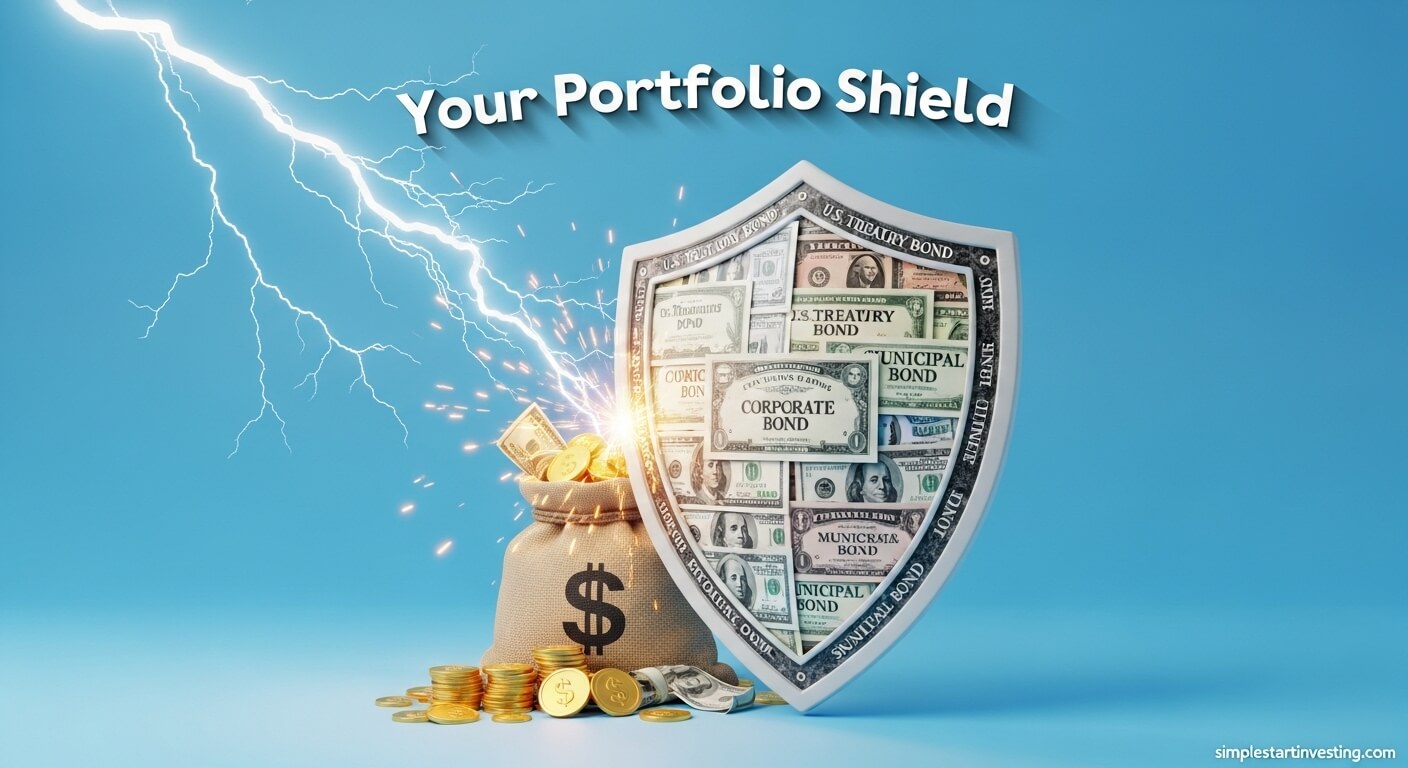
Stocks are like the engine of a car—they provide the speed and the growth. Bonds are like the brakes and the suspension—they provide control and a smoother ride. When the stock market crashes (which it does every few years), bonds often hold their value or even go up. This prevents your total account balance from diving too deep into the red, which helps you stay calm and avoid “panic selling” your stocks at the worst possible time.
As a general rule of thumb, the closer you get to retirement, the more bonds you might want to own. This is because you have less time to recover from a stock market crash and you need the steady “income” that bonds provide.
Bonds Aren’t Boring—They’re Strategic
It is easy to get caught up in the hype of the next big AI stock or a “get rich quick” crypto trend. But successful, long-term investing is rarely about the “home runs.” It’s about staying in the game.
By understanding bonds for beginners, you are learning how to build a foundation. You are moving from just being a consumer to being a financier—the person who provides the capital that makes the world go round. Whether you use them for tax-free income, as a safety net, or a way to save for a house in five years, bonds are a tool every investor should have in their belt.
Start small. Look at the options in your 401(k) or brokerage account. You don’t need to be a Wall Street pro to start earning interest. You just need the patience to let your money work for you.
Disclaimer: This content is for educational purposes only and does not constitute financial, legal, or tax advice. Market conditions change frequently; always consult with a qualified professional before making investment decisions.