We’ve all been there. You’re scrolling through your phone late at night, and suddenly, an ad pops up for a sleek new gadget, a designer jacket, or the latest home espresso machine. It looks perfect. You can already imagine how much better your life would be with it. With one-click ordering and saved credit card info, that item is at your door in two days. But a week later, the excitement fades, and you’re left with a “what was I thinking?” feeling—and a smaller bank account balance.
This cycle of impulse buying is one of the biggest hurdles for anyone trying to build wealth. That is where the 30-day rule comes in. It is a deceptively simple financial habit that acts as a circuit breaker for your brain’s impulse triggers. By forcing a cooling-off period, you move from emotional spending to intentional spending.
In this guide, we will break down exactly how the 30-day rule works, why our brains try to sabotage our savings, and how this one habit can literally save you thousands of dollars over the course of a year without making you feel like you’re “depriving” yourself.
What Exactly Is the 30-Day Rule?
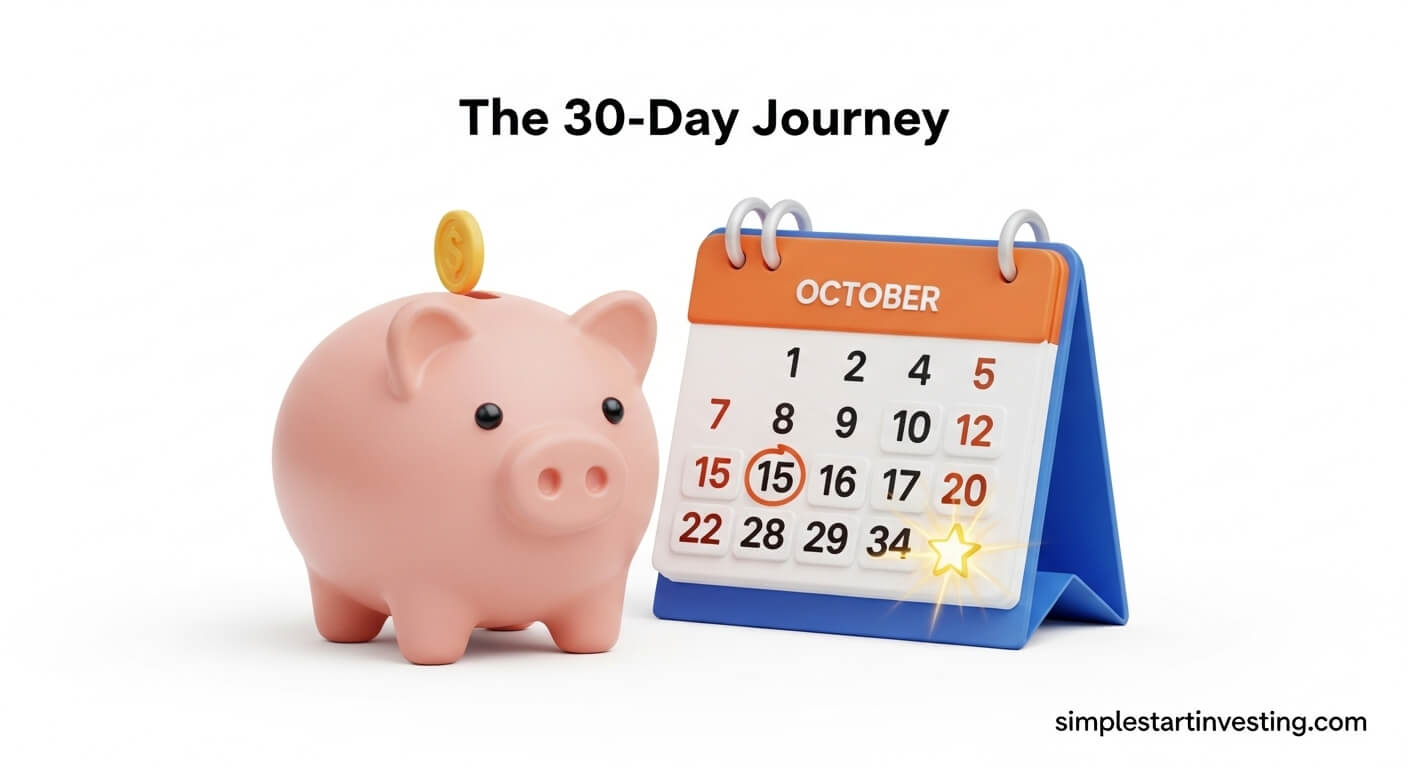
At its core, the 30-day rule is a personal finance strategy designed to curb impulse spending. The rule is simple: whenever you feel the urge to buy something that isn’t a basic necessity—like groceries or rent—you must wait exactly 30 days before making the purchase.
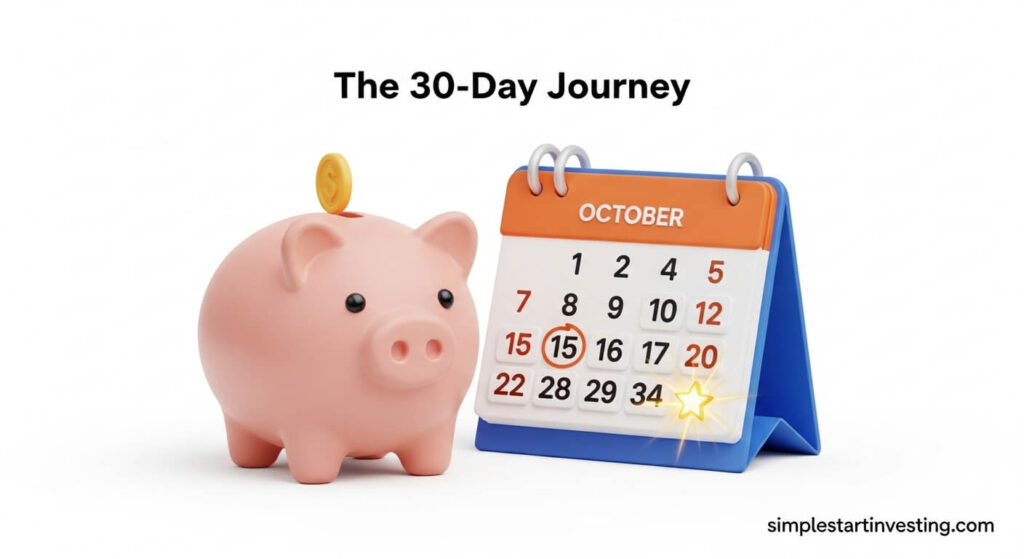
During those 30 days, you take the item out of your physical or digital cart and put it on a “30-day list.” You write down the name of the item, where you found it, and how much it costs. Then, you walk away. If, after 30 days, the burning desire to own that item is still there, you can give yourself permission to buy it—provided it fits within your budget.
More often than not, however, you’ll find that by day 30, the “need” has completely evaporated. You might even forget why you wanted it in the first place. That money stays in your pocket, or better yet, goes toward your emergency fund or long-term investments.
Why Do We Struggle With Impulse Buying?
To understand why the 30-day rule is so effective, we have to look at how our brains are wired. Humans are naturally programmed for instant gratification. When we see something we want, our brain releases dopamine, a “feel-good” chemical. This chemical rush happens at the moment of discovery and during the checkout process.

Retailers know this. Modern marketing is designed to exploit these biological triggers. Features like “limited-time offers,” “only 2 left in stock,” and “one-click buy” buttons are all meant to make you act before your logical brain has a chance to weigh in.
When you use the 30-day rule, you are essentially giving your “emotional brain” time to calm down so your “logical brain” can take over. You are breaking the link between the dopamine hit and the act of spending money.
Common Misunderstandings About the 30-Day Rule
Many beginners hear about this rule and immediately push back because they misunderstand the goal. Let’s clear up a few common myths:
Myth 1: “It Means I Can’t Buy Anything I Want”
The 30-day rule isn’t about deprivation or living a minimalist life if you don’t want to. It is about intentionality. It ensures that when you do spend your hard-earned money, you are spending it on things that truly add value to your life, rather than temporary distractions.
Myth 2: “It’s Only for Huge Purchases Like a Car”
While it works wonders for big-ticket items, the rule is surprisingly effective for mid-range purchases—those 100-dollar to 500-dollar items that tend to “bleed” a budget dry. Think of things like new shoes, video games, or kitchen appliances. If you find yourself constantly wondering where your paycheck went at the end of the month, these mid-sized impulse buys are usually the culprit.
Myth 3: “I’ll Miss Out on a Great Sale”
This is the most common fear. “But it’s 40% off today only!” Here is the reality: saving 40% on something you didn’t need is still spending 60% more than you should have. Most sales are recurring. If you truly need the item, it will likely be on sale again, or you can find a better price once you’ve had time to research.
The Hidden Financial Impact: How Saving Small Adds Up
It is easy to think that a 50-dollar impulse buy here and there doesn’t matter. But let’s look at the logic of how these small wins build a massive foundation over time.
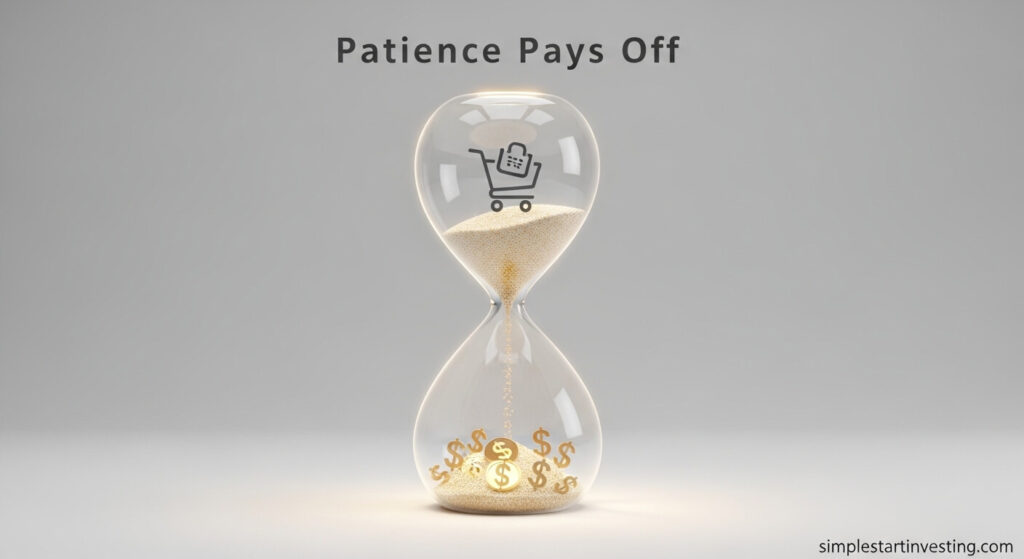
Imagine you find yourself wanting about 200 dollars’ worth of “stuff” every month—maybe a new outfit, a gadget, or some home decor. If the 30-day rule helps you realize you don’t actually need 70% of those things, you’ve just “found” 140 dollars a month.
Over a year, that is 1,680 dollars. If you take that 1,680 dollars and put it into a high-yield savings account or a retirement fund, the impact grows. Instead of having a closet full of clothes you don’t wear, you now have a significant start to an emergency fund that can protect you if your car breaks down or you have a medical bill.
In the US, many people carry credit card debt with high interest rates. If you are using a credit card for impulse buys and not paying it off, a 100-dollar item could end up costing you 150 dollars or more over time because of interest. Using this rule keeps you away from that “debt trap.”
Step-by-Step: How to Implement the Rule Today
If you want to start using the 30-day rule, don’t just try to remember it. You need a system. Here is a simple way to set it up:
- Create a “Wait List”: This can be a note on your phone or a physical notebook.
- The Entry Requirements: Any time you want to buy something that costs more than a set amount (many people start at 50 dollars), you must add it to the list. Include the date, the item, the price, and the link.
- The Cooling-Off Period: Set a reminder on your calendar for 30 days from today.
- The Reflection: When the 30 days are up, look at the item again. Ask yourself: “Do I still want this as much as I did on day one?” and “Can I afford this without taking money away from my savings goals?”
- The Decision: If the answer is yes, buy it with a clear conscience. If the answer is no, cross it off and celebrate the money you just saved.
How the Rule Helps with “Lifestyle Creep”
In the US market, we often fall victim to something called lifestyle creep. This happens when your income increases (like getting a raise at work), and your spending increases right along with it. You start buying more expensive coffee, better clothes, and newer cars just because you can.
The 30-day rule is a powerful shield against lifestyle creep. It forces you to maintain the same level of scrutiny on your spending, regardless of how much money is in your bank account. It reminds you that just because you can buy something doesn’t mean you should.
Dealing with the “Need” vs. “Want” Confusion
Beginners often struggle to distinguish between a need and a want. A need is something essential for your survival or your ability to earn an income. This includes basic groceries, housing, utilities, and reliable transportation to work.
A want is anything that makes life more comfortable or fun but isn’t strictly necessary. The tricky part is that marketers are experts at making “wants” feel like “needs.” They tell you that you “need” this specific software to be productive or you “need” these shoes to be healthy.
When you apply the 30-day waiting period, the fog of marketing clears. You begin to see the difference between a tool that solves a problem and a toy that provides a temporary spark of joy.
The Psychological Benefits of Waiting
Beyond the dollars and cents, the 30-day rule improves your mental health. Constant impulse buying creates a cluttered home and a cluttered mind. It leads to “decision fatigue,” where you feel overwhelmed by the sheer number of things you own and the financial pressure of paying for them.
By practicing patience, you develop financial discipline. This discipline spills over into other areas of your life, like health and productivity. You start to feel more in control of your destiny because you are no longer a slave to your immediate whims.
When Should You Break the Rule?
Are there times when you shouldn’t wait 30 days? Yes, but they are rare. If your refrigerator breaks and all your food is going to spoil, you don’t wait 30 days to buy a new one. That is a functional emergency.
However, be careful. If your “emergency” is that a concert was announced and tickets might sell out, that isn’t a financial emergency—that’s FOMO (Fear Of Missing Out). The rule is there to protect you from your emotions, so try to be honest with yourself about what constitutes a real crisis.
Teaching the 30-Day Rule to Your Family
If you have a partner or children, the 30-day rule can become a shared family value. It is one of the best ways to teach children about the value of money. Instead of saying “no” to every toy they want, tell them, “Let’s put it on your 30-day list and see if you still want it next month.”
For couples, this rule can reduce “money fights.” If both partners agree to the rule for any purchase over a certain amount, it eliminates the “why did you buy that?” arguments. The rule becomes the authority, not the person.
The 24-Hour Rule: A Small Version for Daily Life
If 30 days feels too long for smaller items, you can use a “micro-version” called the 24-hour rule. Apply this to things like books, inexpensive apps, or extra items at the grocery store. Just waiting until the next morning can often be enough to realize you don’t actually need that extra snack or that third black t-shirt.
How This Connects to Your Long-Term Goals
Every time you choose not to buy an impulse item, you are making a choice to buy your future freedom. In the US, the path to financial independence is paved with small, consistent choices.
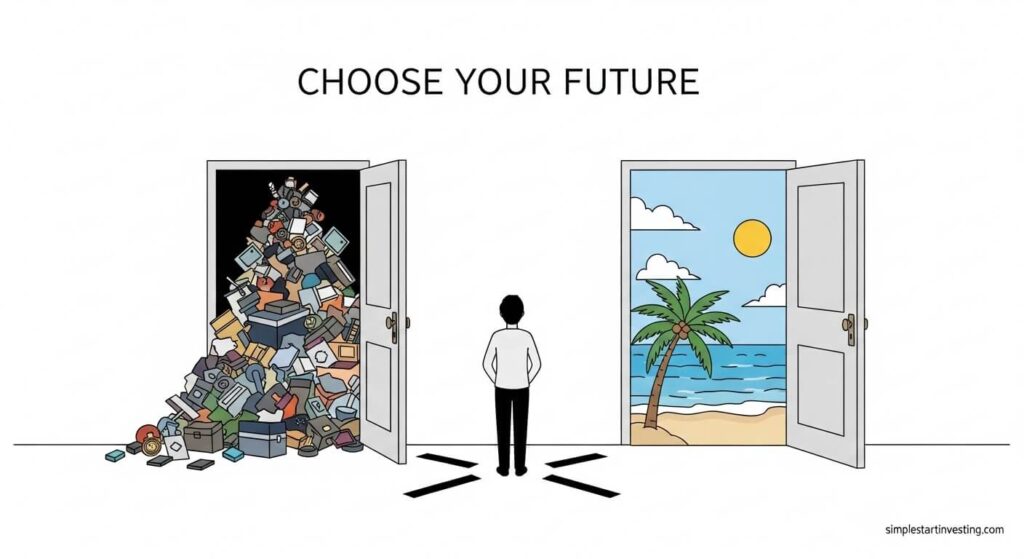
Think of it this way: if you save 100 dollars this month by using the 30-day rule, you haven’t just saved 100 dollars. You’ve saved the time it took you to earn that 100 dollars. If you earn 25 dollars an hour, that’s four hours of your life you’ve “bought back.” Over a lifetime, those hours add up to years of freedom.
Final Thoughts on Mindful Spending
Mastering the 30-day rule is about more than just saving money; it is about changing your relationship with “stuff.” We live in a world that constantly tells us we are one purchase away from happiness. The 30-day rule proves that happiness usually comes from the security and peace of mind that a solid financial foundation provides.
Next time you see that “must-have” item, take a deep breath. Write it down. Date it. Then, go back to living your life. You might be surprised at how much lighter you feel—and how much heavier your wallet stays.
Disclaimer: This content is for educational purposes only and does not constitute financial, investment, or legal advice. Regulations regarding financial products and services can change, so please consult with a qualified professional or check current IRS guidelines for your specific situation.