
Have you ever opened your monthly internet bill and felt a sudden jolt of frustration? Maybe it started at 50 dollars, then crept up to 65 dollars, and now you are staring at a 90 dollars charge for the exact same service. It feels like a “loyalty tax”—where the longer you stay with a company, the more they charge you.
Most people simply sigh, pay the bill, and move on because they think these prices are set in stone. They assume that because there are only one or two providers in their neighborhood, they have no choice but to accept the price hikes. This is a very common misunderstanding that costs the average American household hundreds of dollars every single year.

The truth is that your internet and phone bills are far more flexible than you think. These companies have entire departments dedicated to keeping you as a customer, and they are authorized to give out massive discounts just to stop you from leaving. You do not need to be a master negotiator or an aggressive person to get these deals. You just need 15 minutes and the right words.
In this guide, we are going to walk through exactly how to negotiate internet bills and phone costs. We will break down the psychology of why these companies overcharge you, how to prepare for the call, and the exact phrases that make customer service agents open up their “secret” menu of discounts.
Why Your Bills Keep Going Up
To understand how to lower your costs, you first have to understand the business model of an Internet Service Provider (ISP) or a cell phone carrier. These companies spend billions of dollars on advertising to get new customers in the door. They offer “promotional rates” that look amazing for the first 12 months.
Once that honeymoon phase is over, your price automatically jumps to the “standard rate.” The company is betting that you are either too busy to notice or too intimidated to call and complain. They call this “churn management.” They know a certain percentage of people will leave, but they hope most will just keep paying the higher price.
It is actually much cheaper for a company like Comcast, Spectrum, or AT&T to keep an existing customer by giving them a 20 dollars discount than it is to go out and find a brand-new customer. This gives you a lot of hidden power. When you call and ask for a better deal, you are simply asking them to use their “retention budget” to keep your business.
The Preparation: Knowledge Is Your Best Weapon
You should never call your provider “blind.” If you just call and say, “My bill is too high,” the agent will likely offer you a tiny five-dollar credit and tell you that is the best they can do. To get the real savings, you need to do about ten minutes of homework before you pick up the phone.
First, look at your current bill and identify exactly what you are paying for. Are you paying for 1,000 Mbps of internet speed when you only live in a small apartment and watch Netflix? Are you paying ten or fifteen dollars a month for “modem rental”? These little details are where the waste hides. Write down your current monthly total and the name of your specific plan.
Next, look up what the “new customer” offer is for your current provider. Go to their website, enter your neighbor’s address (or any address that isn’t yours), and see what price they are offering to people who sign up today. If they are offering new people the same service for 45 dollars and you are paying 80 dollars, you now have a target price.
Finally, check the competition. Even if you think you only have one provider, check for 5G home internet options like T-Mobile or Verizon Home Internet. If a competitor is offering a deal for 50 dollars a month, write that down. You don’t necessarily want to switch, but you need to be able to say, “The other guy is offering me a better deal.”
Finding the People With the Power
When you dial the customer service number, you will usually be greeted by a “Level 1” agent. Their job is to handle technical support or basic billing questions. Often, these agents do not have the authority to give you significant, long-term discounts. If you spend your time arguing with them, you will likely end up frustrated.
The secret is to get to the Retention Department, sometimes called the “Loyalty Department” or the “Cancellations Department.” These employees are evaluated based on how many customers they “save” from leaving. Because of this, they are given a special toolbox of credits and promotional codes that the regular agents cannot see.
To get there, you can sometimes just ask the automated voice system for “cancellations.” When a human picks up, do not be rude. Start the conversation with kindness. You might say, “Hi, I’ve been a loyal customer for three years, but my bill has become too expensive and I’m considering switching. I was hoping to speak with someone in the loyalty department to see if we can make the numbers work.”
The Winning Script: What to Say and How to Say It
Once you are talking to a retention specialist, your goal is to be “pleasantly firm.” You want to be the nicest person they talk to all day, but you also want to be clear that you are ready to leave if the price doesn’t drop. Here is a simple flow you can use to negotiate internet bills successfully.

Start by stating the problem clearly. Tell them that you enjoy the service, but the recent price hike doesn’t fit your budget. Mention the competitor’s price you found earlier. You could say, “I see that a competitor is offering a similar speed for 50 dollars, and my bill just went up to 85 dollars. I’d love to stay with you, but I can’t justify paying 35 dollars more every month.”
Wait for them to respond. This is the most important part: stay silent. Let them click through their computer and see what they can find. They might offer you a 10 dollars discount. Do not accept the first offer immediately. Instead, ask, “Is that the best you can do? I was really hoping to get closer to that 50 dollars new-customer rate.”
If they say they have no more discounts, try a different angle. Ask if there are any “speed adjustments” available. Sometimes you can move to a slightly slower plan that is still more than enough for your needs, saving you 20 dollars a month. Or, ask about “packaging discounts” if you have multiple services.
Dealing with Equipment Fees
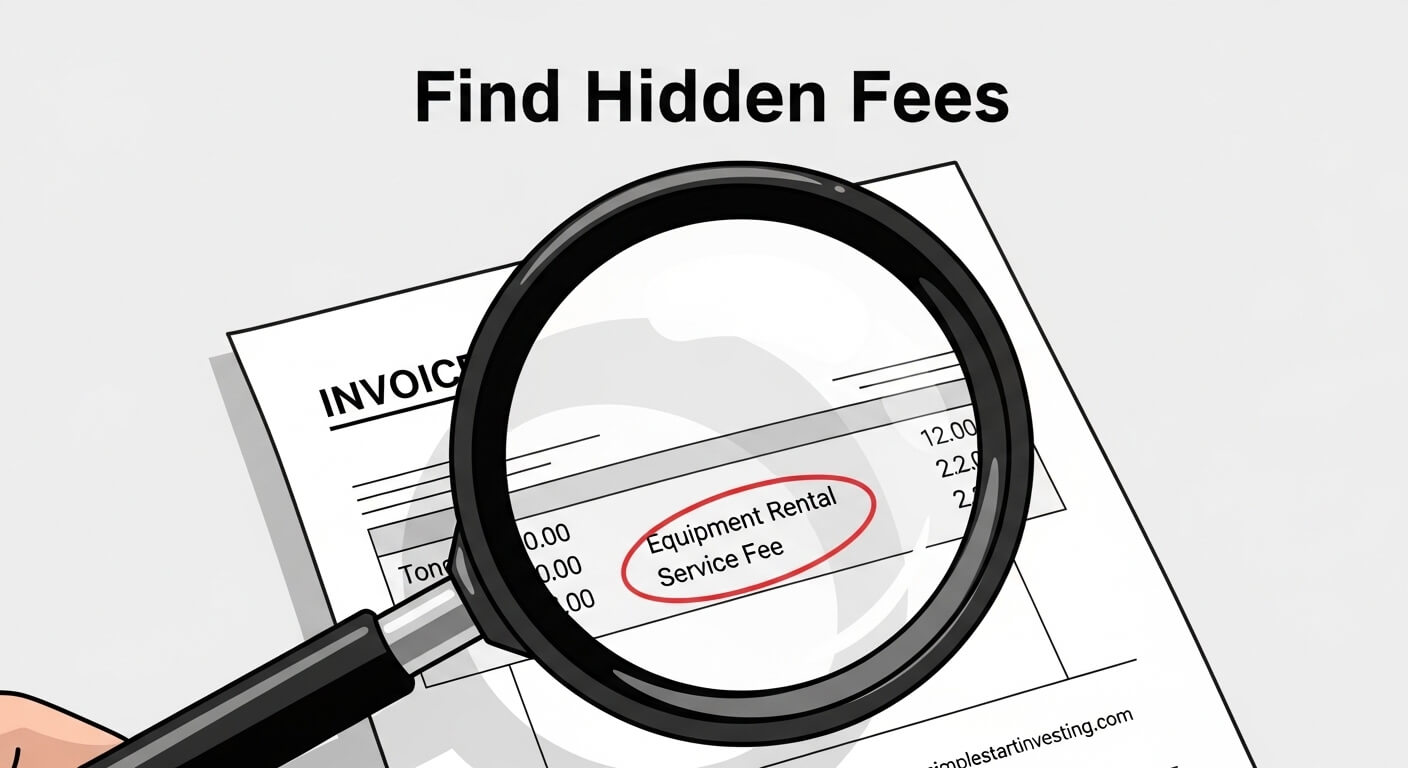
One of the biggest “invisible” costs on an internet bill is the equipment rental fee. Most companies charge between 10 dollars and 15 dollars every month just to use their router and modem. If you stay with a company for four years, you might pay over 600 dollars for a piece of hardware that only costs 100 dollars to buy at the store.
During your negotiation, ask the agent if you can provide your own equipment. Almost all cable providers allow this. By purchasing your own high-quality modem and router, you can eliminate that monthly fee forever. It pays for itself in less than a year. If the agent can’t lower your monthly service rate, removing the equipment fee is a guaranteed way to lower the total.
Even better, sometimes during a negotiation, an agent will offer to “waive” the equipment fee for a year just to keep you happy. That is an easy 120 dollars to 180 dollars in annual savings just for asking one question. It is a simple step that many beginners overlook because they think the provided box is mandatory.
Lowering Your Cell Phone Bill Without Switching

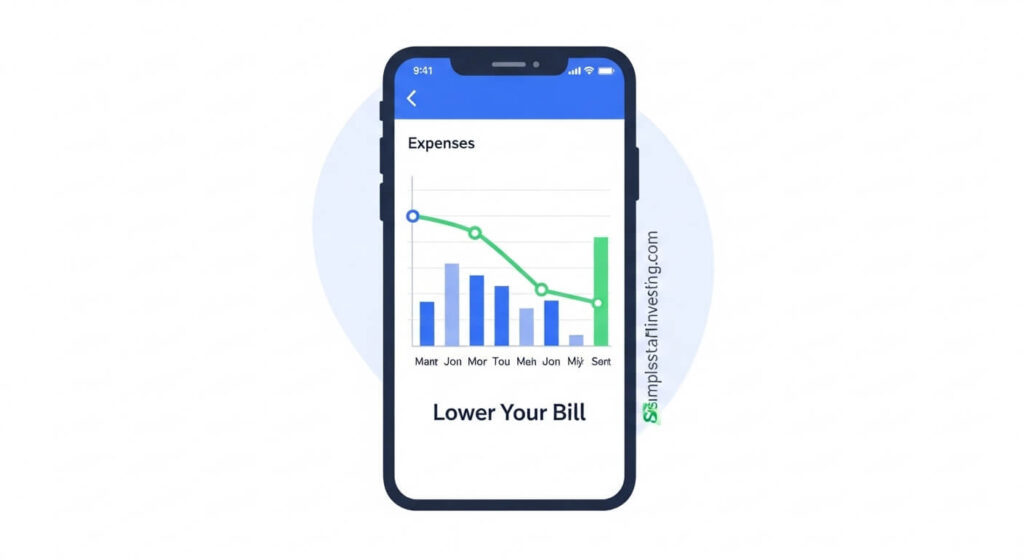
Call your carrier and ask for a “data usage review.” Ask the agent to look at the last six months of your history. If you are only using 5 gigabytes of data but paying for a 50-gigabyte plan, you are throwing money away. Ask them to move you to a lower-tier plan that actually fits your lifestyle. This can often shave 20 dollars to 40 dollars off your bill instantly.
Also, check for “hidden” discounts. Many carriers offer discounts for teachers, military members, first responders, or employees of certain large corporations. You might even get a discount just for being a student or a senior citizen. Always ask, “Are there any corporate or professional discounts I might be eligible for?” These are usually 10% to 20% off the monthly service price.
Another huge win for your phone bill is the “Autopay and Paperless” discount. Most major carriers will give you a 5 dollars or 10 dollars discount per line just for setting up automatic payments. For a family of four, that is 40 dollars a month in savings—nearly 500 dollars a year—just for clicking a button on their website.
The Power of the “MVNO” Alternative
If your current phone company refuses to budge on the price, it is time to look at Mobile Virtual Network Operators (MVNOs). This sounds like a complex technical term, but it is actually very simple. Companies like Mint Mobile, Visible, and Cricket Wireless do not own their own cell towers. Instead, they “rent” space on the major networks like Verizon or T-Mobile.
This means you get the exact same coverage and the exact same signal bars, but at a fraction of the price. While a big carrier might charge you 80 dollars for one line, an MVNO might charge you 25 dollars or 30 dollars for the same service. Because these companies don’t have thousands of retail stores or massive Super Bowl commercials, they pass those savings on to you.
Many beginners are afraid that switching will be a nightmare or that they will lose their phone number. In the U.S., “number porting” is a legal right. Your old company is required to let you take your phone number with you. The process usually takes less than 30 minutes. Switching to an MVNO is often the single biggest “raise” you can give yourself in your monthly budget.
What to Do If They Say “No”
Sometimes, you will get an agent who is having a bad day or a company that is currently being very strict with their budget. If you go through the whole script and they insist there are absolutely no discounts available, do not get angry. Simply say, “I understand. I’m not ready to cancel quite yet, but I’m going to look at my other options and call back. Thank you for your time.”
Then, hang up and call again the next day. This is known as the “HUCA” method—Hang Up and Call Again. You will reach a different agent who might be more helpful or have access to different codes. Every agent has a different personality and a different level of experience. The second person you talk to might find a discount the first person missed.
If you have tried twice and still got a “no,” you have two choices. You can actually switch to a competitor, which usually guarantees you a lower “introductory” price for a year. Or, you can wait a month and try again. Markets change, and sometimes new promotions are released at the beginning of a new month or quarter.
Why This 15-Minute Task Is Worth It
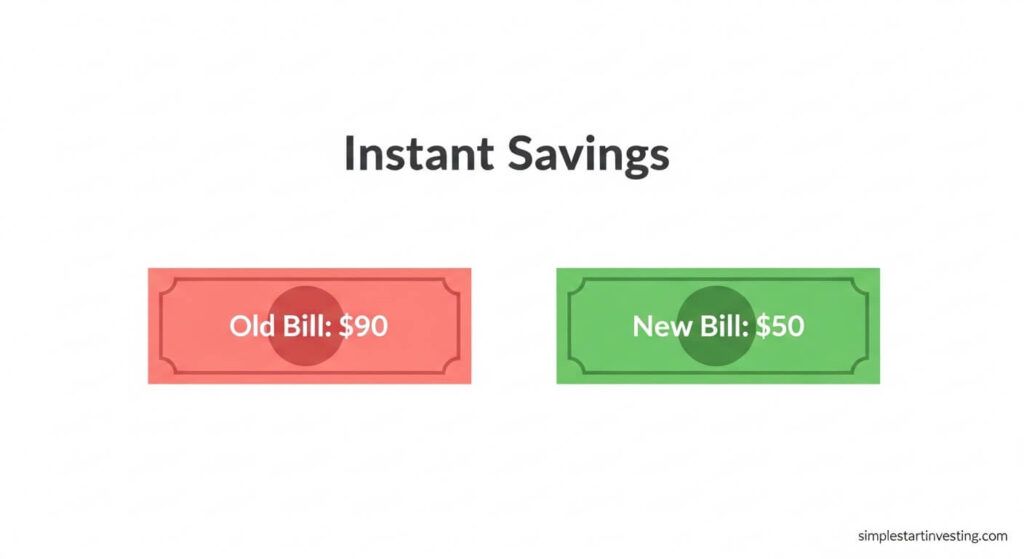
Think about it this way: if you spend 15 minutes on the phone and save 40 dollars a month, that is 480 dollars over the course of a year. That is almost 500 dollars of pure profit for 15 minutes of “work.” There are very few jobs in the world that pay that kind of hourly rate.
When you negotiate internet bills, you are taking control of your financial life. You are refusing to pay the “lazy tax” and ensuring that your hard-earned money stays in your bank account instead of going to a billion-dollar corporation. It builds a “negotiation muscle” that will help you when you eventually buy a car, rent an apartment, or ask for a raise at work.
Start today by looking at your latest bill. See what the “new customer” price is. Then, set a timer for 15 minutes and make the call. The worst they can say is no, but the best they can say is “Yes, I can lower that for you,” and suddenly you have an extra 500 dollars a year to save, invest, or spend on things that actually matter to you.
Summary of the “Savings Call” Strategy
To make sure you are successful, remember these four pillars of a good negotiation call:
First, be remarkably kind. The person on the other end of the line deals with angry, screaming people all day long. If you are the one person who is polite and uses their name, they will be much more likely to “find” a discount for you. Your goal is to make them want to help you.
Second, be prepared to walk away. You don’t actually have to cancel your service, but the agent has to believe that you might. If they think you are just complaining but will never leave, they have no incentive to give you the best deals. Mentioning a specific competitor by name is the best way to show you are serious.
Third, ask for specific things. Instead of saying “help me save money,” ask for “loyalty credits,” “waived equipment fees,” or “promotional rate matching.” Using the right terminology shows the agent that you know how the system works, and they are less likely to give you a generic, low-value answer.
Fourth, keep a record. When you do get a discount, write down the name of the agent, the date, and the specific amount they promised. Sometimes these discounts take a billing cycle to show up, and having those details will help if you need to call back and confirm the change.
By following these steps, you turn a chore into a high-paying financial win. You are no longer a passive consumer; you are an active manager of your own money. That shift in mindset is the first step toward long-term financial success.
Disclaimer: This content is for educational purposes only and does not constitute financial advice. Service availability and promotional offers vary by location and provider. Always check the current terms and conditions of your specific service agreements.