Imagine you just bought a rare, vintage comic book for 1,000 dollars. A week later, you realize you need that money back to cover an unexpected car repair. You check online and see the “value” has actually gone up to 1,200 dollars. You feel great—until you realize that finding a buyer who is willing to pay that price might take weeks, months, or even longer.
In the world of investing, we call this a lack of market liquidity.
Many new investors spend all their time obsessing over how much a stock might go up. They look at charts, read earnings reports, and dream about profits. But they often forget the most important part of the equation: Can you actually get your money back out when you want it?

Market liquidity is essentially the “exit door” of an investment. If the door is wide open and easy to walk through, the market is liquid. If the door is tiny, locked, or crowded with people trying to squeeze through at the same time, you have a liquidity problem. Understanding this concept is the difference between being a smart investor and being someone who gets trapped in a “paper profit” that they can never actually spend.
What Exactly Is Market Liquidity?
At its simplest level, market liquidity refers to how quickly and easily you can turn an asset into cash without it losing much value in the process.
Cash itself is the ultimate liquid asset. If you have a 100-dollar bill in your wallet, it is already “liquid.” You can exchange it for goods or services instantly at its full value. However, once you move that money into other things—like stocks, bonds, or real estate—that liquidity begins to change.
Think of it like a crowded marketplace. If you are trying to sell a gallon of milk in a busy grocery store, you’ll find a buyer in seconds because everyone wants milk and the price is well-known. That is high liquidity. Now, imagine trying to sell a very specific, hand-carved wooden chair in a small town. You might eventually find a buyer, but it will take time, and you might have to lower your price significantly just to get it sold today. That is low liquidity.
In the stock market, market liquidity works the same way. For big, famous companies like Apple or Walmart, there are millions of shares being bought and sold every single minute. If you want to sell your shares at 10:00 AM, they will likely be sold by 10:00:01 AM at the current market price.
Why New Investors Often Overlook Liquidity
When you first start investing, you are usually focused on the “buy” side. You’re excited to get into the market. Because modern trading apps make buying feel instantaneous, it creates an illusion that selling will be just as easy.
This is a dangerous assumption.
The “price” you see on your screen isn’t always the price you will get when you sell. That number is often just the price of the last trade that happened. If you own a stock that very few people are trading, the gap between what you want to sell for and what someone is willing to pay can be huge.
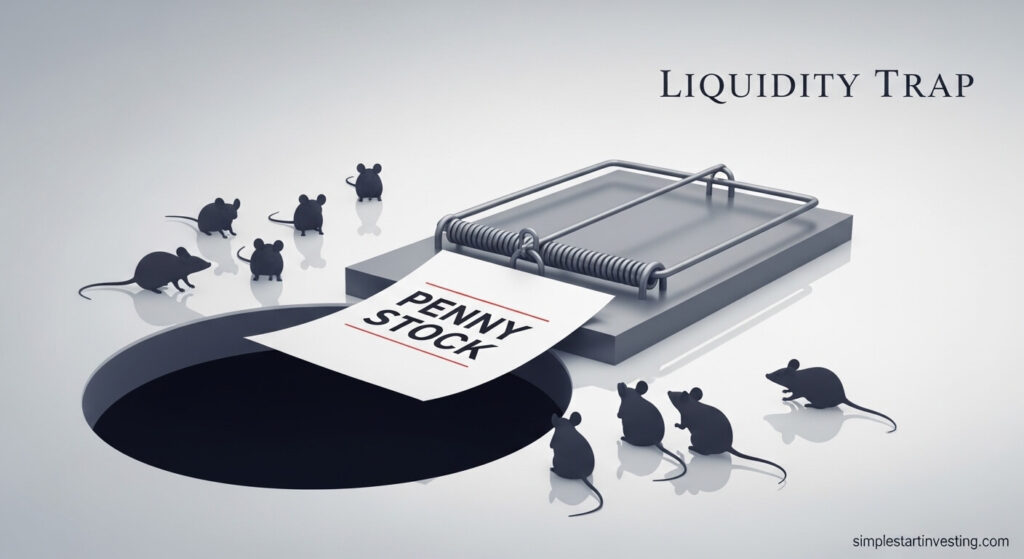
New investors often fall into the trap of looking at “penny stocks” or very small companies because they think they can get “more shares” for their money. While the potential for growth might look high on paper, these are often the most illiquid spots in the market. You might buy 1,000 shares of a tiny company at 2 dollars per share, see the price go to 3 dollars, and think you’ve made a 1,000-dollar profit. But when you hit the “sell” button, you might find there are no buyers at 3 dollars. You might have to sell for 2.10 dollars just to find someone willing to take them off your hands.
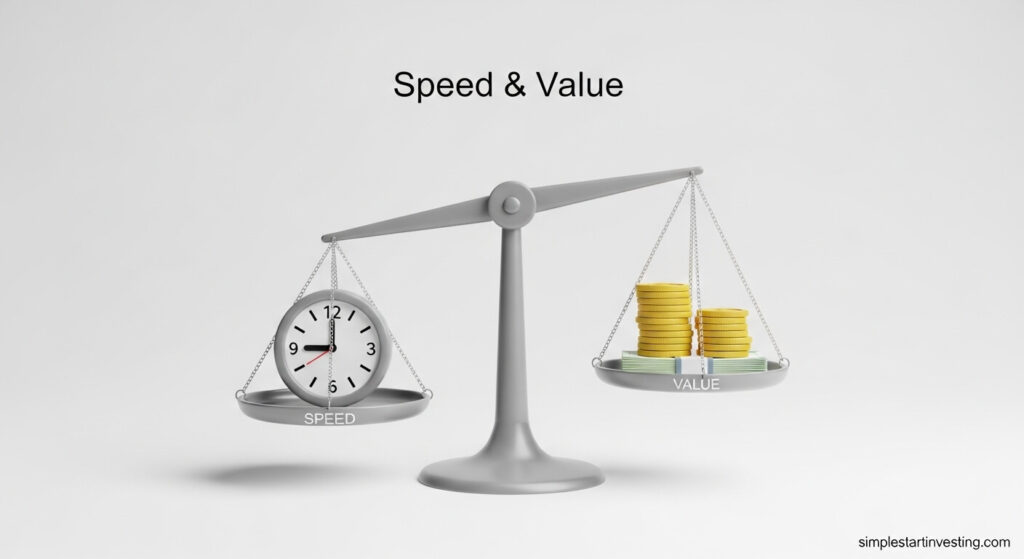
The Two Pillars of Liquidity: Speed and Price
To truly understand market liquidity, you have to look at two things happening at the same time: how fast you can sell and how much of the “fair price” you get to keep.
If you have to sell something immediately, and you are forced to take a 20% discount to do it, that asset is not liquid. A truly liquid asset allows you to do both: sell fast and sell at the current market rate.
In the US stock market, we generally enjoy some of the highest liquidity in the world. However, even here, liquidity can dry up during times of panic. When everyone wants to sell at the same time and no one wants to buy, the “exit door” gets jammed. This is why understanding the environment you are investing in is just as important as the company you are buying.
How to Spot Liquidity Without Using Complex Math
You don’t need a degree in finance to figure out if a stock is liquid. You just need to look at a few simple indicators that most brokerage apps provide for free.
Trading Volume
This is the most obvious sign. Volume tells you how many shares of a stock changed hands during a specific period (usually a day).
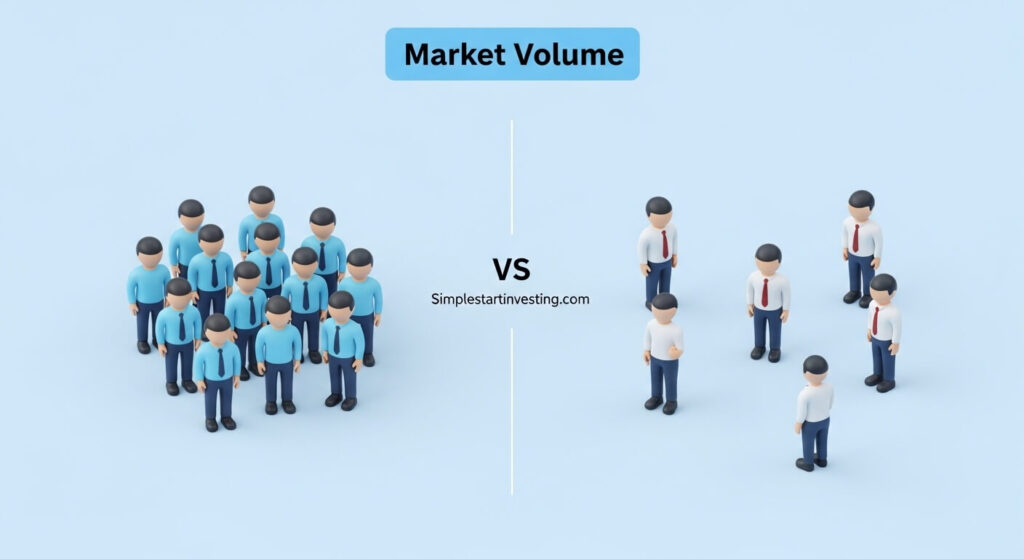
If a company has an average daily volume of 10 million shares, your 50 shares are just a tiny drop in a very large bucket. You can sell them instantly. But if a company only trades 5,000 shares a day, your 50 shares represent a much larger portion of the activity. Selling them might “move the needle” and cause the price to drop while you’re trying to get out.
The Bid-Ask Spread
This sounds like technical jargon, but it’s actually very simple.
- The Bid is the highest price a buyer is willing to pay.
- The Ask is the lowest price a seller is willing to accept.
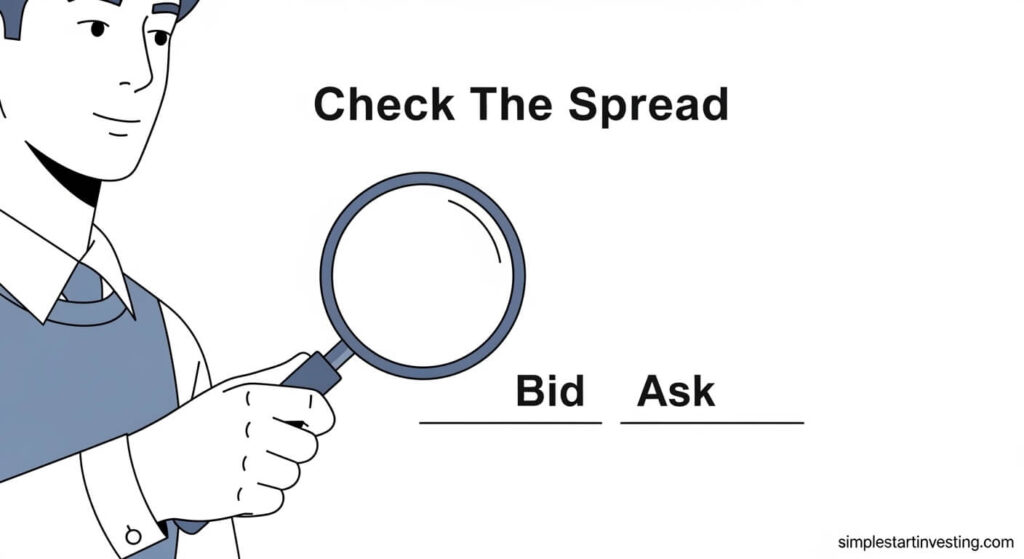
In a highly liquid stock, these two numbers are usually only a penny or two apart. For example, the bid might be 150.00 dollars and the ask might be 150.01 dollars. This “spread” is tiny, meaning liquidity is high.
In an illiquid stock, the bid might be 10.00 dollars while the ask is 10.50 dollars. That 50-cent gap is a “hidden cost” of trading. If you buy at 10.50 dollars and immediately change your mind and try to sell, you can only sell for 10.00 dollars. You’ve lost nearly 5% of your money in seconds just because of the lack of liquidity.
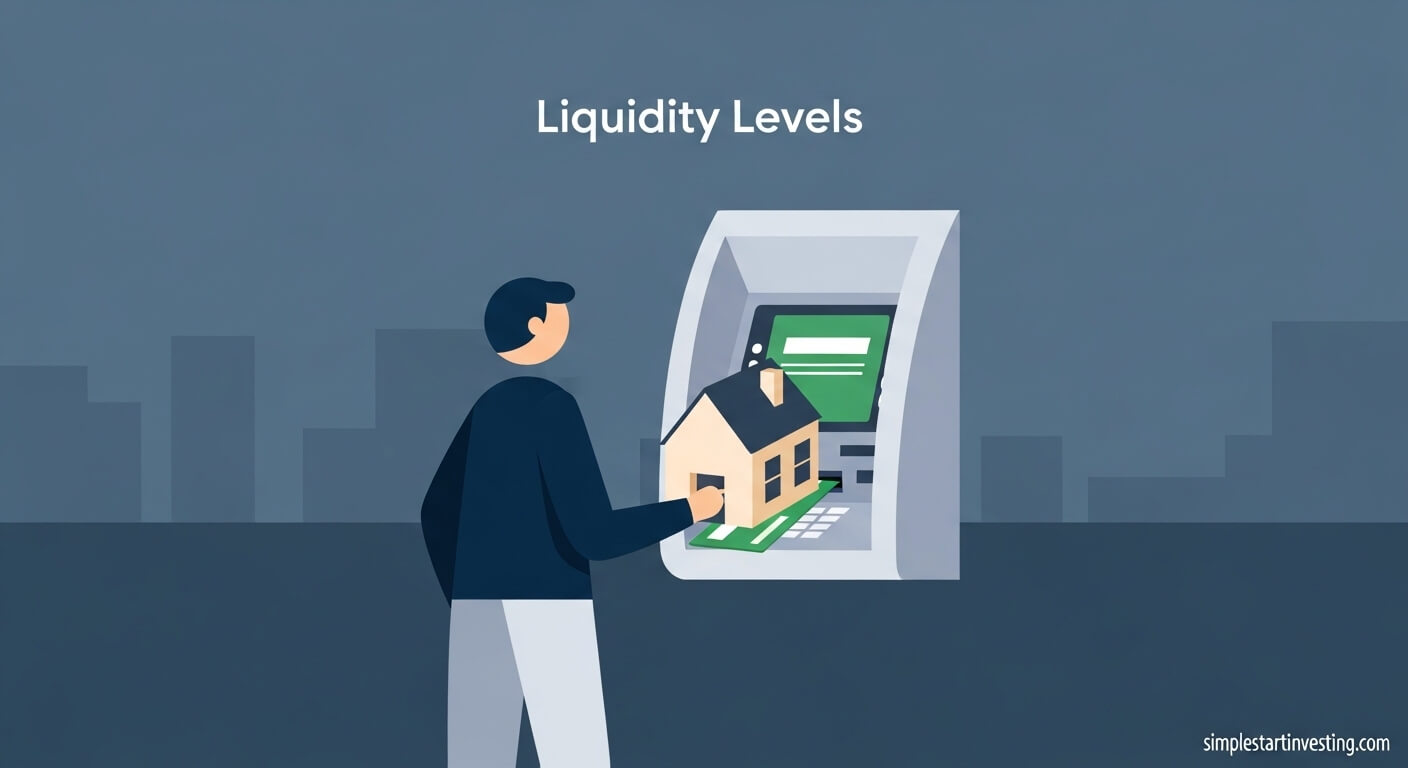
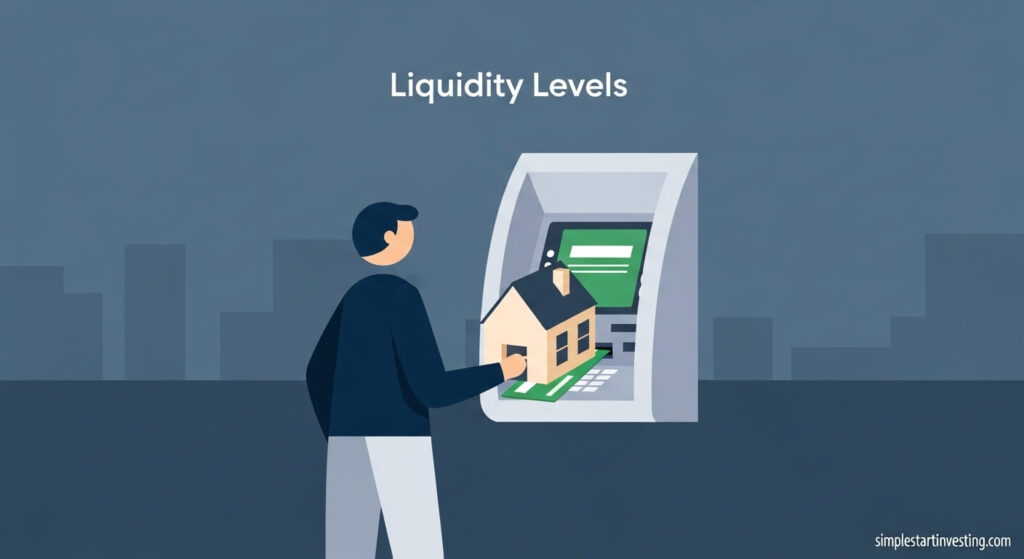
The Liquidity Spectrum: From Cash to Houses
To help you visualize where to put your money, it’s helpful to look at different assets through the lens of market liquidity.
High Liquidity: Savings Accounts and Cash
Money in a standard US bank savings account is extremely liquid. You can go to an ATM or transfer it to your checking account almost instantly. You get 100% of the value (minus maybe a small ATM fee).
High Liquidity: Blue-Chip Stocks and ETFs
Large-cap stocks (like those in the S&P 500) and major Exchange Traded Funds (ETFs) are very liquid. In the US, most stock trades now “settle” on the next business day (T+1), meaning the cash is officially yours very quickly after you sell.
Medium Liquidity: Corporate Bonds and Small-Cap Stocks
Bonds can be a bit trickier. While there is a massive market for them, individual bonds aren’t traded as frequently as stocks. You might have to wait a little longer or accept a slightly lower price to sell a specific corporate bond quickly.
Low Liquidity: Real Estate
This is the classic example of an illiquid asset. Even in a “hot” market, selling a house takes weeks or months. There are inspections, paperwork, and bank approvals. If you absolutely had to have the cash from your house by tomorrow morning, you would have to sell it for a massive, massive discount to find a cash buyer willing to move that fast.
Low Liquidity: Collectibles and Private Business Stakes
Art, vintage cars, jewelry, and shares in a friend’s startup are all highly illiquid. You might have an “appraisal” that says your diamond ring is worth 5,000 dollars, but finding a person to give you 5,000 dollars in cash today is a very different story.
The Danger of “Liquidity Risk”
Liquidity risk is the risk that you won’t be able to exit a position when you need to, or that you’ll be forced to take a huge loss to do so. This usually happens in two ways.
First, there is asset-specific risk. This is what happens when you buy a “garbage” stock that nobody else wants. You might be the only person in the room trying to sell, and if no one is there to buy, the price effectively becomes zero for you at that moment.
Second, there is market-wide risk. This is rarer but more scary. During a major financial crisis, liquidity can “evaporate” across the whole system. Even for good companies, buyers might disappear because they are scared or because they don’t have enough cash themselves. In these moments, the “spreads” we talked about earlier get wider, and the cost of moving your money around goes up significantly.
How Liquidity Should Influence Your Strategy
As a beginner, how should you use this information? It comes down to matching your goals with the right level of liquidity.
The Emergency Fund
Your emergency fund—the money you keep for a job loss or a medical bill—should always be in a highly liquid place, like a high-yield savings account. You do not want your “safety net” tied up in an illiquid asset like a piece of real estate or a specialized stock that takes days to sell. When an emergency happens, you need the money now.
Long-Term Investing
If you are investing for retirement 30 years away, you can afford to hold some less liquid assets. Since you don’t plan on selling for decades, the fact that a stock is hard to sell today doesn’t matter as much. However, even for long-term investors, most experts suggest keeping the core of your portfolio in liquid assets like broad market index funds. This gives you the flexibility to change your mind or rebalance your portfolio without paying huge “hidden costs” in the form of wide spreads.
Avoiding the “Trap” Stocks
One of the best things a beginner can do is stay away from stocks with very low daily trading volume. A good rule of thumb is to look for stocks that trade hundreds of thousands (or millions) of shares a day. This ensures that when you are ready to leave the party, the exit door will be wide open.
Common Misconceptions About Liquidity
A very common mistake is confusing “Volatility” with “Liquidity.”
Volatility is how much the price of a stock bounces up and down. A stock can be very volatile (the price moves 10% a day) but still be very liquid (you can sell it instantly at that moving price).
Conversely, an asset can have low volatility but also low liquidity. Think of a piece of land. The price of land doesn’t change much from minute to minute. It’s very “stable.” But it is also very illiquid. Don’t assume that because a price is “steady” on a screen, it will be easy to get your cash back.
Another misunderstanding is that “the market” will always be there to buy your shares. In the US, we have “Market Makers”—specialized firms whose job it is to provide liquidity by always being ready to buy or sell. However, they are not required to buy from you at a high price. If things get bad, they will lower their “bid” significantly to protect themselves. You are never guaranteed a specific price; you are only guaranteed the opportunity to trade what the market is currently offering.
Practical Steps for Your First Trade
Before you buy your next stock or ETF, take 30 seconds to do a “Liquidity Check”:
- Look at the Volume: Is it in the millions? If it’s under 100,000, be careful.
- Look at the Spread: What is the difference between the Bid and the Ask? If it’s more than a few cents, you are paying a high price just to “enter” the trade.
- Check the “Settlement”: Remember that in the US, while you might see the trade execute instantly, it usually takes one business day for that cash to be officially “settled” and ready to be moved back to your bank account.
By paying attention to market liquidity, you are looking past the “glamour” of potential profits and focusing on the reality of managing your money. Investing is a two-way street. You need to be able to get in, but more importantly, you must ensure you can always get out.
The goal of “Simple Start Investing” is to help you build wealth without unnecessary stress. Ignoring liquidity is one of the easiest ways to create stress for yourself later. Keep your exit doors clear, stay with assets that have plenty of buyers and sellers, and you’ll be ahead of the vast majority of new investors.
Disclaimer: This content is for educational purposes only and does not constitute financial advice. Market conditions can change rapidly, and liquidity is not guaranteed for any investment.