Have you ever looked at a receipt from a few years ago and felt a bit of shock? Maybe it was a simple grocery trip to Walmart or a quick stop for gas. You might notice that the twenty dollars in your wallet doesn’t buy nearly as much as it used to. This feeling isn’t just in your head; it is a fundamental part of how our economy works.
If you are just starting your journey into the world of money, the most important concept to grasp is why leaving all your savings in a basic bank account can actually be a losing strategy. In the world of finance, we often say that “cash is trash” over the long term. This doesn’t mean cash is useless—you certainly need it for emergencies—but it means that as a long-term storage for your wealth, it is slowly disappearing.
By learning the basics of investing for inflation, you can move from being a victim of rising prices to being someone who grows their wealth alongside the economy. This guide will help you understand why prices go up and how the US stock market acts as a powerful shield to protect your hard-earned money.
Understanding the “Invisible Thief” Called Inflation
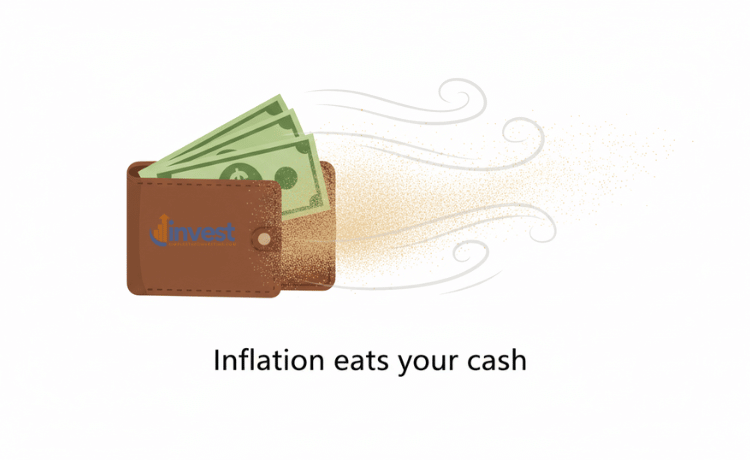
To understand why cash loses value, we first have to talk about inflation. Think of inflation as an invisible thief that sneaks into your bank account every single day and takes a tiny, microscopic bite out of every dollar you own. You don’t see it happening in real-time, but over several years, the bite marks become very obvious.
In simple terms, inflation is the rate at which the general level of prices for goods and services is rising. When inflation happens, each dollar you own buys a smaller percentage of a good or service. This year, for example, we have seen inflation hovering around two to three percent. While that sounds small, it adds up quickly over a decade.
The Costco and Apple Example
Let’s look at a real-world example. Imagine you have 100 dollars today. You could go to Costco and buy a specific amount of groceries. If the inflation rate is three percent, that same pile of groceries might cost 103 dollars next year.
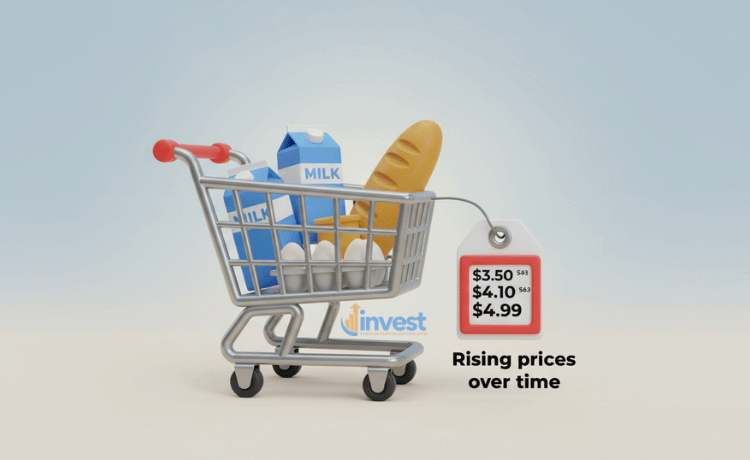
Now, imagine you also want to buy some new technology from Apple. If the price of an iPhone or a MacBook goes up because the parts to make them become more expensive, your 100 dollars suddenly feels like it only has the power of 97 dollars. You haven’t “lost” any physical bills, but the power of those bills has shrunk.
The Beginner’s Mistake: “Cash is the Safest Option”
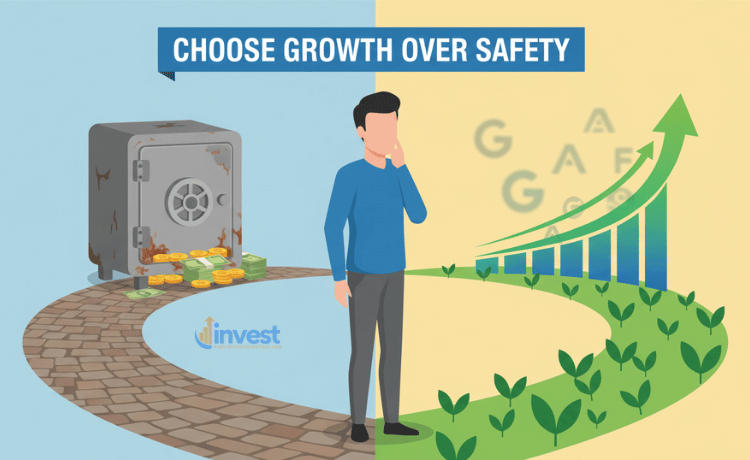
Many people starting out believe that keeping their money in a savings account is the only way to be “safe.” They worry that the stock market is too volatile, so they keep 50,000 dollars in a standard checking account for ten years.
The Financial Logic: The Risk of Doing Nothing
The reality is that “doing nothing” is actually a guaranteed way to lose purchasing power. If inflation averages just three percent a year, your 50,000 dollars will be able to buy significantly less in ten years than it can today. While the number in your bank account stays the same, your ability to live a comfortable life decreases. Real safety comes from having your money grow at a rate that is faster than the rate of rising prices.
Why the US Dollar Loses Its Muscle
You might wonder why the government doesn’t just stop prices from rising. In a healthy economy like the United States, a small amount of inflation is actually considered a good thing by the Federal Reserve. It encourages people to spend and invest rather than hoarding cash under a mattress. However, for you as an individual, this means the “muscle” of your dollar is constantly weakening.
Historically, the US dollar has lost about half of its value every twenty to thirty years. If you look back at what a house or a car cost in the 1970s or 1990s compared to today, the difference is staggering. This isn’t because the houses got “better”—though many did—it’s largely because the currency used to buy them became less valuable.
The Grocery Store Logic
Think about a box of cereal at Walmart. Ten years ago, it might have been three dollars. Today, it might be five dollars. The box hasn’t changed, and the cereal hasn’t changed. What changed is that it now takes more “weak” dollars to buy that same “strong” box of cereal.
The Beginner’s Mistake: Focusing Only on the Number
New investors often focus on the total balance of their bank account. They feel rich if the number goes up by a few dollars from interest. However, if your bank pays you one percent interest but the price of eggs and rent goes up by four percent, you are actually getting poorer.
The Financial Logic: Real Return vs. Nominal Return
To stay ahead, you must focus on your “real return.” This is the money you make after you subtract the rate of inflation. If you want to build true wealth, you need to find places to put your money—like investing for inflation—where the growth is consistently higher than the rising cost of living.
How the Stock Market Protects You
This is where the US stock market comes in. When you buy a stock, you aren’t just betting on a number. You are buying a piece of a real business. Companies like Amazon, Tesla, or JPMorgan Chase are not sit-at-home victims of inflation. In fact, they are often the ones driving it or reacting to it.
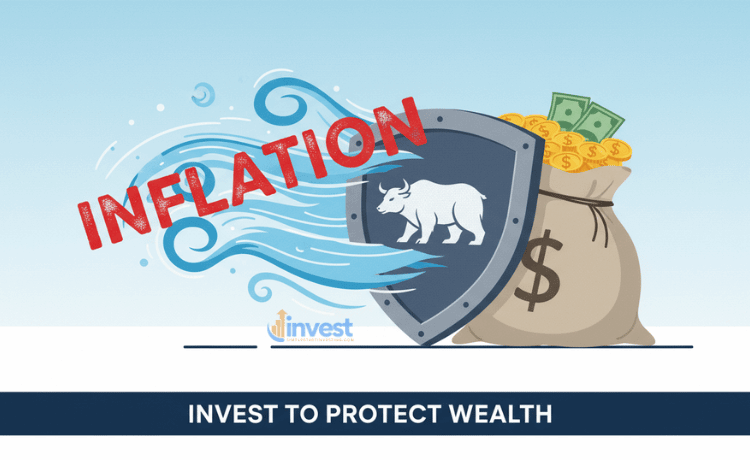
When the cost of materials goes up, these companies raise their prices. If it costs more for Amazon to deliver a package, they might increase the price of a Prime membership. If you own a piece of Amazon, you are an owner of a business that is successfully capturing more dollars from the public. This is why stocks have historically been one of the best ways to protect yourself.
The “Ownership” Example
Imagine you own a small slice of Tesla. If the price of cars goes up across the world, Tesla brings in more revenue. As their revenue grows, the value of the company generally grows too. By owning the stock, your wealth is “tethered” to the rising prices of the world. Instead of being the person paying the higher prices, you are the person owning the company that receives them.
The Beginner’s Mistake: Seeing Stocks as a Gamble
Many beginners think the stock market is like a casino. They see prices go up and down and think it’s just luck. Because they are afraid of a “crash,” they stay out of the market entirely.
The Financial Logic: Stocks are Productive Assets
A casino has no underlying value, but a company like Microsoft or Home Depot produces products, earns profits, and owns real estate. Over long periods, the US stock market has returned an average of about ten percent per year. Even when you subtract inflation, that is a huge gain in your ability to buy things in the future.
The Magic of Growth without the Math
You don’t need a degree in mathematics to see how investing for inflation works. It all comes down to how money can build upon itself. In the financial world, we call this “compounding,” but you can just think of it as “snowballing.”

Imagine you have a small snowball at the top of a hill. As you push it down, it picks up more snow. The bigger it gets, the more snow it can grab with every rotation. By the time it reaches the bottom, it is a massive boulder. Investing works the exact same way.
A Simple Growth Story
Let’s say you start with 1,000 dollars. If that money grows by ten percent in one year, you now have 1,100 dollars. You made 100 dollars just by letting it sit there in a good investment.
The next year, that same ten percent growth doesn’t just apply to your original 1,000 dollars; it applies to the new total of 1,100 dollars. Now you make 110 dollars in profit. Year after year, the amount you earn gets bigger even if the percentage stays the same. Over twenty or thirty years, this “snowball” can grow so large that it far outpaces any increase in the price of milk or gasoline.
The Beginner’s Mistake: Waiting for the “Right Time”
Many people wait until they have “enough money” to start. They think they need 10,000 dollars to be a “real” investor. They wait five years to save up, but during those five years, inflation has already eaten away at their savings, and they missed out on the early stages of the snowball.
The Financial Logic: Time is Your Greatest Asset
In the US market, time is more important than the amount of money you start with. Starting with just 50 dollars a month today is often better than starting with 500 dollars a month ten years from now. The earlier you start, the more “rotations” your snowball gets to make.
Using Your Retirement Accounts as a Shield
The US government actually provides special tools to help you with investing for inflation. These are called tax-advantaged accounts, like the 401(k) and the Individual Retirement Account (IRA). The IRS sets rules for these every year to encourage Americans to save for their future.
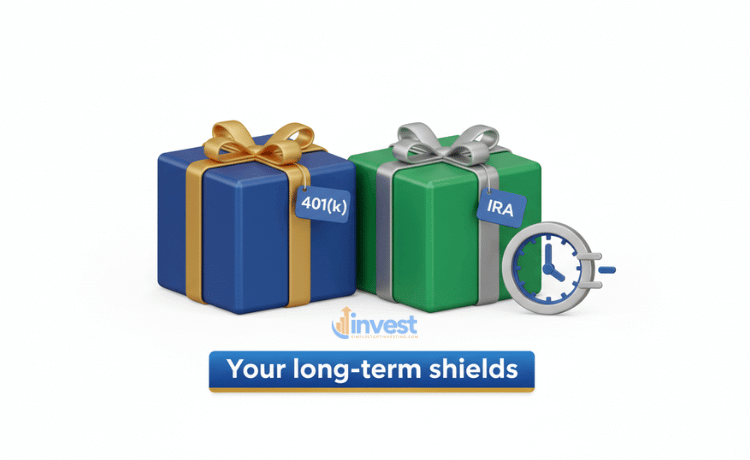
For the current year, the IRS has allowed individuals to put up to 24,500 dollars into their 401(k). If you are using an IRA, the limit is 7,500 dollars. These accounts are like protective bubbles for your investments. Inside these bubbles, your money can grow without being taxed every single year, allowing the “snowball” to grow even faster.
The Employer Match Example
Many US companies will “match” your contribution to a 401(k). If you put in 100 dollars, your boss might put in another 100 dollars for you. This is an immediate 100 percent return on your money. There is no better way to beat inflation than getting free money from your employer.
The Beginner’s Mistake: Ignoring the “Fine Print”
Some beginners avoid these accounts because they “can’t touch the money until they are 59 and a half years old.” They worry about their money being “locked up” and instead keep it in a standard savings account where they can see it.
The Financial Logic: Long-Term Protection
You want some of your money to be locked up for your future self. Inflation is a long-term problem, so it requires a long-term solution. By using a 401(k) or a Roth IRA, you are ensuring that when you retire, you have a pile of wealth that has grown for decades, completely independent of how much the price of bread has risen. Note that tax laws and contribution limits can change; it is always a good idea to check current IRS guidelines or speak with a professional.
Common Myths That Hold Beginners Back
When it comes to investing for inflation, there is a lot of bad advice out there. Let’s clear up a few things so you can move forward with confidence.
Myth 1: “I should wait for the market to drop before I buy.”
This is called “timing the market,” and even the professionals are bad at it. While you wait for a “crash” to get a bargain, the market might go up by twenty percent. Even if it drops by ten percent later, you are still buying at a higher price than when you first started waiting. Meanwhile, inflation is eating your cash every single day you wait.
Myth 2: “Gold is the only way to beat inflation.”
While some people like gold, it doesn’t “do” anything. A bar of gold will be the same bar of gold in fifty years. It doesn’t earn profits, and it doesn’t pay dividends. Companies like Google or Target, however, are active engines of wealth. They innovate, they sell more products, and they grow. Historically, the US stock market has outperformed gold as an inflation hedge over long periods.
Myth 3: “Investing is only for the wealthy.”
Decades ago, you needed a stockbroker and a lot of money to get started. Today, you can buy “fractional shares” of companies like Amazon or Tesla for as little as one dollar using many popular US apps. You can own a piece of the biggest companies in the world with the change in your pocket.
How to Start Protecting Your Wealth Today
Starting your journey into investing for inflation doesn’t have to be scary. You don’t need to pick the “next big stock” or spend hours looking at charts. For most beginners, the path is simple:
- Build an Emergency Fund: Keep a few months of expenses in cash. Yes, inflation will bite it, but this is the “insurance” you pay to ensure you don’t have to sell your investments if you lose your job.
- Use Your Workplace Plan: If your job offers a 401(k), especially with a match, start there. It is the easiest way to begin.
- Look into Index Funds: Instead of buying one stock like Apple, you can buy an “index fund” that owns a tiny piece of the 500 largest companies in America (like the S&P 500). This spreads your risk and ensures you are growing with the entire US economy.
- Be Consistent: Don’t worry about the daily news. Set up an automatic transfer and let your money work in the background.
The Path Forward
The “cash is trash” philosophy isn’t about hating money; it’s about respecting the power of time and the reality of how the economy works. By moving your focus from “saving” to “investing,” you are taking a stand against the invisible thief of inflation.
You work hard for your dollars. Don’t let them sit in a bank account where they get weaker every year. Give them a job. Put them to work in the US economy, and let them grow into a future where you can afford everything you need and more.
Disclaimer: This content is for educational purposes only and does not constitute financial advice. Investing involves risk, including the loss of principal. Past performance is not a guarantee of future results.