If you are looking for the single most powerful way to save money in the United States, you might be surprised to find it hidden inside your health insurance plan. Most people think of their health insurance as a monthly bill they have to pay, but for those with the right plan, it opens the door to a Health Savings Account, or HSA.
An HSA is often called the “Ultimate Savings Secret” because of its unique HSA tax benefits. While most retirement accounts like a 401k or an IRA give you one or two tax breaks, the HSA offers three. In the financial world, we call this the Triple Tax Advantage. It allows you to put money in tax-free, let it grow tax-free, and spend it tax-free on medical costs.

In this guide, we will break down exactly how an HSA works, why it is better than almost any other savings vehicle for beginners, and how you can use it to build serious wealth while protecting your health.
What is a Health Savings Account (HSA)?
At its simplest level, a Health Savings Account is a personal savings account designed specifically for people who have a High-Deductible Health Plan (HDHP). Think of it as a “Medical IRA.” It is a place where you can set aside money to pay for health-related expenses, from doctor visits and prescriptions to dental work and even Lasik eye surgery.
Unlike a typical bank account, the money you put into an HSA is special. The government wants to encourage you to save for your own healthcare costs, so they give you massive tax breaks to do so. You own the account, not your employer. If you change jobs, the money stays with you. If you don’t spend it this year, it rolls over to next year. It is yours forever.
Why Beginners Often Get It Wrong
Many beginners confuse the HSA with an FSA (Flexible Spending Account). They worry that if they don’t spend the money by December 31st, they will lose it. This is a major misunderstanding.
The Right Way to Think
With an HSA, there is no “use-it-or-lose-it” rule. You should view this account not just as a way to pay for today’s aspirin, but as a long-term investment bucket. It is a tool that allows you to build a mountain of cash that can be used for a surgery twenty years from now or even for general living expenses in retirement.
The First Advantage: Tax-Deductible Contributions
The first part of the Triple Tax Advantage happens the moment you put money into the account. Every dollar you contribute to your HSA reduces your taxable income for the year. This is what we call “pre-tax” or “tax-deductible” money.
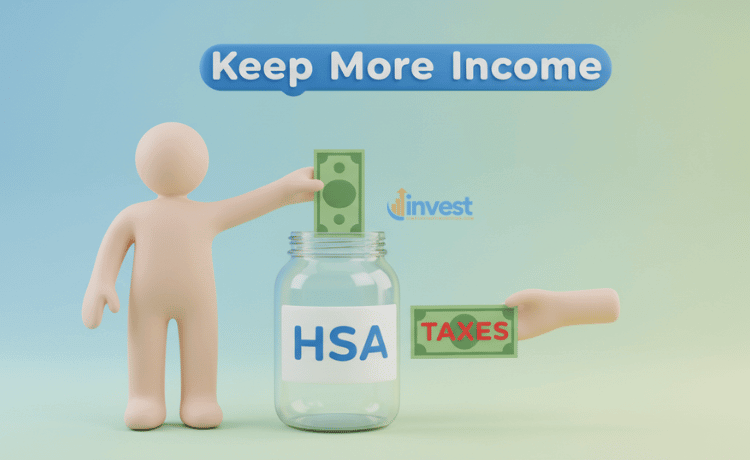
Let’s look at how this works in the real world. Imagine you earn 50,000 dollars this year. If you put 3,000 dollars into your HSA, the IRS acts as if you only earned 47,000 dollars. You are not required to pay income tax on that 3,000 dollars.
A Real-World Example
Suppose you work at a company like Walmart or Amazon and they offer an HSA through your payroll. If you choose to contribute 100 dollars from every paycheck, that 100 dollars goes straight into your HSA before the government takes its “cut.” If your tax rate is 20 percent, you are essentially saving 20 dollars in taxes for every 100 dollars you save. Over a full year, those savings can add up to hundreds or even thousands of dollars staying in your pocket instead of going to the IRS.
The Beginner Mistake
A common mistake is thinking that you can only contribute through an employer. Many people assume that if their boss doesn’t set it up, they can’t have one.
The Professional Insight
As long as you have a qualifying High-Deductible Health Plan, you can open an HSA at many financial institutions, like Fidelity or Vanguard, on your own. You can then claim the tax deduction when you file your taxes at the end of the year. It works regardless of whether your employer is involved or not.
The Second Advantage: Tax-Free Growth Through Investing
This is where the HSA truly becomes a “secret weapon.” Most people leave their HSA money in a basic savings account earning almost zero interest. However, most HSA providers allow you to invest that money in the stock market once you reach a certain balance.

When you invest inside an HSA, any profit you make is completely tax-free. If you buy shares of a company like Apple (AAPL) or Microsoft (MSFT) and those shares double in value, you do not owe the government a single penny in capital gains tax. In a regular brokerage account, you might have to give 15 percent or 20 percent of your profit back to the government. Inside an HSA, you keep everything.
The Power of Compound Growth
Let’s use a simple example. If you have 5,000 dollars in your HSA and you invest it in a fund that tracks the top 500 American companies (like the S&P 500), and that investment earns 10 percent in a year, you now have 5,500 dollars. That 500 dollars of growth is yours to keep. If you let that happen year after year, the “snowball effect” of compound interest can turn a small account into a massive fortune over several decades.
Why Beginners Often Get It Wrong
Beginners often view the HSA as a “spending” account. They keep all the money in cash so they can pay for a 20-dollar prescription. Because they keep it in cash, they miss out on years of market growth.
The Right Way to Think
Think of your HSA as a two-part system. Keep enough cash to cover your expected medical deductible for the year, but invest everything else. By treating the HSA like a long-term retirement account, you are letting the HSA tax benefits work their magic over time.
The Third Advantage: Tax-Free Withdrawals for Medical Needs
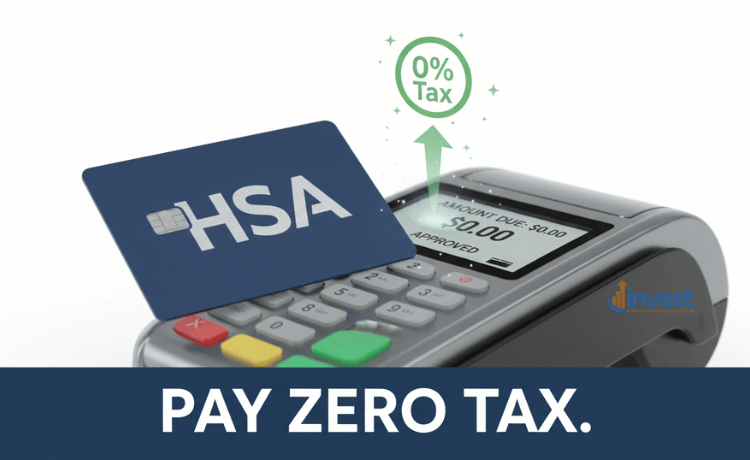
The final piece of the puzzle is taking the money out. With most retirement accounts, you eventually have to pay taxes when you withdraw the money (like a 401k) or you had to pay taxes before you put it in (like a Roth IRA). The HSA is the only account that lets you avoid taxes on both ends—as long as the money is used for “qualified medical expenses.”
The list of what counts as a medical expense is surprisingly long. It includes:
- Doctor and hospital visits.
- Dental treatments and braces.
- Vision care, glasses, and contact lenses.
- Psychological therapy and mental health care.
- Over-the-counter medicines (like ibuprofen or bandages).
- Long-term care insurance premiums.
An Everyday Example
Imagine you are 45 years old and you need a knee surgery that costs 5,000 dollars. If you have that 5,000 dollars sitting in your HSA, you can pay the hospital directly using your HSA debit card. You paid no tax when you put the money in, no tax while it grew, and you pay no tax when you spend it. If you had taken that same 5,000 dollars out of a traditional IRA, you might have had to pay 1,000 dollars or more in taxes, leaving you with less money to pay your bill.
The Beginner Mistake
Many people think they have to use the money immediately after a doctor’s visit. They lose their receipts and feel rushed to pay the bill from the account.
The Professional Insight
There is no “deadline” to reimburse yourself. You can pay for a medical bill today with your own pocket money, save the receipt digitally, and “pay yourself back” from the HSA twenty years from now. This allows your HSA money to stay invested and growing for decades while you keep the option to take that money out tax-free whenever you want in the future.
HSA vs. FSA: Knowing the Difference
It is very common for people to confuse the HSA with the FSA (Flexible Spending Account). While they sound similar, the HSA is almost always superior for long-term wealth building.
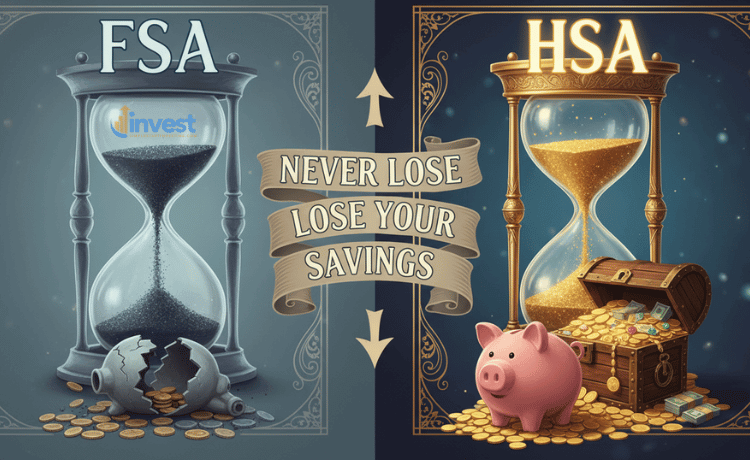
An FSA is generally “use-it-or-lose-it.” If your employer gives you an FSA and you put 2,000 dollars into it but only spend 1,500 dollars by the end of the year, that extra 500 dollars usually disappears. It goes back to the employer.
An HSA has no such rule. If you have 2,000 dollars and spend nothing, you still have 2,000 dollars next year. Plus, as we discussed, you can invest it. You cannot typically invest the money in an FSA.
Common Misunderstanding
People often think, “I’ll just take the FSA because the deductible on the HSA-eligible plan is too high.”
Strategic Adjustment
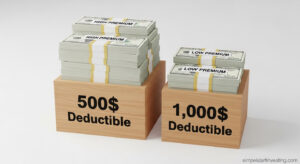
While the “High Deductible” part of an HSA plan can feel scary because you pay more upfront for care, you have to look at the “Total Cost.” Often, the monthly premium (the price you pay just to have the insurance) is much lower for an HSA plan. If you take the money you save on premiums and put it into the HSA, you are building an asset you own, rather than giving that money to an insurance company and never seeing it again.
The Retirement Hack: Using Your HSA After Age 65
What happens if you are lucky and stay healthy? What if you reach age 65 and you have 200,000 dollars in your HSA that you never needed for medical bills?
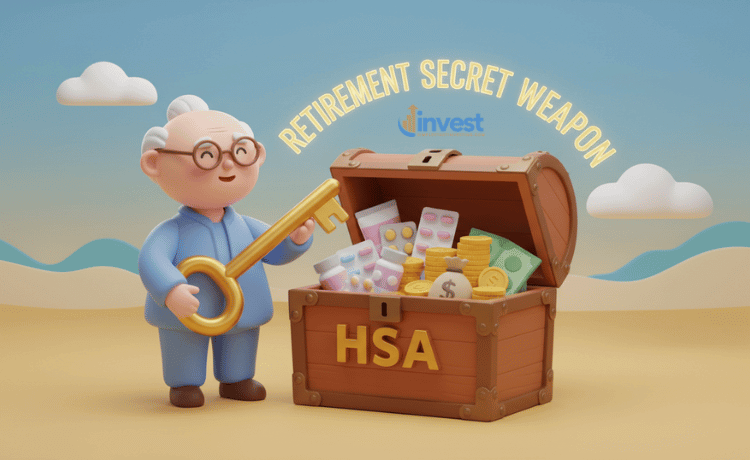
This is where the HSA reveals its final secret. Once you turn 65, the HSA essentially turns into a Traditional IRA. You can withdraw the money for any reason—buying a boat, traveling, or paying for groceries—and you will only owe regular income tax on it. The 20 percent penalty that usually applies to non-medical withdrawals disappears.
However, if you use that money for medical costs after 65 (including some Medicare premiums!), it remains 100 percent tax-free. Since most retirees spend a large portion of their income on healthcare, the HSA is the most efficient way to fund your golden years.
A Simple Logic Check
- Before age 65: Use for medical = Tax-free. Use for non-medical = Taxed + 20 percent penalty.
- After age 65: Use for medical = Tax-free. Use for non-medical = Taxed only (no penalty).
By contributing to an HSA now, you are creating a “heads I win, tails I also win” scenario for your future self.
Common HSA Mistakes to Avoid
Even though the HSA is a fantastic tool, there are a few traps that beginners often fall into.
1. Contributing Too Much
The IRS sets a strict limit on how much you can put into an HSA each year. For a single person this year, the limit is 4,300 dollars. For a family, it is 8,550 dollars. If you go over these limits, the IRS will hit you with a 6 percent penalty on the extra amount every single year it stays in the account.
2. Not Being Eligible
You must be enrolled in a High-Deductible Health Plan to contribute. If you switch to a “PPO” or a “Standard” plan mid-year, you must stop your contributions or prorate them based on how many months you were eligible. If you contribute while ineligible, you will face taxes and penalties.
3. Forgetting to Name a Beneficiary
If you pass away and your HSA goes to your spouse, it remains an HSA for them. But if it goes to someone else (like a child or a friend), it stops being an HSA and becomes fully taxable to them immediately. Always make sure your beneficiary forms are up to date.
How to Start Your HSA Journey
Ready to take advantage of these HSA tax benefits? Here is how to get started:
- Check Your Insurance: During your next “Open Enrollment” period at work, look for plans labeled “HDHP” or “HSA-Eligible.”
- Open the Account: If your employer provides one, use theirs. If not, open one at a major provider like Fidelity or Lively.
- Set a Contribution Goal: You don’t have to hit the maximum limit right away. Even 50 dollars a month is a great start.
- Automate It: If possible, set up a payroll deduction. This is the best way to save because it also helps you avoid “FICA” taxes (Social Security and Medicare taxes), which is an extra 7.65 percent savings that even a 401k doesn’t offer!
- Invest the Surplus: Once you have a few thousand dollars in cash for emergencies, start moving the extra into a simple index fund.
The rules and limits for these accounts can change annually, so it is always a good idea to check the current IRS guidelines or consult with a tax professional as you plan your strategy.
Summary of the Triple Tax Advantage
To wrap it all up, let’s look at why the HSA is so special. In a world where the government usually takes a bite out of your income, your savings growth, and your spending, the HSA provides a rare “tax-free zone.”
By understanding the HSA tax benefits, you are not just saving for a rainy day at the doctor’s office. You are building a portable, flexible, and incredibly efficient wealth-building machine that will serve you for the rest of your life.
Disclaimer: This content is for educational purposes only and does not constitute financial, legal, or tax advice. Investment involves risk, and past performance is no guarantee of future results. Please consult with a qualified professional regarding your specific situation.