If you have kids or care for an elderly relative, you know that childcare costs can feel like a second mortgage. It is one of the biggest monthly bills for American families. However, there is a powerful tool hiding in many employer benefit packages that can save you thousands of dollars: the Dependent Care FSA.
A Dependent Care FSA (Flexible Spending Account) is a special type of account that lets you set aside money from your paycheck before taxes are taken out. You then use that money to pay for things like daycare, preschool, or summer camps. Because the money is “pre-tax,” you are essentially getting a huge discount on your childcare costs because the IRS never touches that portion of your income.

In this guide, we will break down exactly how this account works, the major changes to the contribution limits this year, and how you can use it to keep more of your hard-earned money.
What Exactly is a Dependent Care FSA?
Think of a Dependent Care FSA as a dedicated savings bucket for caregiving expenses. This account is offered through your employer. During your “Open Enrollment” period, you tell your company how much you want to contribute for the upcoming year. They then take that amount and divide it equally across all your paychecks for the year.
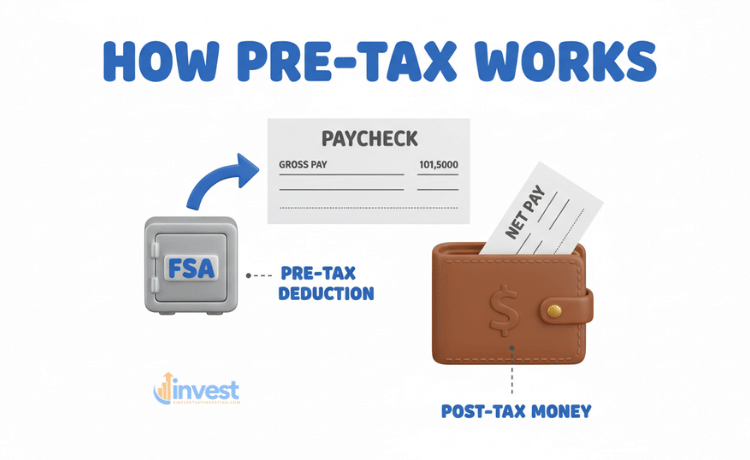
The “magic” happens because this money is taken out pre-tax. When the government calculates how much income tax you owe, they act like that money doesn’t exist. This lowers your overall taxable income, which means you pay less in federal income tax, Social Security tax, and Medicare tax.
How it works in real life
Imagine you work for a company like Amazon or Walmart and you earn 60,000 dollars a year. If you decide to put 5,000 dollars into a Dependent Care FSA, the IRS will only tax you as if you earned 55,000 dollars.
If you are in a 20% tax bracket, you could save about 1,000 dollars in federal income taxes alone. When you add in the savings from Social Security and Medicare taxes, you are keeping even more of your paycheck. It is like getting a 25% or 30% discount on your daycare bill just by using this account.
The Beginner Trap: Mixing up FSA types
A common mistake for beginners is confusing the Dependent Care FSA with a Health Care FSA.
- Health Care FSA: Used for doctor visits, medicine, and bandages.
- Dependent Care FSA: Used ONLY for caregiving so you can work.
The Mindset Shift: Stop thinking of your childcare bill as a post-tax expense. Start seeing it as a way to reduce your tax bill. Every dollar you put into this account is a dollar the government can’t tax.
The Big Change: New Higher Limits for This Year
For a long time, the maximum amount a family could put into a Dependent Care FSA was 5,000 dollars. However, starting this year, the IRS has significantly increased these limits. This is huge news for parents who are feeling the pinch of rising costs.
For this year, the contribution limits are:
- 7,500 dollars for individuals or married couples filing a joint tax return.
- 3,750 dollars for married couples filing separate tax returns.
Why this matters
If you are paying for two kids in a high-cost area like New York or San Francisco, 5,000 dollars barely covers a few months of care. With the new 7,500 dollar limit, you can shield an extra 2,500 dollars from taxes.
Common Mistake: Thinking the limit is “per child”
Many parents mistakenly believe that if they have three children, they can put away 7,500 dollars for each child. This is incorrect. The limit is per household. Whether you have one child or five, the total amount you can set aside across the whole family is 7,500 dollars.
The Mindset Shift: Even if the 7,500 dollars doesn’t cover your entire childcare bill for the year, you should still use it. It is much better to pay for the first 7,500 dollars of care with tax-free money than to pay for everything with money that has already been taxed.
What Expenses are Actually Eligible?
The IRS is very specific about what counts as a “qualified expense.” The general rule is that the care must be necessary for you (and your spouse, if married) to work or look for work. If one parent stays at home and doesn’t work, you generally cannot use a Dependent Care FSA.
What you CAN pay for:
- Licensed daycare centers: This is the most common use.
- Nursery school and Preschool: Even if they provide some education, as long as it is primarily for care while you work.
- Before and After-school programs: Great for older kids.
- Summer Day Camps: These are eligible, but they must be “day camps.”
- In-home care: Such as a nanny or a babysitter (as long as you report their tax ID or Social Security number).
What you CANNOT pay for:
- Overnight camps: The IRS considers these a luxury, not a work necessity.
- Kindergarten or private school tuition: Once the child is in “school age” (Grade K and up), the educational costs are not eligible.
- Late fees: If you are late picking up your child and the daycare charges you 20 dollars, that fee is not tax-deductible.
- Tutoring: Learning centers like Kumon or private tutors do not count as “care.”
Common Mistake: Paying the “neighbor kid” under the table
A lot of parents try to use their Dependent Care FSA to pay a neighborhood teenager to watch their kids. To get reimbursed from your FSA, you must provide the caregiver’s Social Security Number or Taxpayer Identification Number. If you pay someone “under the table” without these details, your claim will be denied.
The Mindset Shift: Think of your Dependent Care FSA as a formal business transaction. To get the tax break, you must use a provider that is willing to be identified to the IRS.
Who Qualifies as a “Dependent”?
You can’t just use this money for anyone. The person receiving care must be a “qualifying person.” Usually, this is your child, but it can also include other family members in certain situations.

The Age 13 Rule
For children, the most important rule is the age limit. A child is only a qualifying person until they turn 13 years old. Once they reach their 13th birthday, you can no longer use Dependent Care FSA funds for their care.
Adult Dependents
You can also use these funds for a spouse or a relative (like an elderly parent) who lives with you for more than half the year and is physically or mentally unable to care for themselves.
Common Mistake: Using funds for a 14-year-old
Many parents assume that because a 14-year-old still needs supervision after school, the expense is covered. It is not. The day the child turns 13, the tax benefit stops. If you spend money on care for a 14-year-old, the FSA administrator will reject your request for reimbursement.
The Mindset Shift: Plan ahead for the “cliff.” If your child turns 13 in July, you can only contribute and use funds for the months of January through June. You should adjust your contribution amount during the enrollment period to reflect this.
The “Use It or Lose It” Rule: The Biggest Risk
The Dependent Care FSA has one major catch that scares many beginners: the Use It or Lose It rule. Unlike a regular savings account or a 401(k), the money you put into an FSA does not stay there forever.
If you put 7,500 dollars into the account but only spend 6,000 dollars by the end of the plan year, you lose the remaining 1,500 dollars. Your employer is required by law to take that money back. It does not roll over to the next year.

How to avoid losing money
- Estimate carefully: Look at your daycare bills from last year. If you pay 800 dollars a month, you know you will spend at least 9,600 dollars a year. In this case, you can safely contribute the full 7,500 dollars.
- Check for a Grace Period: Some employers offer a “grace period” of two and a half months into the next year to spend the remaining funds.
- Track your spending: Don’t wait until December to look at your balance. Check it every few months to make sure you are submitting your receipts.
Common Mistake: Over-funding the account
A beginner might think, “I’ll put the maximum 7,500 dollars in just in case.” But if their child starts public school in September and they no longer need daycare, they might find themselves with thousands of dollars left in the account and no way to spend it.
The Mindset Shift: Be conservative with your math. It is better to contribute 4,000 dollars and know for sure you will spend it all than to contribute 7,500 dollars and risk losing 3,000 dollars because your plans changed.
FSA vs. Child and Dependent Care Tax Credit
When you file your taxes, there is another way to save money on childcare: the Child and Dependent Care Tax Credit. You might be wondering, “Should I use the FSA or the tax credit?”
The rule is that you cannot “double-dip.” You cannot use the same 1,000 dollars of daycare expenses for both the FSA and the tax credit. However, for most middle and high-income families, the Dependent Care FSA provides a much bigger tax break than the credit.
A Simple Comparison
- FSA: You save on federal income tax, Social Security, and Medicare taxes. For many families, this equals a 30% discount or more.
- Tax Credit: This is a percentage of your costs (usually 20% for most families) that is subtracted directly from your tax bill.
Can you use both?
Yes, but with a limit. The tax credit allows you to claim up to 3,000 dollars in expenses for one child or 6,000 dollars for two or more children. If you have two kids and spend 15,000 dollars on daycare, you could use the 7,500 dollar FSA first. Since you still have 7,500 dollars in “extra” expenses, you could potentially use the remaining gap to claim a small portion of the tax credit, though the rules get very specific here.
The Mindset Shift: For most people working at major companies like Apple or Google, the FSA is the better first choice because it saves you more on your total tax bill. Always start with the FSA if your employer offers it.
How to Get Reimbursed
Unlike a Health Care FSA, which often gives you a debit card to swipe at the pharmacy, the Dependent Care FSA usually works on a “reimbursement” model.
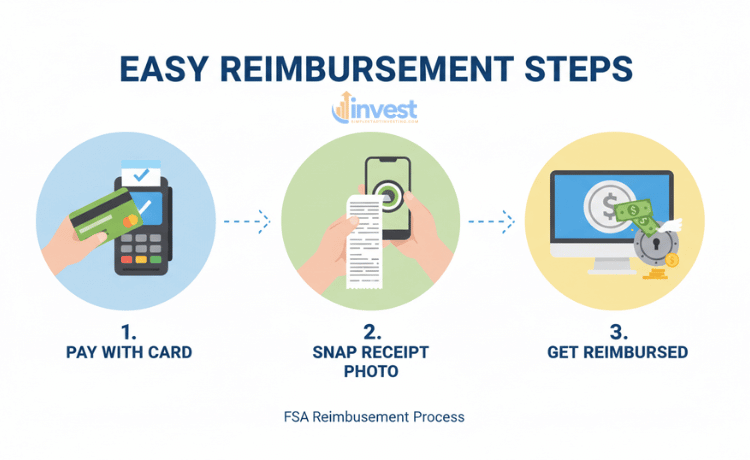
- You pay the provider: You pay your daycare center 200 dollars for the week using your own checking account.
- Get a receipt: Make sure the receipt shows the dates of care, the provider’s name, and the amount paid.
- Submit a claim: You log into your employer’s benefits portal and upload a photo of the receipt.
- Get paid: The FSA administrator sends the 200 dollars back to your bank account.
The “Cash Flow” Reality
One thing many beginners don’t realize is that Dependent Care FSAs are not “pre-funded.” With a Health FSA, you can spend the full 3,000 dollars on January 1st even if you haven’t contributed it yet. With a Dependent Care FSA, you can only be reimbursed up to the amount that has actually been taken out of your paycheck.
If you have a 1,000 dollar daycare bill in January but you have only contributed 300 dollars so far, the account will only pay you 300 dollars. It will “hold” the rest of your claim and pay you as more money is deducted from your future paychecks.
How to Enroll and Next Steps
You can generally only sign up for a Dependent Care FSA during two times:
- Open Enrollment: Usually in the fall (October or November) for the following year.
- A Qualifying Life Event: This includes things like having a new baby, getting married, or a change in your childcare provider’s cost.
If you just had a baby, you don’t have to wait until next year! You usually have 30 or 60 days from the birth of the child to sign up and start saving immediately.
Is it worth it?
Let’s look at one final example. Imagine you pay 1,000 dollars a month for daycare. Over a year, that is 12,000 dollars. If you put 7,500 dollars into a Dependent Care FSA and you are in a typical tax bracket, you will save roughly 2,250 dollars in taxes.
That is 2,250 dollars extra in your pocket just for filling out a form during your benefits enrollment. That is money you could use to start an emergency fund, invest in a 529 college savings plan, or buy shares in a company like Tesla or Microsoft.
Summary Checklist for Beginners
- Confirm Eligibility: Ensure both you and your spouse are working or looking for work.
- Do the Math: Look at your total childcare costs for the year.
- Pick a Number: Decide how much to contribute (up to 7,500 dollars this year).
- Identify Your Provider: Make sure they have a tax ID number.
- Submit Receipts: Set a monthly reminder to upload your receipts so you don’t forget.
- Watch the Deadline: Spend every penny before the end of the year so you don’t lose it.
Childcare is expensive, but the government is giving you a way to make it slightly more affordable. Don’t leave this money on the table. If your employer offers a Dependent Care FSA, it is one of the smartest financial moves a new parent can make.
Disclaimer: This content is for educational purposes only and does not constitute financial or tax advice. Tax laws and contribution limits can change; please check the current IRS guidelines or consult with a qualified tax professional regarding your specific situation.