Have you ever walked into your favorite store, seen a high-quality jacket on the 50% off rack, and felt an immediate rush of excitement? You know the jacket is worth 200 dollars, but today it is only 100 dollars. In the world of smart investing, we look for that exact same feeling. This concept is known as the margin of safety, and it is the single most important secret to protecting your money while growing your wealth.
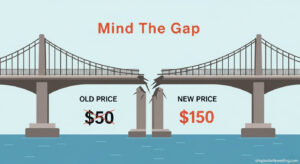
The margin of safety is a simple but powerful idea. It means buying an investment only when the market price is significantly below what the investment is actually worth. Think of it as a “financial cushion” that protects you from being wrong. Because let’s be honest, even the best experts can’t predict the future perfectly. By building in a gap between price and value, you give yourself room to breathe.
If you are new to the stock market, you might think that “price” and “value” are the same thing. They aren’t. Price is what you pay, but value is what you actually get. Learning to spot the difference is how you move from “gambling” on stocks to truly investing in them. In this guide, we will break down how to find your own margin of safety so you can invest with confidence and peace of mind.
What Exactly is a Margin of Safety?
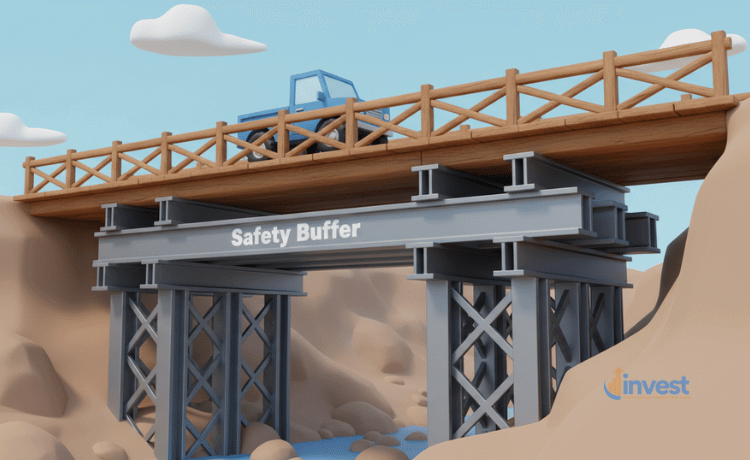
To understand the margin of safety, imagine a structural engineer building a bridge. If the engineer expects the heaviest truck crossing the bridge to weigh 10,000 pounds, they won’t build a bridge that can only hold exactly 10,000 pounds. That would be a recipe for disaster. Instead, they build a bridge that can hold 15,000 or 20,000 pounds.
That extra 5,000 to 10,000 pounds of capacity is the “margin of safety.” It accounts for unexpected heavy loads, extreme weather, or small errors in the construction process. Investing works the same way. When you calculate that a company like Apple (AAPL) or Microsoft (MSFT) is worth a certain amount, you shouldn’t pay that full price. You want to pay much less to account for the “unexpected.”
In plain English, if you think a stock is worth 100 dollars per share, you might decide to only buy it if the price drops to 70 dollars. That 30 dollar difference is your protection. If the company has a bad quarter or the economy slows down, you are still safe because you bought it at such a deep discount.
A Real-World Example: The “House Next Door”
Imagine there is a house in your neighborhood that you know is worth 500,000 dollars based on recent sales of identical homes. However, the owner is in a hurry to move and offers it to you for 350,000 dollars.
Even if the real estate market drops by 10% next year, you aren’t worried. Why? Because you bought it with a 150,000 dollar margin of safety. You could be “wrong” about the market for a while and still come out ahead. This is exactly how legendary investors like Warren Buffett approach the stock market.
The Common Beginner Mistake: Equating Price with Worth
Most beginners look at a stock price moving up and think, “Everyone is buying this, so it must be valuable!” They see Tesla (TSLA) or Nvidia (NVDA) skyrocketing and jump in at the peak because they assume the high price reflects the true value.
This is a dangerous mindset. A high price often means the “margin of safety” has completely disappeared. When you buy at the top, you have zero room for error. If anything goes slightly wrong with the company, the price can crash, leaving you with a heavy loss.
The Shift in Mindset: You are a Business Owner, Not a Ticker Symbol Trader
To use a margin of safety correctly, you must stop looking at stocks as blinking lights on a screen. You are buying a piece of a real business with buildings, employees, and products. When you realize you are buying a business, you naturally want to get a good deal. You wouldn’t buy a local lemonade stand for 1,000 dollars if it only makes 10 dollars a year in profit. You would wait for a price that makes sense for the risk you are taking.
Why “Market Price” and “Intrinsic Value” are Different
The foundation of the margin of safety is the gap between the market price and the intrinsic value. This is where most new investors get confused. Let’s peel back the layers on these two terms so you can see why they rarely match up in the real world.
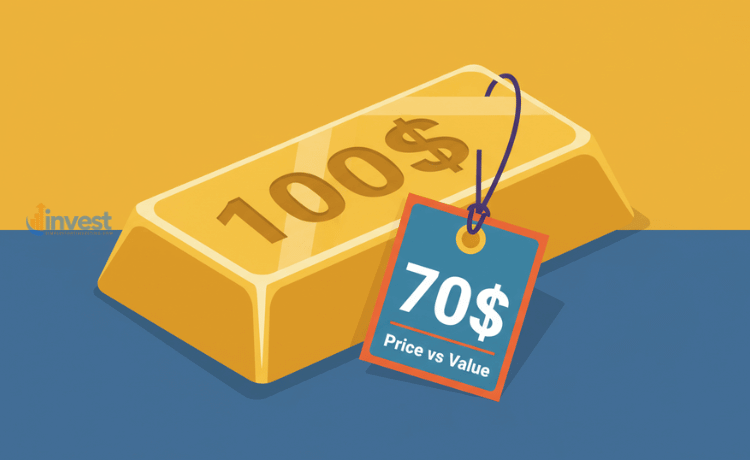
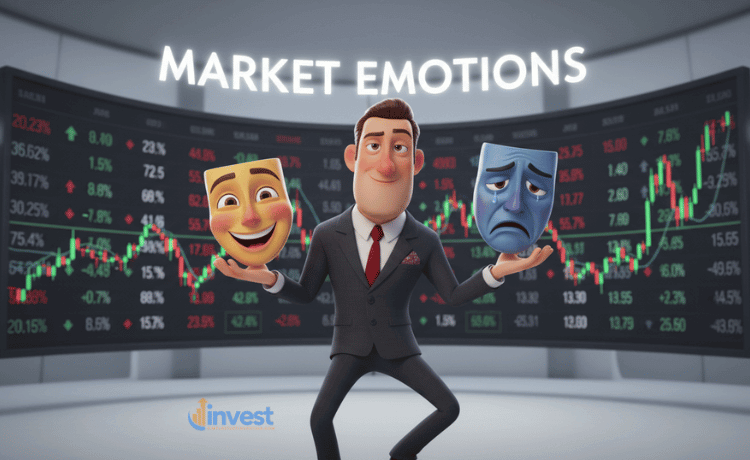
Market Price is the number you see on your Yahoo Finance or Robinhood app. It is determined by the “mood” of millions of investors at any given second. If people are scared, the price goes down. If people are greedy, the price goes up. It is purely based on supply and demand right now.
Intrinsic Value is the “true” worth of the business. If you were to own the entire company and collect all its future profits, what would that be worth to you today? This value doesn’t change every second. It changes slowly as the company grows, releases new products, or manages its debt.
Why the Gap Exists: Meet “Mr. Market”
Benjamin Graham, the father of value investing, used a famous story to explain this. Imagine you own a small stake in a business with a partner named Mr. Market. Every single day, Mr. Market comes to your door and offers to either buy your share or sell you his share at a specific price.
Some days, Mr. Market is incredibly happy and optimistic. He names a very high price. Other days, he is depressed and fearful, so he names a very low price. The beauty of this is that you are not obligated to trade with him. You only trade when his price is “crazy low”—far below the real value of the business. That low price is where your margin of safety lives.
An Example with Costco (COST)
Let’s look at a company many Americans know: Costco.
- The Value: People love Costco because of the membership model and the high-quality products. It has a very stable “intrinsic value” because we know millions of people will renew their memberships every year.
- The Price: During a stock market panic, people might sell their Costco shares simply because they are scared of the general economy. The price might drop from 500 dollars to 400 dollars in a few weeks.
- The Opportunity: If the business itself hasn’t changed—people are still buying giant tubs of peanut butter and hot dogs—the “intrinsic value” is still high. Buying at 400 dollars when the value is 500 dollars gives you a 100 dollar margin of safety.
The Beginner’s Misconception: “The Market is Always Right”
Many beginners believe that if a stock is selling for 100 dollars, then 100 dollars must be exactly what it is worth. They assume “smart money” has already figured it all out.
The truth is, the market is frequently wrong. It overreacts to bad news and gets over-excited about good news. If the market were always right, no one would ever make a massive profit or suffer a massive loss. Your job is to wait for the market to be “wrong” in your favor.
How to Estimate “Intrinsic Value” Without Complex Math
You might be thinking, “This sounds great, but how do I know what a stock is actually worth?” While Wall Street uses complicated spreadsheets, beginners can get a very good estimate by looking at a few “common sense” factors. Remember, we don’t need a perfect number; we just need a “ballpark” figure that gives us a margin of safety.

Think of valuing a company like valuing a used car. You look at the mileage, the condition of the engine, the brand’s reputation, and what similar cars are selling for.
1. The Power of Earnings (The Engine)
A company exists to make a profit. If a company like Walmart (WMT) consistently makes billions of dollars every year, that “engine” is very valuable. Look at the company’s history. Has it grown its profits over the last 5 to 10 years? A company with steady, predictable profits is much easier to value than a new tech startup that is losing money.
2. Assets and Cash (The Gas in the Tank)
Look at how much cash the company has in the bank and how much debt it owes. A company with 10 billion dollars in cash and zero debt is inherently safer than a company with 10 billion dollars in debt. This “cash cushion” adds to the intrinsic value because it protects the company during hard times.
3. The “Moat” (The Protective Wall)
Warren Buffett often talks about an “Economic Moat.” This is something that makes it hard for competitors to steal customers.
- Brand Loyalty: People will buy Coca-Cola (KO) or Apple products even if they cost a little more.
- Switching Costs: It is hard for a business to switch away from Amazon Web Services (AWS) once all their data is there. A wide moat makes a company’s future profits more “certain,” which makes it easier for you to estimate a fair value.
Example: The “Lawn Mowing Business” Logic
Imagine your neighbor has a lawn mowing business. He has 10 regular customers who pay 50 dollars a week. That is 500 dollars a week in revenue. After paying for gas and equipment, he keeps 300 dollars in profit.
- In a year, he makes about 15,000 dollars in profit.
- If he offers to sell you the business for 30,000 dollars, you are paying “2 years of profit.” That feels like a great deal with a huge margin of safety.
- If he asks for 300,000 dollars (20 years of profit), you have no margin of safety. If one customer leaves, your investment is in trouble.
Why the Margin of Safety is Your “Insurance Policy”
The stock market is full of surprises. Even if you pick a great company, things can go wrong. A new law could be passed, a competitor could launch a better product, or a global event could disrupt shipping. The margin of safety is how you survive these surprises.

Protection from “Analytical Errors”
Let’s be humble: sometimes we are just wrong. You might think Target (TGT) will grow at 10% next year, but they only grow at 2%. If you bought the stock with a 30% discount (margin of safety), that “mistake” in your math won’t hurt you much. You are still in the green because you didn’t pay for “perfection.”
Protection from Market Volatility
When the overall stock market crashes (which happens every few years), almost every stock goes down. If you bought a stock at its “full value,” a 20% market drop means you are now down 20%. But if you bought a stock at a 40% discount, you might still be “up” relative to what you paid, or at least you won’t feel the need to panic sell because you know you got a bargain.
The Psychological Benefit
The hardest part of investing isn’t the math; it’s the emotions. Watching your account balance turn red is scary. However, when you use a margin of safety, your mindset changes. Instead of being scared when the price drops, you might actually be happy. Why? Because the “discount” just got even bigger! You can buy more of a great company for an even lower price.
How Beginners Can Apply This Today
You don’t need a finance degree to start using the margin of safety. You just need patience and discipline. Most people fail at investing because they want to “get rich quick.” Value investors get rich by “not getting poor.”
Step 1: Create a Watchlist
Don’t just buy a stock because you heard about it on the news. Pick 5 to 10 high-quality companies that you understand (like Disney, Home Depot, or Visa). Research them and decide what you think is a “fair price” based on their earnings.
Step 2: Set Your “Buy Price”
Once you have a fair price, apply your discount. Many conservative investors use a 20% or 30% margin of safety. If you think Alphabet (GOOGL) is worth 150 dollars, tell yourself you won’t touch it until it hits 120 dollars or 110 dollars.
Step 3: Wait for the Sale
This is the hardest part. The stock market might be “expensive” for months or even years. During this time, you do nothing. You keep your cash in a high-yield savings account and wait for the market to have a “bad day.” When the panic hits and everyone else is selling, you look at your list, see that your favorite company is finally at your “buy price,” and you act.

Step 4: Review Regularly
Companies change. Every few months, check the news to make sure the “intrinsic value” hasn’t dropped. If a company starts losing its “moat” or taking on too much debt, your fair price needs to be adjusted downward.
Common Myths About Buying at a “Discount”
To truly master the margin of safety, we need to clear up some common misunderstandings that lead beginners astray.
Myth 1: “Cheap Price” means “Cheap Stock” A stock trading for 5 dollars is not necessarily a “discount.” It might be a terrible company heading for bankruptcy. A stock trading for 500 dollars could actually be a massive bargain if the company is worth 1,000 dollars. Focus on value, not the absolute dollar amount of the share price.
Myth 2: “I will miss out if I wait” The fear of missing out (FOMO) is the enemy of the margin of safety. Beginners worry that if they don’t buy Amazon (AMZN) today, it will go up forever and they will never own it. The truth is, the market is cyclical. Opportunities always come back. It is better to miss a gain than to suffer a permanent loss of your hard-earned money.
Myth 3: “A margin of safety guarantees I won’t lose money” Nothing in the stock market is 100% guaranteed. A company could completely fail due to fraud or an “act of God.” However, the margin of safety drastically reduces your probability of loss. It turns the odds in your favor, much like the house in a casino.
Summary: The Path to Stress-Free Investing
The margin of safety is more than just a calculation; it is a philosophy of life. It’s about being prepared for the unknown and respecting the fact that the future is unpredictable. By refusing to pay full price for stocks, you protect your downside and let the upside take care of itself.
If you start with 1,000 dollars and lose 50%, you now have 500 dollars. To get back to your original 1,000 dollars, you now have to earn a 100% return. That is very difficult to do! This is why the first rule of investing is “Don’t lose money.” The second rule is “Don’t forget rule number one.” The margin of safety is the tool that helps you follow those rules.
As you begin your journey on simplestartinvesting.com, keep this concept at the front of your mind. Whether you are looking at stocks, real estate, or even buying a car, always ask yourself: “Where is my margin of safety? If I am wrong, how much will it hurt?” If the answer is “it won’t hurt much,” you’ve likely found a great investment.
Disclaimer: This content is for educational purposes only and does not constitute financial advice. Investing involves risk, including the potential loss of principal. Always perform your own due diligence or consult with a certified financial advisor before making any investment decisions. Regulations regarding taxes and securities can change; please check current IRS and SEC guidelines.