Imagine you are a chef preparing a signature dish for a big party. If you only use salt, the food is inedible. If you only use chili peppers, your guests will be in pain. A great meal requires a precise balance of proteins, fats, spices, and greens. Each ingredient has a job: some provide the bulk, others provide the flavor, and some keep the dish from being too dry.
Investing works exactly the same way. Many beginners enter the market thinking that “investing” just means buying a few shares of a famous company like Apple or Tesla. They focus entirely on the ingredients and forget about the recipe. In the world of finance, that recipe is called asset allocation.
If you have ever felt a pit in your stomach when the news mentions a market crash, or if you feel confused about how much money to put into your 401k versus a savings account, you are in the right place. Understanding asset allocation is the single most important step you can take to move from “gambling” to “building wealth.” It is the invisible force that helps you stay calm when everyone else is panicking.
What is Asset Allocation anyway?
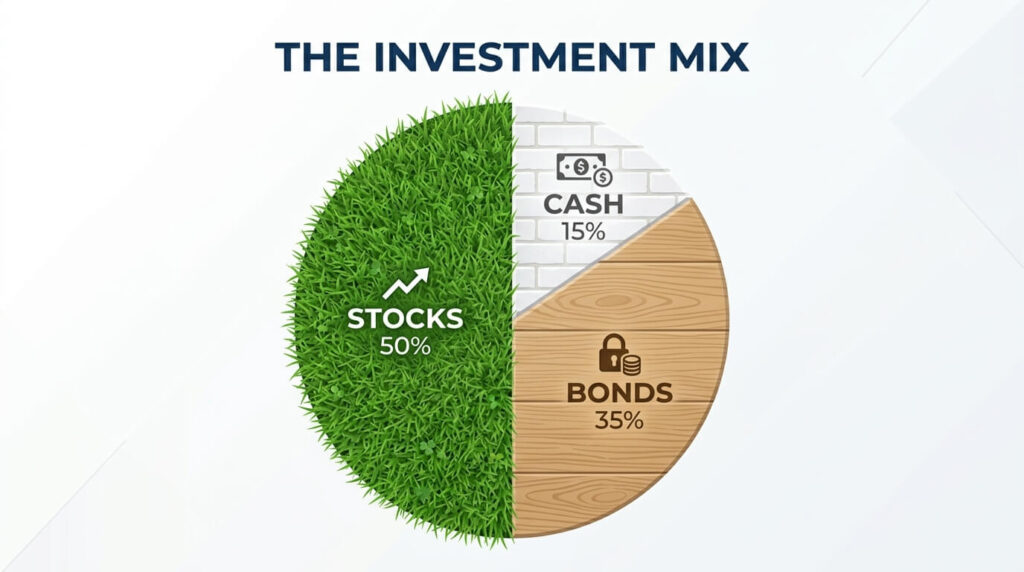
At its simplest, asset allocation is the strategy of dividing your investment portfolio among different categories of assets. These categories—primarily stocks, bonds, and cash—behave differently from one another.
Think of it like building a sports team. You wouldn’t want a team made entirely of quarterbacks. You need blockers to protect the quarterback and runners to move the ball down the field. In your portfolio:
- Stocks are your offense. They are there to score points and grow your money over time.
- Bonds are your defense. They provide stability and a bit of “protection” when the offense is having a bad game.
- Cash is your bench. It is safe, ready to use, but it doesn’t contribute much to the score.
The magic of asset allocation is that these different groups usually don’t move in the same direction at the same time. When stocks are falling because the economy looks shaky, bonds often hold steady or even go up. By owning a mix, you ensure that no single bad event can wipe out your entire life savings.
Why beginners often get it wrong
Most people start investing by “performance chasing.” They see a stock that went up 50% last year and they put all their money into it. This isn’t asset allocation; it’s a high-stakes bet.

The biggest misunderstanding for beginners is the confusion between “diversification” and “asset allocation.” You might think you are diversified because you own ten different tech companies. However, if the tech industry as a whole crashes, all ten of those stocks will go down together.
True asset allocation means owning different types of things. Owning ten tech stocks is like having ten different types of salt in your kitchen. If the recipe calls for flour and water, you’re still in trouble. A well-allocated portfolio looks across different industries, different countries, and entirely different asset classes like real estate or government debt.
Another common mistake is thinking that asset allocation is a one-time decision. Many people set up their accounts and never look at them again. But as time goes on, the market changes the weight of your ingredients. If your stocks grow very fast, they might suddenly make up 90% of your portfolio when you only intended for them to be 70%. Without realizing it, you’ve become much riskier than you intended to be.
The main ingredients: Stocks, Bonds, and Cash
To build a solid foundation, you need to understand the personality of each asset class. This is where most beginners feel overwhelmed, but we can keep it very simple by looking at the “job” each one performs for you.

Stocks: The growth engine
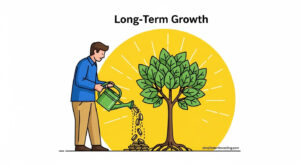
Stocks represent ownership in a company. When you buy a stock, you are betting on the future success of that business. Historically, stocks have provided the highest returns over the long run. If you want your money to grow enough to outpace inflation and build a retirement nest egg, you generally need a significant portion of your money in stocks.
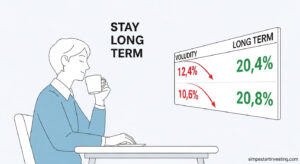
However, stocks are volatile. They can drop 10%, 20%, or even 50% in a single year. If you are 25 years old, this might not scare you because you have decades to wait for them to recover. But if you are 64 and planning to retire next month, a big drop in stocks is a major problem.
Bonds: The shock absorber
Bonds are essentially loans you make to a government or a corporation. In exchange for your money, they promise to pay you back with a little bit of interest over time. Bonds are generally much less volatile than stocks.
When the stock market gets “scary,” investors often run to the safety of bonds. This is why having bonds in your asset allocation is so helpful. They act as a cushion. While they won’t make you a millionaire overnight, they prevent your total account balance from swinging wildly up and down.
Cash and Cash Equivalents: The safety net
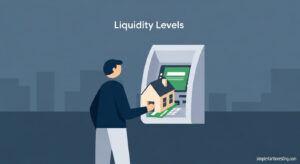
This includes your high-yield savings accounts, certificates of deposit (CDs), or money market funds. Cash is the only asset that is virtually guaranteed not to lose its nominal value. If you put 100 dollars into a savings account, you will still have at least 100 dollars tomorrow.
The downside? Cash usually grows very slowly. In fact, if inflation is high, the “purchasing power” of your cash might actually go down. If a gallon of milk costs 4 dollars today but 5 dollars next year, your 100 dollars in the bank can’t buy as much as it used to. That is why holding too much cash is also a risk.
How to find your “Personal Recipe”
There is no “perfect” asset allocation that works for everyone. Your ideal mix depends on two things: your timeline and your stomach.
Your Timeline (Time Horizon)
This is the most logical part of the decision. How long is it until you need to spend this money?

If you are saving for a house you want to buy in two years, you should have a very high allocation to cash and bonds. You don’t have time to wait for a stock market recovery if things go south.
If you are saving for a retirement that is thirty years away, you can afford to have a very high allocation to stocks. You are playing the long game, and the short-term ups and downs don’t matter as much as the long-term growth.
Your Stomach (Risk Tolerance)
This is the emotional part. Some people can see their account balance drop by 5,000 dollars in a week and not lose a minute of sleep. Others will feel a deep sense of panic and be tempted to sell everything and quit.
Be honest with yourself. If a 20% drop in your portfolio would cause you to panic-sell, then your asset allocation is too aggressive. It is better to have a slightly more “boring” portfolio that you can stick with than a “high-growth” portfolio that you abandon at the first sign of trouble.
Understanding the “Rule of 100”
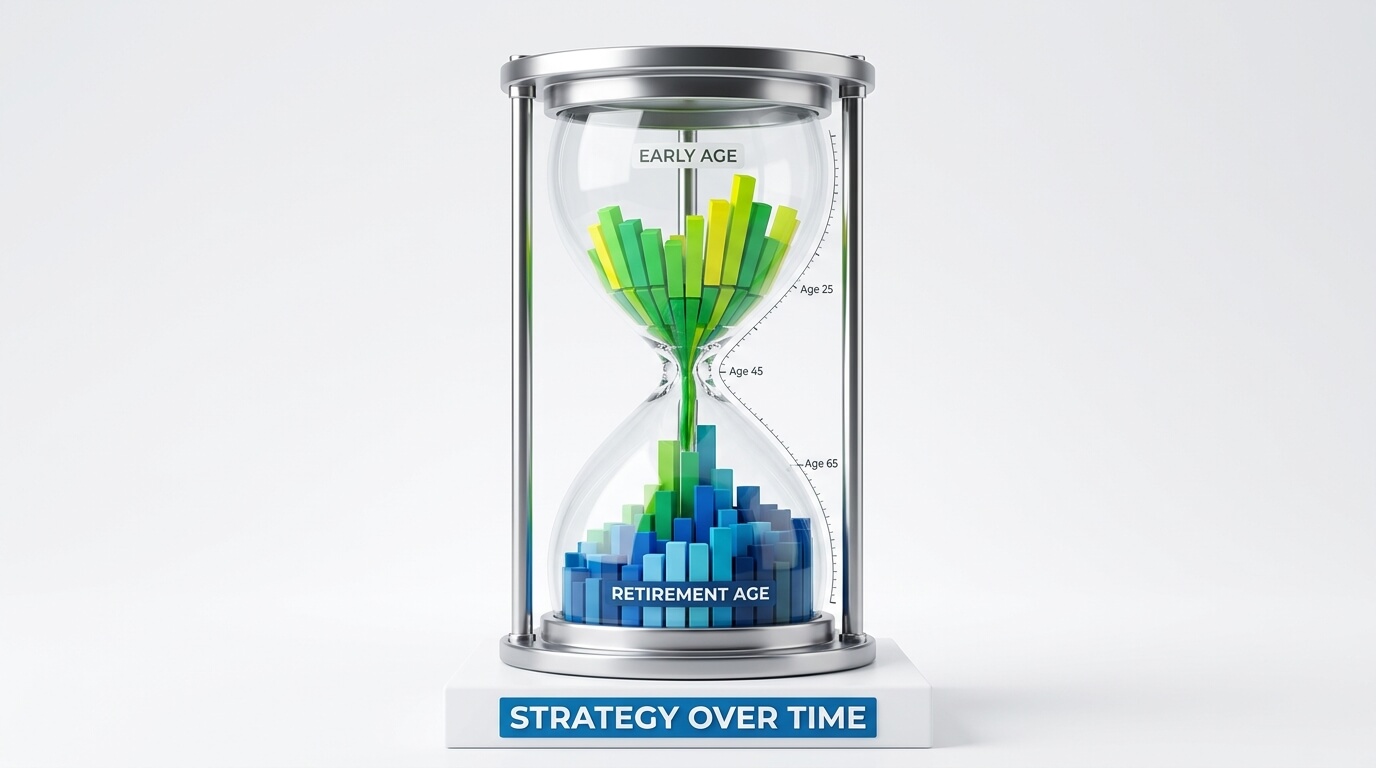
A very common rule of thumb used by many financial professionals is a simple logic called the Rule of 100. While it isn’t a strict law, it helps you visualize how your mix might change as you get older.
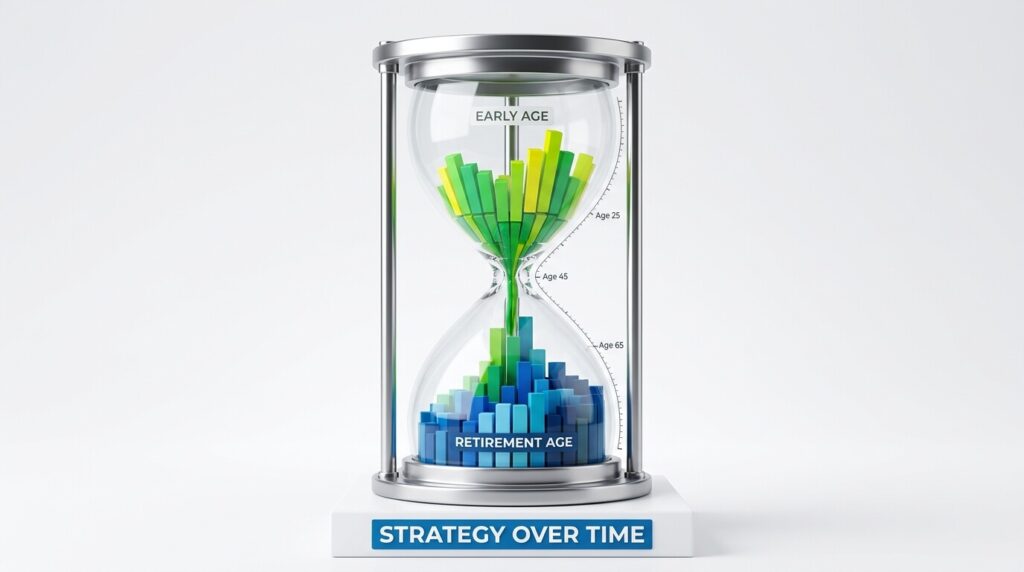
The idea is to take the number 100 and subtract your current age. The result is the percentage of your portfolio that should be in stocks. The rest should be in bonds and cash.
For example, if you are 30 years old, you would subtract 30 from 100. That gives you 70. This logic suggests you might put 70% of your money in stocks and 30% in bonds.
As you get older, say when you reach 60, the math changes. You subtract 60 from 100, leaving you with 40. Now, the logic suggests 40% in stocks and 60% in bonds.
Why does this happen? Because as you get closer to retirement, you have less time to recover from market crashes. You move from “growth mode” to “protection mode.” Again, this is just a starting point. Many people today use 110 or 120 instead of 100 because people are living longer, but the logic remains: youth allows for more risk; age requires more stability.
The danger of the “All or Nothing” approach
One of the biggest mistakes I see beginners make is what I call the “Binary Trap.” They think they are either “in the market” (100% stocks) or “out of the market” (100% cash).
This is a dangerous way to think. If you wait until the news sounds “safe” to get into the market, you have usually already missed the biggest gains. If you wait until a crash starts to get out, you have already taken the losses.
Asset allocation removes the need to “time the market.” If you always have a mix of 60% stocks and 40% bonds, you are always “in.” When stocks are cheap, your 40% in bonds gives you the stability (and sometimes the extra cash) to stay the course. You don’t have to guess what the economy will do next week because your portfolio is designed to handle multiple scenarios at once.
How rebalancing keeps you on track
Let’s say you decided on a mix of 50% stocks and 50% bonds. A year goes by, and the stock market has a fantastic run. Your stocks grew so much that they now represent 70% of your total account value, while your bonds only represent 30%.
On the surface, this looks great—you made money! But your “recipe” is now out of balance. You are now much riskier than you originally wanted to be. If the market crashes tomorrow, you will lose more money than you were prepared for.
This is where rebalancing comes in. Rebalancing is the act of selling a bit of what has grown too much (stocks) and using that money to buy more of what has stayed flat or gone down (bonds).
It sounds counterintuitive to sell your “winners,” but this is actually the secret to “buying low and selling high.” By rebalancing once or twice a year, you are forced to lock in profits from your stocks and reinvest them into safer areas when they are relatively cheaper. It keeps your risk level exactly where you want it.
Real-world examples of Asset Allocation in action
Let’s look at two friends, Sarah and Mike, to see how this works in real life.
Sarah is 28 and just started her first real career. She has a high risk tolerance and doesn’t plan on touching her retirement money for 35 years. She chooses an asset allocation of 90% stocks and 10% bonds. When the market drops, her account balance might look scary, but she doesn’t care because she knows she has decades for it to grow back. Her goal is maximum growth.
Mike is 55 and wants to retire in ten years. He is worried about the economy and wants to make sure his hard-earned savings are there when he stops working. He chooses a mix of 50% stocks, 40% bonds, and 10% in a high-yield cash account. If the stock market drops by half, Mike’s total portfolio might only drop by a much smaller amount because his bonds and cash stay steady. He has traded some potential growth for a lot of peace of mind.
Neither of them is “right” or “wrong.” They just have different needs, and their asset allocation reflects that.
Common pitfalls to avoid
As you start looking at your own accounts, keep an eye out for these “hidden” risks:
- Too much “Home Bias”: Many US investors put 100% of their stock allocation into US companies. While the US market is strong, a good asset allocation often includes some international stocks. This protects you if the US economy goes through a long period of stagnation while other parts of the world thrive.
- Forgetting your Cash: Don’t forget that the money sitting in your checking account is part of your allocation. If you have 50,000 dollars in stocks but 100,000 dollars in a checking account, your portfolio is actually very conservative, even if your “investments” look aggressive.
- Inflation Neglect: If your allocation is 100% bonds and cash because you are afraid of the stock market, you are facing a different kind of risk: the risk that your money won’t buy as much in the future. You need at least a little bit of growth to keep up with the rising cost of living.
The “Set it and Forget it” Solution: Target Date Funds
If all of this sounds like too much work, there is a shortcut that many experts recommend for beginners. Most 401k plans and IRA providers offer something called a Target Date Fund (TDF).
You simply pick the year you plan to retire (for example, Target Date 2055). The fund managers do all the asset allocation and rebalancing for you. When you are young, the fund is mostly stocks. As you get closer to the year 2055, the fund automatically sells stocks and buys more bonds and cash for you. It’s like having a professional chef manage your recipe for your entire life.
Final thoughts for the beginner investor
Building wealth is not about being the smartest person in the room or finding the next “moon shot” stock. It is about discipline and structure. Asset allocation provides that structure. It is the framework that allows you to be an investor instead of a speculator.
When you have a solid mix of assets, you can stop checking the news every five minutes. You can stop worrying about whether the Fed will raise interest rates or if a certain CEO is acting strangely on social media. You know that your “team” has both a strong offense and a strong defense.
Take a look at your accounts this week. Don’t look at the individual stocks or names. Look at the big categories. Are you all in one thing? Or do you have a balanced recipe that can survive any weather? Once you get the mix right, the rest is just a matter of time and patience.
Disclaimer: This content is for educational purposes only and does not constitute financial advice. Market conditions change frequently, and you should always perform your own research or consult with a qualified professional before making investment decisions.