Building an emergency fund is often the very first step in any solid financial plan. It is that “sleep better at night” money that sits waiting for a rainy day, a flat tire, or an unexpected medical bill. But once you have started saving that cash, a big question pops up: where should you actually put it?
You want your money to be safe, you want it to grow a little bit through interest, and most importantly, you want to be able to grab it the moment things go wrong. For most people, the choice comes down to two heavy hitters: savings accounts and money market accounts.

While they might sound like the same thing, they have some “under the hood” differences that could change how you manage your safety net. Let’s break down what money market accounts really are and whether they deserve to hold your hard-earned emergency cash.
Why Your Choice of Account Matters
If you are just starting out, it is easy to think that any bank account is fine as long as the money is there. However, where you park your money affects two things: how fast it grows and how easily you can spend it.
If your money is in a standard checking account, you might spend it on groceries by accident. If it is locked in a long-term investment, you might not be able to get it out when the plumber is standing in your kitchen demanding payment.
The goal for an emergency fund is to find the “sweet spot” between earning interest and staying “liquid,” which is just a fancy way of saying “easy to spend.”
What Is a Savings Account?
A savings account is the most basic tool in the shed. Almost every bank and credit union offers them. They are designed to hold money that you don’t plan to spend on daily coffee or rent.
In a traditional savings account, the bank pays you a small amount of interest for the privilege of holding your money. This year, many people are looking toward high-yield savings accounts (HYSAs), which are usually offered by online banks and pay much higher interest than the big national banks you see on every street corner.
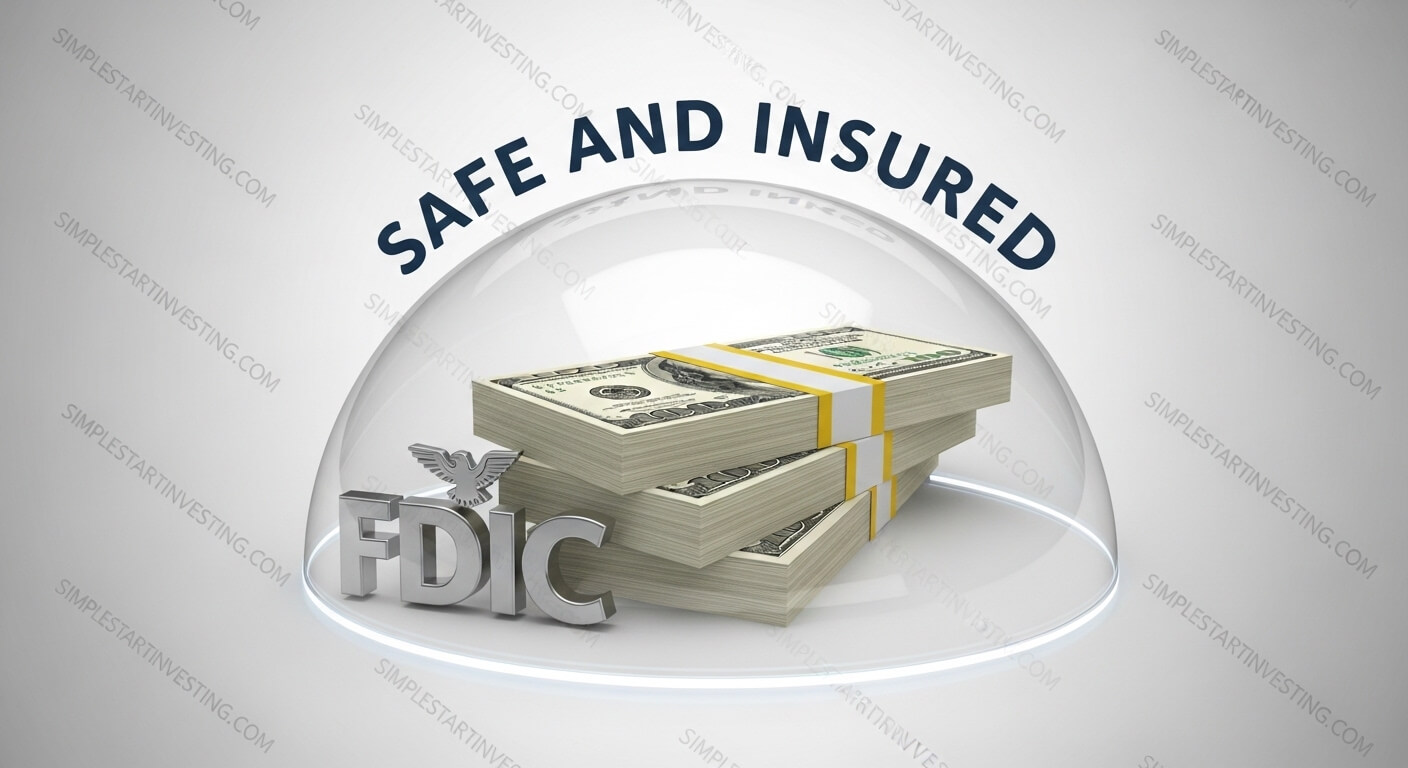
The main job of a savings account is safety. Your money is protected by the federal government up to 250,000 dollars, so even if the bank goes out of business, you won’t lose your savings.
What Exactly Are Money Market Accounts?
This is where things get interesting. A money market account (MMA) is often described as a “hybrid” account. It tries to take the best parts of a checking account and the best parts of a savings account and mash them together.
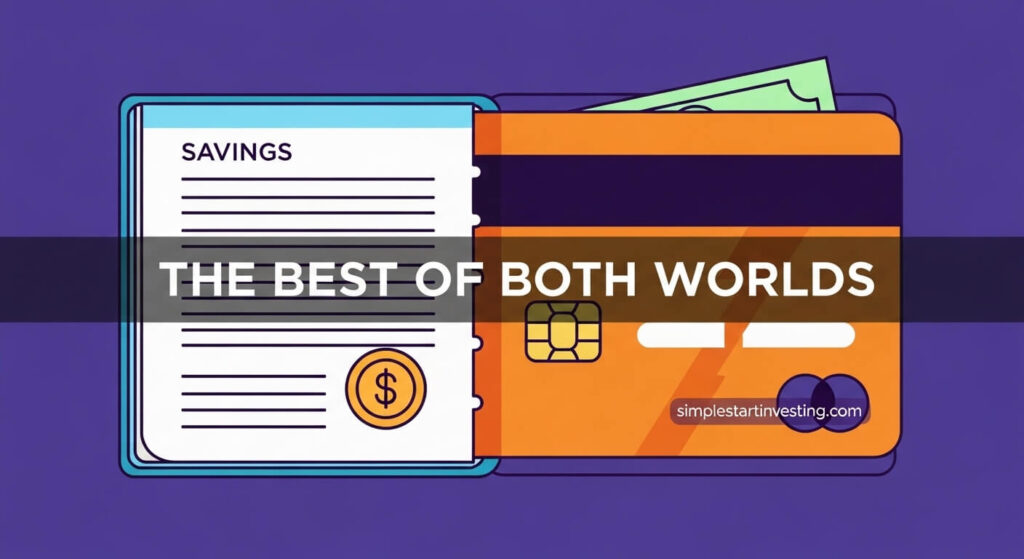
Like a savings account, it pays you interest and is protected by federal insurance. But unlike a basic savings account, a money market account often comes with a debit card or the ability to write checks directly from the account.
Think of it as a “premium” savings account. Because you get those extra features like check-writing, banks sometimes require you to keep a larger amount of money in the account to avoid fees.
The Myth of Risk: Are Money Market Accounts Safe?
One of the biggest hurdles for beginners is the name. When people hear “money market,” they often think of the “stock market.” This leads to a common fear that the money could go down if the economy hits a rough patch.
It is vital to clear this up: a money market account is a bank deposit, not a stock market investment. Your balance does not fluctuate based on the S&P 500. If you put 5,000 dollars in today, you will have at least 5,000 dollars tomorrow, plus whatever interest you earned.
This is different from a “money market fund,” which is an investment product offered by brokerage firms. While money market funds are also very safe, they aren’t the same thing as the bank account we are talking about today.
Comparing the Interest Rates
For a long time, money market accounts almost always paid more interest than savings accounts. In the current market, that line has blurred a bit.
Today, you might find an online high-yield savings account that pays roughly the same, or even slightly more, than a money market account. The “winner” often depends on how much money you are planning to deposit.
Many money market accounts use “tiered” interest rates. This means the bank might pay you a lower rate for the first 1,000 dollars, but a much higher rate if your balance stays above 10,000 dollars. If you are just starting your emergency fund and only have 500 dollars, a standard high-yield savings account might actually earn you more.
Accessibility: How Fast Can You Get Your Cash?
This is the area where money market accounts usually shine. Imagine your car breaks down. If your money is in a savings account, you might have to transfer it to your checking account first, which can take a day or two if you use different banks.
With a money market account, you might be able to simply use the provided debit card at the mechanic or write a check on the spot. That convenience is a huge plus for an emergency fund because emergencies, by definition, don’t give you a two-day heads-up.
However, there is a catch. Federal rules used to strictly limit you to six “convenient” withdrawals per month from these accounts. While those rules have become more flexible recently, many banks still enforce that limit. If you treat your emergency fund like a checking account and swipe the card every day, the bank might charge you a fee or even turn the account into a regular checking account.
The Minimum Balance Hurdle
If there is a “downside” to money market accounts for a beginner, it is the minimum balance requirement.
Many high-yield savings accounts let you open an account with as little as one dollar and don’t charge monthly fees. In contrast, many money market accounts want to see a higher commitment. You might need to keep 2,500 dollars or even 5,000 dollars in the account at all times.
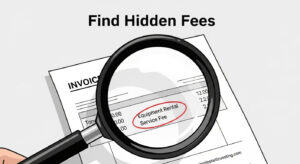
If your balance drops below that line, the bank might hit you with a monthly maintenance fee of 10 or 15 dollars. For someone just starting out, those fees can quickly eat up any interest you were hoping to earn.
Understanding the Math of Interest
Let’s look at how the interest actually works in your favor without getting bogged down in formulas.

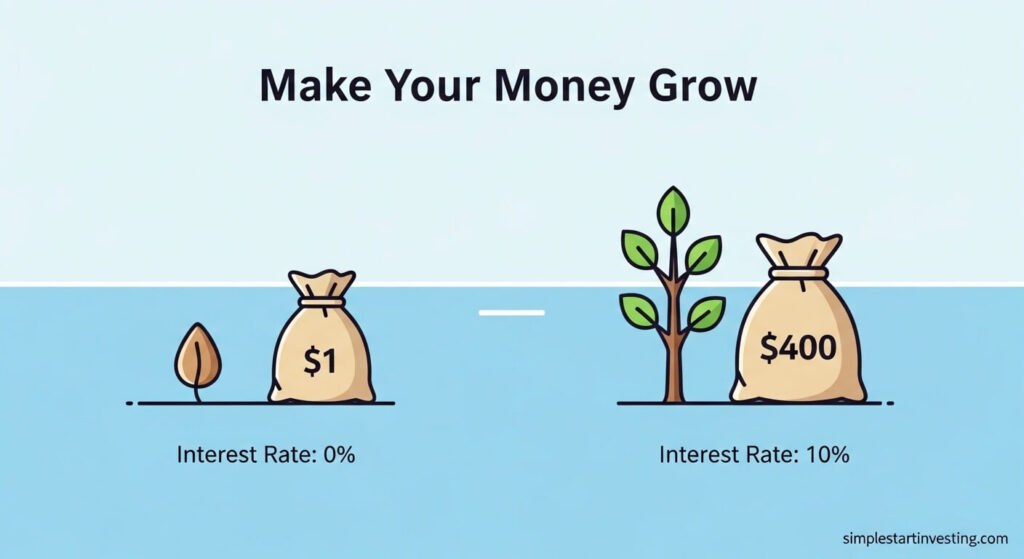
Imagine you have saved 10,000 dollars for your emergency fund. If you leave that money in a traditional savings account at a big national bank, they might pay you a tiny rate, such as 0.01 percent. After a whole year, you would only have earned 1 dollar in interest. That is barely enough for a pack of gum!
Now, imagine you move that same 10,000 dollars into a high-yield savings account or a money market account paying 4 percent. By the end of the year, you would have earned 400 dollars just for letting the money sit there.
That 400 dollars is “free” money that helps your emergency fund keep up with the rising costs of things like groceries and gas. This is why choosing the right account is so important—it’s the difference between earning a piece of gum and earning a new set of tires.
Common Mistakes Beginners Make
One frequent error is choosing an account based solely on the highest advertised interest rate. While the rate matters, the “fine print” matters more.
If an account offers a 5 percent interest rate but charges a 20-dollar monthly fee unless you keep 10,000 dollars in it, and you only have 2,000 dollars, you are losing money. You would pay 240 dollars in fees over a year while only earning about 100 dollars in interest. In this case, you are actually “paying” the bank to hold your money.
Another mistake is not checking the insurance. Always ensure the bank is FDIC-insured (for banks) or NCUA-insured (for credit unions). If they aren’t, your emergency fund isn’t truly safe.
The Psychological Advantage of Separation
Whether you choose a savings account or a money market account, there is a psychological trick that helps many people succeed: keeping the money at a different bank than your everyday checking account.
When your emergency fund is at the same bank where you pay your bills, it’s easy to see that big balance and feel “rich.” You might be tempted to dip into it for a vacation or a new gadget.
By putting your emergency fund in a dedicated money market account at a separate institution, you create a healthy barrier. You can still get the money if you need it, but you aren’t looking at it every time you check your balance to see if you can afford dinner out.
Is an MMA Right for You?
So, back to the main question: are money market accounts better for your emergency fund?
Choose a Money Market Account if:
- You already have a decent amount of cash saved (usually over 2,500 – 5,000 dollars) to meet minimum balance requirements.
- You want the peace of mind of having a debit card or checks attached directly to your emergency cash.
- You found a bank offering a higher rate for MMAs than for their savings accounts.
Stick with a High-Yield Savings Account if:
- You are just starting out and have less than 1,000 dollars.
- You want an account with zero monthly fees and no minimum balance rules.
- You don’t mind waiting a day or two for a transfer if an emergency happens.
How to Get Started
Setting this up is easier than most people think. Most online banks allow you to open an account in about ten minutes from your phone.
- Look for the rate: Check current “Best Money Market Account” lists from reputable financial news sites.
- Read the fee schedule: Look specifically for “Monthly Maintenance Fees” and “Minimum Balance to Avoid Fees.”
- Check for insurance: Look for the FDIC or NCUA logo on the website.
- Link your accounts: Connect your current checking account so you can move your savings over easily.
Final Thoughts on Your Safety Net
An emergency fund isn’t about getting rich; it’s about staying safe. Whether you pick a money market account for its convenience or a high-yield savings account for its simplicity, the most important thing is that the money is there when you need it.
Don’t let the fear of making a “wrong” choice stop you from saving. Both of these options are miles better than leaving your emergency fund in a basic checking account that pays zero interest. Pick the one that fits your current balance today, and remember that you can always move the money later as your “just in case” fund grows.
Knowing that you have a few thousand dollars tucked away in a secure, interest-bearing account is one of the best feelings in the world. It turns a “crisis” into a mere “inconvenience.”
Disclaimer: This content is for educational purposes only and does not constitute financial advice. Interest rates and banking regulations can change, so always verify the current terms with your financial institution before opening an account.