Opening your mail to find a property tax bill can feel a bit like getting a surprise bill after a long dinner. You knew it was coming, but the final number still catches you off guard. For many new homeowners, property taxes are one of those “hidden” costs of the American Dream that rarely get explained in detail during the closing process.
If you are just starting your journey into homeownership or real estate, property taxes for beginners might seem like a maze of jargon and confusing numbers. You might wonder why your neighbor pays less than you, or why your bill went up even though you didn’t renovate your kitchen.
Understanding how these taxes work is the first step toward managing your household budget effectively. It also empowers you to spot mistakes that could be costing you thousands of dollars. Let’s break down the mystery of the property tax bill and see how your home determines that yearly amount.
What Are Property Taxes Anyway?
At its simplest level, a property tax is a “tax on wealth” rather than a tax on what you earn. While the IRS taxes your paycheck, your local government taxes the value of the real estate you own. This money doesn’t go to Washington, D.C.; instead, it stays right in your community.
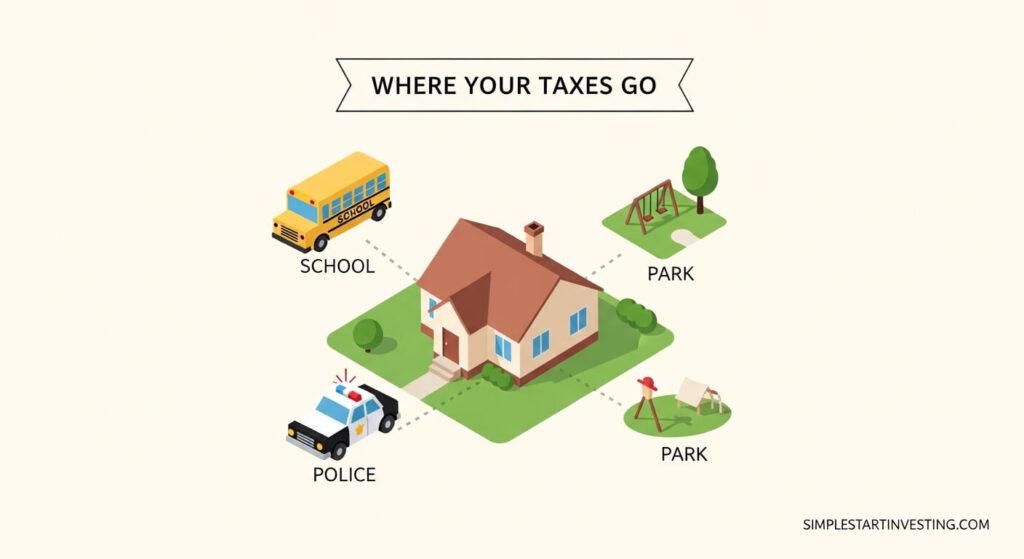
Most of the time, your property tax dollars fund the things you see every day. This includes local public schools, police and fire departments, public libraries, and the maintenance of roads and parks. If you enjoy having a paved street and a working fire hydrant nearby, your property taxes are the subscription fee for those services.
In the United States, property taxes are managed at the local level. This means your county, city, or school district decides the rules. Because of this, two identical houses in different states—or even different zip codes—can have vastly different tax bills.
Who Decides What You Owe?
There are usually two main characters in the story of your tax bill: the Tax Assessor and the Tax Collector. It is important to know the difference because they handle very different parts of the process.
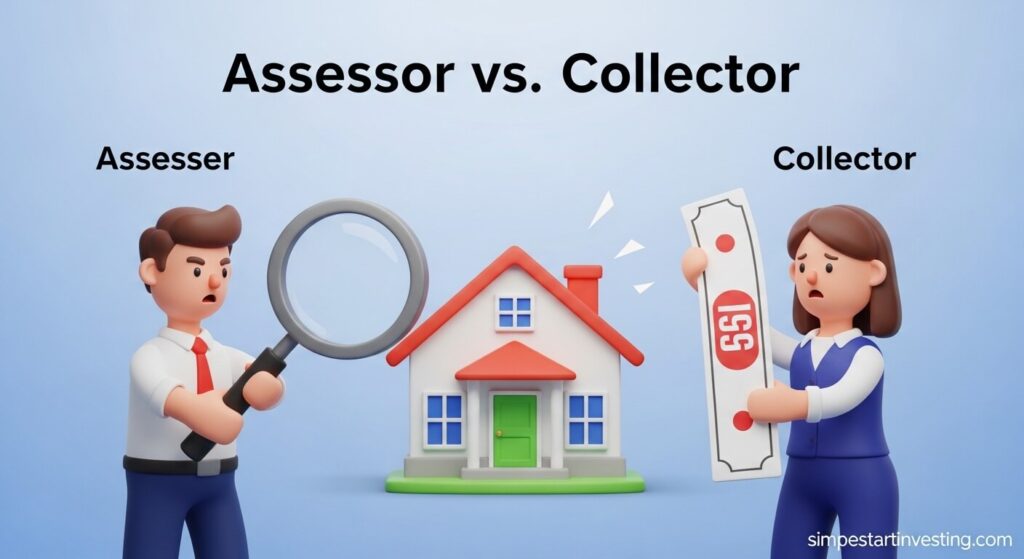
The Tax Assessor is the person (or office) responsible for determining how much your home is worth for tax purposes. They don’t care how much you love your house or how clean it is; they focus on the “taxable value” based on local guidelines.
The Tax Collector is the office that sends the bill and processes your payment. They don’t decide the value of your home; they just apply the rates set by the local government and make sure the money gets into the public treasury.
Market Value vs. Assessed Value: The Big Confusion
One of the most common mistakes beginners make is assuming that “Market Value” and “Assessed Value” are the same thing. They are not, and understanding this distinction can save you a lot of stress.
Market Value is what a buyer would likely pay for your home today. If you see a similar house down the street sell for 500,000 dollars, that gives you an idea of your market value. This number changes constantly based on the economy and how many people want to move into your neighborhood.

Assessed Value is a number created specifically for taxes. Many local governments only tax a percentage of the market value. For example, your county might have a rule that says the “Assessed Value” is only 80% of the market value.
So, if your home is worth 500,000 dollars on the open market, the assessor might only list it at 400,000 dollars on the tax rolls. This is why you shouldn’t panic if your tax assessment is lower than what you think you could sell the house for—that’s actually a good thing for your wallet!
How Your Bill Is Calculated (Without the Scary Math)
You don’t need a degree in finance to understand how your bill is born. It follows a very logical path. Think of it like a three-step recipe.
First, the local government looks at the Assessed Value of your home. As we discussed, this is the official value placed on your property by the county.
Second, they apply the Tax Rate, often called a “millage rate” in many parts of the U.S. Instead of a simple percentage, they often talk in “mills.” One mill represents one dollar of tax for every 1,000 dollars of assessed value.
Finally, they subtract any Exemptions you qualify for. Exemptions are like “coupons” that lower your taxable value. We will dive deeper into those in a moment, but they are the secret weapon for lowering your bill.
For a simple example: If your house is assessed at 300,000 dollars and your total local tax rate is 1%, your basic bill would be 3,000 dollars for the year. If you have a 50,000 dollar exemption, you only pay tax on 250,000 dollars, which brings your bill down to 2,500 dollars.
Why Do Property Taxes Go Up?
It can be frustrating to see your tax bill rise when your salary stays the same. Usually, your bill increases for one of two reasons.
The first reason is that your home value increased. If the neighborhood is booming and the assessor decides your home is worth more this year than last year, your bill will likely go up. Even if the tax “rate” stays the same, applying that rate to a higher home value results in a bigger bill.
The second reason is that the local government raised the tax rate. This often happens through a public vote. If the community decides they want a new high school or better parks, they might vote to increase the tax rate to pay for it. In this case, even if your home value didn’t change, you still owe more money.
It is also worth noting that major home improvements can trigger a tax hike. If you add a bedroom, a swimming pool, or a large deck, you are increasing the value of your property. The next time the assessor checks your records, they will see these improvements and adjust your bill upward.
Common Myths About Property Taxes
When it comes to property taxes for beginners, there is a lot of “backyard fence” advice that is simply wrong. Let’s clear up a few of these myths.
Myth: If I don’t pay, the IRS will come after me. Actually, the IRS handles federal income taxes. Property taxes are local. If you don’t pay, your local county or city will be the ones to take action. This usually involves putting a “lien” on your property, which means you can’t sell it or refinance it until the debt is paid. Eventually, they could even sell the property at a tax auction.
Myth: My taxes will be the same as the previous owner. This is a dangerous trap for new buyers. Some states have laws that “freeze” or limit how much taxes can go up for a long-time owner. When you buy that house, those protections might disappear, and the property is re-assessed at the current market price. Always check what the new tax will be, not just what the current owner is paying.
Myth: I have no say in how much I pay. Many people think the tax bill is a final command that cannot be challenged. In reality, the assessment process is human and prone to errors. You have a legal right to “appeal” your assessment if you think it is unfairly high.
Lowering Your Bill: The Power of Exemptions
Exemptions are the most overlooked part of property taxes. They are designed to provide tax relief to specific groups of people. If you don’t apply for them, the government won’t give them to you automatically.

The most common is the Homestead Exemption. In many states, if the home is your primary residence (not a vacation home or a rental), you can shield a portion of its value from taxes. This can save you hundreds or even thousands of dollars every single year.
There are also specific exemptions for:
- Senior citizens (usually over age 65).
- Military veterans or disabled veterans.
- People with certain disabilities.
- Properties used for agriculture or historical preservation.
Each county has different deadlines and forms for these. As a beginner, your first task after buying a home should be to visit your local Tax Assessor’s website and look for the “Exemptions” section.
How to Appeal Your Property Tax Assessment
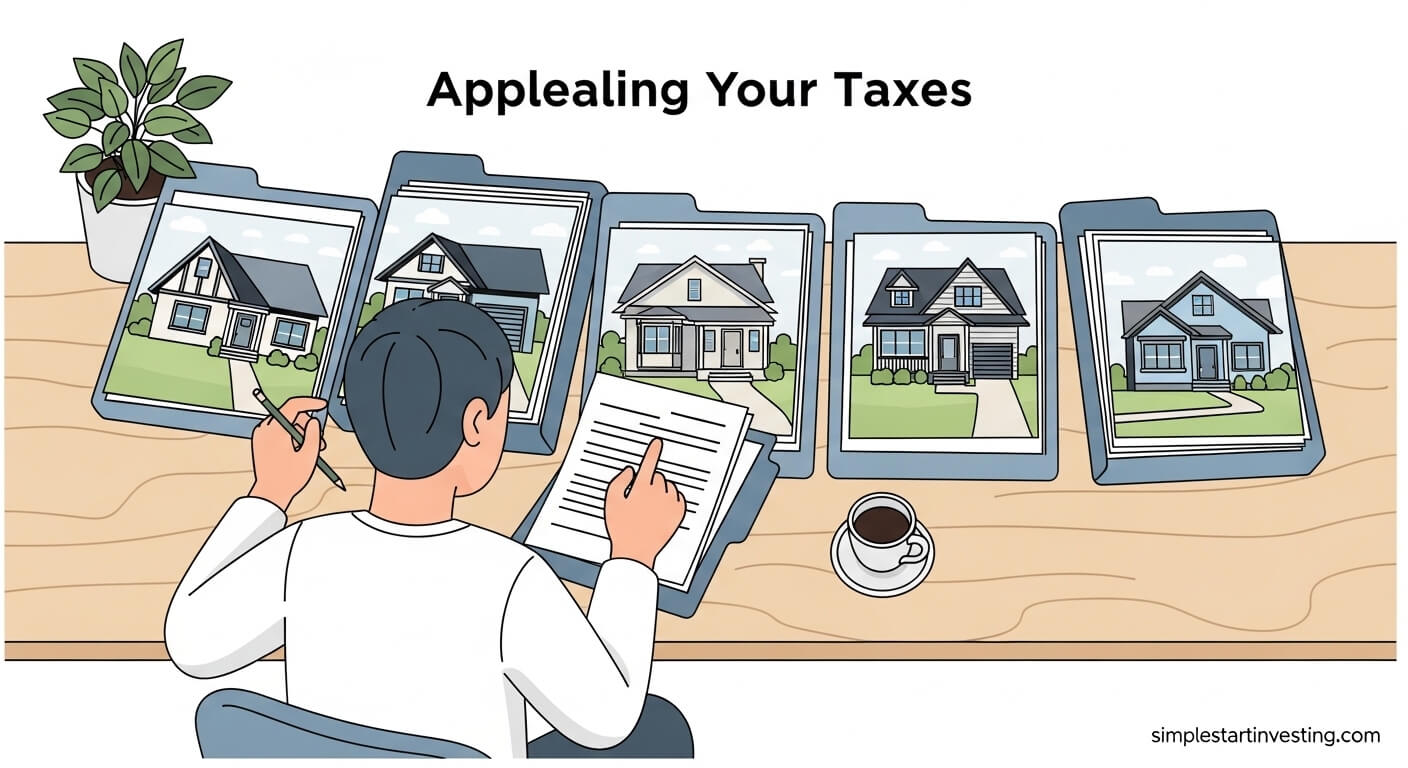
If you receive your assessment notice and the value seems way too high, don’t just complain to your neighbors—take action. Appealing your property tax is a standard process.
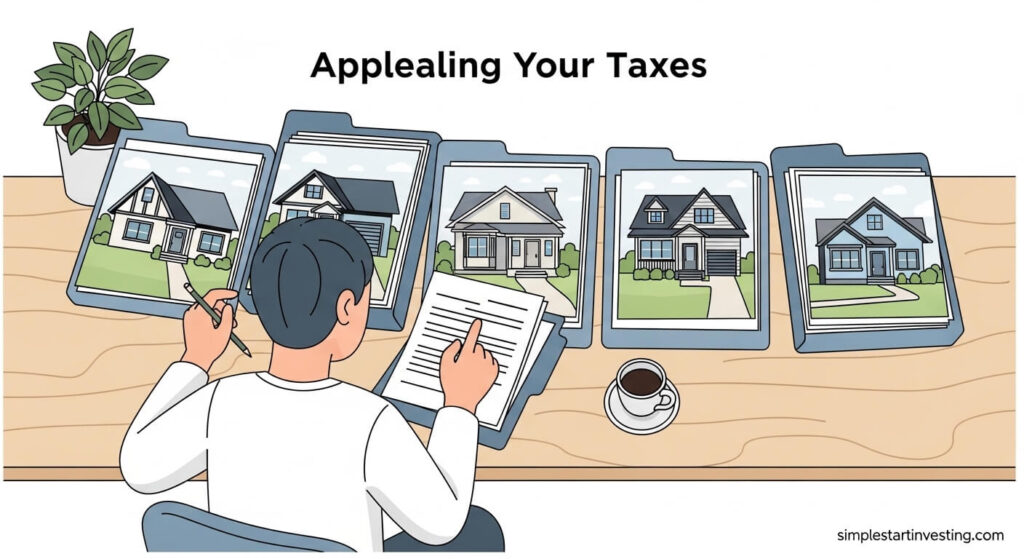
Start by checking your Property Record Card. This is the document the assessor uses to value your home. Does it say you have four bedrooms when you only have three? Does it say you have a finished basement when it’s actually just concrete? Errors in the basic data are the easiest way to win an appeal.
Next, look at Comparable Properties. Find three or four houses in your neighborhood that are similar to yours in size and age. If they are assessed at 350,000 dollars and yours is at 400,000 dollars, you have a strong case that your assessment is unfair.
Keep in mind that there is usually a very short “window” of time to file an appeal—often only 30 to 60 days after you receive your assessment notice. If you miss the deadline, you generally have to wait until the next year.
Understanding the Role of Escrow
For most beginners, you don’t actually write a check to the Tax Collector yourself. Instead, it is handled through an Escrow Account managed by your mortgage company.
Every month, when you pay your mortgage, a portion of that money is set aside in a special “savings account” held by the lender. When your property tax bill arrives at the end of the year, the mortgage company pays it on your behalf using that saved money.

This is convenient, but it can cause your monthly mortgage payment to change. If your property taxes go up, your lender will need to collect more money every month to make sure there is enough in the account to pay the bill. If you see your “mortgage payment” increase, it’s usually not the bank charging you more interest—it’s likely your property taxes or insurance going up.
Why Location Is Everything
In the world of property taxes for beginners, you quickly learn that state lines matter. Some states, like New Jersey or Illinois, are known for having very high property tax rates. Others, like Hawaii or Alabama, have much lower rates.
However, low property taxes don’t always mean a lower cost of living. Often, states with low property taxes might have higher state income taxes or higher sales taxes to make up the difference. When you are looking to move, always look at the “total tax picture” rather than just the property tax bill.
Even within a single state, different school districts will have different needs. A district that just built a state-of-the-art sports complex or a new elementary school will likely have higher property taxes than the neighboring town that hasn’t updated its facilities in decades.
The Cycle of Property Taxes
Property taxes aren’t a one-time event; they are a cycle. It usually looks like this:
- Valuation: The assessor determines the value of all properties in the area.
- Budgeting: The local government decides how much money they need to run the city and schools.
- Rate Setting: They set the tax rate needed to meet that budget based on the total property values.
- Billing: You receive your bill or your escrow account is charged.
- Appeals: Homeowners challenge their values if necessary.
Staying aware of this cycle helps you plan. If you know your city is discussing a major new project, you can expect your taxes might rise in a year or two. If you see home prices in your area falling, you should keep an eye on your assessment to make sure it drops accordingly.
Making Decisions with Taxes in Mind
When you are a beginner, it is easy to focus only on the purchase price of a home. But the property tax is a “forever” cost. Even after you pay off your mortgage 30 years from now, you will still owe property taxes every single year.
Before you buy, use online tools to estimate the taxes for that specific address. Don’t rely on the “estimated taxes” listed on real estate apps like Zillow or Redfin, as they are often just guesses. Go straight to the source: the County Assessor’s website.
Understanding these costs helps you decide how much house you can truly afford. A 2,000 dollar monthly mortgage payment might fit your budget, but if you have to add 500 dollars a month for property taxes, your total “carrying cost” might be too high.
Your Path Forward
Property taxes can be intimidating, but they are manageable once you understand the logic behind them. They are a local investment in your community, and as a homeowner, you have a seat at the table.
By keeping an eye on your assessment, applying for every exemption you deserve, and understanding how your escrow account works, you can take the “surprise” out of that yearly bill. You aren’t just a passive payer; you are an informed property owner who knows exactly where their money is going and how to protect their investment.
Take a few minutes this week to look up your local assessor’s office. See what exemptions are available in your area. You might be surprised to find that a little bit of research can lead to significant savings on your next tax bill.
Disclaimer: This content is for educational purposes only and does not constitute financial or legal advice. Property tax laws vary significantly by location and are subject to change; always verify current regulations with your local taxing authority or a qualified professional.