
Have you ever looked at your investment account, seen the green numbers climbing, and felt that rush of excitement? Maybe you bought a few shares of Apple (AAPL) or Tesla (TSLA) a while back, and now they are worth significantly more than what you paid. That feeling of “winning” is exactly why we invest.
But as the old saying goes, there are two certainties in life: death and taxes. When you eventually decide to sell those shares and lock in your profit, the IRS will be waiting. This is where Capital Gains Tax comes into play. If you are new to investing, the way these taxes work can feel like a maze, but understanding the rules today can save you thousands of dollars tomorrow.
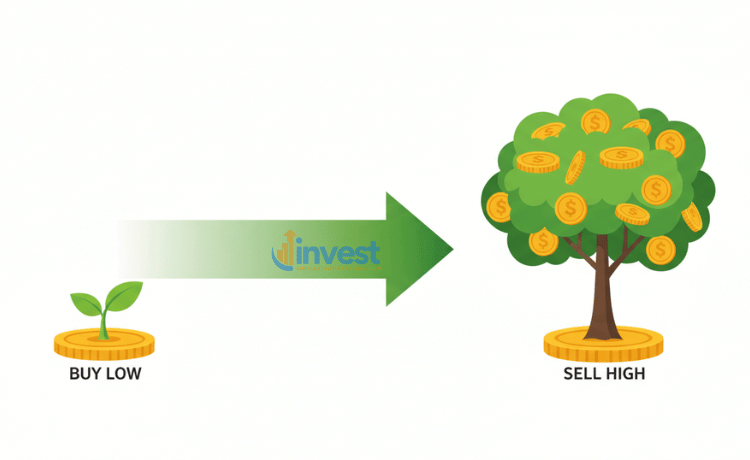
In this guide, we are going to break down everything you need to know about Capital Gains Tax. We will move layer by layer, starting from what it is, why the timing of your sale matters more than the amount of money you make, and how you can keep more of your hard-earned profits in your own pocket.
What Exactly Is Capital Gains Tax?
At its simplest level, Capital Gains Tax is a tax on the profit you make when you sell an asset for more than you originally paid for it. Think of it as the government taking a “success fee” on your smart investment choices.
An asset can be almost anything you own for investment or personal purposes. In the world of finance, this usually refers to stocks, bonds, mutual funds, or even a piece of real estate like a rental property.
The Logic of a Capital Gain
To figure out if you owe this tax, the IRS looks at two numbers: your cost basis and your sale price.
The cost basis is usually just the price you paid to buy the investment, plus any commissions or fees you paid to your broker. The sale price is what you received when you sold it. If the sale price is higher than your cost basis, you have a “gain.” If it is lower, you have a “loss.”
A Real-World Example: Imagine you bought 10 shares of Amazon (AMZN) a few years ago. Let’s say you paid 100 dollars per share, so your total investment was 1,000 dollars. This year, you see that the price has climbed to 150 dollars per share. You decide to sell all 10 shares, receiving a total of 1,500 dollars.
Because you started with 1,000 dollars and ended with 1,500 dollars, you have made a profit of 500 dollars. That 500 dollars is your “capital gain,” and that is the specific portion the IRS wants to tax.
The Beginner’s Trap: The “Paper Profit” Confusion
A very common mistake for new investors is thinking they owe Capital Gains Tax just because their stocks went up in value. They log into their app, see they are “up” 2,000 dollars, and start worrying about how to pay the tax on it.
The Correction: You do not owe a single penny in tax as long as you continue to hold the investment. This is called an unrealized gain. It only exists on paper. The tax only triggers when you actually “realize” the gain by clicking that “Sell” button. Until then, your money can continue to grow tax-free.
The Golden Rule: Timing Is Everything
In the eyes of the IRS, not all profits are created equal. The most important factor in determining how much you pay in Capital Gains Tax is not how much profit you made, but how long you held the asset before selling it.
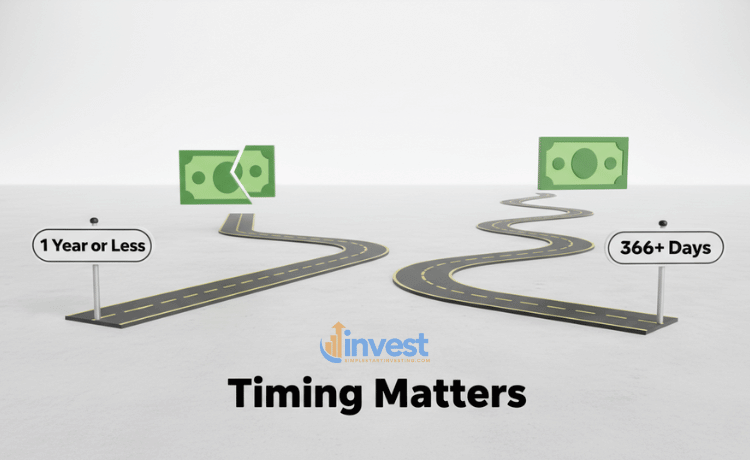
The tax code divides your profits into two distinct buckets: Short-Term and Long-Term.
1. Short-Term Capital Gains (The Expensive Bucket)
If you sell an investment that you owned for one year or less, your profit is considered a short-term capital gain.
The IRS treats this profit exactly like the money you earn at your 9-to-5 job. It is added to your ordinary income and taxed at your regular income tax rate. Depending on how much you earn, this could be as high as 37 percent. For most people, this is the most expensive way to take a profit.
2. Long-Term Capital Gains (The Discount Bucket)
If you hold your investment for more than one year—specifically, 366 days or longer—your profit qualifies for long-term capital gains rates.
The government wants to encourage people to invest for the long haul because it stabilizes the economy. To reward you for your patience, they offer much lower tax rates on these gains. For many people, the long-term rate is significantly lower than their normal income tax rate. In fact, some people pay zero percent.
A Tale of Two Investors: Let’s look at Sarah and Mark. Both of them bought shares of Walmart (WMT) and made a profit of 10,000 dollars.
Sarah got excited and sold her shares after 11 months. Because she didn’t wait a full year, the IRS taxed her 10,000 dollars at her normal income rate of 22 percent. She had to pay 2,200 dollars in taxes.
Mark was patient. He waited 13 months to sell. Because he held for more than a year, he qualified for the long-term rate of 15 percent. He only had to pay 1,500 dollars in taxes. By waiting just two more months, Mark saved 700 dollars.
Understanding the Tax Brackets
Now that you know long-term is better than short-term, you’re probably wondering, “Which rate do I pay?”
The IRS sets the rates for long-term capital gains based on your total taxable income for the year. There are three main tiers: 0 percent, 15 percent, and 20 percent.
The 0 Percent Rate: The Hidden Gem
Many beginners are shocked to learn that you can actually pay zero tax on investment profits. This usually applies to individuals or couples with a lower total income for the year.
For example, this year, if you are a single filer and your total taxable income is below roughly 49,000 dollars, your long-term capital gains tax rate is 0 percent. If you are married and filing together, that limit jumps to nearly 99,000 dollars. This is a massive advantage for retirees or those in a lower income bracket.
The 15 Percent Rate: The Common Ground
Most individual investors in the United States fall into this category. If your income is above the 0 percent threshold but below roughly 545,000 dollars (for singles), you will pay a flat 15 percent on your long-term profits.
The 20 Percent Rate: The High Earners
Only the top earners in the country pay the 20 percent rate. This kicks in once your taxable income goes above those high thresholds mentioned above.
Important Mindset Shift: > New investors often worry that a big capital gain will “push them into a higher tax bracket” and make them pay more tax on their regular salary.
Here is the reality: The Capital Gains Tax is calculated separately from your ordinary income tax rates. While your total income determines which capital gains tier you fall into, your regular paycheck is still taxed at the normal graduated rates. You won’t “lose money” by making a profit; you’ll just pay the designated rate on that specific profit.
Real Estate and Your Home: A Special Rule
When most people think of Capital Gains Tax, they think of the stock market. But your home is also a capital asset. However, the IRS is surprisingly generous when it comes to the place where you live.
If you sell your primary residence (the home you actually live in), you might not owe any tax at all on the profit, thanks to the Section 121 Exclusion.

How it Works:
- If you are single: You can exclude up to 250,000 dollars of profit from your taxes.
- If you are married filing jointly: You can exclude up to 500,000 dollars of profit.
To qualify, you generally must have owned the home and lived in it as your main residence for at least two out of the five years leading up to the sale.
Example: > Suppose you bought a house for 300,000 dollars and lived in it for four years. You sell it today for 500,000 dollars. You made a profit of 200,000 dollars.
Because that profit is less than the 250,000 dollar limit for a single person, you owe zero dollars in Capital Gains Tax. You get to keep the entire 200,000 dollars.
Can You Avoid or Lower This Tax?
Nobody likes paying more tax than necessary. Here are a few legitimate ways investors manage their Capital Gains Tax bill.
1. Tax-Loss Harvesting: Turning Lemons into Lemonade
Sometimes, investments go down. While no one likes seeing red in their portfolio, a loss can actually be useful.
The IRS allows you to use your investment losses to “offset” your gains. If you made 5,000 dollars in profit from selling Apple (AAPL) but lost 3,000 dollars from selling a different stock that didn’t do so well, you only owe tax on the difference, which is 2,000 dollars.
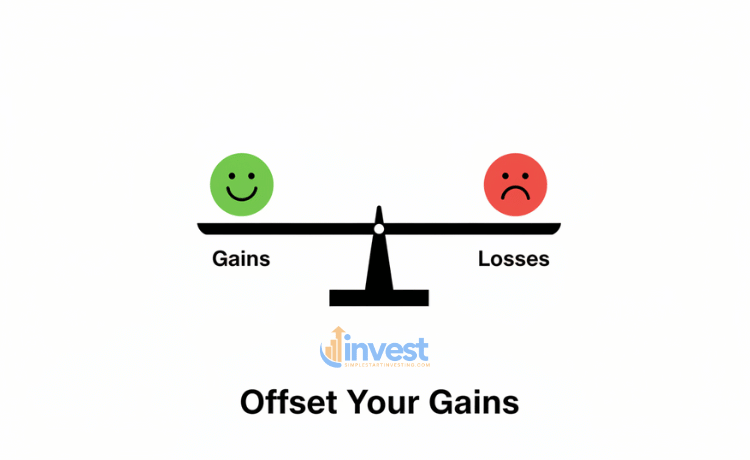
If your total losses for the year are more than your total gains, you can even use up to 3,000 dollars of that extra loss to reduce the tax you owe on your regular job income.
2. Invest Through Retirement Accounts
If you buy and sell stocks inside a 401(k) or a Traditional IRA, you don’t pay any Capital Gains Tax at the time of the sale. The taxes are “deferred” until you take the money out in retirement.
Even better, if you use a Roth IRA, you pay no tax on the gains ever, provided you follow the rules for withdrawals. This is the ultimate way to defeat the Capital Gains Tax.
3. The Power of “Buy and Hold”
The simplest way to manage this tax is to simply not sell. By holding your great companies for years or even decades, you allow your money to compound without the government taking a cut every year. This is how legendary investors like Warren Buffett built their wealth.
Reporting to the IRS: What to Expect
When tax season rolls around, you won’t have to guess how much you made. Your brokerage (like Robinhood, Fidelity, or Charles Schwab) will send you a document called Form 1099-B.
This form lists every sale you made during the year, what you paid for the shares, and what you sold them for. You, or your tax software, will use this information to fill out Schedule D of your tax return.
A common misunderstanding: New investors sometimes think they only need to report their “net” profit. The Truth: You must report every single sale, even the ones where you lost money. The IRS wants to see the whole picture to make sure the math is correct.
Summary Checklist for Beginners
If you are thinking about selling an investment soon, run through this quick mental checklist:
- How long have I held this? If it has been less than a year, can I wait until I hit the 366-day mark to lower my tax rate?
- What is my total income this year? If your income is lower than usual this year, it might be a great time to sell and take advantage of the 0 percent rate.
- Do I have any losses to offset this gain? Check if you have any “losing” stocks you want to get rid of to lower your tax bill.
- Is this in a retirement account? If yes, you don’t need to worry about immediate capital gains taxes!
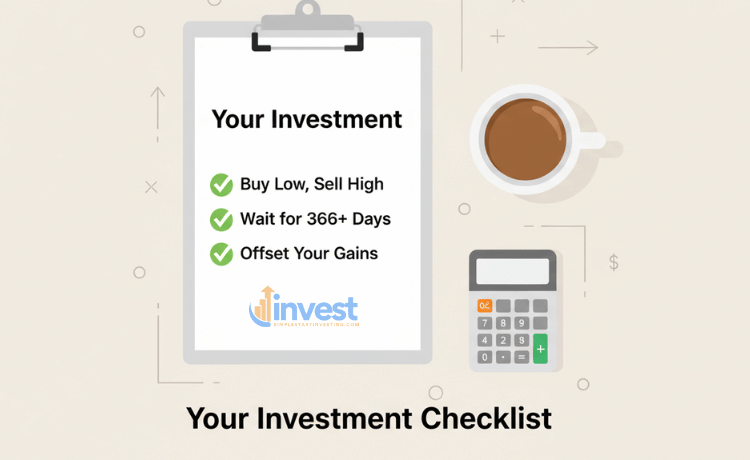
Investing is one of the best ways to build wealth, and understanding Capital Gains Tax is a key part of becoming a sophisticated investor. By being mindful of the clock and the calendar, you can ensure that more of your profits stay where they belong: in your pocket, working for your future.
Note: Tax laws and regulations are subject to change by the IRS and Congress. Always check the most current guidelines or consult with a qualified tax professional before making significant financial decisions.
Disclaimer: This content is for educational purposes only and does not constitute financial or tax advice. Always consult with a professional regarding your specific situation.