
Imagine you and your best friend both land high-paying jobs at the same company, earning the exact same salary. You live in a sun-drenched apartment in Miami, Florida, while your friend resides in a cozy flat in San Francisco, California. When payday hits, you notice something shocking. Your bank account has significantly more money than your friend’s.
Why does this happen? The answer lies in the complex and often confusing world of state income taxes. In the United States, your physical location doesn’t just dictate your commute; it determines how much of your hard-earned money you actually get to keep.
If you are new to the workforce or considering a move, understanding how state income taxes work is one of the most important financial lessons you can learn. It is the silent factor that can make a sixty-thousand-dollar salary feel like fifty thousand, or vice versa.
What Are State Income Taxes Anyway?
To understand state taxes, we first need to look at the “tax bucket” system. In the U.S., most workers pay two main types of income tax. First is the federal income tax, which goes to the IRS to fund national things like the military and social security. This tax is the same regardless of which state you call home.
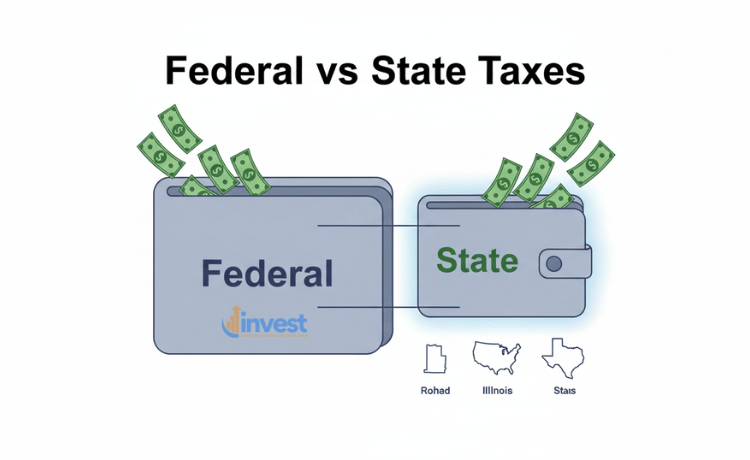
The second type is the state income tax. This is a separate fee collected by the government of the specific state where you live or work. These funds stay local, paying for things like state highways, public universities, and state police.
Think of it like a membership fee for living in a particular state. Some states have very expensive “membership fees,” while others are essentially free. Because each state is its own mini-government, they all have the right to set their own rules.
The Different Flavors of State Income Tax
Not all state income taxes are created equal. Across the country, states generally fall into one of three categories. Understanding which category your state falls into is the first step in planning your personal finances.
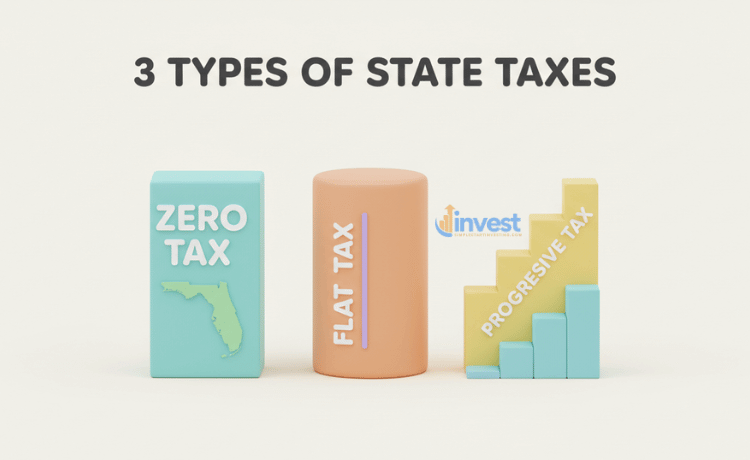
1. No Income Tax States There are a handful of states that have decided not to charge any state income tax at all. If you live and work in one of these states, your “membership fee” for income is zero. These states often fund their budgets through other means, like higher sales taxes or property taxes.
- Examples: Florida, Texas, Nevada, Washington, Wyoming, South Dakota, Tennessee, Alaska, and New Hampshire.
2. Flat Tax States In these states, everyone pays the exact same percentage of their income, no matter how much they earn. Whether you are a part-time barista at Starbucks or a high-level executive at a firm like JP Morgan, the rate remains the same.
- Example: If the state has a 3 percent flat tax, and you earn 100 dollars, you pay 3 dollars. If you earn 1,000 dollars, you pay 30 dollars.
3. Progressive Tax States This is the most common system and mirrors how federal taxes work. In a progressive system, the more money you make, the higher the percentage you pay on your top dollars. These states have “tax brackets.”
- Example: You might pay 2 percent on your first 20,000 dollars, but 5 percent on every dollar you earn above that amount.
The Great Misconception: “I Only Pay Where I Live”
One of the biggest mistakes beginners make is assuming they only owe taxes to the state where their house is located. In reality, the state where you physically perform the work usually gets the first bite of the apple.
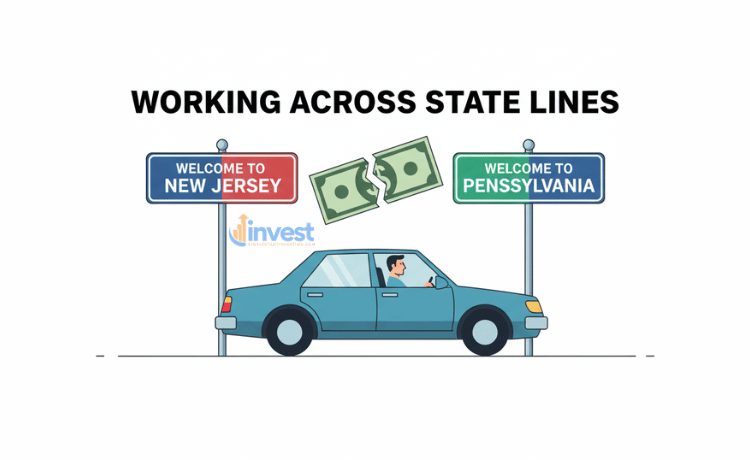
Plain English Explanation: Tax laws are generally based on “nexus” or physical presence. If your feet are on the ground in a specific state while you are working, that state usually wants a cut of the money you earned while you were there.
Real-World Example: Let’s look at a “Super Commuter” scenario. Imagine Mark lives in a quiet suburb in Pennsylvania but drives across the border every day to work at a tech firm in New Jersey. Even though Mark’s bed is in Pennsylvania, New Jersey will tax the income he earned while sitting at his desk in their state.
Common Beginner Mistake: Many people believe that if they live in a “no-tax” state like Florida but work remotely for a company based in New York, they will automatically pay zero state taxes.
The Financial Logic Correction: This is not always true. Some states, like New York, have a “convenience of the employer” rule. If your company is in New York and you are working from Florida just because you want to, New York might still try to tax your income. You must always look at the laws of both the state where you live and the state where your employer is located.
How Remote Work Changed the Game
With the rise of companies like Amazon and Tesla allowing more flexible work arrangements, the question of state income taxes has become even more complicated. If you are a “digital nomad” or a remote worker, you are responsible for knowing which state has a claim on your paycheck.
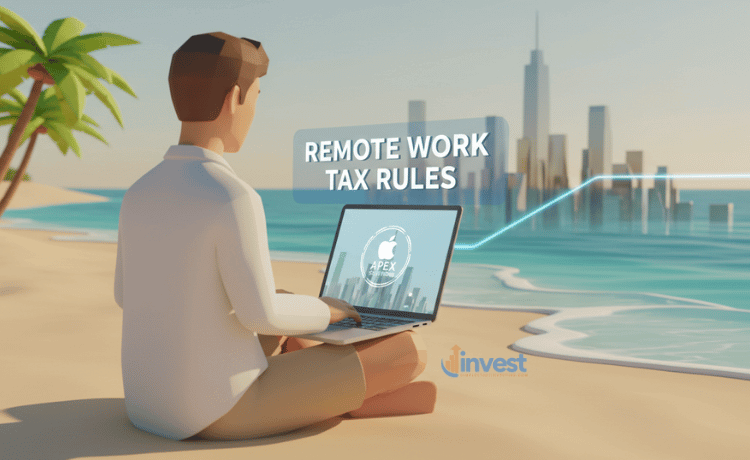
Generally, if you live in one state and work remotely for a company in another, you are a resident of the state where you live. You will report your income there. However, your employer’s state might also have rules. To prevent you from being taxed twice on the same dollar, many states offer something called a “tax credit.”
How a Tax Credit Works (The Simple Version): Imagine you owe 1,000 dollars to the state where you work, and 1,200 dollars to the state where you live. Usually, you pay the 1,000 dollars to the work state first. Then, your home state says, “Since you already paid 1,000 dollars to the other guys, you only owe us the remaining 200 dollars.” You don’t pay 2,200 dollars total; you pay the higher of the two rates.
Reciprocity Agreements: The “Neighborly” Rule
Some states have realized that people crossing borders for work is very common. To make life easier, they sign “Reciprocity Agreements.” This is a fancy way of saying two states have agreed to leave each other’s residents alone.
Plain English Explanation: If two states have a reciprocity agreement, you only pay taxes to the state where you live, regardless of where your office is located.
Real-World Example: Take the DMV area (DC, Maryland, and Virginia). Many people live in Virginia but work for the government or a contractor in Washington D.C. or Maryland. Because these areas have agreements, the worker usually only has to file a tax return in their home state. This simplifies everything and saves you from filing two sets of state paperwork every April.
Common Beginner Mistake: A beginner might think that if there is no agreement, they are being “robbed” by paying two states.
The Financial Logic Correction: As mentioned before, the tax credit system usually prevents double taxation. You aren’t paying double the percentage; you are simply splitting your payment between two different state governments. It’s more of an administrative headache than a double financial penalty.
Does Moving to a “No-Tax” State Save You Money?
This is the golden question for many new investors and retirees. If you see that Texas has no state income tax while California’s top rate is over 13 percent, moving seems like a “no-brainer.” However, the math isn’t always that simple.
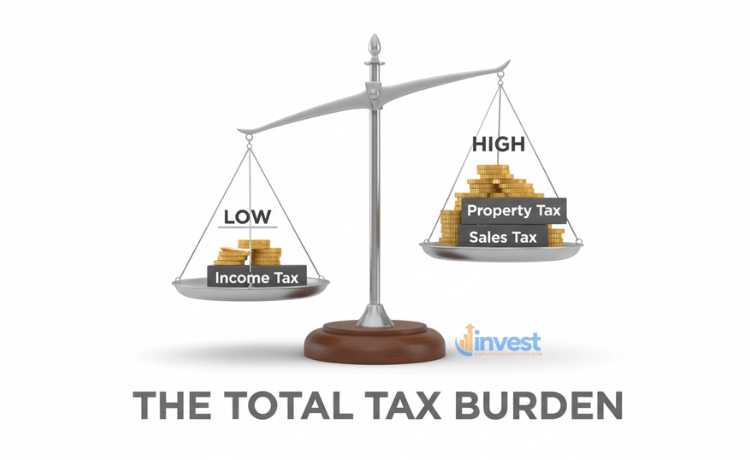
Plain English Explanation: Governments need money to function. If they don’t get it from your paycheck, they will get it from somewhere else. “No-tax” states often have higher costs in other areas to make up the difference.
Real-World Example: New Hampshire has no state income tax. That sounds great! However, New Hampshire has some of the highest property taxes in the entire country. You might save 3,000 dollars on your income tax but end up paying an extra 4,000 dollars a year in taxes on your home.
Similarly, a state like Tennessee has no income tax but has a very high sales tax on groceries and clothes. Every time you buy a pair of jeans or a gallon of milk, the state takes a bigger bite than they would in a state with an income tax.
Common Beginner Mistake: Looking only at the state income taxes rate when deciding where to live or take a job.
The Financial Logic Correction: You must look at the “Total Tax Burden.” This includes income tax, sales tax, and property tax combined. A state with a 4 percent income tax and low property taxes might actually be cheaper for you than a “zero-tax” state with high property costs.
How to Stay Out of Trouble
Tax laws are not suggestions; they are requirements. Failing to properly track which state you owe money to can lead to “back taxes,” interest, and penalties that can wipe out your savings.
- Track Your Days: If you spend a significant amount of time working from a second home or a vacation spot, keep a log. Many states consider you a resident if you spend more than 183 days there.
- Update Your HR Department: If you move, tell your employer immediately. They need to withhold the correct state income taxes from your check so you don’t get a giant bill at the end of the year.
- Check for “Convenience” Rules: If you work remotely, specifically ask if your employer’s state has a “convenience of the employer” rule. This is common in states like New York, Delaware, and Nebraska.
Summary: Your Location is a Financial Choice
When you are starting your financial journey, every dollar counts. Choosing where to live and work is one of the biggest “levers” you can pull to increase your savings rate. By understanding how state income taxes work, you can make an informed decision rather than a lucky guess.
Remember, the goal isn’t necessarily to pay the lowest tax possible, but to get the best value for your life. If you love the amenities of a high-tax state like New York or California, the “membership fee” might be worth it to you. But if you prefer to keep more of your paycheck for investing in stocks like Apple (AAPL) or Tesla (TSLA), a lower-tax state might be your best path to wealth.
Regulations regarding taxes can change every year as state legislatures pass new budgets. Always check current guidelines or consult with a qualified tax professional to ensure you are following the most up-to-date rules for your specific situation.
Disclaimer: This content is for educational purposes only and does not constitute financial or tax advice. Tax laws are subject to change and vary greatly by individual circumstances.