Imagine you are the architect of your own mini-universe. In the center, you have a massive, glowing sun that provides 90 percent of the energy and stability. Around it, a few smaller planets spin, adding variety and excitement. This isn’t just a science lesson; it is exactly how some of the most successful investors on Wall Street build their wealth. This approach is called the Core-Satellite strategy.
If you are new to the world of money, you might feel like you have to choose a side. Should you be a “safe” investor who only buys broad market funds that track the whole economy? Or should you be a “bold” investor who hunts for the next big thing like Tesla or a new AI startup? The Core-Satellite strategy tells you that you do not have to choose. You can have both.
In this guide, we will break down how to build a portfolio that protects your hard-earned cash while still giving you a ticket to the “moon” if one of your favorite stocks takes off.
What is the Core-Satellite Strategy?
At its simplest, the Core-Satellite strategy is a way of organizing your investments into two distinct groups.
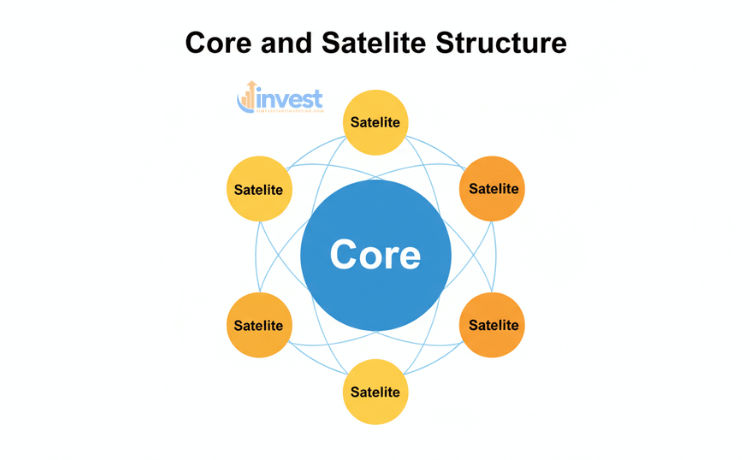
The Core is the foundation. It is usually made up of low-cost, broad index funds that track the entire stock market. Think of this as the “boring” part of your portfolio that slowly but surely grows over decades. Most experts suggest the core should make up about 70 percent to 90 percent of your total money.
The Satellites are the “spices.” These are smaller positions in individual stocks, specific industries (like green energy or cybersecurity), or even alternative assets like gold or digital currencies. These make up the remaining 10 percent to 30 percent.
The 4-Step Breakdown of the Core
- Plain English: The core is your safety net. You aren’t trying to beat the market here; you are trying to be the market.
- Real-World Example: Imagine you put 8,000 dollars into an S&P 500 index fund (like VOO or SPY). This single fund gives you a tiny piece of 500 of the biggest companies in America, from Apple to Walmart.
- Common Mistake: Beginners often think the core is “too slow” and try to make their whole portfolio out of satellites (individual stocks).
- Right Mindset: The core is there so that even if your individual stock picks go to zero, your financial future is still secure because the broad US economy tends to grow over the long term.
Why Every Beginner Needs a “Core”
Why not just pick five great stocks and call it a day? Because even the smartest people in the world get stock picks wrong. In the early 2000s, many people thought General Electric was the safest bet on earth—until it wasn’t.
By having a core made of something like a Total Stock Market ETF (Exchange Traded Fund), you own a piece of everything. If one company fails, it is balanced out by thousands of others that are succeeding.
For 2026, the IRS and SEC continue to emphasize the importance of diversification. With inflation and shifting interest rates, having a broad foundation helps you sleep at night. You don’t have to check the news every five minutes to see if one CEO said something silly on social media.
The Fun Part: Choosing Your Satellites
Now, let’s talk about the satellites. This is where you get to use your intuition and research. Do you believe that Amazon (AMZN) will dominate healthcare? Do you think Nvidia (NVDA) is the only way to play the AI revolution?
Satellites allow you to take “calculated risks.” If you are right, these small investments can “outperform” the market and give your total balance a nice boost. If you are wrong, the damage is limited because they only represent a small slice of your pie.

The 4-Step Breakdown of Satellites
- Plain English: Satellites are your “active” bets. You use them to try and get higher returns than the average investor.
- Real-World Example: You take 1,000 dollars and buy shares of Tesla (TSLA) because you love their new robotics division. If Tesla doubles in price, that 1,000 dollars becomes 2,000 dollars, which helps your overall portfolio grow faster than just the index fund alone.
- Common Mistake: Beginners often “over-weight” their satellites. They might put 50 percent of their money into one trendy stock.
- Right Mindset: Satellites are like the toppings on a pizza. They add flavor, but the crust (the core) is what actually fills you up. Keep your satellites small enough that a “bad day” doesn’t ruin your life.
How to Do the Math (Without a Calculator)
Let’s look at how you would actually set this up with a simple example. Suppose you have saved 10,000 dollars to start your investing journey.
Using an 80/20 Core-Satellite split, here is how the math works:
First, you take 80 percent of your money, which is 8,000 dollars. You put this into a broad index fund. This fund might track the S&P 500 or the Vanguard Total World Stock ETF (VT). This is your “set it and forget it” money.

Next, you have 20 percent left, which is 2,000 dollars. You decide to pick four satellites. You put 500 dollars into each.
- 500 dollars in a Tech Stock (like Apple)
- 500 dollars in an Energy Stock
- 500 dollars in a Dividend Stock (like JPMorgan)
- 500 dollars in a “Wildcard” (like a Bitcoin ETF)
If the broad market grows by 10 percent this year, your 8,000 dollars becomes 8,800 dollars. If one of your satellites (like the Tech Stock) happens to grow by 50 percent, that 500 dollars becomes 750 dollars.
By combining them, you earned more than the average market return, but you did it without risking your entire 10,000 dollars on just one or two companies.
The Danger of the “Inverted” Portfolio
The biggest trap for beginners is accidentally building an Inverted Portfolio. This happens when your satellites become bigger than your core.
Imagine you started with the 80/20 plan above. But then, your “Wildcard” investment triples in value! Suddenly, that small satellite is now worth 4,000 dollars, while your core is still 8,800 dollars. Your “risky” side is now a much larger portion of your total wealth.
If you don’t fix this, you are no longer following a Core-Satellite strategy; you are just gambling on a high-risk asset.
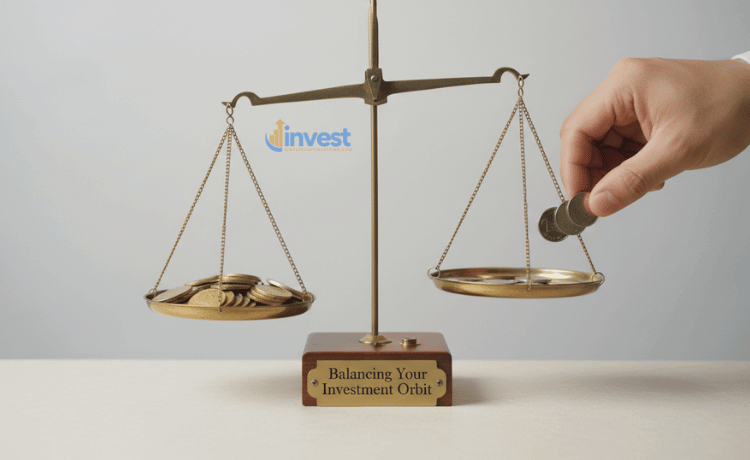
How to Fix a Wonky Orbit (Rebalancing)
- Plain English: Rebalancing is just moving money from your “winners” back into your “foundation” to keep the risk level the same.
- Real-World Example: If your Apple stock grew so much that it now makes up 40 percent of your portfolio, you might sell a little bit of it. You take that profit and buy more of your boring index fund to get back to your original 80/20 goal.
- Common Mistake: People get “greedy” and refuse to sell their winners, even when those winners become too risky for their overall plan.
- Right Mindset: Selling a small part of a winner isn’t “giving up.” It is “locking in” your success and ensuring your foundation stays solid.
Tax Rules You Must Know for 2026
In the United States, how you move money around matters to the IRS. When you sell a satellite stock for a profit, you usually have to pay Capital Gains Tax.
If you hold a stock for less than a year, you pay a higher tax rate (Short-Term). If you hold it for more than a year, you pay a lower rate (Long-Term). As of early 2026, the IRS has adjusted income brackets for inflation, so it is always a good idea to check the current rates for your specific income level.
Also, remember that inside certain accounts like a Roth IRA or a 401(k), you can often trade and rebalance without triggered an immediate tax bill. This makes these accounts “prime real estate” for a Core-Satellite strategy.
Note: Regulations can change; please check current guidelines or consult a professional.
Why This Strategy Wins Emotionally
Investing isn’t just about math; it is about how you feel when the market goes down. Most people quit investing because they get scared.

When you have a Core-Satellite strategy, you have a psychological “buffer.”
- If the market crashes, you know your Core is diversified and will eventually bounce back with the rest of the world.
- If the market is booming and everyone is talking about a hot new stock, you don’t have to feel “FOMO” (Fear Of Missing Out). You can simply use a small piece of your Satellite money to join the party without risking your retirement.
It gives you the discipline of a professional and the excitement of an enthusiast.
Is This Right for You?
The Core-Satellite strategy is perfect for the person who wants to be “mostly safe” but “a little bit adventurous.”
If you are the type of person who enjoys reading business news and following certain companies, the satellite portion gives you a productive outlet for that interest. If you are the type of person who just wants to retire comfortably without checking your account every day, you can make your “Core” 95 percent or even 100 percent.
The beauty of this system is that it grows with you. As you get older and closer to retirement, you might naturally shrink your satellites and grow your core to protect what you have built.
Summary Checklist for Beginners
- Build the Foundation: Start with a broad, low-cost index fund (The Core). Aim for 80 percent of your total investment.
- Pick Your Flavors: Choose 2 to 5 individual stocks or themes you believe in (The Satellites). Keep these to 20 percent or less.
- Check the Orbit: Once or twice a year, look at your percentages. If your satellites have grown too large, move some profit back to the core.
- Watch the Costs: Use a brokerage that offers zero-commission trades for your satellites so that small fees don’t eat your profits.
By keeping your “sun” in the center and your “planets” in check, you are building a financial universe that can withstand almost any market storm.
Disclaimer: This content is for educational purposes only and does not constitute financial advice. Investing involves risk, including the possible loss of principal. Always perform your own research or consult with a qualified financial advisor before making investment decisions.