
If you are working for yourself as a freelancer, a consultant, or running a small business, you have likely realized that the “gold watch” retirement age is a myth of the past. You are the CEO, the marketing department, and the janitor all at once. But there is one role you might be neglecting: the Chief Pension Officer.
While your friends at big corporations like Apple or Walmart might have a human resources department setting up their 401k plans, you have to build your own safety net. This is where the SEP IRA comes into play. It is often described as one of the most powerful and flexible tools for anyone who doesn’t have a traditional boss.
In this guide, we will break down exactly what a SEP IRA is, why it might be the perfect fit for your growing business, and how to avoid the common traps that trip up many new investors.
What Exactly is a SEP IRA?
Let’s start with the name. SEP IRA stands for Simplified Employee Pension Individual Retirement Account. That sounds like a mouthful, but the most important word there is “Simplified.”
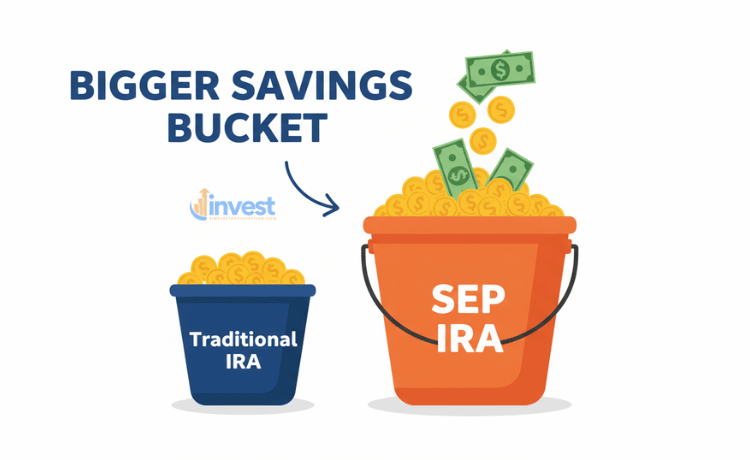
Think of a SEP IRA as a super-charged version of a traditional IRA. While a regular IRA only lets you put away a small amount of money each year, a SEP IRA allows you to save a massive portion of your income. It was designed specifically so that small business owners and self-employed people could have a retirement plan that is easy to set up and cheap to maintain.
A Simple Explanation Imagine you have a bucket for your future self. In a normal retirement account, the government only lets you put a few handfuls of cash into that bucket every year. With a SEP IRA, the government gives you a much bigger bucket and says, “As long as you are the boss, you can fill this up with much more money.”
A Real-World Example Let’s say Sarah is a freelance graphic designer who earns 100,000 dollars a year. If she only used a standard Traditional IRA, she might be limited to saving around 7,000 or 7,500 dollars. But with a SEP IRA, she could potentially put away up to 20,000 dollars or more, depending on her specific business structure. She could then use that money to buy shares of companies she uses every day, like Adobe or Amazon, right inside her account.
Common Misconception Many beginners think that a SEP IRA is only for “real” businesses with offices and employees. They assume that because they are “just a freelancer” or “just an Uber driver,” they aren’t eligible.
The Correct Mindset If you earn 1099 income or have any form of self-employment earnings, you are a business owner in the eyes of the IRS. You don’t need a fancy office or a 50-person team to open a SEP IRA. You just need the desire to save for your future and a little bit of earned income.
The Power of High Contribution Limits
One of the main reasons people choose a SEP IRA over other plans is the high limit on how much you can contribute. For most people, the limit is 25 percent of their compensation.
However, there is a “ceiling” or a maximum dollar amount set by the IRS every year. In the current environment, this limit has climbed to 70,000 dollars or even 72,000 dollars depending on the specific tax year. This is significantly higher than what you can put into a standard IRA.
How the Math Works (In Plain English) If you earn a high income, you can save a lot. If you earn a lower income, you are still limited by that 25 percent rule. For example, if you earn 40,000 dollars in a year, 25 percent of that would be 10,000 dollars. Since 10,000 dollars is much less than the 72,000 dollar maximum, your personal limit for that year would be 10,000 dollars.
A Real-World Example Consider a high-earning consultant who makes 300,000 dollars. Using the 25 percent rule, they might think they can contribute 75,000 dollars. However, because the IRS has a hard cap (for example, 72,000 dollars in 2026), they would be stopped at that cap. They still get to put away a massive amount of money compared to a regular worker.
Common Misconception New investors often think they can contribute to a SEP IRA as both an “employee” and an “employer” to double their limits.
The Correct Mindset In a SEP IRA, only the employer makes the contributions. If you are self-employed, you are the employer. You cannot “double dip” by putting in money as a worker and then putting in more as the boss. The total contribution is capped by the employer limit.
Flexibility: The Secret Weapon for Irregular Income
If you are a freelancer, your income probably looks like a roller coaster. Some months are great, and some months are quiet. The SEP IRA is built for this reality.
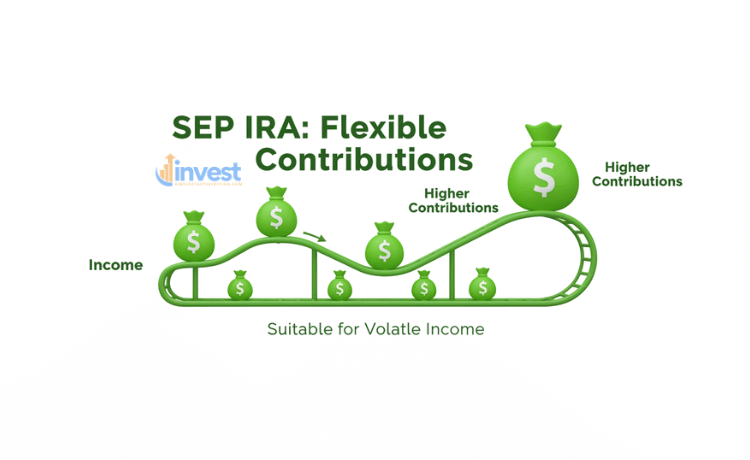
Unlike some other retirement plans that require you to commit to a certain amount every month, the SEP IRA is completely flexible. You are not required to contribute every year.
A Simple Explanation Think of the SEP IRA as an optional savings account. If your business has a fantastic year, you can “feast” and put in the maximum allowed. If the next year is a “famine” and you barely make enough to cover your rent, you can contribute zero dollars. The IRS doesn’t care if you skip a year or ten years.
A Real-World Example Imagine a real estate agent who sells five luxury homes in one year and earns a massive commission. They might put 50,000 dollars into their SEP IRA to lower their tax bill. The following year, the housing market slows down, and they only sell one small condo. They can choose to contribute nothing that year without any penalty or paperwork.
Common Misconception Many people think that once they set a contribution percentage (like 10 percent), they are locked into that percentage forever.
The Correct Mindset You can change your contribution percentage every single year. You can do 20 percent this year, 5 percent next year, and 0 percent the year after. This flexibility is what makes the SEP IRA a favorite for people in volatile industries.
Tax Benefits: Pay Less to the IRS Now
The SEP IRA is a “tax-deferred” account. This means that the money you put into the account reduces your taxable income today.

How it Works (In Plain English) If you earn 80,000 dollars and you put 10,000 dollars into your SEP IRA, the IRS treats you as if you only earned 70,000 dollars. You don’t pay income tax on that 10,000 dollars right now. Instead, that money sits in your account and grows. You only pay taxes on it when you take the money out during retirement, usually after you turn 59 and a half.
A Real-World Example Let’s say you are in a tax bracket where you pay 25 cents for every dollar you earn. By putting 4,000 dollars into a SEP IRA, you effectively “save” 1,000 dollars on your tax bill immediately. That is 1,000 dollars that stays in your pocket (or rather, in your investment account) instead of going to the government.
Common Misconception Beginners often think “tax-deferred” means “tax-free.” They believe they will never have to pay taxes on this money.
The Correct Mindset You are simply pushing the tax bill into the future. The logic is that when you retire, you might be in a lower tax bracket than you are now, so you will pay less in total. Also, by not paying taxes now, you have more money in the account to invest in stocks like Tesla or NVIDIA, allowing your wealth to compound faster.
The “Hidden” Rule: Employees and Equality
This is the part of the SEP IRA that catches many small business owners off guard. If you have employees, you cannot just contribute to your own retirement; you must contribute for them too.
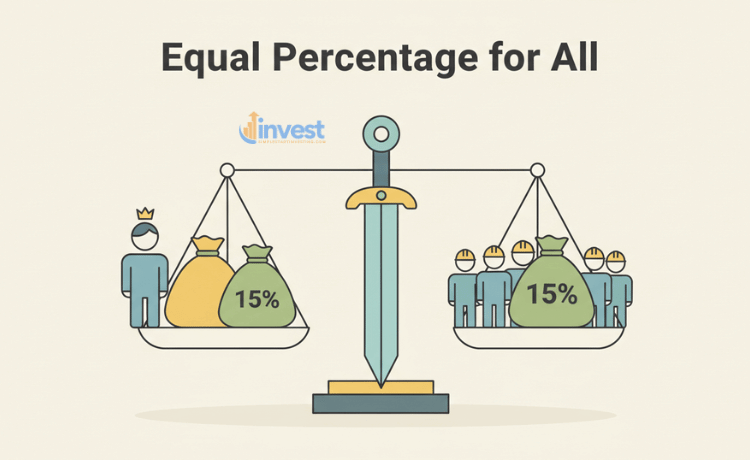
The Proportional Rule (In Plain English) The IRS requires that you contribute the same percentage of salary for every “eligible” employee. If you decide to put 15 percent of your own pay into your SEP IRA, you must also put 15 percent of your employees’ pay into their accounts. This money comes out of your business’s pocket, not the employee’s paycheck.
A Real-World Example Suppose you own a small boutique and you earn 100,000 dollars, while your one employee earns 40,000 dollars. If you want to contribute 10,000 dollars to your own retirement (10 percent), you must also contribute 4,000 dollars to your employee’s retirement (10 percent). You cannot give yourself 20 percent and give them only 5 percent.
Common Misconception Owners often think they can pick and choose which employees get the benefit, perhaps as a reward for the “best” workers.
The Correct Mindset The SEP IRA is an “all or nothing” plan for eligible employees. If you have a lot of employees, a SEP IRA can become very expensive very quickly. This is why this plan is most popular with solo freelancers or very small “mom and pop” shops with few workers.
Who is an “Eligible” Employee?
You don’t have to contribute for every person who walks through your door. The IRS has specific rules about who must be included in the plan. Generally, an employee is eligible if they meet these three criteria:
- They are at least 21 years old.
- They have worked for you in at least 3 of the last 5 years.
- They earned at least a minimum amount of money during the year (usually around 750 to 800 dollars).
A Simple Explanation The IRS wants to make sure you aren’t forced to set up a retirement account for a teenager who helped you move boxes for one weekend. The rules are designed to cover long-term, consistent workers.
A Real-World Example If you hire a college student to help with your social media for one summer and then they move on, you likely don’t have to contribute to a SEP IRA for them. But if that student stays with you for three years, you will eventually have to start making contributions on their behalf if you are making them for yourself.
Common Misconception Some owners think they can bypass this by calling their workers “independent contractors.”
The Correct Mindset The IRS has very strict rules about who is an employee and who is a contractor. If you treat someone like an employee (setting their hours, providing equipment), the IRS will view them as an employee regardless of what you call them. Misclassifying workers to avoid retirement contributions can lead to heavy fines.
Setting Up Your SEP IRA: Step by Step
One of the best things about a SEP IRA is that it is incredibly easy to start. You don’t need a lawyer or a complex plan document.
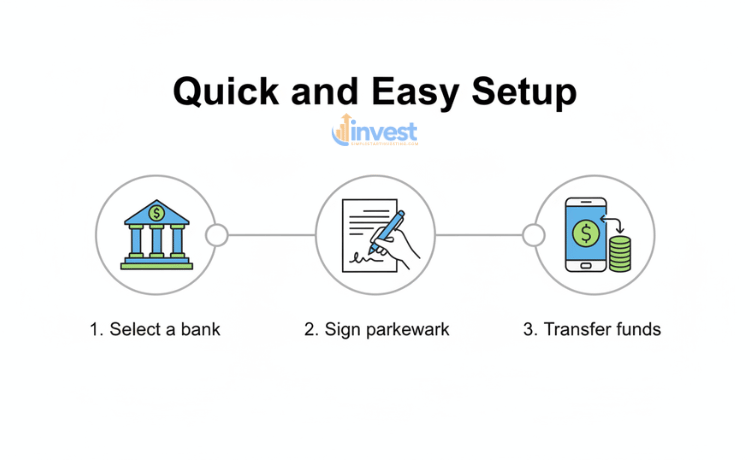
The Setup Process
- Choose a Provider: You can open a SEP IRA at almost any major financial institution, such as Fidelity, Charles Schwab, or Vanguard.
- Fill out Form 5305-SEP: This is a simple one-page document provided by the IRS. You don’t even have to send it to the IRS; you just keep it in your records.
- Open the Account: This is just like opening a bank account.
- Fund the Account: Transfer money from your business bank account into the SEP IRA.
A Real-World Example Imagine a freelance writer named Mark. He decides on a Tuesday that he wants a SEP IRA. He goes to a major broker’s website, clicks “Open an Account,” selects “SEP IRA,” and e-signs the 5305-SEP form. By Wednesday, his account is open, and he can link his business checking account to start investing in a diversified index fund or individual stocks like Costco or Microsoft.
Common Misconception Many people think they have to set up the account by December 31st of the tax year.
The Correct Mindset The SEP IRA is very forgiving. You can set up and fund the account as late as your tax filing deadline, including extensions. If you are filing your taxes in April, or even October with an extension, you can still open a SEP IRA for the previous year. This gives you plenty of time to see exactly how much profit you made before you decide how much to save.
How to Invest Your Money
Once the money is in your SEP IRA, it doesn’t just sit there like a savings account. You have to “put it to work” by choosing investments.
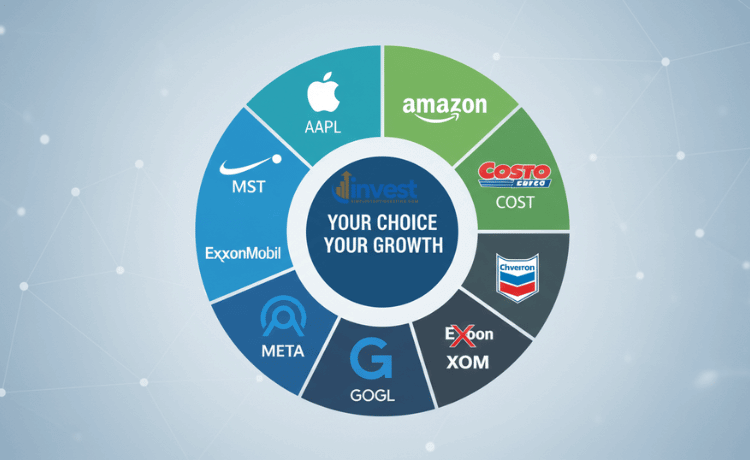
Because a SEP IRA is an individual account, you have total control. You can buy almost anything: stocks, bonds, mutual funds, or Exchange Traded Funds (ETFs).
A Simple Explanation Think of the SEP IRA as the garage, and the investments as the cars. You can park a sensible sedan (a low-risk bond fund) in the garage, or you can park a high-performance sports car (stocks like Apple or Tesla). Most experts suggest a mix of different types of “cars” to ensure you get where you are going safely.
A Real-World Example A 30-year-old freelancer might choose to invest 90 percent of their SEP IRA into an S&P 500 index fund, which holds pieces of the 500 largest companies in America. They are willing to take more risk for higher potential growth over 30 years. Meanwhile, a 60-year-old consultant might put 50 percent of their money into safe government bonds because they need that money very soon and cannot afford a market crash.
Common Misconception Beginners often think the bank or broker manages the money for them automatically.
The Correct Mindset Unless you hire a digital “robo-advisor” or a human financial advisor, the money will stay in cash (earning almost nothing) until you manually select which stocks or funds to buy. Always make sure you actually click the “buy” button after you deposit your money!
SEP IRA vs. Solo 401k: Which is Better?
If you are a solo freelancer with no employees, you might also hear about the “Solo 401k.” Both are great, but they serve different needs.
The Logic Comparison A SEP IRA is much easier to set up and has zero annual paperwork. However, a Solo 401k often allows you to save more money if your income is lower, because it allows “employee” contributions of up to 23,500 dollars (plus the employer portion).
A Real-World Example If you earn only 30,000 dollars, a SEP IRA would only let you save 25 percent (7,500 dollars). A Solo 401k would let you save almost the entire 30,000 dollars. However, the Solo 401k requires more complex paperwork once your balance hits 250,000 dollars.
Common Misconception People think the SEP IRA is always the “best” because it has the word “Simplified” in the name.
The Correct Mindset “Simplified” refers to the paperwork, not necessarily the amount of money you can save. If your goal is to save the absolute maximum amount on a modest income, the Solo 401k might be worth the extra effort. If you want a “set it and forget it” plan with no stress, the SEP IRA wins.
Withdrawing the Money: The Rules of the Exit
Eventually, you will want to use this money. Since the government gave you a tax break to put the money in, they have strict rules about how you take it out.
The Withdrawal Logic (In Plain English) You can generally start taking money out without a penalty once you reach age 59 and a half. Every dollar you take out will be taxed as “ordinary income,” just like a paycheck. If you take the money out before age 59 and a half, the IRS will usually hit you with a 10 percent penalty on top of the regular taxes.
A Real-World Example If you are 40 years old and decide to take 10,000 dollars out of your SEP IRA to buy a new car, you will lose a big chunk of it. You might pay 2,500 dollars in income tax and another 1,000 dollars as a penalty. You would only walk away with 6,500 dollars. It is almost always better to leave the money alone until retirement.
Common Misconception Some beginners believe they can “borrow” from their SEP IRA like people do with a corporate 401k.
The Correct Mindset You cannot take a loan from a SEP IRA. If you take money out, it is considered a permanent withdrawal. There is no “paying yourself back.” This makes the SEP IRA a “one-way street” for your money until you reach retirement age.
Summary of Key Takeaways
- High Limits: You can save up to 25 percent of your income, capped at a high dollar amount like 72,000 dollars.
- Tax Savings: Your contributions reduce your tax bill today, allowing your investments to grow faster.
- Extreme Flexibility: You only contribute when you want to. No mandatory payments.
- Simple Setup: One form, no IRS filing, and you can open it at any major broker.
- Employee Equality: If you have employees, you must treat them the same as yourself.
- Deadline Friendly: You can fund it up until your tax deadline (including extensions).
Choosing a retirement plan is one of the most important “CEO decisions” you will make for your one-person business. The SEP IRA offers a rare combination of high-octane savings power and low-maintenance simplicity. Whether you are just starting your freelance journey or you are a seasoned consultant, this account provides a clear path to building wealth outside of the traditional 9-to-5 world.
Disclaimer: This content is for educational purposes only and does not constitute financial, legal, or tax advice. The rules regarding retirement accounts and tax limits are subject to change by the IRS. Please consult with a qualified tax professional or financial advisor before making any investment decisions.