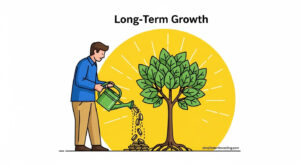
Imagine walking to your mailbox and finding a check for 50 dollars just because you own a piece of a famous company. For many people starting their journey in the markets, this is the ultimate dream of passive income. But when you look at a stock’s profile on a finance app, you will see a percentage called the Dividend Yield.
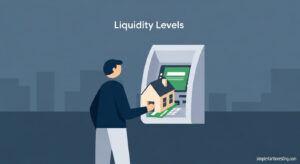
Understanding the Dividend Yield is the first step to turning your stock portfolio into a personal ATM. However, looking at that percentage without context is like looking at the price tag of a car without knowing if it actually runs. In this guide, we will break down exactly what this number means, how it works, and why the biggest number is not always the best one for your wallet.
What Exactly Is Dividend Yield?
At its simplest level, the Dividend Yield is a way to measure how much cash a company pays you relative to its current stock price. Think of it like “cash back” on a credit card. If you spend 100 dollars and get 2 dollars back, that is a 2% cash-back rate. In the stock market, if you buy a share for 100 dollars and the company pays you 2 dollars in dividends over the year, that stock has a 2% yield.
The Plain English Breakdown
A dividend is a portion of a company’s profit that it decides to share with you, the owner. The “yield” is just that payment expressed as a percentage of the stock’s price. It helps you compare different stocks to see which one is giving you more “income” for every dollar you invest.
A Real-World Example
Let’s look at two famous American companies: Coca-Cola (KO) and Apple (AAPL).
- Coca-Cola is a mature company. It doesn’t need to build thousands of new factories every year, so it gives a lot of its profit back to shareholders. Its yield might be around 3%.
- Apple is still spending billions on new technology and research. While it does pay a dividend, its yield might be much lower, like 0.5%.
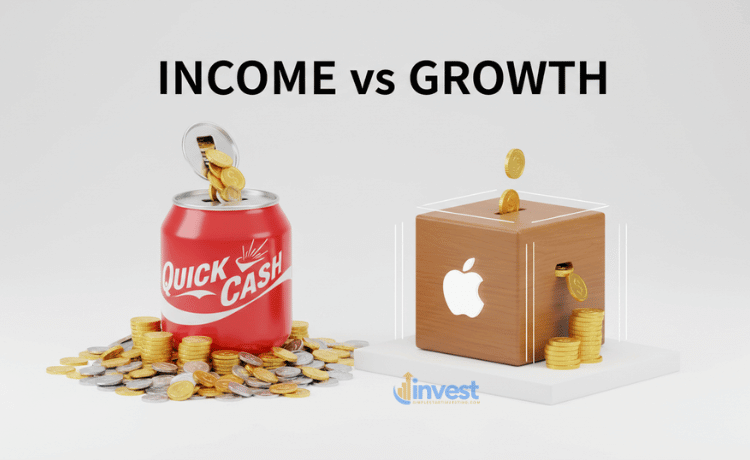
If you invest 1,000 dollars into Coca-Cola, you might expect 30 dollars in cash back over a year. If you put that same 1,000 dollars into Apple, you might only get 5 dollars.
The Common Beginner Mistake
Many new investors see a low yield like 0.5% and think, “That’s not worth it! I want the stock with the 10% yield!” They assume that a higher yield always means a better investment.
The Financial Mindset Shift
The yield is only one part of the story. A high yield can sometimes be a warning sign that the company is in trouble, while a low yield might come from a company that is growing its stock price so fast that the “cash back” is just a tiny bonus.
How to Calculate Your Returns (Without the Math Headaches)
You don’t need to be a math genius to figure out your Dividend Yield. You just need two numbers: the annual dividend payment and the current stock price.
Step-by-Step Logic
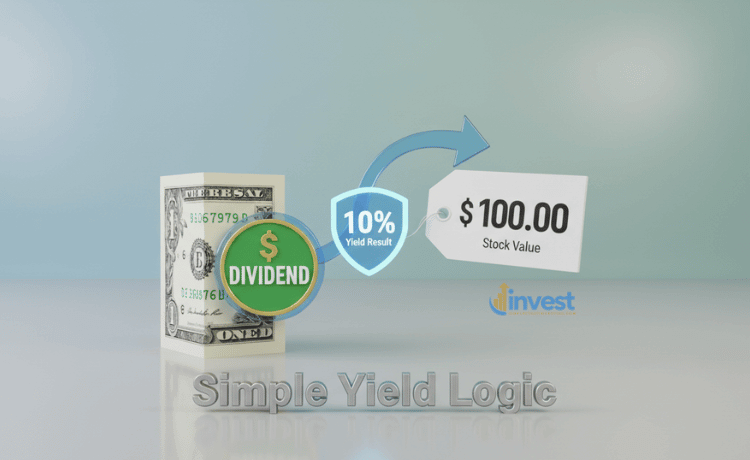
To find the yield, you take the total amount of cash the company pays per share over a full year and compare it to the price you would pay for one share today.
For example, imagine a fictional company called “Big Box Retail.”
- Big Box Retail pays a dividend of 1 dollar every three months.
- That means over a full year, they pay a total of 4 dollars.
- If the stock price for Big Box Retail is currently 100 dollars, you are getting 4 dollars for every 100 dollars you spent.
- In percentage terms, that is a 4% yield.
If the stock price were to drop to 80 dollars but the company still paid that same 4 dollars, the yield would actually go up to 5%. This is because your “entry price” is lower, making the fixed cash payment a larger percentage of your investment.
The “Yield on Cost” Secret
Here is something even more exciting for beginners: Yield on Cost. If you buy a stock today at 100 dollars with a 4% yield, you get 4 dollars. But if you hold that stock for ten years and the company increases its dividend to 10 dollars per year, you are now getting a 10% return on your original 100 dollar investment. This is how long-term investors build massive wealth.
The Seesaw Effect: Why Yield Changes Every Day
One of the most confusing things for new investors is seeing the Dividend Yield change on their app every single day, even when the company hasn’t announced a new payment.
Why It Fluctuates
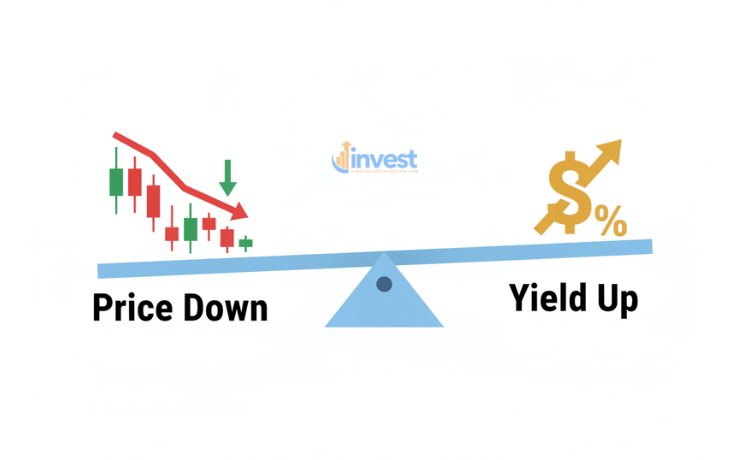
The yield is a calculation based on the current stock price. Because stock prices go up and down like a seesaw every second the market is open, the yield moves in the opposite direction.
- When the stock price goes UP, the yield goes DOWN.
- When the stock price goes DOWN, the yield goes UP.
A Simple Example
Imagine you are looking at Walmart (WMT). If the stock is 160 dollars and pays a 2 dollar dividend, the yield is 1.25%. If the stock price jumps to 200 dollars tomorrow because of great news, that 2 dollar dividend is now only a 1% yield for someone buying in at the new, higher price.
The Beginner Misconception
Newbies often think that if the yield is rising, the company is “paying more.” In reality, a rising yield usually means the stock price is falling.
The Financial Logic
You must separate the “Dividend Payment” (the actual cash) from the “Dividend Yield” (the percentage). The payment usually stays the same for months or years, but the yield changes every time a trade happens on Wall Street.
Beware of the “Dividend Trap”
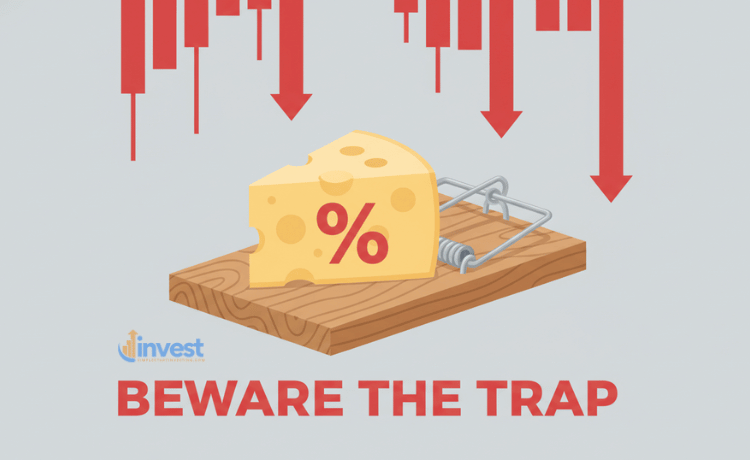
This is the most important lesson for anyone looking for passive income. A high Dividend Yield can be a siren song that leads your portfolio into the rocks. This is known in the industry as a Dividend Trap.
How the Trap Works
Imagine a company whose business is failing. Let’s say it’s an old department store that no one visits anymore. Its stock price crashes from 100 dollars down to 20 dollars. If they were paying a 5 dollar dividend, their yield suddenly looks like a massive 25%!
A beginner might look at that 25% and think they found a gold mine. But a professional looks at that and realizes the company is likely about to run out of money. Soon, the company will “cut” or “suspend” the dividend to save cash, and that 25% yield will disappear, leaving the investor with a crashed stock and zero income.
Real-World Risk
In the US market, companies like AT&T (T) or certain Real Estate Investment Trusts (REITs) sometimes have very high yields. While some are safe, others are high because investors are worried about the company’s future.
The Mindset Shift
Don’t just look for the highest yield. Look for a “sustainable” yield. In the US market, a yield between 2% and 5% is often considered a “sweet spot” for many stable companies. Anything over 8% or 10% requires a very deep look into the company’s health.
IRS Rules: Not All Dividends Are Taxed the Same
When you receive your “cash back” from stocks, the IRS wants a piece of it. However, the US tax code treats different dividends differently. This is a crucial part of understanding your actual “take-home” Dividend Yield.
Qualified vs. Ordinary Dividends
- Qualified Dividends: These are the “good” ones. They come from most US corporations (like JPMorgan Chase (JPM) or Walmart) that you have held for a certain amount of time. They are taxed at a lower rate, similar to long-term capital gains. For many people, this tax rate might even be 0% or 15% depending on their total income for the year.
- Ordinary (Non-Qualified) Dividends: These are taxed just like your salary or wages. This means you could pay much more in taxes on these payments. Many specialized investments, like certain REITs or fast-turnaround stocks, fall into this category.
The Holding Period Rule
To get that lower tax rate on your Dividend Yield, the IRS generally requires you to hold the stock for more than 60 days. You can’t just buy the stock one day before the dividend is paid and sell it the next day to get the tax break.
Note: Tax regulations can change; please check current IRS guidance or consult a tax professional for your specific situation.
Total Return: The Big Picture
The biggest mistake a beginner can make is focusing only on the Dividend Yield and ignoring the stock price. This is called “Yield Chasing.”
The Logic of Total Return
Your “Total Return” is your Dividend Yield PLUS the change in the stock price.
- Scenario A: You buy a stock with a 10% yield, but the stock price drops by 15% over the year. You are actually losing 5% of your money.
- Scenario B: You buy a stock with a 1% yield (like Mastercard (MA)), but the stock price grows by 20% over the year. You are up 21% in total.
Which one would you rather have?
Most beginners choose Scenario A because they love seeing the cash hit their account. Successful investors usually prefer Scenario B because their overall wealth is growing much faster.
The Proper Strategy
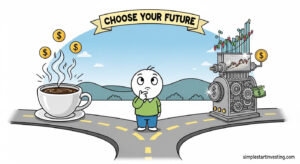
Use the Dividend Yield as a tool to help you reach your goals. If you are 25 years old, you might care less about yield and more about growth. If you are 65 and retiring, you might need that high yield to pay your monthly bills.
Summary Checklist for Beginners
Before you buy a stock for its Dividend Yield, ask yourself these four questions:
- Is the yield too good to be true? If it’s significantly higher than other companies in the same industry, it might be a trap.
- Is the stock price stable? Remember the seesaw—a falling price makes the yield look artificially high.
- Does the company have a history of paying? Look for “Dividend Aristocrats”—companies in the S&P 500 that have increased their dividends for at least 25 consecutive years.
- Is it a qualified dividend? Check how it will affect your taxes at the end of the year.
By focusing on these factors, you can build a portfolio that provides steady, reliable income that grows over time, rather than chasing “empty” percentages that might disappear tomorrow.
Disclaimer: This content is for educational purposes only and does not constitute financial, legal, or tax advice. Investing involves risk, including the potential loss of principal. Always conduct your own research or consult with a qualified financial advisor before making investment decisions.