Do you ever feel like managing your money is a second full-time job? Between remembering when the electric bill is due, checking if you have enough for groceries, and wondering if you should finally open that retirement account, the mental load is heavy. It is no wonder that many people simply freeze and do nothing. But what if you could take the “human error” out of the equation?
The secret to building wealth without the stress is to automate your finances. When you set up a system that moves your money for you, you stop being a manual laborer for your bank account and start being the CEO of your life. This guide will show you exactly how to build a “set it and forget it” system that works in the background while you sleep, eat, or work.
What Does It Mean to Automate Your Finances?
At its heart, to automate your finances means setting up a series of recurring electronic transfers that move your money to the right places automatically. Think of it like a series of pipes. Your paycheck flows into the main tank, and then smaller pipes immediately carry that water to your “Savings,” “Bills,” and “Investing” buckets before you even have a chance to touch it.
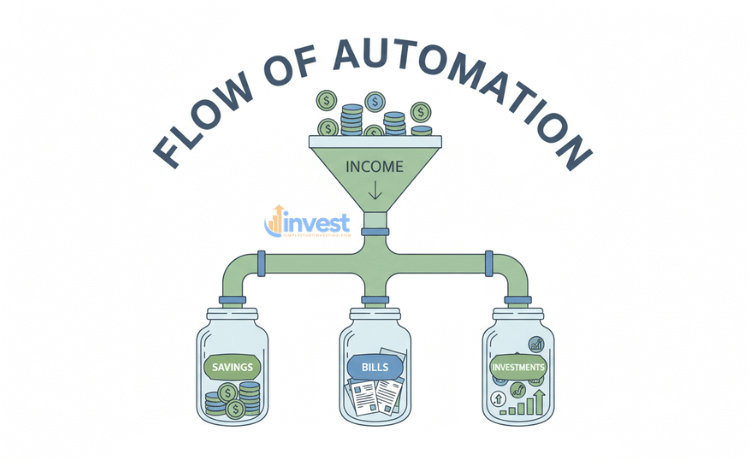
This system is powerful because it removes the need for willpower. Most people try to save what is “left over” at the end of the month, but usually, there is nothing left. Automation ensures that your future self gets paid before you spend a single dime on a latte or a new pair of shoes.
The Pay Yourself First Strategy
This is the golden rule of personal finance. Instead of paying your landlord, the grocery store, and Netflix first, you pay your future self first.
- Simple Explanation: You set up an automatic transfer so that a portion of your paycheck goes directly into a savings or investment account the same day you get paid.
- Real-World Example: Imagine you work at a company like Walmart or Amazon. When your 2,000-dollar paycheck hits your account on Friday morning, your bank immediately moves 200 dollars into a high-yield savings account. You never “see” that money in your spending account, so you don’t miss it.
- Common Mistake: Beginners often wait until the end of the month to see how much money they have left to save. They think, “If I have 100 dollars left on the 30th, I’ll move it to savings.”
- Mindset Correction: Flip the script. If you save first, you can spend the rest of your money with zero guilt because you know your goals are already being met.

Step 1: Mastering Your Direct Deposit
The foundation of a hands-off financial life starts at your job. Most US employers allow you to split your direct deposit into multiple bank accounts. This is the ultimate “set it and forget it” move.
Splitting the Stream
Instead of sending 100 percent of your check to one checking account, ask your HR department (or use your payroll portal) to split it. You might send 80 percent to your checking account for daily spending and 20 percent directly to a separate savings account at a different bank.
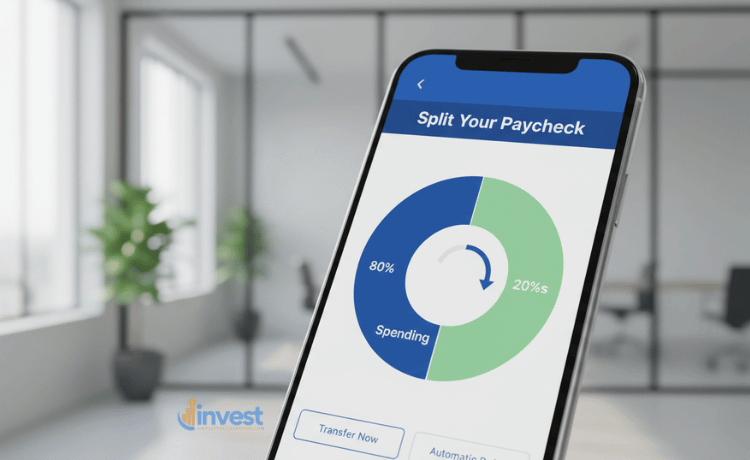
- Simple Explanation: Using your employer’s payroll system to divide your money before it even reaches your main bank account.
- Real-World Example: Let’s say you receive 3,000 dollars a month. You set your payroll to send 500 dollars to an online bank like Ally or Marcus and the remaining 2,500 dollars to your local Chase or Bank of America account.
- Common Mistake: Keeping all your money in one account. When you see a large balance in your checking account, you are much more likely to spend it on “wants” because you feel “rich.”
- Mindset Correction: Out of sight, out of mind. By moving your savings to a different bank, you create a “friction” that makes it harder to spend that money impulsively.
Step 2: Automating Your Retirement Growth
If you want to retire one day, you cannot rely on your memory to invest. You need to automate your finances within your retirement accounts. This is where the magic of compound growth happens.
The 401(k) Machine
If your employer offers a 401(k), this is the easiest place to start. The money is taken out of your check “pre-tax,” meaning you don’t even pay taxes on that portion of your income today.
- Simple Explanation: A retirement plan through your work where contributions happen automatically before you get your paycheck.
- Real-World Example: If you earn 5,000 dollars a month and contribute 10 percent to your 401(k), 500 dollars goes into your retirement fund automatically. This year, the IRS allows you to put up to 24,500 dollars into a 401(k). If your employer matches your contribution, that is basically free money.
- Common Mistake: Setting the contribution but forgetting to actually invest the money. Some plans put your money into a “settlement fund” that earns almost zero interest.
- Mindset Correction: Your 401(k) is not just a savings account; it is an investment engine. Ensure your “automated” contributions are being used to buy low-cost index funds or target-date funds.
The Automatic IRA
If you don’t have a 401(k), or if you want to save even more, you can use an Individual Retirement Account (IRA). You can set up a recurring transfer from your bank to a brokerage like Vanguard or Fidelity.
- Simple Explanation: A personal retirement account that you control. You tell the brokerage to pull a specific amount from your bank account every month.
- Real-World Example: You set up a transfer of 625 dollars every month to your Roth IRA. Over 12 months, this adds up to 7,500 dollars, which is the current annual limit for individuals under age 50.
- Common Mistake: Thinking you need a lot of money to start. Many brokerages allow you to start with as little as 10 dollars or 50 dollars a month.
- Mindset Correction: Consistency beats intensity. It is better to automate 50 dollars a month starting today than to wait until you have 5,000 dollars to invest “someday.”
Step 3: Killing the “Late Fee” Demon
Late fees are a tax on the disorganized. When you automate your finances, you ensure that the companies you owe money to get paid on time, every time, without you having to log into five different websites.
Auto-Pay for Utilities and Rent
Most service providers, from AT&T to your local electric company, offer an auto-pay discount. They want you to automate because it ensures they get paid.
- Simple Explanation: Giving a company permission to pull the amount due from your bank account or credit card on the due date.
- Real-World Example: You link your Netflix and T-Mobile bills to your credit card for auto-pay. You then set your credit card to auto-pay the “full statement balance” from your checking account.
- Common Mistake: Only paying the “minimum amount” on credit cards through auto-pay. This leads to massive interest charges that can swallow your progress.
- Mindset Correction: Always set credit card auto-pay to the “Full Statement Balance.” If you cannot afford to pay the full balance, you are spending more than you earn, and automation will only highlight that problem faster.
Step 4: The Emergency Fund Safety Net
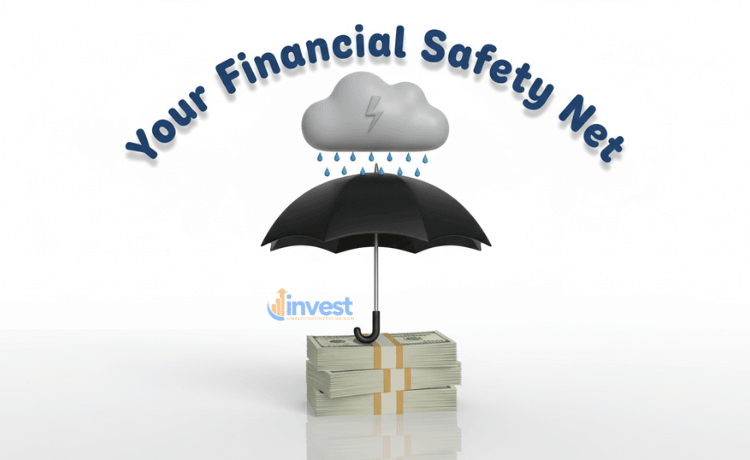
Life happens. Tires pop, pipes leak, and jobs can be lost. An emergency fund is the “shock absorber” of your financial life. Automation makes building this fund painless.
The Automatic Buffer
Instead of waiting for a “good month” to save for emergencies, treat your emergency fund like a bill you owe to yourself.
- Simple Explanation: A dedicated savings account that you fund automatically until you have 3 to 6 months of living expenses saved up.
- Real-World Example: You set up a recurring transfer of 100 dollars every Monday to a High-Yield Savings Account (HYSA). By the end of the year, you have over 5,000 dollars saved without ever making a “decision” to save.
- Common Mistake: Dipping into the emergency fund for “non-emergencies” like a flash sale at Costco or a vacation.
- Mindset Correction: An emergency fund is insurance, not an investment. Its job is not to make you rich; its job is to keep you from becoming poor when things go wrong.
The “Ostrich Effect”: Why You Can’t Completely Disappear
While the goal is to “set it and forget it,” you shouldn’t put your head in the sand like an ostrich. A completely automated system still needs a “pilot” to check the gauges once a month.
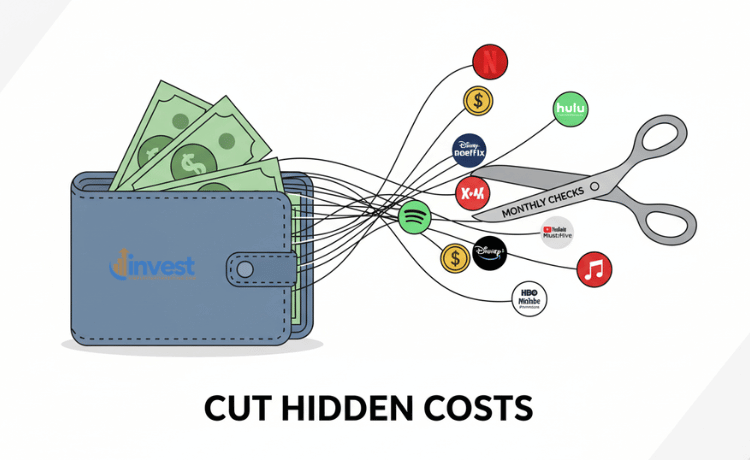
- The Subscription Trap: Automation is great for bills, but it is also great for companies to keep charging you for things you don’t use.
- The Solution: Set a “Money Minute” once a month. Spend 15 minutes reviewing your transactions. Look for “ghost subscriptions”—those 10-dollar-a-month apps you forgot you downloaded.
- Real-World Example: You might find you are still paying for a Disney+ bundle you haven’t watched in three months. That is 15 dollars a month (180 dollars a year) that could be going into your IRA instead.
How to Set It All Up: A Simple Checklist
Ready to automate your finances? Follow these steps in order:
- Calculate Your Number: Determine how much you need to spend on essentials (rent, food, utilities).
- Set Up Direct Deposit Split: Direct your “Savings” portion to a separate bank.
- Enroll in Your 401(k): Contribute at least enough to get the full employer match.
- Connect Your Bills: Turn on auto-pay for every fixed monthly expense.
- Schedule the “Full Balance” Payment: Set your credit cards to pay the full balance automatically.
- Set a Monthly Review: Put a 15-minute appointment on your calendar to check for errors or unused subscriptions.
Final Thoughts
Automating your finances is the single most effective way to change your financial future. It moves the focus from “Will I save money this month?” to “How much has my wealth grown this month?” By removing the friction and the “choice,” you make success the default option.
When your money moves automatically, you gain something much more valuable than interest: you gain time and peace of mind. You no longer have to worry if you forgot a bill or if you are saving enough. The system is doing the work for you.
Disclaimer: This content is for educational purposes only and does not constitute financial advice.