Imagine you find a great savings account or an investment fund that has grown by an average of 10% every year for the last decade. Naturally, you would expect that if you put your money there, you would also earn 10%. But when you look at your actual balance after a few years, you realize you only made 5% or 6%.
Where did the rest of the money go? It didn’t disappear into thin air, and the bank didn’t steal it. This missing piece of profit is what experts call the Behavior Gap. It is the difference between what an investment earns and what the person investing the money actually takes home.
Understanding the Behavior Gap is perhaps the most important lesson for any new investor. You can have the perfect strategy, the best stocks, and the lowest fees, but if you cannot control your own actions, your results will likely suffer. Let’s dive deep into why this happens and how you can make sure you keep every dollar you deserve.
The Difference Between Investment Returns and Investor Returns
To understand the Behavior Gap, we have to look at two different numbers. First, there is the “Investment Return.” This is the performance of the asset itself—like a mutual fund, an index fund, or a piece of real estate. If the S&P 500 grows by 12% in a year, that is the investment return.
Second, there is the “Investor Return.” This is what you, the human being, actually experience. These two numbers are rarely the same. The reason is simple: humans have a habit of moving money in and out at the wrong times.
Think of it like a bus route. The bus (the investment) travels from Point A to Point B at a steady pace. If you stay on the bus the whole time, you arrive exactly when the bus does. But if you keep jumping off the bus because you think you found a faster car, and then you have to run to catch the bus again three miles down the road, you won’t cover the same distance as the bus. You might even end up miles behind.
Why the Behavior Gap Exists
The Behavior Gap isn’t caused by a lack of intelligence. Some of the smartest people in the world—doctors, engineers, and professors—are often the worst investors. This is because investing isn’t a game of math; it is a game of psychology.
Our brains are hardwired for survival, not for the modern stock market. For thousands of years, if we saw a crowd of people running away from something, the safest thing to do was to run with them. In the wild, that keeps you from being eaten by a predator. In the stock market, that leads to “panic selling” at the bottom.
Conversely, if we saw everyone gathering around a plentiful fruit tree, we joined them to eat. In the stock market, this translates to “FOMO” (Fear Of Missing Out), which leads people to buy into an investment only after it has already gone up significantly in price.
Buying High and Selling Low
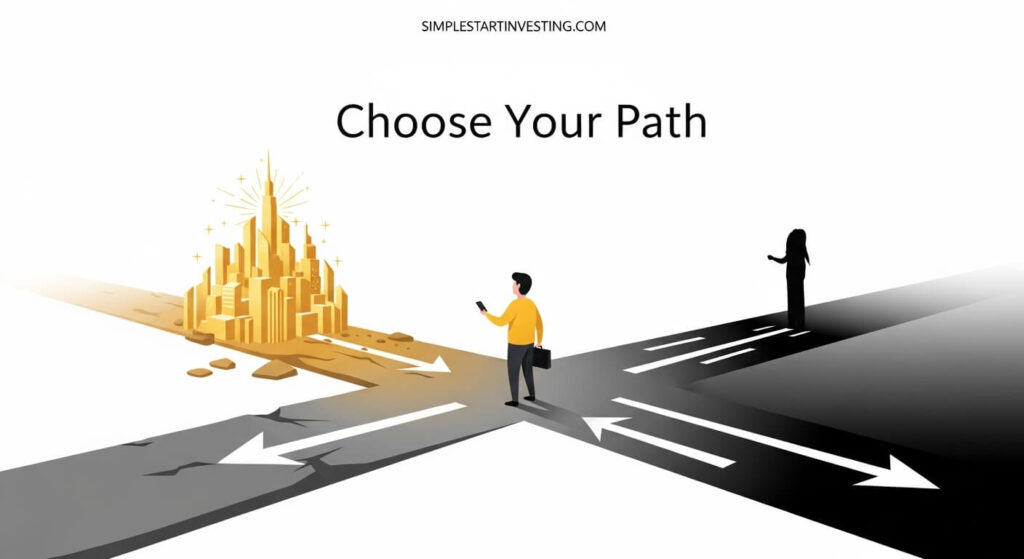
The golden rule of making money is to buy low and sell high. It sounds easy, right? But the Behavior Gap happens because most people do the exact opposite.
When the market is booming and your neighbor is bragging about their profits at a BBQ, you feel an intense urge to get in on the action. The price is high, but you feel safe because everyone else is doing it.
Then, the market inevitably takes a dip. The news headlines turn red. You see your account balance drop from 10,000 dollars to 8,000 dollars. Your brain screams “Danger!” To stop the pain, you sell your shares and move the money to a “safe” savings account.
By the time you feel safe enough to invest again, the market has already recovered and reached new highs. You bought at the peak and sold at the valley. That “gap” between the profit you should have had and the loss you took is the Behavior Gap in action.
The Emotional Rollercoaster of New Investors
When you first start your journey on simplestartinvesting.com, everything feels logical. You see the charts going up over long periods. You think, “I can handle a little bit of volatility.”
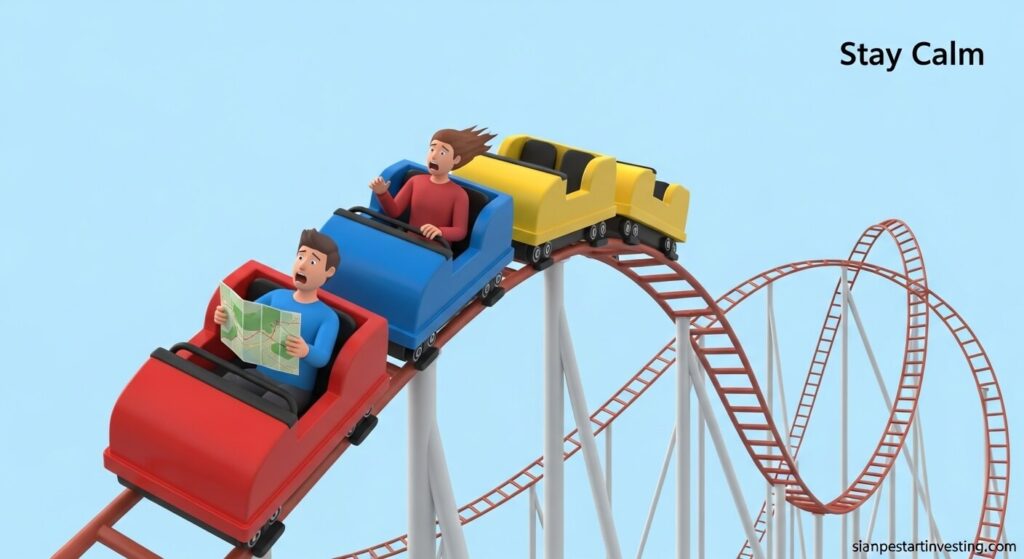
But seeing a chart of a past crash is very different from living through one in real-time. When it’s your hard-earned money—the money for your child’s college or your own retirement—your emotions take over.
The Pain of Loss
Psychologists have found that the pain of losing 1,000 dollars is twice as intense as the joy of gaining 1,000 dollars. This is known as “Loss Aversion.” Because losing hurts so much, we are willing to make irrational decisions just to make the hurting stop.
Imagine you bought a stock for 50 dollars. It drops to 40 dollars. Logic says that if you liked it at 50 dollars, you should love it at 40 dollars because it is “on sale.” But emotion says, “This is a disaster, get out before it goes to zero!” Many beginners sell here, only to watch the stock climb to 70 dollars a year later.
The Trap of Recency Bias
Another reason for the Behavior Gap is something called “Recency Bias.” This is our tendency to believe that what happened recently will keep happening in the future.
If the market has been going up for three years, we assume it will go up forever. We take on too much risk. If the market has been down for two months, we assume it will crash to nothing. We become too fearful. Both of these emotional extremes lead to poor timing and a wider Behavior Gap.
The High Cost of Trying to Time the Market
Many beginners think they can beat the Behavior Gap by “timing the market.” They try to guess when the market is at its highest to sell and when it is at its lowest to buy.
The problem is that the market’s best days often happen very close to its worst days. If you sit on the sidelines trying to avoid a “bad” day, you will almost certainly miss the “best” days too.
Let’s look at a simple example using words instead of complex charts. Imagine a 20-year period. If you stayed invested the whole time, you might have earned a very comfortable return that doubled or tripled your money. However, if you missed just the 10 best-performing days of those 20 years because you were “waiting for a better time to buy,” your total profit could be cut in half.
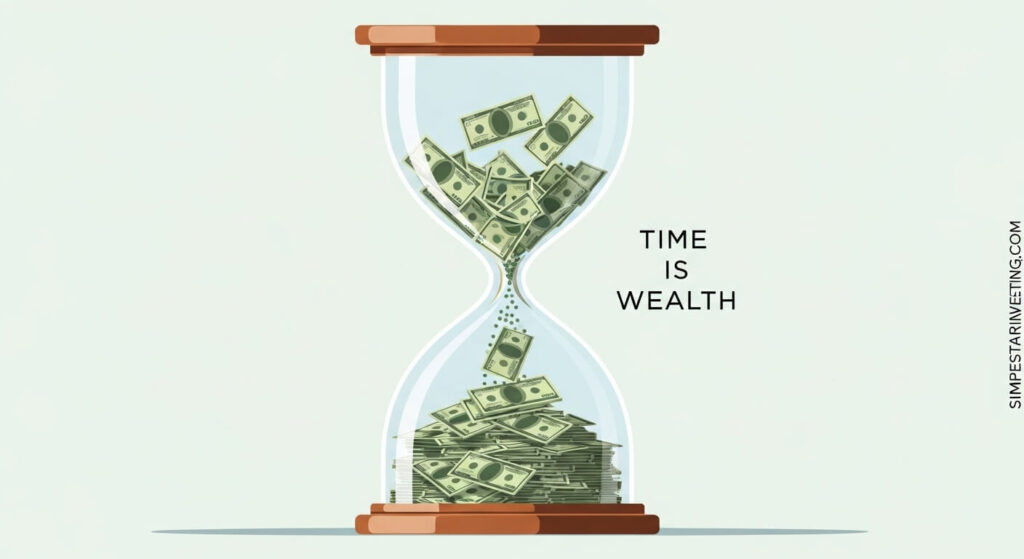
The Behavior Gap thrives on the idea that we are smarter than the market. In reality, time in the market is much more important than timing the market.
How Social Media Widens the Gap
In the past, investors got their news from the daily paper or a weekly magazine. Today, we have 24-hour news cycles and social media influencers “finfluencers” shouting about the next big thing.
Social media is designed to trigger emotions. It uses excitement to make you buy and fear to make you click. When you see someone on TikTok claiming they made 500% profit on a random coin or a tech stock in one week, it creates a “Comparison Trap.”
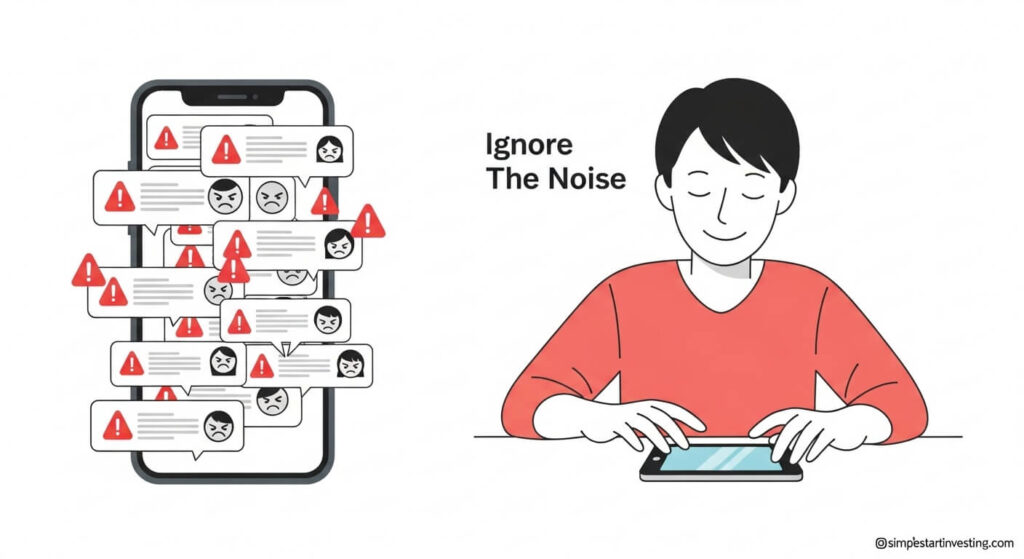
You look at your steady, diversified portfolio that grew by a boring but healthy percentage, and you feel like you are losing. So, you abandon your plan to chase the “hot” tip. Usually, by the time a tip reaches social media, the big gains are already over. You buy the top, the hype dies, the price crashes, and you are left with a massive Behavior Gap.
Strategies to Close the Behavior Gap
The good news is that you don’t have to be a victim of your emotions. You can build a “system” that protects you from yourself. Here are the most effective ways to close the Behavior Gap.
1. Automate Your Investing
The best way to take emotion out of the equation is to stop making decisions. Set up an automatic transfer from your bank account to your investment account every month.
Whether the market is up, down, or sideways, your “system” buys a set amount. This is called Dollar-Cost Averaging. When prices are high, your money buys fewer shares. When prices are low, your money buys more shares. Over time, this lowers your average cost and eliminates the need to “guess” when to buy.
2. Focus on Your “Why,” Not the “What”
If you are investing just to “make money,” you will be easily swayed by market swings. But if you are investing to “buy a house in 5 years” or “retire at 60,” you have a goal that is bigger than today’s stock price.
When the market drops, remind yourself that your house purchase is still years away. The daily fluctuations of the stock market are just “noise” on the way to your actual destination.
3. Build an Emergency Fund First
One of the biggest causes of the Behavior Gap is being forced to sell because you need cash. If your car breaks down and all your money is in the stock market during a downturn, you have to sell at a loss.
Having three to six months of living expenses in a simple savings account gives you “staying power.” It allows you to leave your investments alone to grow, even when life gets messy.
4. Stop Checking the Scoreboard Every Day
In the age of smartphones, it is tempting to check your investment app ten times a day. But the more often you check, the more “volatility” you see.
If you check your portfolio once a year, you will likely see growth. If you check it every minute, you will see a heart-wrenching rollercoaster. Limit yourself to checking once a quarter or even once a year. Your stress levels—and your returns—will thank you.
Understanding the “Cost of Admission”
Every great thing in life has a price. To get a college degree, you pay tuition. To get a fit body, you “pay” with sweat and discipline. In investing, the “price” of high long-term returns is short-term uncertainty.
Think of market volatility not as a “fine” for doing something wrong, but as the “fee” you pay for the chance to grow your wealth over time. When you view a market drop as a temporary fee rather than a permanent loss, it becomes much easier to stay calm and avoid the Behavior Gap.
The Importance of a Written Investment Policy
When you are calm and logical, write down your rules for your money. This is sometimes called an Investment Policy Statement. It doesn’t have to be fancy. It can be a simple note on your phone that says:
- “I will invest 500 dollars every month.”
- “I will not sell my stocks unless I am ready to retire.”
- “If the market drops 20%, I will not look at my app for a month.”
When the world feels like it’s ending and your emotions are running high, you don’t make a new decision. You simply follow the rules your “calm self” wrote down. This is one of the most powerful tools to bridge the Behavior Gap.
How Much Could the Behavior Gap Cost You?
To make this real, let’s look at a simple scenario.
Imagine two friends, Sarah and Joe. Both start with 10,000 dollars. They both choose the same investment that earns an average of 8% per year.
Sarah is a “Buy and Hold” investor. She puts her money in and ignores it for 30 years. Using simple growth, her 10,000 dollars could grow to over 100,000 dollars.
Joe, however, is a “Reactor.” Every time the market drops, he gets scared and moves to cash. Every time it booms, he jumps back in. Because of this “Behavior Gap,” Joe only earns an actual return of 4% per year. After 30 years, Joe’s 10,000 dollars only grows to about 32,000 dollars.
The investment was exactly the same. The only difference was how Sarah and Joe behaved. Joe’s emotions cost him nearly 70,000 dollars in potential wealth. That is the true, staggering cost of the Behavior Gap.
Redefining “Success” in Investing
We often think the “best” investor is the one who picks the best stocks. In reality, the best investor is often the one who is the best at being “average” for the longest period of time without quitting.
Closing the Behavior Gap isn’t about being a genius. It’s about being disciplined. It’s about recognizing that your biggest enemy isn’t the economy, the Fed, or the stock market—it’s the person you see in the mirror every morning.
At simplestartinvesting.com, we believe that mastering your behavior is the “secret sauce” to financial freedom. Once you accept that the market will be bumpy and that your emotions will try to trick you, you are already ahead of 90% of other investors.
Moving Forward With Confidence
As you continue your journey, remember that it is okay to feel nervous when the market is red. It is okay to feel excited when it is green. You are human. The goal isn’t to stop feeling those emotions; the goal is to stop acting on them.
Stick to your plan. Keep your costs low. Stay diversified. And most importantly, stay in the game. The gap between where you are and where you want to be is often just a matter of keeping your cool when others are losing theirs.