
Buying your first car in the United States is more than just a rite of passage; it is one of the most significant financial decisions you will make. For most beginners, the process feels like walking into a maze. You see shiny rows of vehicles at the dealership, hear fast-talking sales pitches about “low monthly payments,” and feel the pressure to sign a stack of papers you barely understand. However, learning how to buy a car the right way can save you thousands of dollars and years of financial stress.
The goal isn’t just to get from point A to point B. The goal is to do it without falling into the “perpetual car payment” trap. Many Americans spend a large portion of their lives paying off one car loan only to jump immediately into another. If you understand the logic of car buying, you can break this cycle. This guide will walk you through the essential steps of how to buy a car while keeping your bank account healthy and your stress levels low.
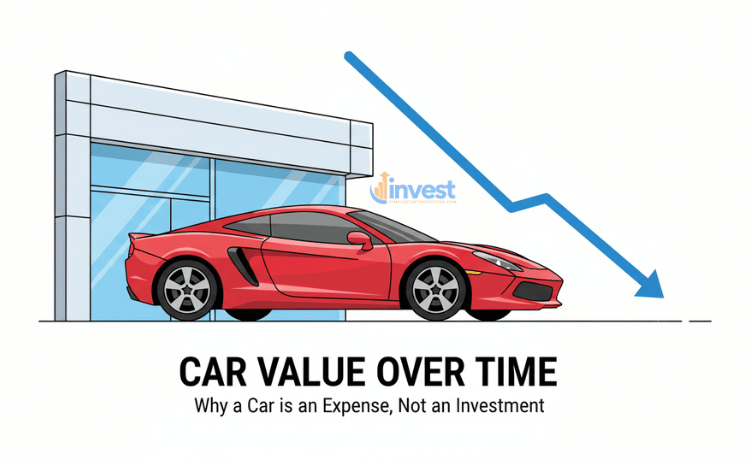
Why a Car is an Expense, Not an Investment
The biggest hurdle for many beginners is a misunderstanding of what a car actually is. In the world of finance, we distinguish between “assets” and “liabilities.” An asset is something that puts money into your pocket or grows in value over time, like a well-chosen stock or a rental property. A liability or a “depreciating asset” is something that loses value the moment you take ownership.
Understanding Depreciation in Plain English
Depreciation is simply the drop in value of your car over time. Imagine you buy a brand-new car today. The second you drive it off the dealership lot, its resale value drops because it is now “used.” Over the first few years, this value continues to slide downward.
A Real-World Example
Consider a popular car like a brand-new Tesla Model 3 or a Ford F-150. If you purchase a new one for 45,000 dollars today, it might only be worth 36,000 dollars just twelve months from now. You have essentially “lost” 9,000 dollars in value while just driving to work and running errands. By the end of five years, that same car might be worth less than half of what you paid for it.
The Beginner’s Blind Spot
Many people believe that because they “own” the car, it adds to their net worth in a meaningful way. They treat the car like a savings account on wheels. This leads them to spend more than they should, thinking they can always “get their money back” later.
Flipping the Script
The correct mindset is to view a car as a tool or a “utility expense.” You are paying for the service of transportation. Just like you wouldn’t expect your refrigerator to be worth more in five years, you shouldn’t expect your car to be a wealth-builder. When you view it as an expense, you become much more careful about how much you spend on it.
The Great Debate: New vs. Used
One of the first questions you will face when learning how to buy a car is whether to go for that “new car smell” or a “pre-owned” vehicle. Financially speaking, the answer for beginners is almost always a high-quality used car.
The Logic of Buying Used
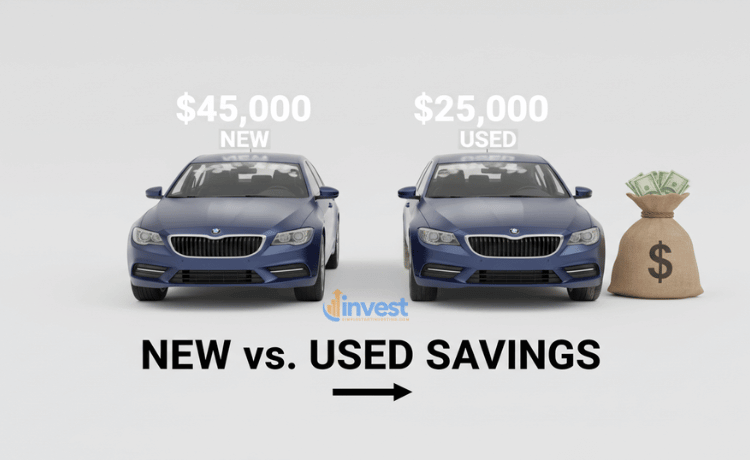
When you buy a used car that is three to five years old, someone else has already paid for the biggest “chunk” of depreciation. The first owner took the 20 percent to 30 percent hit in value. You get to step in and buy a vehicle that is still modern, safe, and reliable, but at a significantly lower price point.
A Practical Scenario
Let’s look at a reliable sedan like a Toyota Camry or a Honda Civic. A brand-new model might cost you 28,000 dollars. However, a three-year-old version of the exact same model—with low mileage and a clean history—might cost only 19,000 dollars. Both cars will get you to work safely, but the used one leaves 9,000 dollars in your pocket to invest in your future.
The “Reliability” Myth
A common mistake beginners make is assuming that a used car is a “lemon” or a “money pit” that will constantly break down. They fear that the repairs will cost more than the savings on the purchase price.
The Truth About Modern Cars
Modern vehicles, especially from brands known for longevity like Toyota, Honda, or even newer Mazda models, are designed to last well over 150,000 miles with basic maintenance. If you choose a car with a good track record and have it inspected, you can enjoy years of worry-free driving without the new car price tag.
Budgeting for Your Ride: The 20/4/10 Rule
How much can you actually afford? Most people walk into a dealership and ask, “What is the monthly payment?” This is exactly what the salesperson wants you to do. By focusing only on the monthly cost, they can stretch your loan to six, seven, or even eight years, making an expensive car look “affordable” while charging you a fortune in interest.
Explaining the 20/4/10 Rule in Words
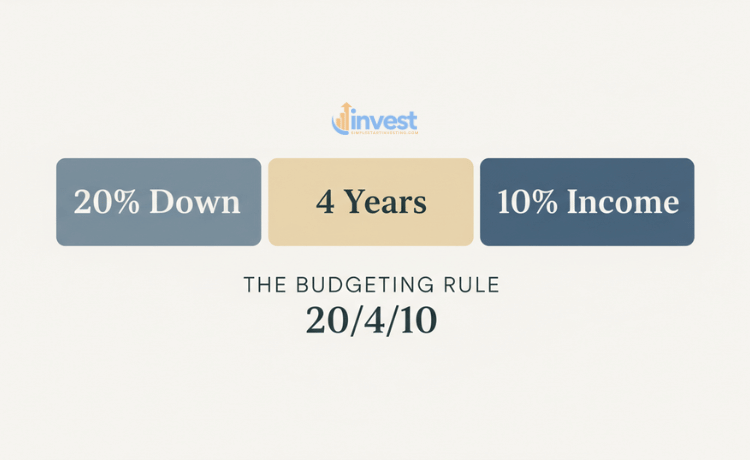
To stay financially safe, experts recommend a simple guideline. First, try to put down at least 20 percent of the car’s price in cash upfront. Second, the loan term should not exceed four years (or 48 months). Finally, your total monthly car costs—including the loan payment, insurance, and fuel—should not be more than 10 percent of your monthly take-home pay.
A Numbers Example
Suppose you take home 4,000 dollars every month after taxes. According to the rule, your total car expenses should stay under 400 dollars. If your insurance is 100 dollars and gas is 100 dollars, your actual loan payment should only be about 200 dollars. To hit that 200 dollar payment on a four-year loan, you would need to look at a car priced around 10,000 to 12,000 dollars, depending on interest rates.
The Debt Extension Trap
Beginners often ignore the “four-year” part of the rule. They see a 40,000 dollar SUV and the dealer offers an eighty-four-month loan (seven years). This makes the payment fit their budget, but they end up paying thousands more in interest and will likely owe more than the car is worth for several years.
Protecting Your Future Self
By following the 20/4/10 rule, you ensure that your car doesn’t “eat” your ability to save for a home or retirement. You are controlling the car; the car is not controlling your life.
Hidden Costs: It’s Not Just the Sticker Price
When you see a price tag on a car, that is only the beginning. Beginners often forget that the state and the insurance company want their share, too. In the U.S., these “closing costs” can add a significant amount to your final bill.
Beyond the Purchase Price
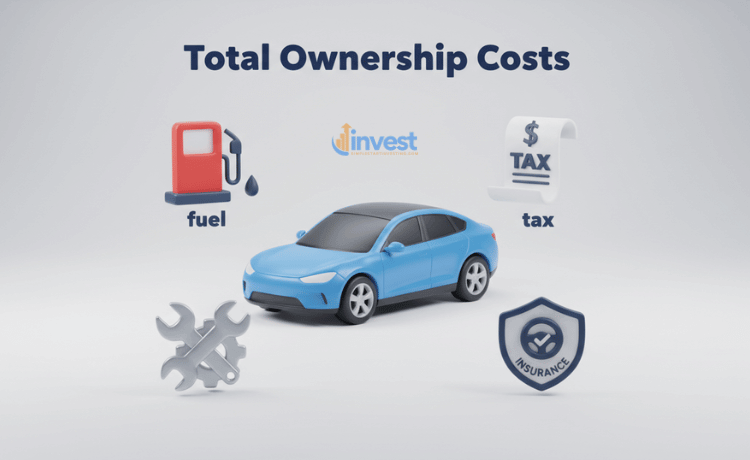
When you buy a car, you must account for sales tax (which varies by state), registration fees, and documentation fees. Additionally, insurance for a newer car or for a younger driver can be quite expensive. You also have to consider “maintenance” and “wear and tear” items like tires and brakes.
A Real-World Comparison
Imagine you find a great deal on a used BMW 3 Series for 20,000 dollars. You might think it costs the same as a 20,000 dollar Toyota Corolla. However, the insurance on the BMW will likely be higher because it’s a “luxury” vehicle. Furthermore, a simple oil change or a set of new tires for the BMW could cost twice as much as it would for the Toyota.
The “Sticker Shock” Mistake
Many beginners spend every last penny they have on the down payment, leaving them with zero dollars in their bank account. When the first registration bill or an unexpected flat tire happens a month later, they are forced to use a high-interest credit card to pay for it.
Building a “Car Buffer”
Always set aside an extra 1,000 to 1,500 dollars specifically for the initial taxes, fees, and the first few months of maintenance. This ensures that your new-to-you car brings joy, not a financial emergency.
The Step-by-Step Buying Process
Now that you have your budget, it is time to find the right vehicle. Knowing how to buy a car involves a specific sequence of events to ensure you aren’t being cheated.
Step 1: Research and Narrow Down
Start by looking at reliability ratings from sources like Consumer Reports or JD Power. Look for models that are known for lasting a long time. Once you have two or three models in mind (for example, a Honda CR-V or a Toyota RAV4), check prices on websites like Kelley Blue Book (KBB) or Edmunds to see what they are actually selling for in your area.
Step 2: Check the Vehicle History
Never buy a used car without seeing its history report. Services like Carfax or AutoCheck will tell you if the car has been in a major accident, if the odometer has been tampered with, or if it has a “salvage title” (meaning it was previously declared a total loss by an insurance company).
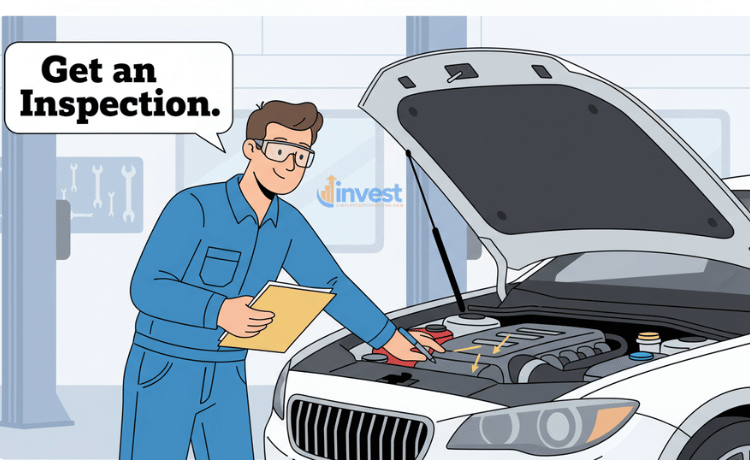
Step 3: The Pre-Purchase Inspection (PPI)
This is the most critical step that beginners skip. Even if the car looks shiny and the salesperson is friendly, you must take the car to an independent mechanic—not the dealer’s mechanic—for a full inspection. It usually costs about 100 to 200 dollars, but it can reveal hidden engine problems or structural damage.
Step 4: Negotiate the “Out-the-Door” Price
Dealers love to negotiate based on the “monthly payment.” You must decline this. Instead, negotiate the “Out-the-Door” (OTD) price. This is the total price of the car including all taxes and fees. When you negotiate the total price, you have a clear understanding of exactly what you are paying.
Financing: Dealership vs. Credit Union
Most people need a loan to buy a car. However, where you get that loan matters just as much as the car you choose. Beginners often default to “dealership financing” because it is convenient, but it is rarely the cheapest option.

Understanding Interest Rates
An interest rate is the “cost” of borrowing money. If you have a high interest rate, you will pay much more over the life of the loan. Dealerships often add a “markup” to the interest rate the bank gives them, pocketing the difference as profit.
The Power of Pre-Approval
Before you ever step foot on a car lot, visit your local bank or a credit union. Ask for a “pre-approval” for an auto loan. They will tell you exactly what interest rate you qualify for. Now, when you go to the dealership, you have a “benchmark.” If the dealer can’t beat your credit union’s rate, you simply use your own loan.
The “Low Monthly Payment” Trap
Dealers may offer you a very low monthly payment but with a very high interest rate over a long period. Beginners are often so happy to see a “299 dollar” payment that they don’t realize they will be paying for the car for the next seven years, eventually paying double what the car is worth.
Mastering Your Debt
By securing your own financing first, you take the power away from the salesperson. You become a “cash buyer” in the eyes of the dealer, which allows you to focus purely on negotiating the price of the car itself.
Common Beginner Mistakes and the Logic Shift
To truly master how to buy a car, you need to avoid the psychological traps that catch most first-time buyers.
Mistake 1: Shopping While Emotional
You see a car that looks “cool” or makes you feel successful, and you decide you must have it today. The Shift: Treat car buying like a business transaction. If the numbers don’t work, be prepared to walk away. There are millions of cars for sale; you don’t have to buy this specific one.
Mistake 2: Falling for Add-ons
In the final stages of the deal, the “finance manager” will try to sell you extended warranties, gap insurance, fabric protection, and VIN etching. The Shift: Most of these add-ons are high-profit items for the dealer and low-value for you. You can almost always get a better warranty or insurance product elsewhere for much less money. Say “no” to everything in the finance office until you have researched it thoroughly.
Mistake 3: Rolling Negative Equity
If you already have a car and owe more on the loan than it is worth, a dealer might offer to “roll” that debt into your new loan. The Shift: This is a recipe for financial disaster. You end up with a massive loan for a car that is worth much less. It is better to keep your current car until the loan is paid off or until you have enough cash to cover the “gap” in value.
A Note on Rules and Regulations
The rules regarding vehicle taxes, registration, and even business-related deductions (like the IRS Section 179 for those using a car for work) can change from year to year. For instance, recent laws like “The One Big Beautiful Bill Act” have updated how much business owners can deduct for heavy vehicles.
Because these rules are dynamic, it is essential to stay informed. Regulations can change; please check current guidelines or consult with a professional regarding taxes and registration in your specific state.
Your Next Step Toward a Reliable Ride
Buying a car is a marathon, not a sprint. Now that you understand the mechanics of depreciation, the importance of the 20/4/10 rule, and the power of a pre-purchase inspection, you are ahead of 90 percent of other buyers.
Your immediate next step is to sit down and calculate your true “10 percent” budget based on your take-home pay. Once you have that number, start looking at three-to-five-year-old models from reliable brands like Toyota or Honda.
Would you like me to help you compare the typical maintenance costs and insurance rates for two specific car models you are considering?
Disclaimer: This content is for educational purposes only and does not constitute financial advice. Car buying involves legal contracts and financial obligations; always perform your own due diligence.